Adding convenience and functionality to a Falmouth home through the installation of three new double socket outlets across living and dining spaces.
Modern homes demand more electrical capacity than ever before. With smartphones, tablets, laptops, and countless other devices requiring regular charging, homeowners often find themselves struggling with too few power points in the right places. This Falmouth property needed extra socket outlets to better serve the daily needs of the household, and the solution required careful planning to achieve clean, professional results without unnecessary disruption.
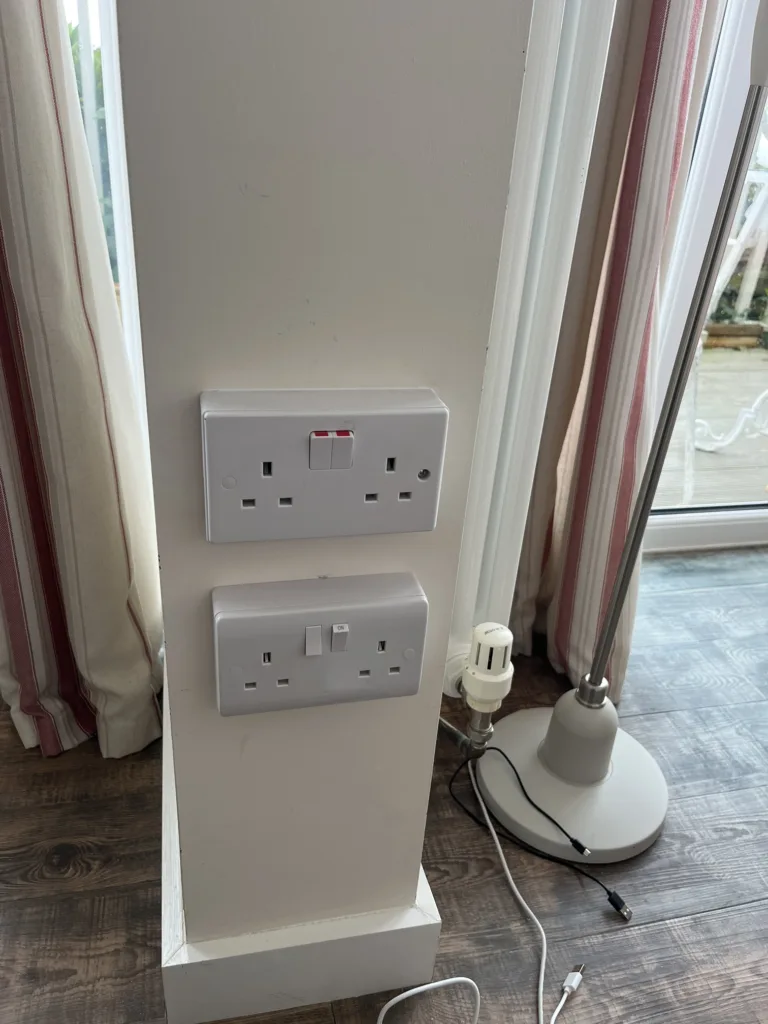
The work involved installing three new double socket outlets in different areas of the home, each presenting its own technical considerations. The first outlet was positioned below the front window in the living space, taking advantage of the plasterboard wall construction to run new cabling through the cavity. This approach meant the installation could be completed without the mess and expense of chasing into solid walls, which would have required making good the plasterwork afterwards. By extending the circuit from the nearest existing socket, the new outlet integrated seamlessly into the property’s electrical system whilst maintaining proper circuit loading.
Socket circuits in domestic properties follow specific regulations regarding how many outlets can be connected and how they’re configured. Before any extension work begins, it’s necessary to verify that the existing socket isn’t already serving as a spur, which would limit the options for adding further outlets. In this case, the circuit configuration allowed for the straightforward extension, and the wall cavity proved clear of any obstructions that might have complicated the cable routing. The result was a neat installation that provided the additional power point exactly where it was needed, with minimal visual impact.
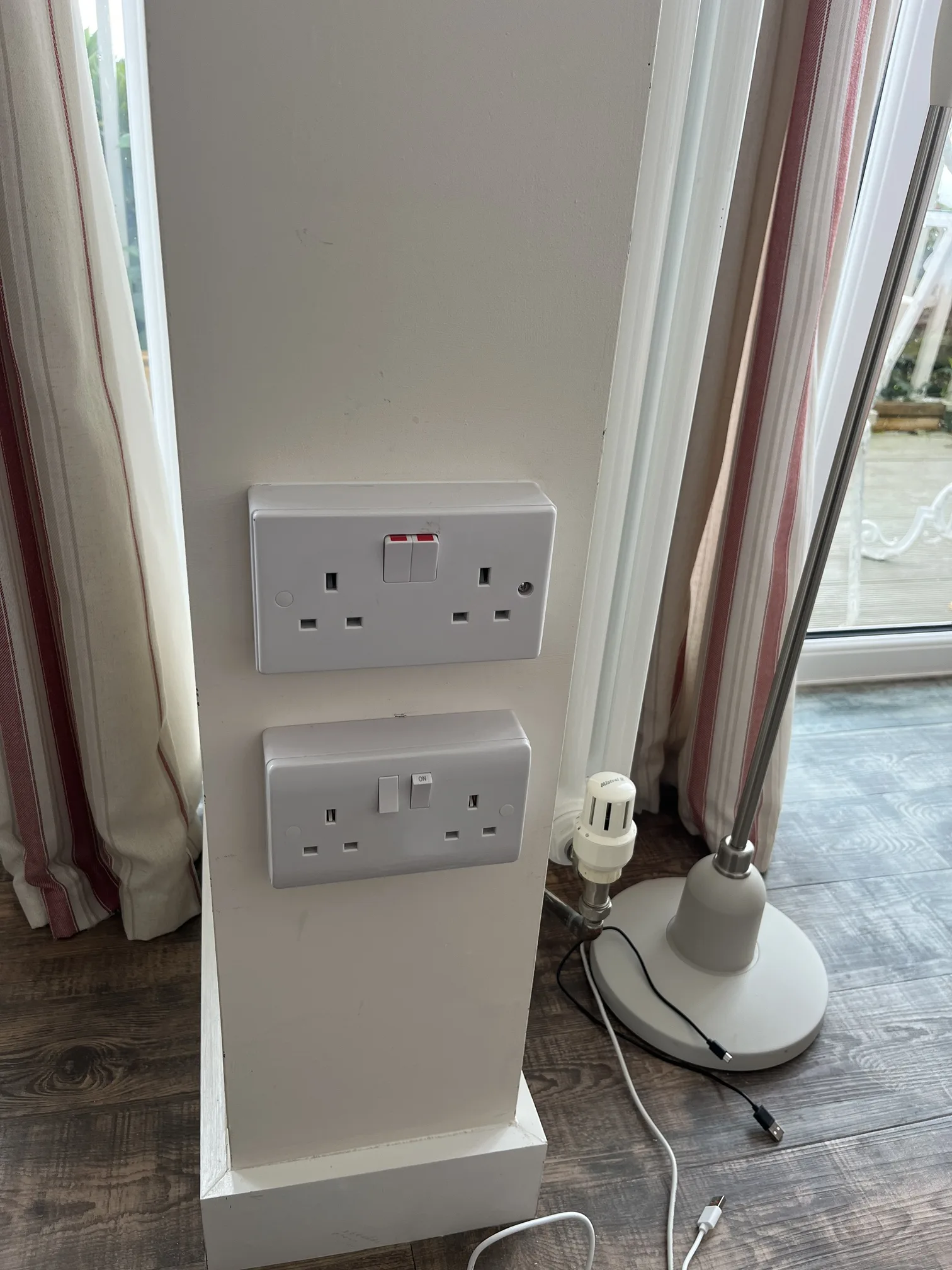
The dining area required a different approach. Here, the new double socket needed to sit below an existing outlet on the return wall. Rather than attempting to conceal the cabling within the wall structure, which might not have been practical given the construction type and existing services, surface-mounted installation methods provided the answer. A pattress box was fitted to house the new outlet, with a short section of mini-trunking bridging the gap between the two sockets. Whilst some might view surface mounting as less elegant than fully recessed work, when done properly it offers several advantages. The installation is quicker, causes less disruption, and makes future maintenance or modifications far more straightforward. The mini-trunking protects the cable whilst creating clean, straight lines that look intentional rather than makeshift.
Plastic finish sockets remain the most popular choice for domestic installations, offering good value and a clean appearance that suits most interior schemes. White finishes blend easily with light-coloured walls and woodwork, and the switched design provides convenient local isolation for connected appliances. Modern socket outlets also incorporate improved safety features compared to older designs, with shuttered terminals that protect against accidental contact and more robust construction that stands up better to repeated use.
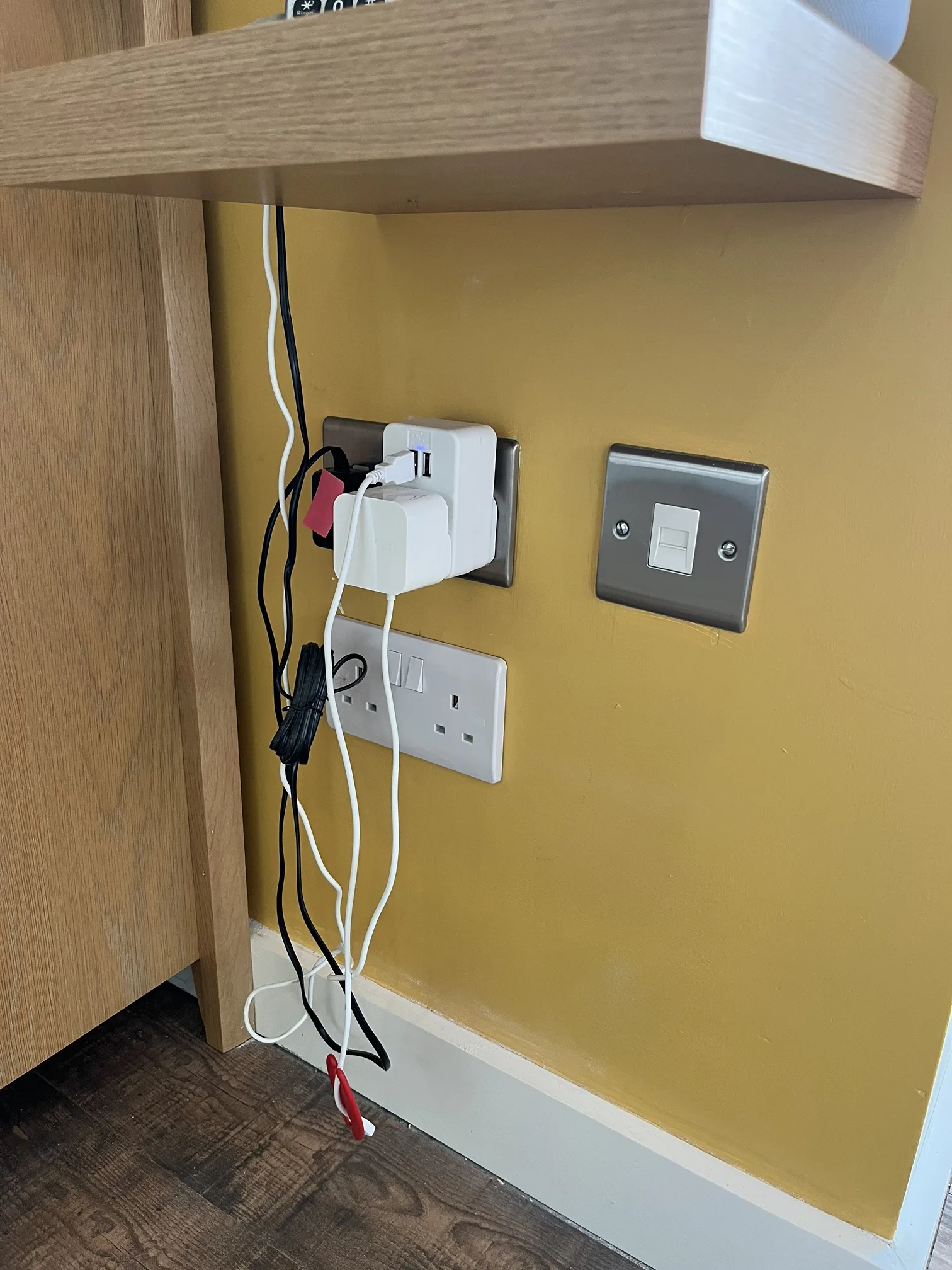
The living room installation presented yet another variation in approach. This outlet was recessed into the wall below an existing socket on the yellow feature wall. Recessed installation creates the neatest possible appearance, with the socket sitting flush with the wall surface. Again, the plasterboard construction worked in favour of a clean installation, allowing the cable to run through the wall cavity without disturbing the finished surfaces. The positioning below the existing outlet made practical sense, providing power points at different heights to accommodate various needs. Floor-level sockets suit table lamps, phone chargers, and other regularly used items, whilst higher-mounted outlets might serve wall-mounted equipment or provide more accessible points for occasional use.
Circuit design plays a significant role in how effectively a socket installation serves the property. Ring circuits, commonly used in UK homes, allow multiple outlets to share the load whilst maintaining good capacity. When extending these circuits, care must be taken to maintain the ring configuration or to add spurs in accordance with wiring regulations. Each socket added to a circuit represents potential load, so understanding the existing setup and how it will handle additional demand forms part of the planning process. In domestic settings, most general socket circuits run on 32-amp protection, but the actual load capacity depends on cable size, circuit length, and installation method.
Cable routing requires thought beyond simply getting from point A to point B. Within wall cavities, cables need to follow defined zones to avoid future damage from picture hooks or shelving fixings. Where cables run horizontally or vertically from outlets and switches, these zones create safe areas where building occupants can reasonably expect to find electrical services. Running cables outside these zones, even within wall cavities, creates risk that future work might damage them. Professional installation respects these requirements, protecting both the immediate integrity of the work and its long-term safety.
The physical installation of socket outlets involves more than just making the electrical connections. Back boxes must sit squarely and at consistent heights, particularly when multiple outlets appear in the same room. The front plates need to finish flush with the wall surface, neither proud nor recessed. Terminal connections require proper torque – too loose and they may develop high resistance that leads to heat build-up, too tight and the terminals can be damaged. Each outlet gets tested after installation to verify correct polarity, earth continuity, and insulation resistance.
For the homeowner, the completed work delivered exactly what was needed – convenient access to mains power in the locations where it would be used most. The living space gained flexibility for lighting and device charging near the window area. The dining space could now accommodate table lamps, seasonal decorations, or occasional appliances without resorting to extension leads. The lounge benefited from improved accessibility, making everyday use more convenient.
Socket installations might seem straightforward, but doing them properly requires understanding of circuit design, cable routing, construction methods, and current regulations. Each property presents different challenges based on its construction type, existing electrical installation, and how the spaces are used. Getting it right means planning the work carefully, using appropriate methods for each location, and completing every aspect to professional standards. The result is electrical infrastructure that serves the building reliably whilst maintaining safety and meeting all regulatory requirements.