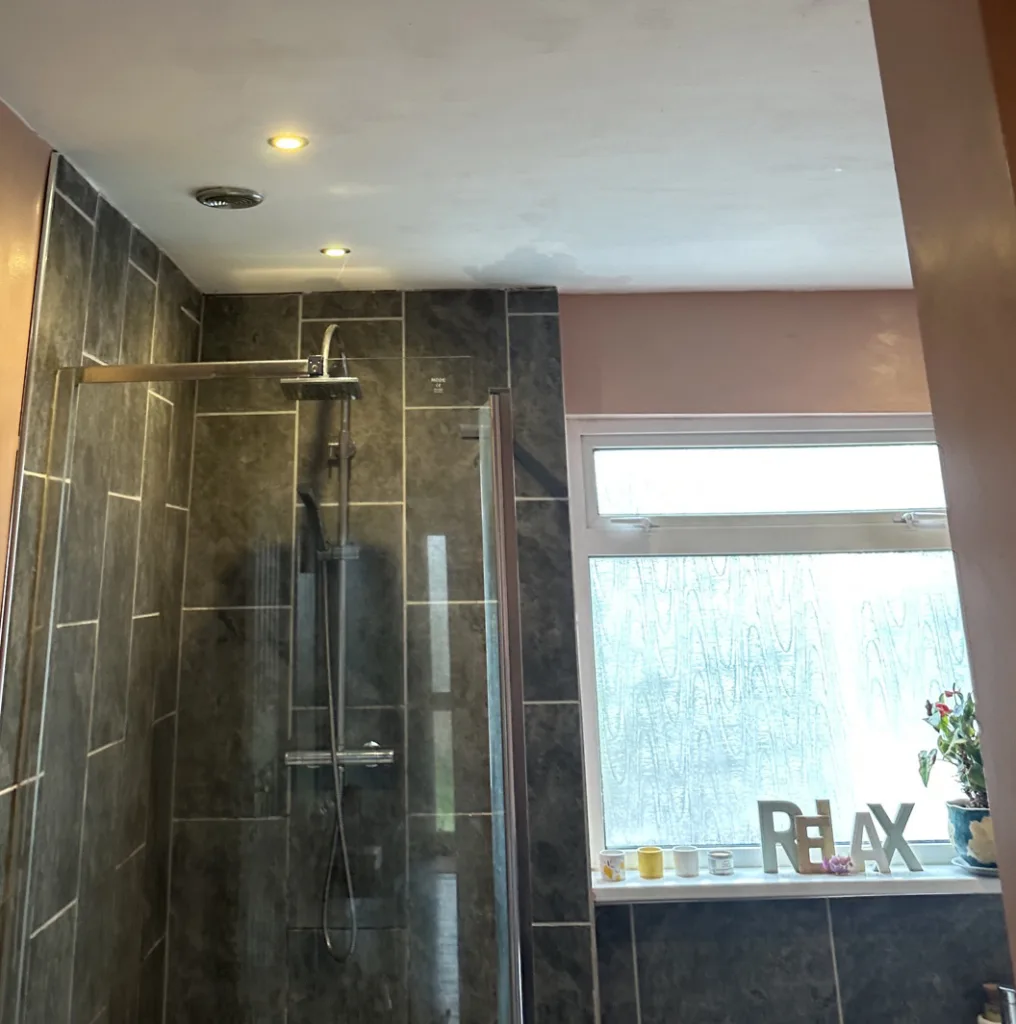
Bathroom electrics can be deceptively complicated. What looks like a straightforward setup on the surface often turns out to have a history of modifications or compromises that have left things wired in a way that no longer suits how the space is used. That was very much the case with this bathroom in Redruth, where the existing circuit needed untangling before anything else could happen.
The original arrangement had the pull cord isolator switch controlling both the lighting and extractor fan unit as well as the shower pump – two very different loads sharing the same switching point. This kind of setup can sometimes come about through a previous installation being adapted over time, but it creates real limitations. Having the shower pump tied into the same switch as the lighting means there’s no independence between the two. If the occupants ever needed the pump isolated separately from the lights, there was no clean way of doing it.
The brief was clear: reconfigure the circuit so the pull cord switch controls only the lighting and fan, and move the shower pump onto its own arrangement entirely. The solution for the pump was to route its supply back to the loft space and connect it via a plug top there. This gives the pump a clean, accessible isolation point that’s well away from the bathroom zone and easy to reach if maintenance is ever needed. It’s a practical approach that makes the overall setup far simpler to manage going forward.
On the lighting side of the reconfiguration, the existing pull cord isolator was removed and replaced with a 10A pull cord light switch. The distinction between these two components matters more than it might seem. An isolator is intended to fully disconnect a circuit for maintenance purposes – it’s not designed for regular, everyday switching. A dedicated light switch is the correct component for that job. Getting the right part doing the right role is something that gets overlooked in bathrooms more often than you’d expect, particularly in older installations where isolators were sometimes used as a workaround in place of a proper light switch.
With the new pull cord switch in place, the wiring was reconfigured so it feeds only the lighting and extractor fan. The occupant uses the pull cord to turn the lights and fan on and off as normal, the fan runs its timed overrun as it should, and the shower pump sits completely separate on its own supply.
Bathrooms fall within what the wiring regulations class as special locations. There are specific rules around what equipment can be installed in the various zones relative to water sources, and those rules carry real weight. Any electrical work carried out in a bathroom has to be approached with that in mind – from the type of fittings and components used through to how circuits are arranged and protected. The reconfiguration here was carried out with all of that considered throughout.
Working in the loft to connect the pump via the plug top required some careful routing and making sure the connection point was properly supported and accessible. Loft spaces vary considerably – some are straightforward to work in, others less so – but getting the installation right up there meant the pump now has a safe, easily reached isolation point that doesn’t require going into the bathroom at all.
From the homeowner’s point of view, the end result is a bathroom where the pull cord does exactly what you’d expect – controls the lights and fan, nothing else. The shower pump runs independently, which is the correct way for a pump of that type to be set up. It removes any ambiguity about what controls what, and means that if anything ever needs attention on either the lighting circuit or the pump, there’s a clear, straightforward answer.
Circuit reconfiguration work like this tends not to get much attention because there’s nothing visually dramatic about it in the way a full installation might be. But getting circuits properly organised does matter, both for everyday use and for longer-term safety. A bathroom that’s been extended, renovated or had equipment added over the years can accumulate wiring arrangements that were each reasonable at the time but have left the overall setup in a less than ideal state. Sorting it out properly is worth doing, and this job in Redruth is a solid example of that kind of careful, considered work.