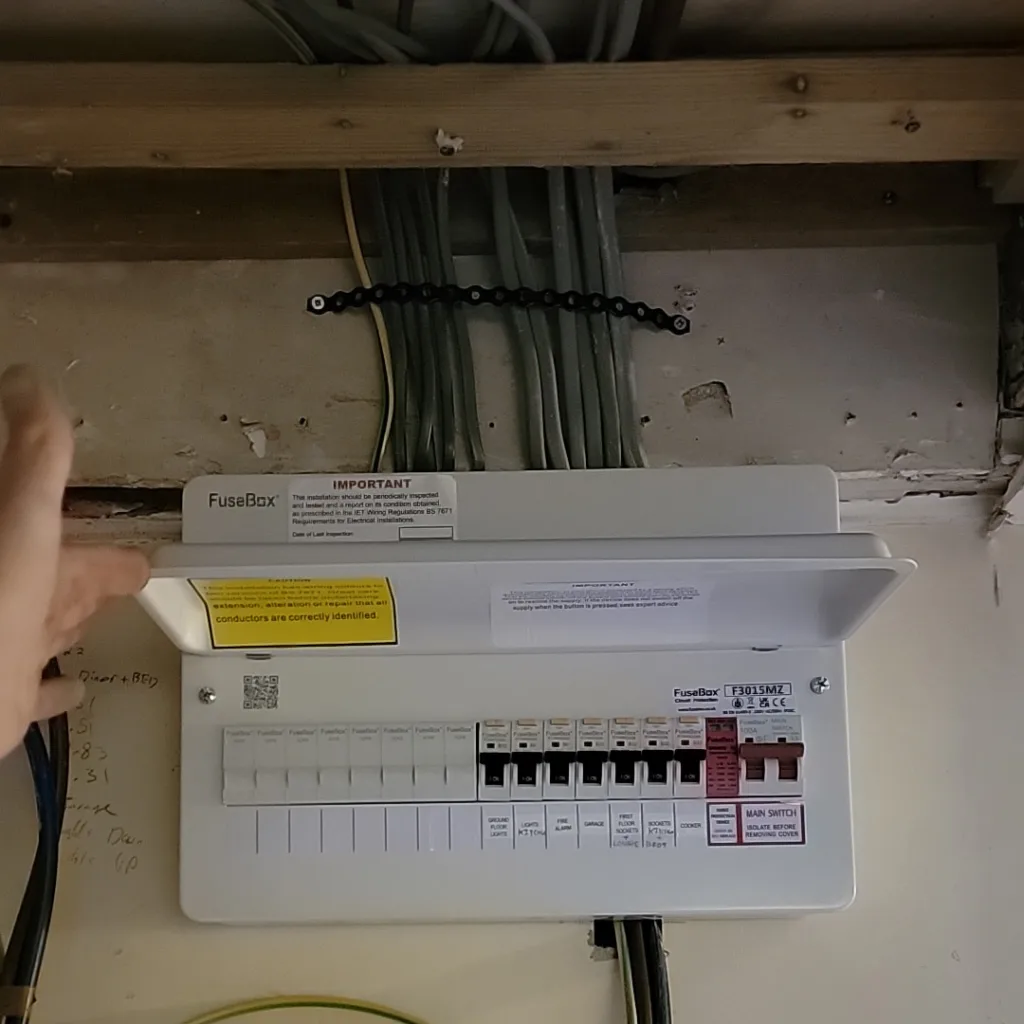
Moving a consumer unit isn’t something that gets talked about much, but there are plenty of situations where it makes sense – whether it’s a refurbishment, a change in how a space is used, or simply the existing board being in an awkward or unsuitable position. This property in St Day was a case where relocating the unit to an adjacent wall allowed for a much better installation overall, and the opportunity was taken at the same time to bring the board up to a modern standard.
The existing consumer unit was removed and replaced with a 15-way fire-rated RCBO unit with an integrated surge protection device (SPD). Fire-rated boards offer a significant improvement over standard consumer units in the event of an electrical fault – the enclosure is designed to contain any fire rather than contribute to its spread. Individual RCBOs on each circuit mean that a tripped breaker on one circuit doesn’t affect the rest of the property, which is a practical benefit that most people appreciate straight away once they experience it. The SPD protects connected equipment from voltage spikes that can originate from the grid – lightning strikes and switching events in the network can send transient surges down supply cables, and without protection, sensitive electronics can be damaged or have their lifespan shortened.
Relocating a consumer unit isn’t simply a case of lifting it off the wall and remounting it elsewhere. When the board moves, so does the point at which all the existing circuits terminate. The existing circuit cables weren’t long enough to reach the new position on the adjacent wall, so extensions were required. To keep the installation clean and the cables properly protected, extension connections were housed within an adaptable enclosure sited in the first-floor floor void. Getting access to that void meant lifting carpet and flooring, which was done carefully with the intention of relaying it once the work was complete.
Routing cables through voids is standard practice in domestic electrical work, but it does require some planning – particularly when it comes to working out the most practical path for each circuit. Where access through the void wasn’t straightforward, some work to the plasterboard was required to facilitate routing. Any holes made were patched and first-filled before leaving site, ready for fine filling, sanding and decorating by others.
With the new board in position and all circuits connected, the installation went through full electrical testing. Every circuit that had been altered was tested in accordance with BS 7671, the wiring regulations that govern electrical installations in the UK. This testing produced the required Electrical Installation Certificate (EIC), which documents the condition of the installation and provides the evidence needed for the Building Control notification that Part P of the Building Regulations requires for notifiable electrical work. Consumer unit replacements fall within that category, so the certification process is part of the job rather than an optional extra.
One item that was originally scoped – the relocation of a two-gang light switch in the hallway to sit adjacent to the new consumer unit position – was stood down during the visit at the client’s request. That work remains available to be carried out at a later date if required.
The completed installation gives the property a properly sized, modern consumer unit in a more practical location, with individual circuit protection throughout and surge protection on the incoming supply.