Consumer unit replacements are one of those jobs that genuinely makes a difference to the safety and reliability of a home’s electrics. This project in Mevagissey involved far more than a straight swap – the existing setup had reached the point where a complete overhaul was the right call, and with the works needed at short notice, we cleared the schedule and got it done.
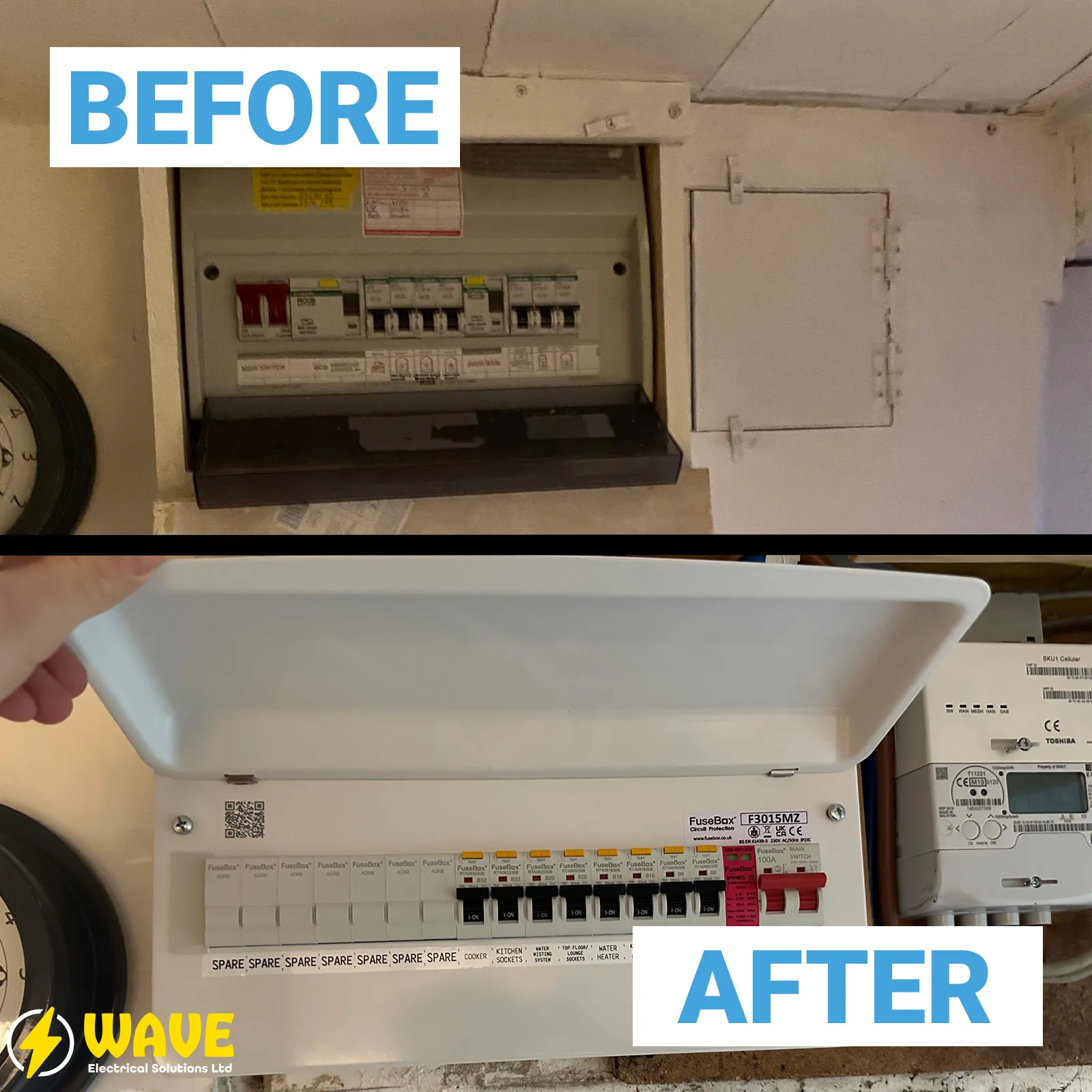
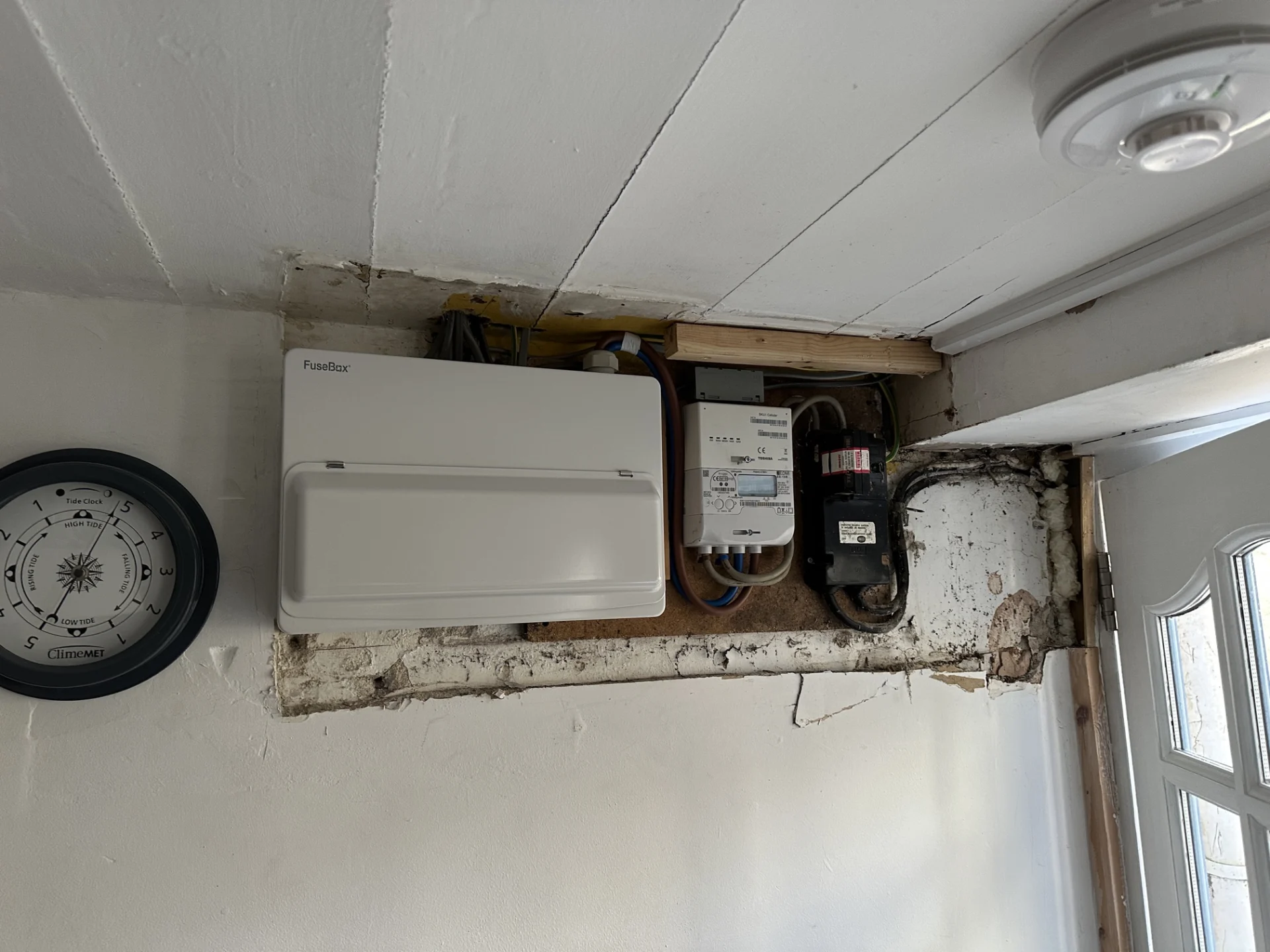
The existing consumer unit was housed within a wooden cabinet, which had to come out before anything else could happen. Cabinets like that can look tidy enough on the surface, but they restrict airflow, create awkward access and, in some cases, present a fire risk if there’s any fault or arcing inside. Removing it gave us a clean slate and proper access to the incoming supply.
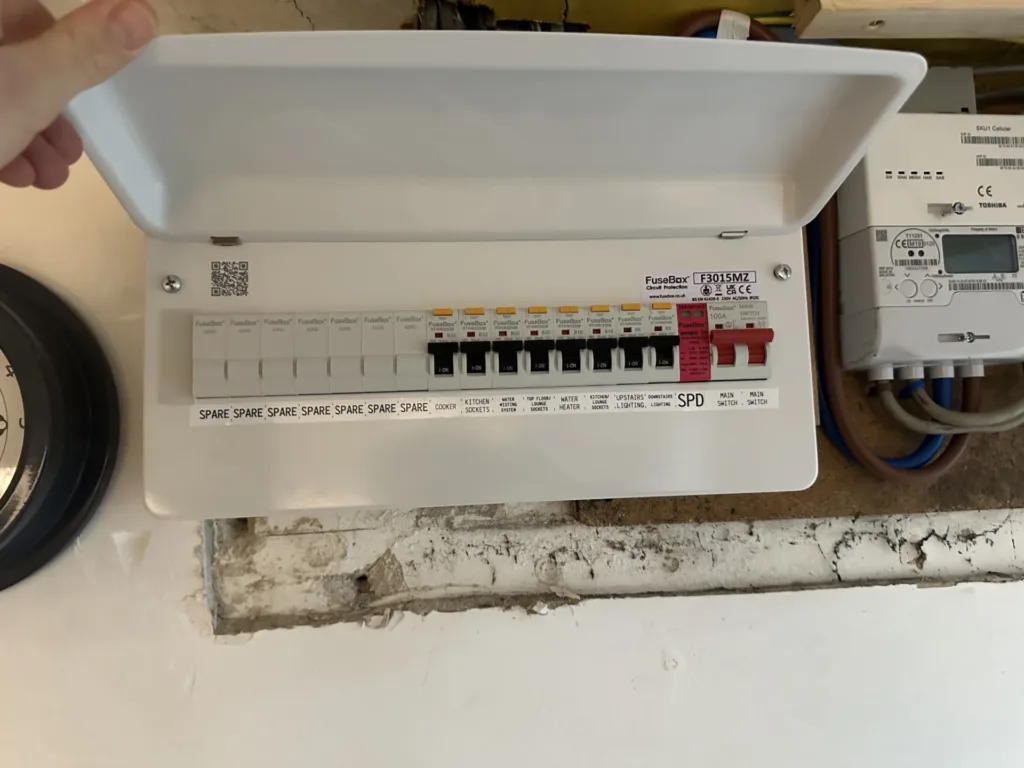
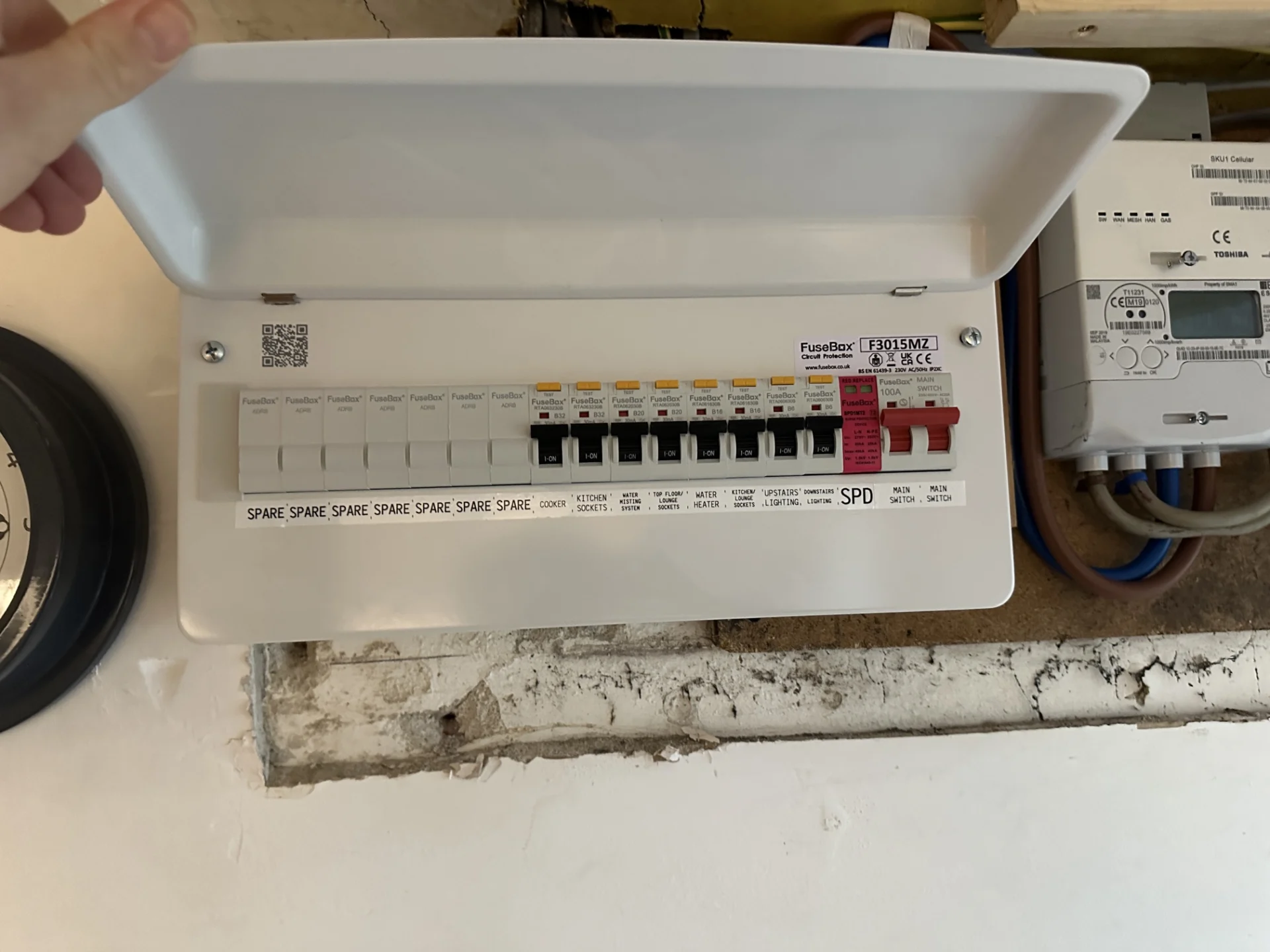
In its place, we installed a FuseBox 15-way RCBO consumer unit – a fire-rated board with an integrated Surge Protection Device (SPD). Each circuit is protected by its own individual RCBO, which means if there’s a fault on one circuit, only that circuit trips rather than taking out half the property. That’s a real advantage over older boards fitted with a single RCD covering multiple circuits, where one nuisance trip can knock out everything downstream.
The SPD is worth explaining separately, because it’s increasingly relevant in modern domestic installations. Voltage spikes and surges from the grid can cause damage to electronics – smart TVs, gaming consoles, laptops, smart home devices – often without any immediately obvious cause. An integrated SPD sits between the incoming supply and the circuits it feeds, diverting surge energy before it can do any harm. As properties become more reliant on connected devices, having that layer of protection built into the consumer unit makes a lot of sense.
The incoming meter tails were also upgraded to 25mm double insulated cabling as part of the works. The tails are the cables that connect the meter to the consumer unit, and getting these right matters – undersized or ageing tails can create a weak point right at the start of the system, regardless of how well the rest of the installation performs.
On the circuit side, the C16 RCBO was replaced with a correctly specified C curve, Type A device to suit the load it’s protecting. The difference between B and C curve breakers isn’t something most homeowners need to think about, but it does matter in practice. C curve devices handle higher inrush currents without nuisance tripping, which is important when the connected load draws a surge at start-up. Getting the curve and type right at the point of selection avoids problems further down the line.
The existing cabling in the trunking run was replaced with FP200 fire-rated cable – approximately 20 metres from the consumer unit to the fused spur. FP200 is circuit integrity cable designed to maintain its function during a fire for a defined period, making it the appropriate choice for this type of application. The switched fused spur under the sink was swapped out for an unswitched unit with an outlet, giving a cleaner and more suitable termination point for the equipment connected to it.
That fused spur feeds into the second part of the project – a new 20A radial circuit for a water misting system. Misting systems have become considerably more common in domestic kitchens and garden rooms, but they do need a dedicated, properly rated supply to operate safely and reliably over time. Running them from an existing socket circuit isn’t the right approach.
The new circuit was taken from the consumer unit and routed at ceiling height along the kitchen wall, then threaded through the joists as required. Running cable at ceiling level keeps it clear of surfaces, reduces any risk of mechanical damage, and keeps the overall route as tidy as possible. Where the cable passed through the joists, it was contained in trunking, and every penetration was caulked to restore the fire integrity of the joist cavities. Caulking those holes might seem like a minor finishing detail, but it means the structure performs as it should in the event of a fire – the trunking and caulk together prevent fire spreading through the void in a way that an unfinished penetration wouldn’t.
The circuit terminates at a 13A fused connection unit in the under-sink cupboard, providing a fixed, protected supply point for the misting system. Using an FCU rather than a socket outlet keeps the connection permanent and tidy, without the risk of someone accidentally disconnecting the wrong thing.
With all altered circuits and the new installation in place, full electrical testing was carried out. Every circuit was tested to confirm it meets the requirements of the 18th Edition Wiring Regulations, and an Electrical Installation Certificate was issued on completion. The EIC records what was installed, the test results for each circuit, and confirms the work was completed by a registered electrician. It’s also the document required for the Building Control Notification of Electrical Works, which was submitted as part of the handover.
Pulling together multiple elements of work at short notice, all within the same visit, takes planning – but getting everything tested, certified and signed off in a single day was the right outcome for the customer.