Following an EICR that had flagged remedial issues across the installation, the full scope of work was carried out to bring everything in line with the current 18th Edition wiring regulations. Three main areas were covered: the consumer unit replacement and meter tails upgrade, the replacement of an unserviceable en-suite extractor fan, and the completion and sign-off of a satisfactory EICR confirming the remedial works had been properly resolved.
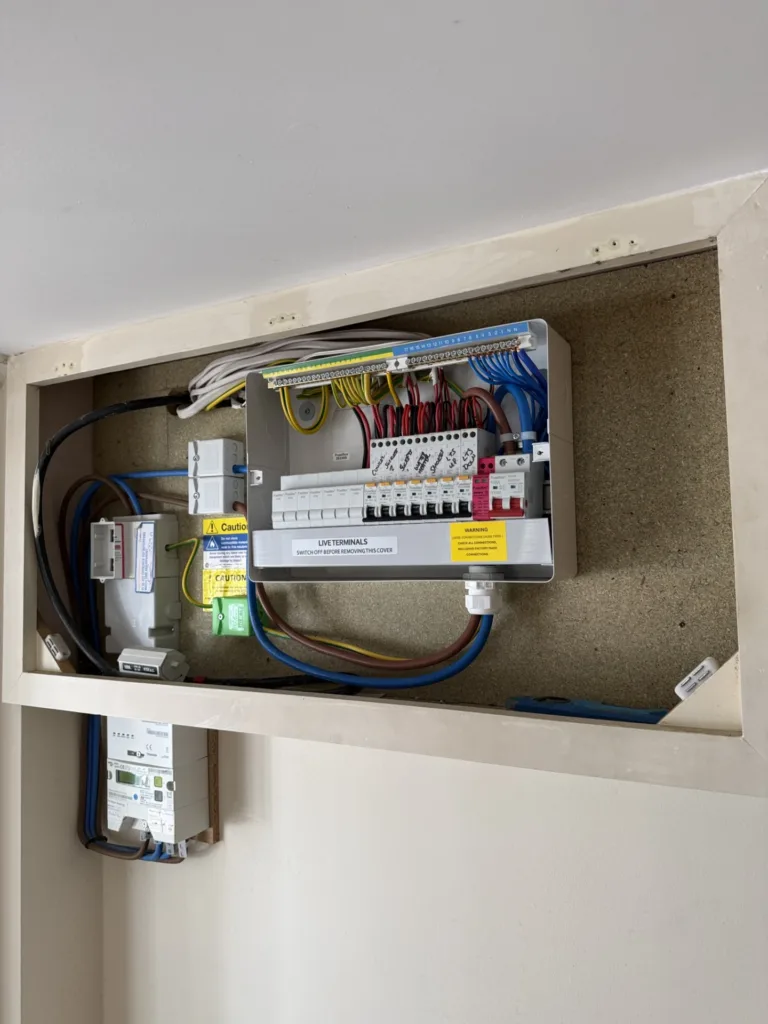
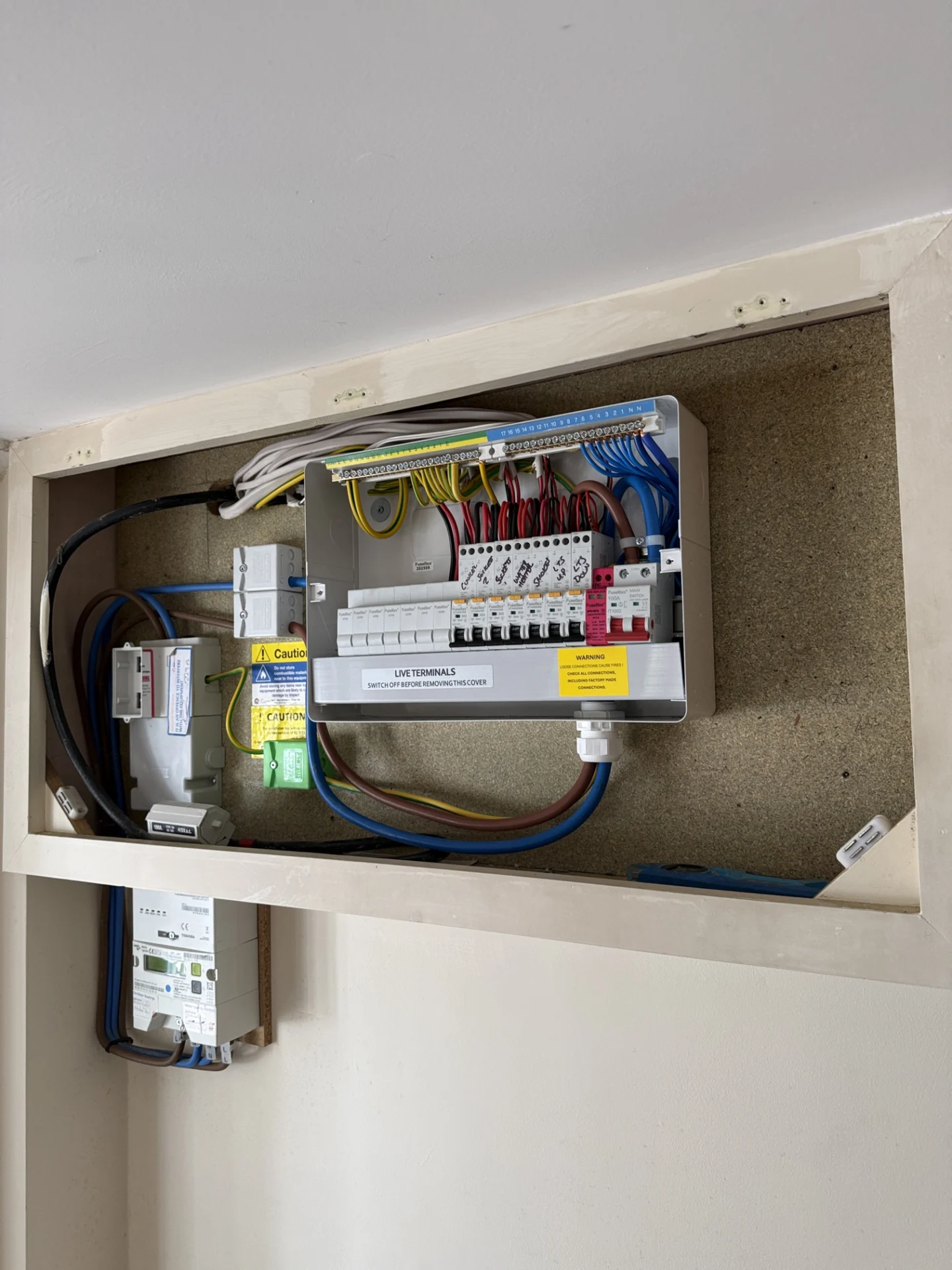
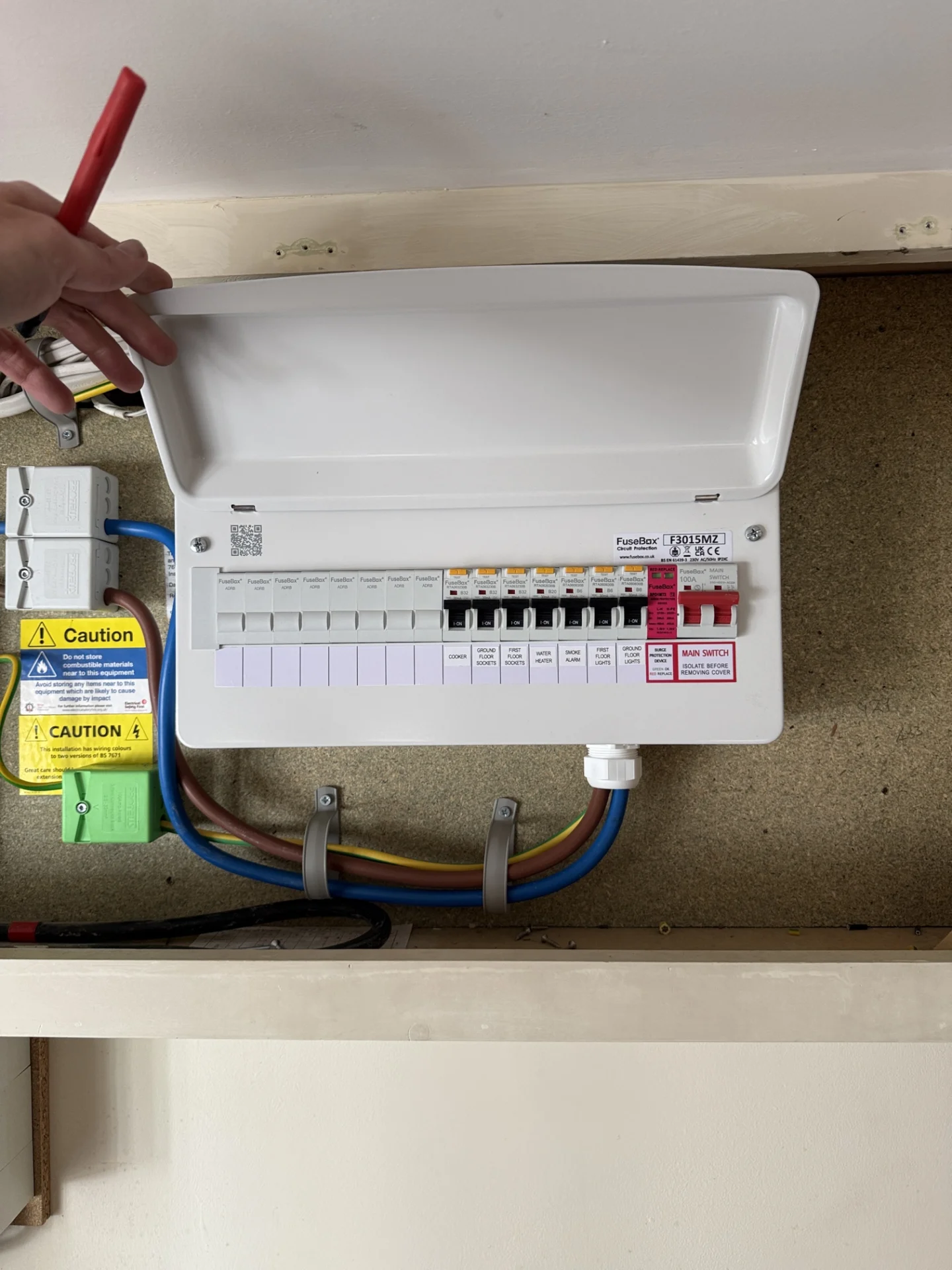
The existing consumer unit was no longer fit for purpose. It couldn’t meet the protection requirements now expected on a domestic installation, and with the remedial works already identified, attempting to patch around an outdated board made little sense. A full replacement was the right approach, and in came a new 15-way RCBO consumer unit with an integrated surge protection device.
The difference between an RCBO-protected board and older consumer unit designs is worth understanding. Older boards typically used one or two shared RCDs to protect multiple circuits grouped together on each side of the board. When a fault trips the RCD, every circuit on that side loses supply at the same time – so a fault on the downstairs sockets can just as easily knock off the upstairs lighting, the fridge, or anything else sharing that RCD. It’s an arrangement that causes unnecessary disruption and can also make fault-finding harder, because the trip doesn’t tell you which specific circuit is the problem.
With an RCBO board, each circuit has its own individual device that handles both overcurrent and residual current protection independently. A fault on one circuit trips that circuit’s RCBO and nothing else – the rest of the installation carries on as normal. It’s a considerably more practical setup for day-to-day living, and it reflects the current standard for domestic installations rather than the approach that was common two or three decades ago.
The integrated surge protection device is a separate but equally relevant part of the installation. Modern homes carry a far greater density of connected electronics than properties wired even fifteen years ago – entertainment systems, computing equipment, smart home devices, and increasingly EV chargers and inverter-based equipment, all of which sit on the mains supply. The supply itself isn’t always clean; voltage transients can arrive through the grid from switching events, faults elsewhere on the network, or nearby lightning activity. Without a surge protection device installed, those transients have an unobstructed path to every circuit in the property. The SPD intercepts and diverts that energy before it reaches the installation’s circuits, which makes a meaningful difference when there’s a significant amount of sensitive electronics throughout the building.
Alongside the consumer unit work, the incoming meter tails were upgraded to 25mm double insulated cabling. The tails are the cables connecting the electricity meter to the consumer unit, and they carry the full incoming load. Undersized tails are a common finding on older properties – installations that were originally wired to the standards of their time, but which don’t meet the current specification or the demands of a modern domestic load. Correctly sized tails are a basic requirement of the installation, and upgrading them was a necessary part of getting the overall setup right.
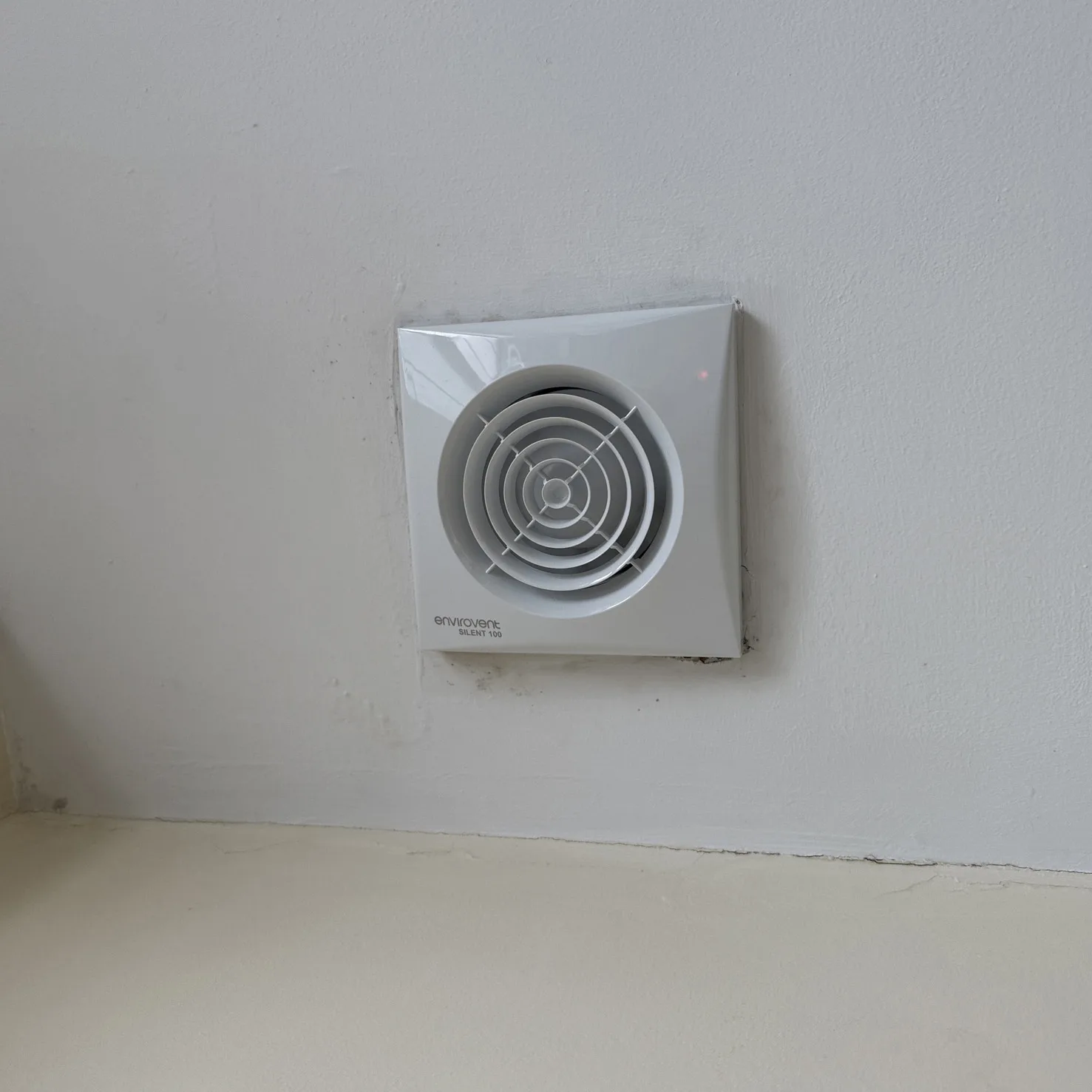
The en-suite extractor fan replacement was the other element of the job. The existing ceiling-mounted unit had become unserviceable – a straightforward but important piece of work. A new low-noise Silent 100 unit was installed in its place, the type designed to run quietly on a timer basis, well suited to a bathroom environment where ventilation needs to happen reliably without being a noticeable intrusion. The fan was wired in as part of the replacement.
Once everything was complete, the job was closed with the production of a satisfactory EICR. Visual inspections and electrical testing were carried out across the installation to verify that the faults identified in the original report had been properly rectified. The satisfactory certificate confirms the installation now meets the required standard, and gives a clear, documented record of the work completed and the condition of the installation going forward.