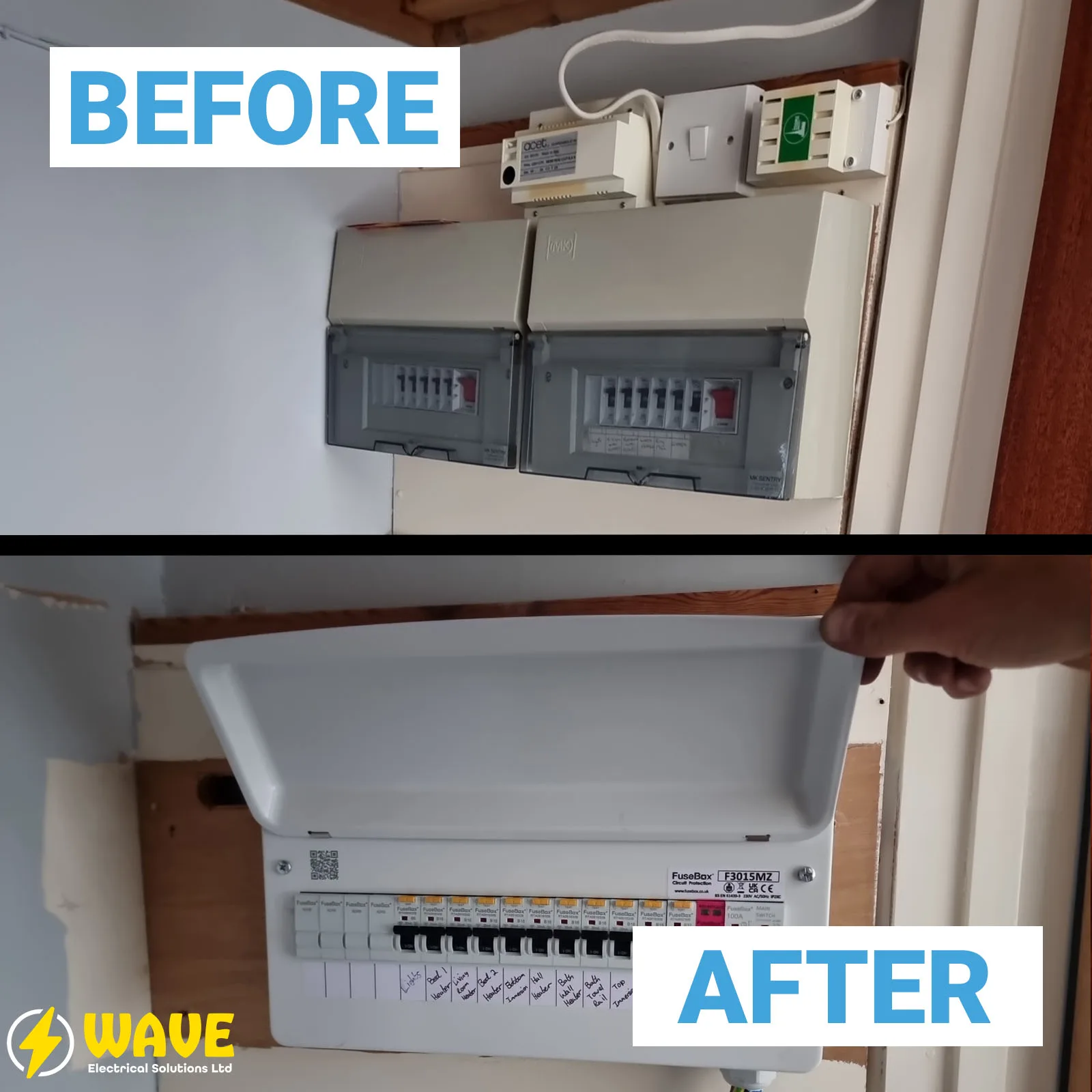
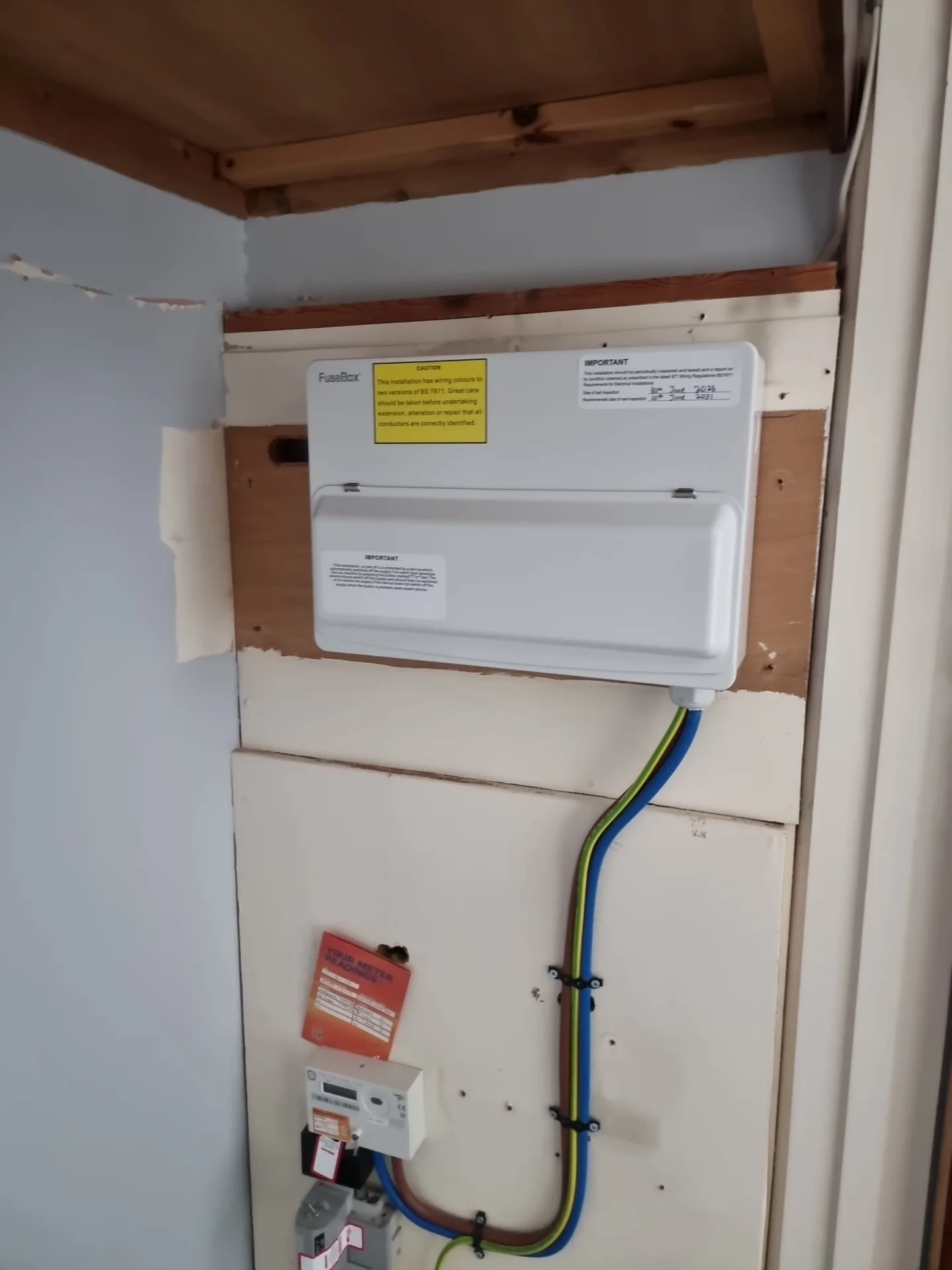
Split consumer unit setups are more common than you might think, particularly in properties that were wired during the Economy 7 era. The arrangement made sense at the time – a separate board handled the overnight storage heating circuits that ran on the cheaper rate, while the main board covered everything else. But when Economy 7 is no longer in use and there’s no storage heating in the property, you’re left carrying redundant circuits across two separate units for no practical benefit.
That’s exactly what this Newquay property had. Two consumer units, circuits spread across both, and a handful of Economy 7 circuits that had long since stopped serving any purpose. Before any upgrade work started, a full Electrical Installation Condition Report was carried out across all circuits to establish the condition of the existing installation and identify what was needed going forward.
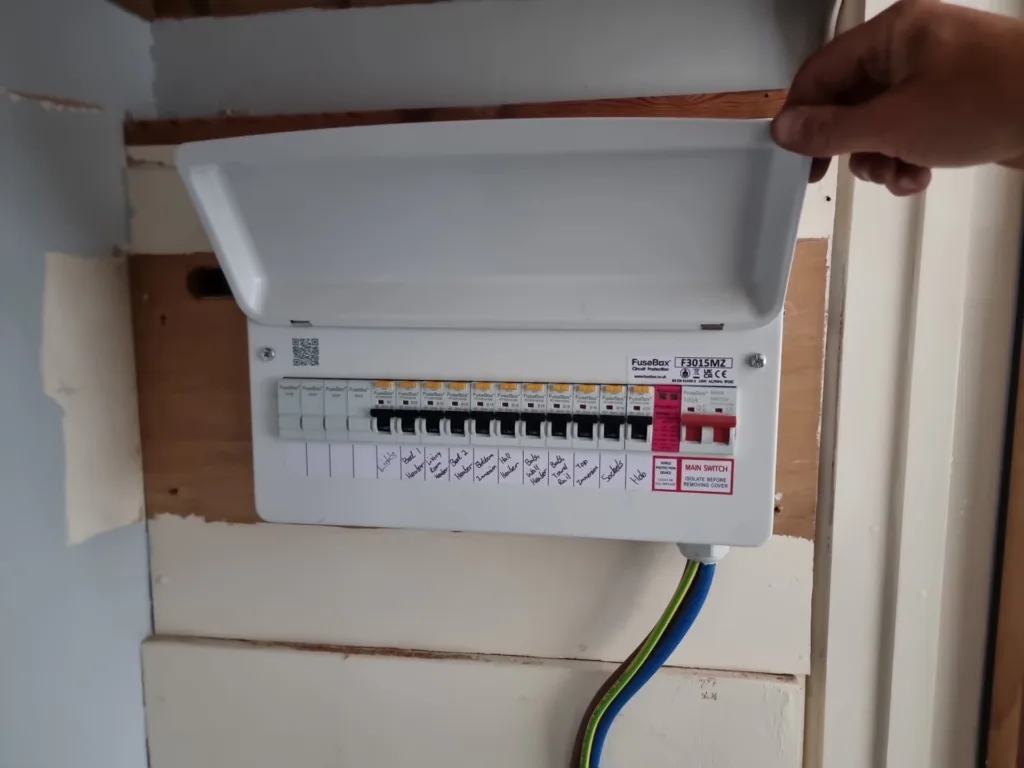
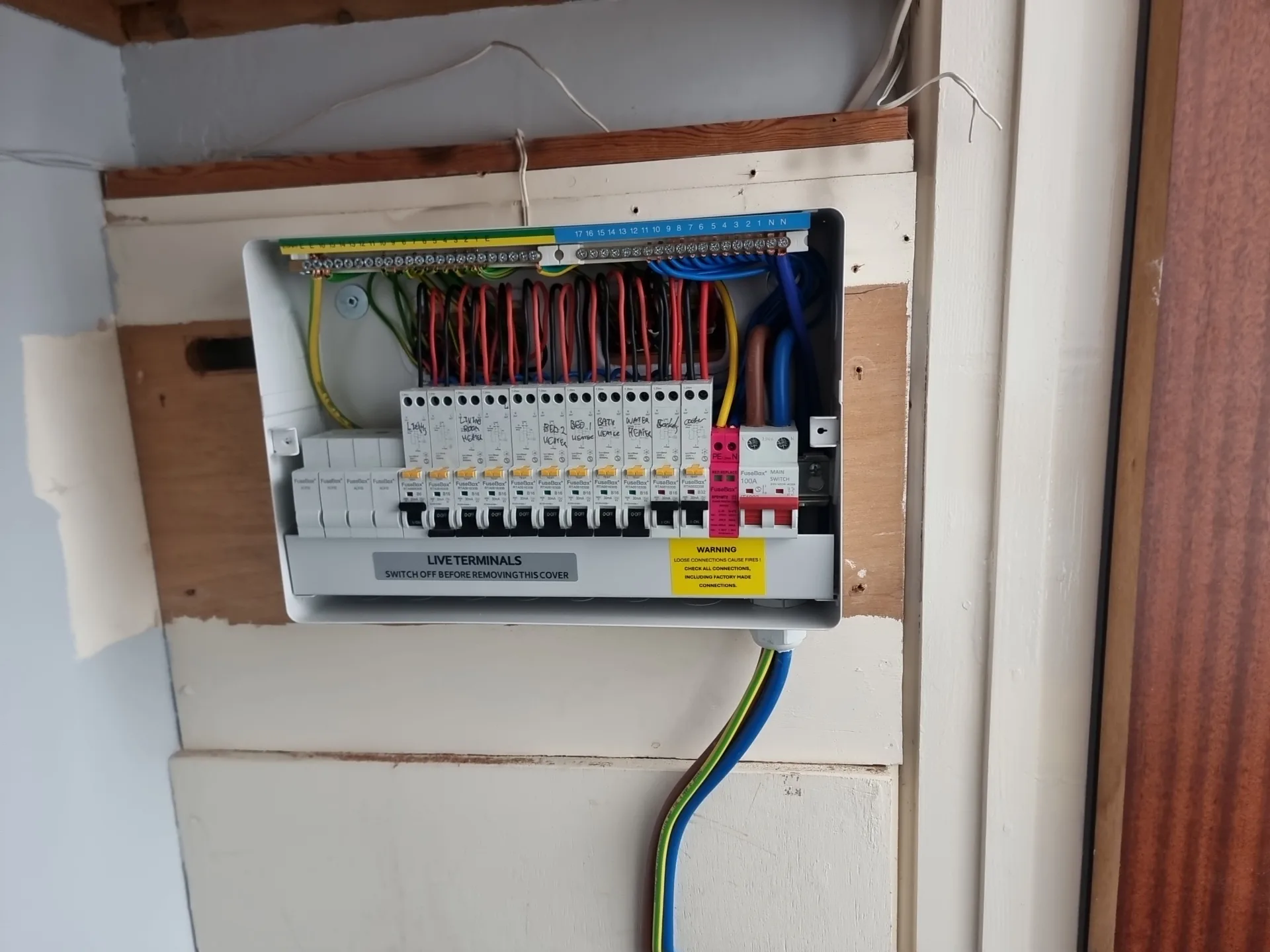
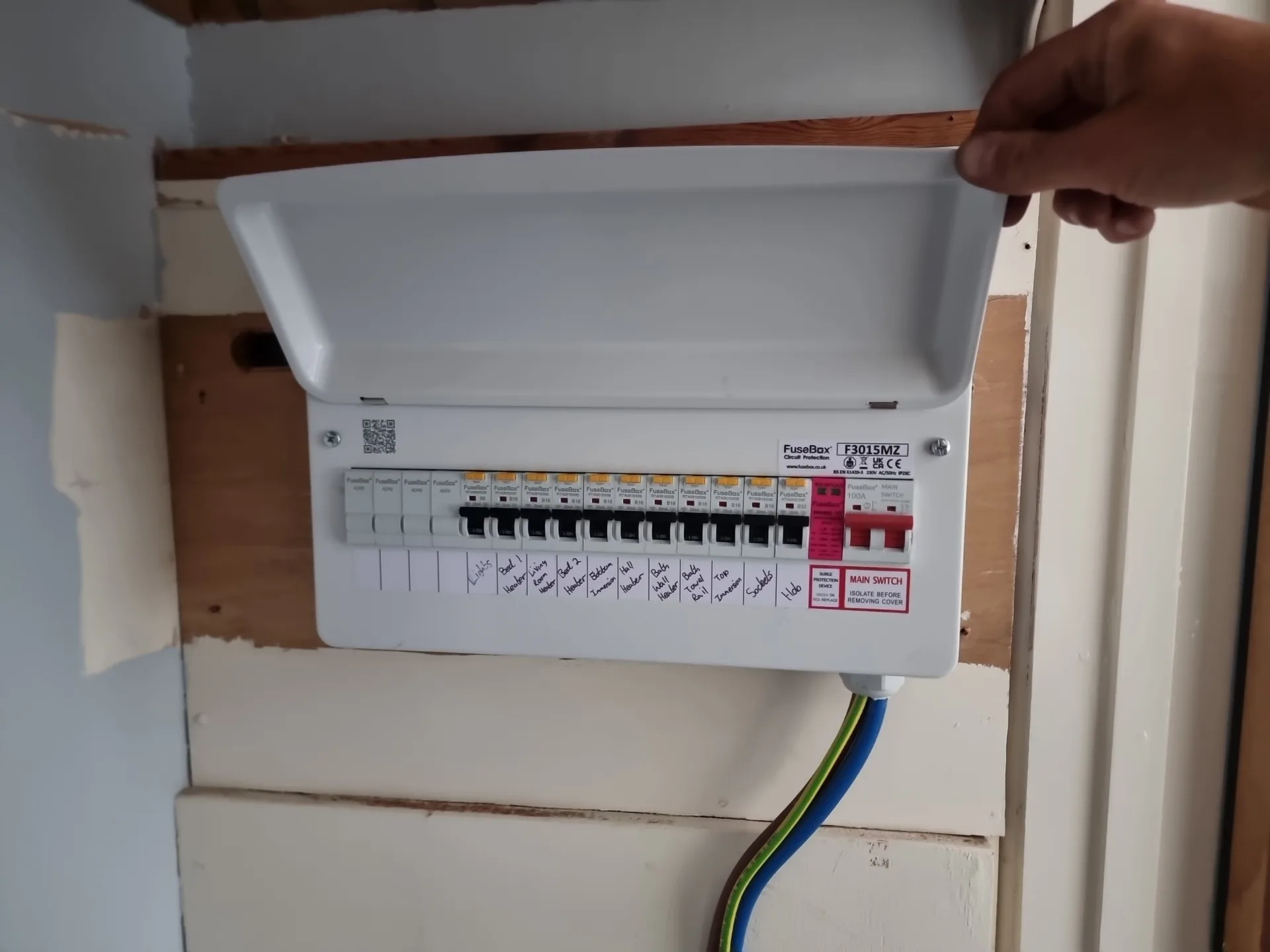
With the EICR complete, the consumer unit works followed. Both existing units were removed and all circuits – including the redundant Economy 7 ones – were consolidated into a single fire-rated 15-way RCBO consumer unit with integrated surge protection. The new board also came with upgraded incoming meter tails, replaced with 25mm double-insulated cabling to handle the demands of the consolidated installation properly.
The move to an all-RCBO board is worth explaining briefly. Older consumer units typically used one or two RCDs to provide residual current protection across groups of circuits. The problem with that arrangement is that a fault on any one circuit in a group will take everything else in that group down with it – lose lighting and sockets on the same RCD, and you might find yourself in the dark without an obvious reason why. An RCBO combines both residual current and overcurrent protection in a single device for each individual circuit. A fault trips only the circuit it’s on, leaving everything else unaffected. For day-to-day living it’s a meaningful difference, and it makes fault-finding considerably more straightforward.
The integrated surge protection device handles something that tends to get overlooked. Voltage spikes and surges from the grid – often caused by switching operations on the network or nearby lightning strikes – can cause damage to sensitive electronics over time, and occasionally in a single event. With more households running smart TVs, computers, gaming consoles, and various connected devices, the case for having surge protection built into the consumer unit is stronger than it was a decade ago.
The new installation was built to comply fully with the 18th Edition wiring regulations. All altered circuits were tested on completion and an Electrical Installation Certificate produced, along with the required Building Control Notification of Electrical Works. The EICR carried out at the start of the project, combined with the EIC on completion, means the property’s electrical installation is properly documented and the work is fully traceable.
Consumer unit replacements often get treated as a straightforward swap, but a job like this – where there’s consolidation involved, redundant circuits to deal with, and infrastructure upgrades like the meter tails – needs to be planned and carried out properly to get a clean result. Cutting corners at the board tends to show up somewhere down the line, either in nuisance tripping, certification problems, or work that doesn’t hold up to scrutiny. Getting it right from the outset, with the inspection at the start and the certificate at the end, is how it should be done.