EICR remedial works are one of those sides of electrical work that don’t always get much attention, but they carry real weight when it comes to electrical safety. When a property in Bodmin received its Electrical Installation Condition Report, two observations came back requiring remedial works before the installation could be assessed as satisfactory. From that point, the scope was clear – get the works done, get them done right, and produce the documentation to back it up.
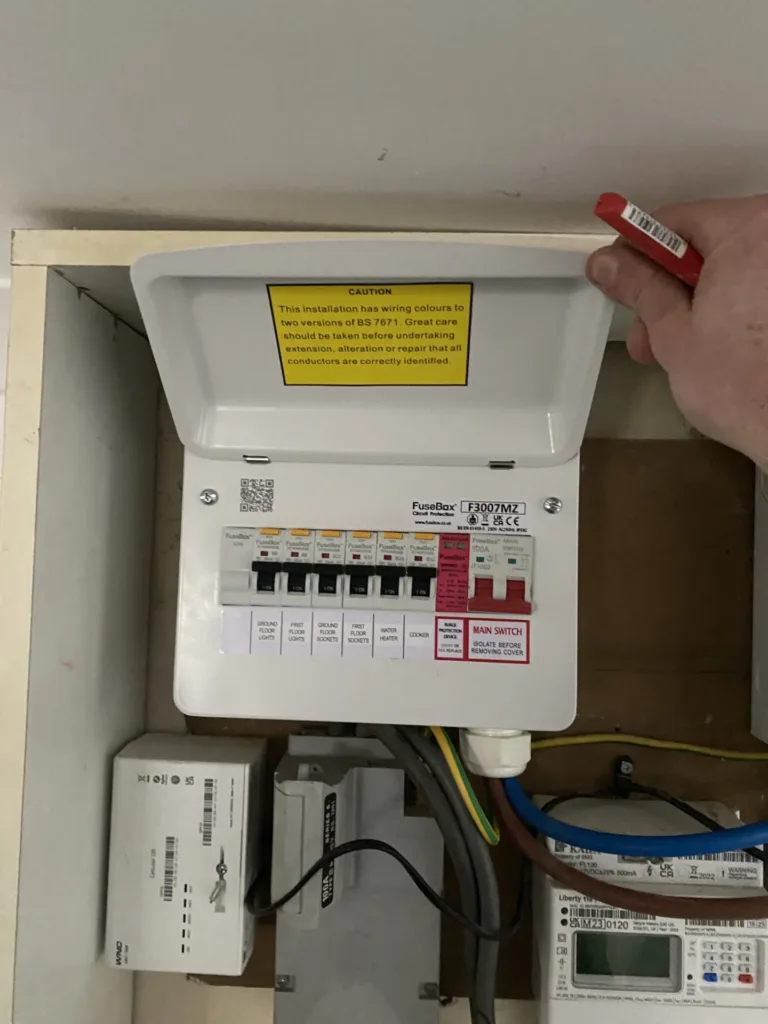
The principal work was replacing the existing consumer unit with a modern 7-way RCBO consumer unit incorporating an integrated Surge Protection Device. Alongside that, the incoming meter tails were upgraded to 25mm double insulated cabling. Both items addressed observations from the original EICR and were required to bring the installation into line with the 18th Edition of the IET Wiring Regulations – the standard that governs fixed electrical installations across the UK.
Consumer unit replacement tends to be one of the more involved remedial works, even on a relatively straightforward domestic installation. The existing board had reached the point where it simply couldn’t meet current requirements, and swapping it out for an RCBO-based unit represents a meaningful shift in how the installation handles electrical faults. Older consumer units typically rely on one or two RCDs covering multiple circuits, combined with individual MCBs for overcurrent protection. If the RCD trips, it can take out several circuits at once – lights, sockets, the lot. An RCBO unit combines both protective functions into a single device per circuit, so a fault on one circuit trips only that circuit. The rest of the installation carries on as normal. For the people living in the property, that’s a tangible practical improvement.
The integrated Surge Protection Device is a separate consideration but an equally relevant one. Voltage fluctuations and surges from the grid are more common than most people realise, and without protection in place, those events can cause gradual damage to connected electronics and appliances. An SPD fitted within the consumer unit intercepts surges before they travel through the circuits, protecting everything downstream. Under the 18th Edition wiring regulations, SPD provision now requires assessment and justification on all installations – so it formed a natural part of the scope here rather than an optional add-on.
Upgrading the incoming meter tails to 25mm double insulated cabling addressed the second observation from the original report. The meter tails are the cables that run between the electricity meter and the consumer unit, and they’re an often-overlooked part of an installation’s incoming supply arrangement. Where existing tails don’t meet current requirements, upgrading them as part of a consumer unit replacement is standard practice – it removes a known deficiency and brings the whole incoming supply up to a consistent standard.
With the new consumer unit in place and the meter tails upgraded, electrical testing was carried out across all altered circuits. This is a requirement following any modification to circuits or the installation of a new consumer unit. The testing produces the data needed to complete the Electrical Installation Certificate, which formally records that the work has been inspected, tested, and meets the required standard. The EIC also supports the submission of a Building Control Notification of Electrical Works under Part P of the Building Regulations – a legal requirement for notifiable electrical work in England and Wales.
The final stage was a verification EICR. This is a separate inspection and test from the original report, and its purpose is specific: to revisit each observation that was flagged, carry out the visual inspections and electrical testing needed to verify that the works have been properly completed, and confirm whether the installation can now be assessed as satisfactory. At this Bodmin property, the outcome was a satisfactory EICR – confirming that both observations had been fully rectified and the installation meets current standards.
There’s sometimes a question around why a verification EICR is needed as a separate document rather than just ticking off the remedial works against the original report. The answer is straightforward – an EICR is a snapshot of the installation at a specific point in time, and it can only be satisfactory or unsatisfactory based on what was found during that inspection. Once remedial works are carried out, a new inspection is required to produce a new condition report reflecting the current state of the installation. That document is what carries weight for insurance purposes, for landlord compliance, and for any future property transaction. It’s the confirmation that the work wasn’t just done, but done to the required standard.
EICR remedials in Bodmin – or anywhere else – follow the same principle. The original report identifies what needs attention, the remedial works address those observations, and the verification EICR closes the loop. Getting all three stages right matters, because the documentation is only as good as the work behind it.