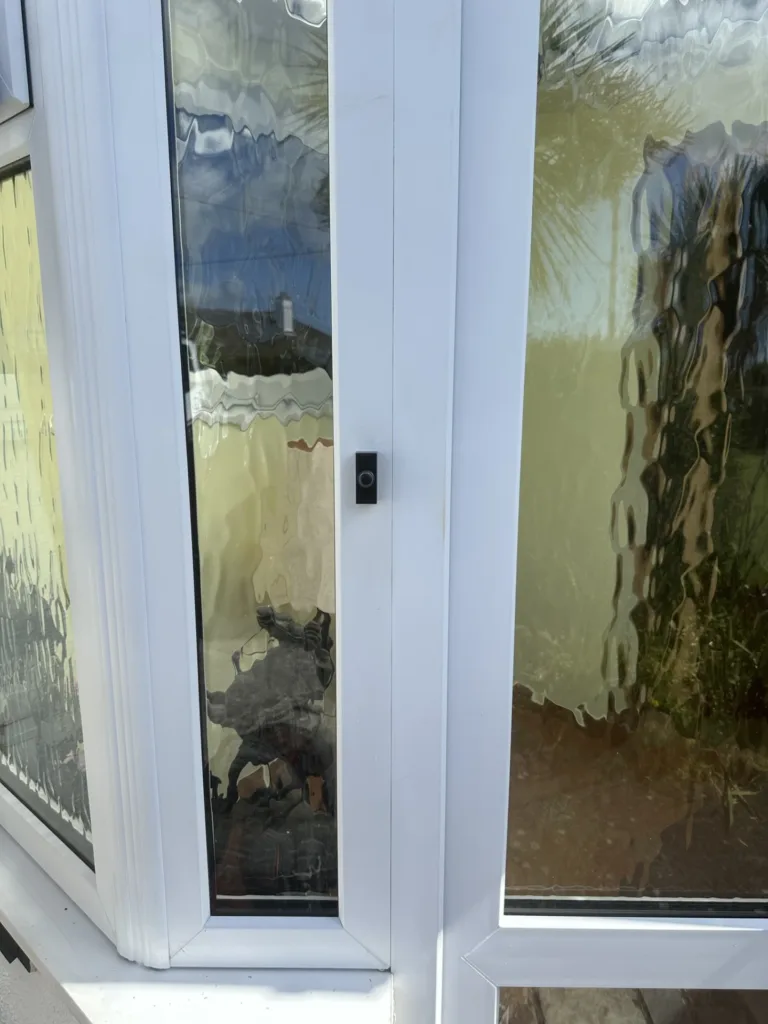
Doorbell faults don’t always announce themselves dramatically. More often, it’s a slow decline – the chime gets quieter, the button stops responding reliably, or the whole thing just goes silent one day and stays that way. When a homeowner in Coverack got in touch about exactly this kind of issue, the fix turned out to be a straightforward replacement of the push-button, chime unit, and the integrated transformer that powers the whole setup.
Traditional wired doorbells like this run off a low-voltage transformer that steps the mains supply down to a safe level for the doorbell circuit. Over time, transformers can fail, and when one goes, it tends to take the rest of the system with it – or at least make it impossible to know what else might be affected. Rather than patch around the problem, replacing the whole lot in one go is the cleaner, more reliable approach.
The existing wiring was still sound, so the new components were terminated directly into it. That means no chasing, no replastering, and no unnecessary disruption to the property – just a clean swap that left everything working as it should. The chime unit was positioned to make the most of the existing cable runs, keeping the job tidy and the finish neat.
For properties in coastal areas like Coverack, wired doorbells often hold up better over time than battery-operated alternatives where the elements can get to the components. A properly installed wired system, with everything terminated correctly and protected from ingress where needed, tends to give far less trouble in the long run.
If your doorbell has stopped working, or it’s been unreliable for a while, it’s worth getting it looked at properly rather than assuming it’s just the button. The fault can sit anywhere in the circuit – the transformer, the chime unit, the wiring connections, or the button itself – and tracking it down correctly saves time and avoids replacing parts that didn’t actually need replacing.