Moving an EV charger from one position to another might not sound particularly involved, but it requires more thought than it first appears. The supply needs extending, the cable route needs planning – especially on a property where the exterior is as much a feature as the building itself – and the unit has to be re-commissioned in its new location before it’ll operate correctly. Getting all of that right is what makes the difference between a job that looks tidy and one that clearly doesn’t.
The property in Liskeard is a traditional stone building, the kind that’s been standing long enough to have real presence. The existing Easee charger was installed and working in its original position, but the location wasn’t ideal for the parking layout, and it needed moving to the adjacent face of the building. The requirement was straightforward in principle: extend the supply cleanly, route the cabling as unobtrusively as possible against the stonework, and get the unit re-commissioned and tested once it was positioned correctly.
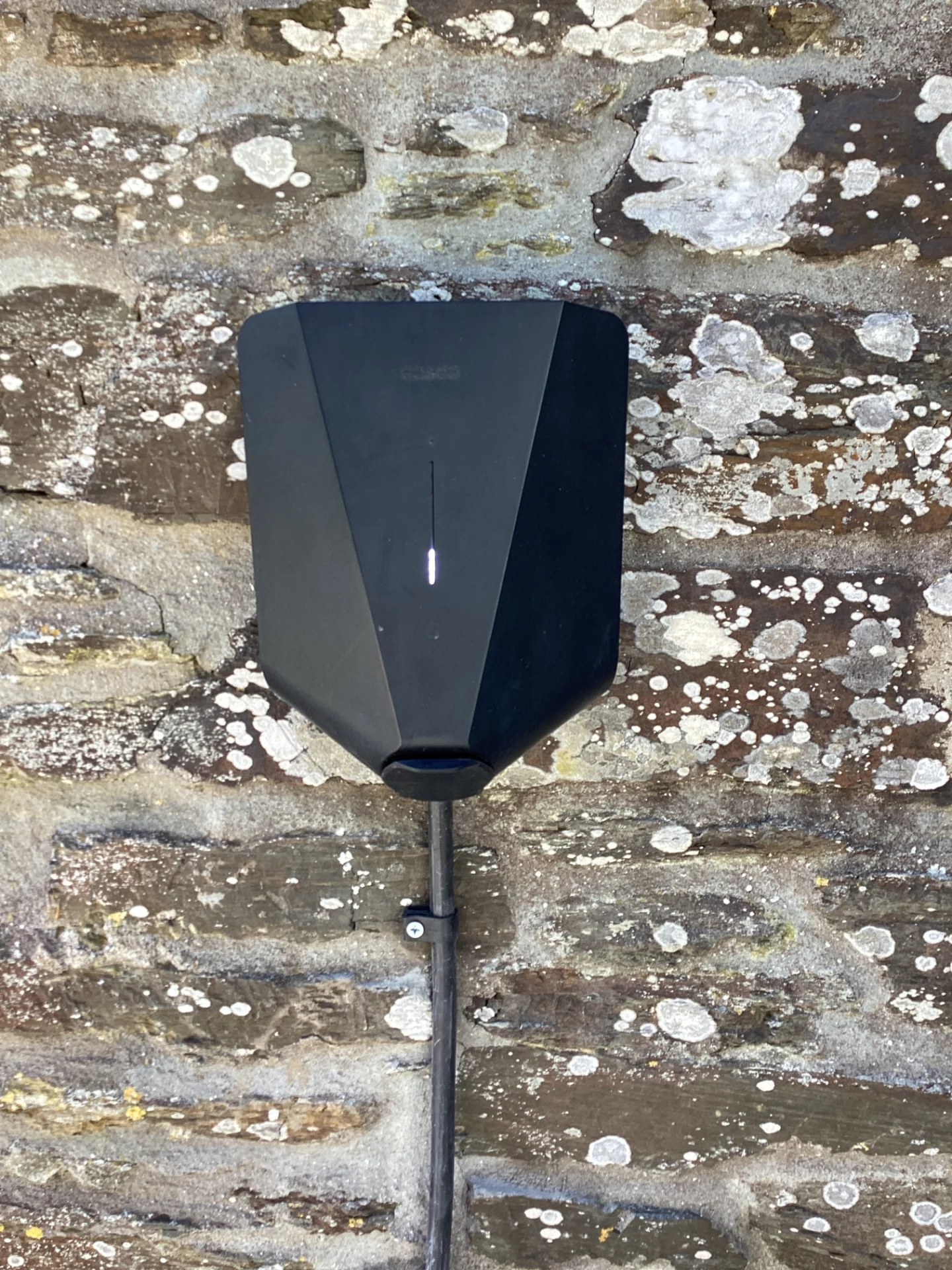
Easee chargers suit period and character properties reasonably well. The unit is compact, with an angular casing that sits against a wall without making itself the centre of attention. The design sits somewhere between functional and considered – not overly styled, but not the kind of equipment that looks like it’s been mounted as an afterthought. That distinction shows more on a stone exterior than it might on a rendered or clad surface, where the contrast between old fabric and modern equipment is more pronounced.
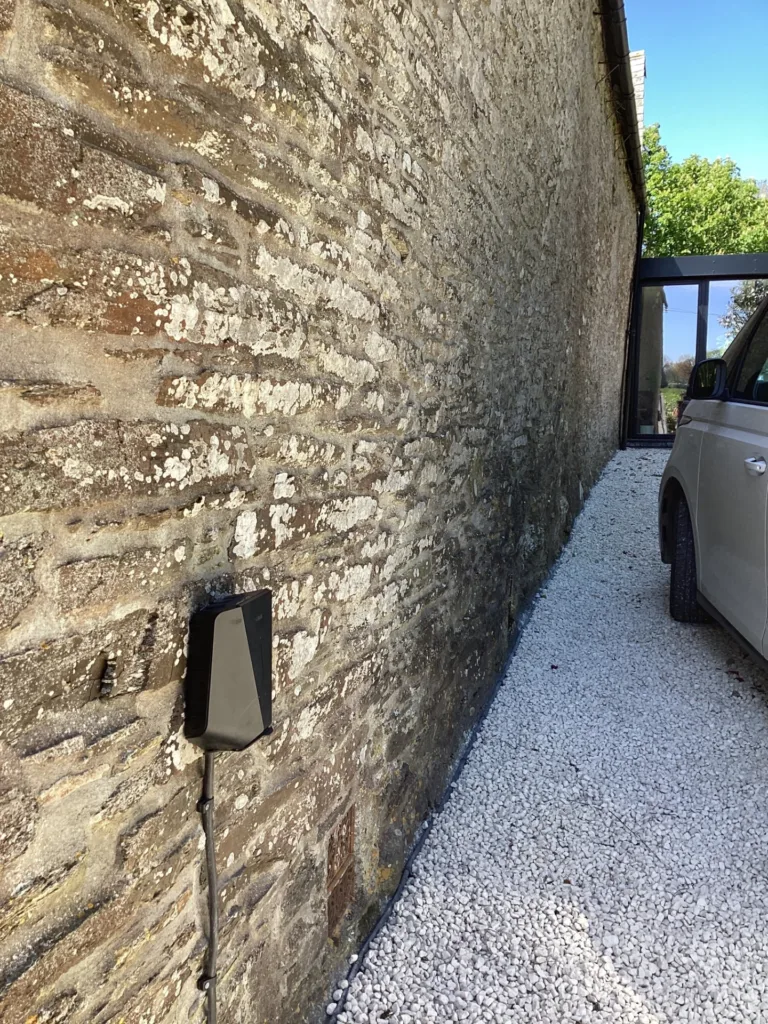
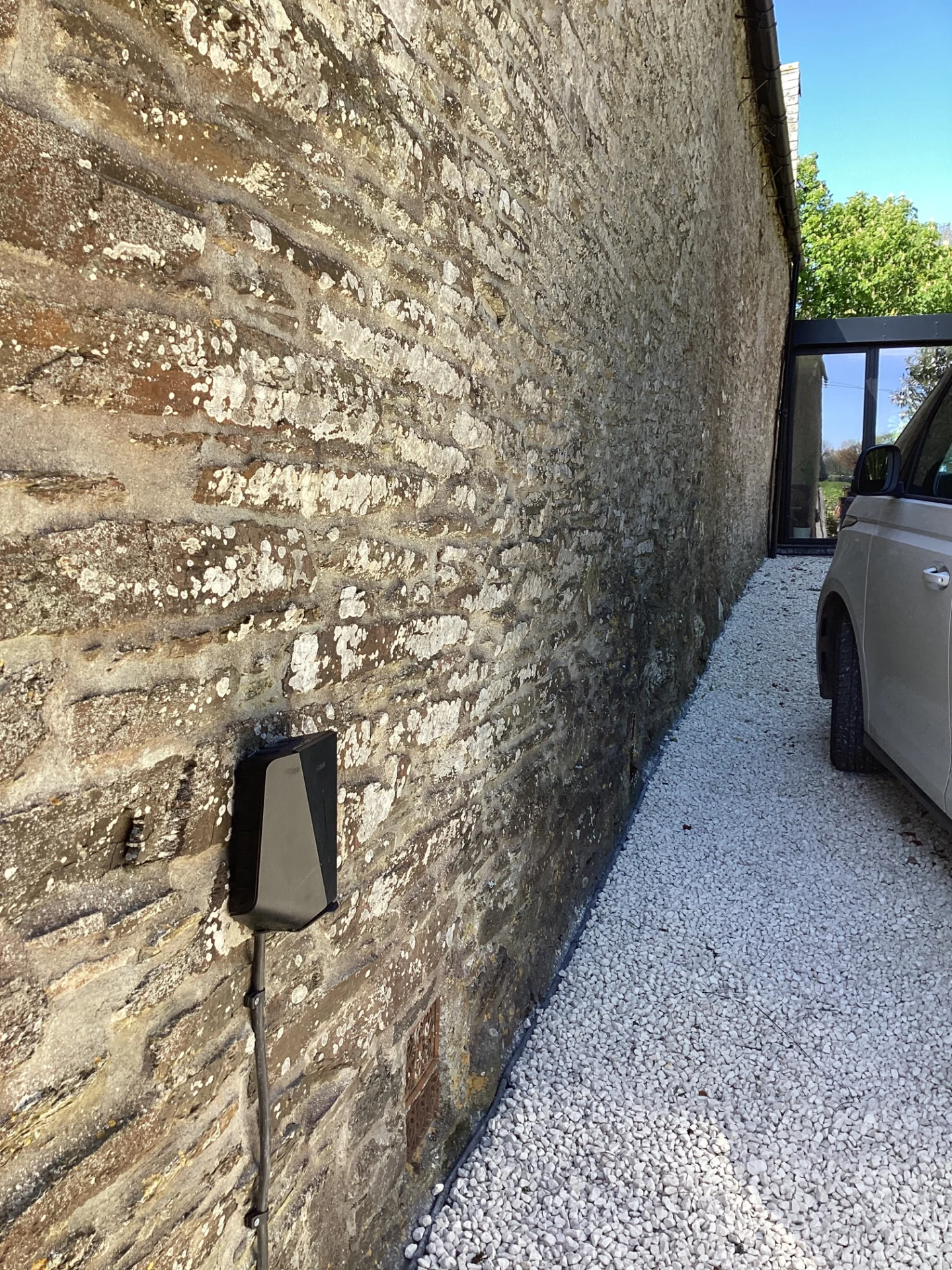
Extending the supply began at the existing junction housing. The infrastructure from the original installation was already in place, which meant running additional cabling from that point out to the new position on the adjacent wall face. The cable was surface-clipped to the exterior at low level, routed along the base of the wall. Running at low level keeps the cable well below natural sightlines from the driveway – it avoids the visual problem of a cable tracking up a prominent section of stonework where it would be immediately obvious.
Stone buildings take a bit more working through when it comes to cable routes. The surface isn’t uniform in the way a rendered wall is, so fixings have to be positioned based on what the masonry will actually support at each point. Keeping the run neat means following the form of the wall rather than imposing a straight line onto it – which would look fine on a flat surface but wrong on character stonework. The cable follows the base of the wall closely, sits out of sight from normal standing height, and the charger itself is positioned cleanly on the adjacent face where the vehicle parks.
Once the physical work was done, the charger needed re-commissioning. Easee units connect to the home’s Wi-Fi network and operate through an app, which handles scheduled charging, load management, and usage monitoring per session. After a relocation, the pairing has to be re-established in the new position and tested to confirm the network connection is stable and the unit is correctly associated with the account. A charger that powers on but isn’t properly paired will give the appearance of working while quietly failing – scheduled charges won’t run, usage data won’t log, and status errors will appear without an obvious cause. The unit was re-paired and tested on-site, with all functions confirmed before the job was finished.
This type of relocation work tends to come up for fairly practical reasons. Parking arrangements change, a second vehicle arrives, or a property changes hands and the new owner finds the charger isn’t in a position that works for them. The Easee handles re-siting cleanly enough – the pairing process is manageable and the compact form of the unit means it can generally go on a different wall face without any significant structural issue. The main variable is the distance between the existing supply point and the new position, and what the cable route across that distance involves in terms of length and fixing method.
For a stone property in particular, the route planning is where most of the visual outcome is determined. A cable that’s been run thoughtfully, at the right level and keeping close to the wall, ends up largely invisible. One that’s been run wherever was quickest tends to stand out. The difference between the two isn’t always a great deal of extra time or effort, but the result looks considerably better – and on a building where the exterior stonework is clearly something the owner values, that matters.