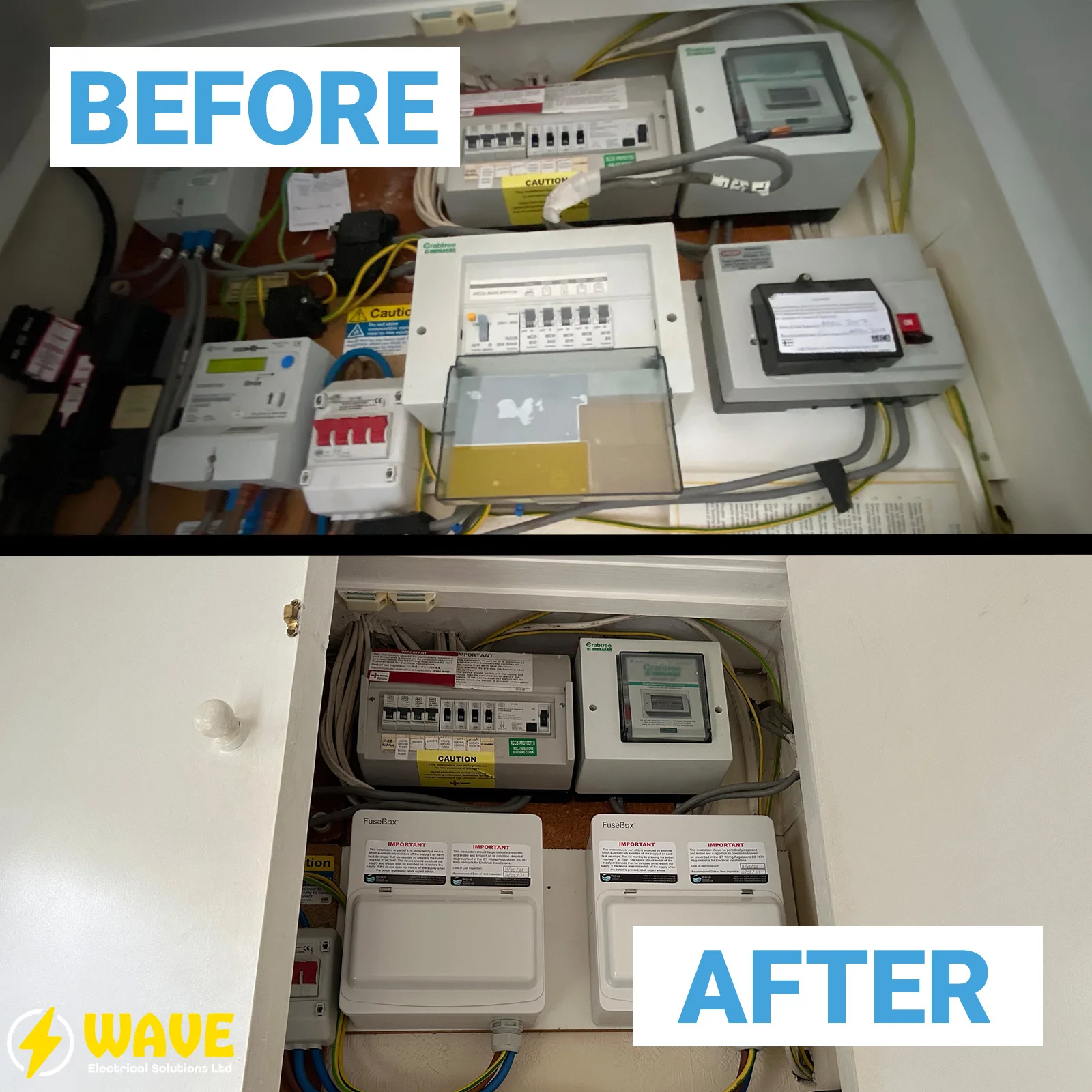
Following an Electrical Installation Condition Report at a residential property in Wadebridge, Wave Electrical Solutions carried out a full programme of remedial works. Two ageing consumer units were replaced with modern RCBO units featuring integrated surge protection, alongside a range of safety-critical repairs including smoke alarm replacement, lighting circuit fault rectification, and the decommissioning of non-compliant bathroom electrical installations.
When an Electrical Installation Condition Report flags a list of observations, the remedial work that follows is where the real difference is made. A property in Wadebridge came to us having had an EICR carried out, and the resulting report identified a number of issues spanning the consumer units, bathroom electrics, smoke alarm circuit, and several lighting faults. The scope of work was broad, covering everything from straightforward socket repairs through to more involved circuit fault investigations – so it made sense to plan the visit carefully and deal with everything in one go.
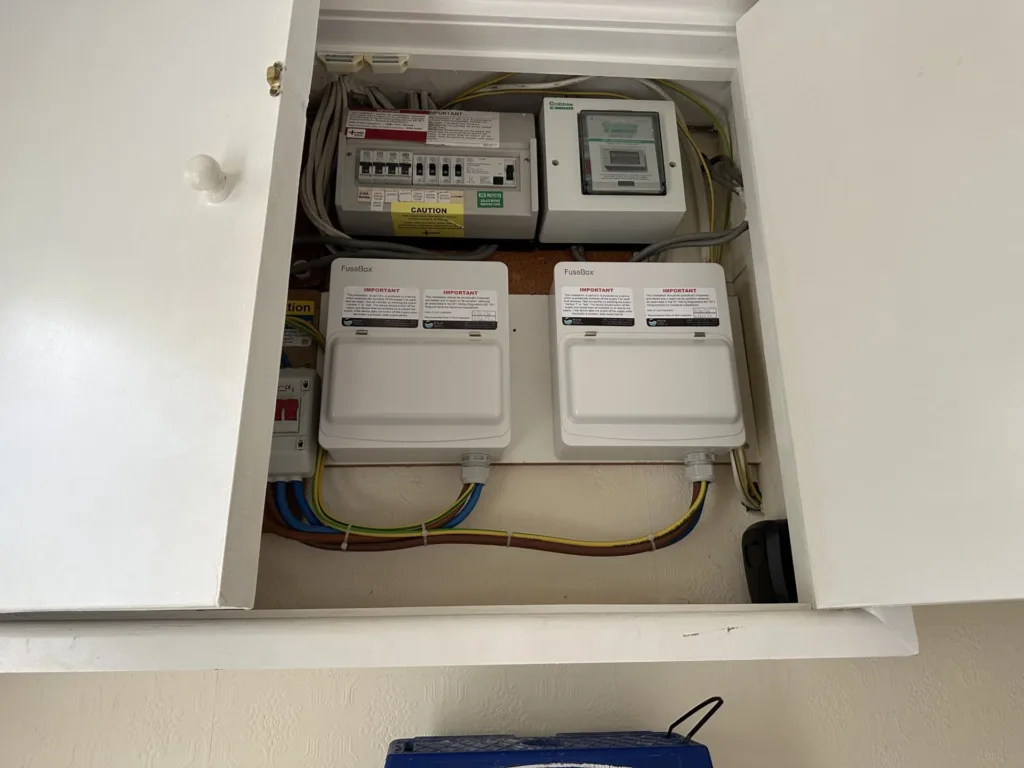
The largest part of the job centred on replacing both consumer units in the property. The existing main distribution board and the separate heating board had both been flagged during the EICR as non-compliant. Neither unit offered the level of protection expected under the current 18th Edition wiring regulations, and both were replaced with new 7-way RCBO consumer units, each fitted with an integrated surge protection device. RCBOs provide individual circuit protection – unlike older RCD-based boards where a single fault can trip multiple circuits at once, each RCBO protects its own circuit independently. The built-in SPD is there to guard connected equipment against voltage spikes and surges coming in from the grid, which is particularly relevant in properties with modern electronics and appliances.
As part of the consumer unit replacements, the incoming meter tails were also upgraded to 25mm double-insulated cabling. Tails are the cables that run between the meter and the consumer unit, and upsizing them to 25mm brings the installation in line with current standards. On completion, full electrical testing was carried out across all altered circuits, with an Electrical Installation Certificate produced and a Building Control notification submitted as required.
Bathroom electrics accounted for a good chunk of the remaining observations. A 1-gang socket outlet within the bathroom was identified as being within 2.5 metres of the bathtub – a clear non-compliance under BS 7671. The socket was permanently disconnected, the cabling was safely terminated, and a blanking plate installed. The feed has been left behind the plate, which keeps options open should a heated towel rail be fitted in the bathroom at a later date – a separate quotation can be provided for that work if required.
The bathroom extractor fan isolator switch was also in the wrong position, sitting too close to the bath to meet the minimum 600mm zone requirement. This was relocated above the window at a compliant height, with all associated cabling routed neatly in 25mm PVC trunking. It’s a small change on the surface, but zone compliance in bathrooms is there for good reason, and getting it right matters.
A 2kW bathroom fan wall heater also needed attention. The unit had been connected to a 6A circuit despite drawing 8A under load – a situation that presents a genuine overload and fire risk. The heater was permanently disconnected and its cabling terminated correctly. The unit itself remains in situ, but it’s no longer live.
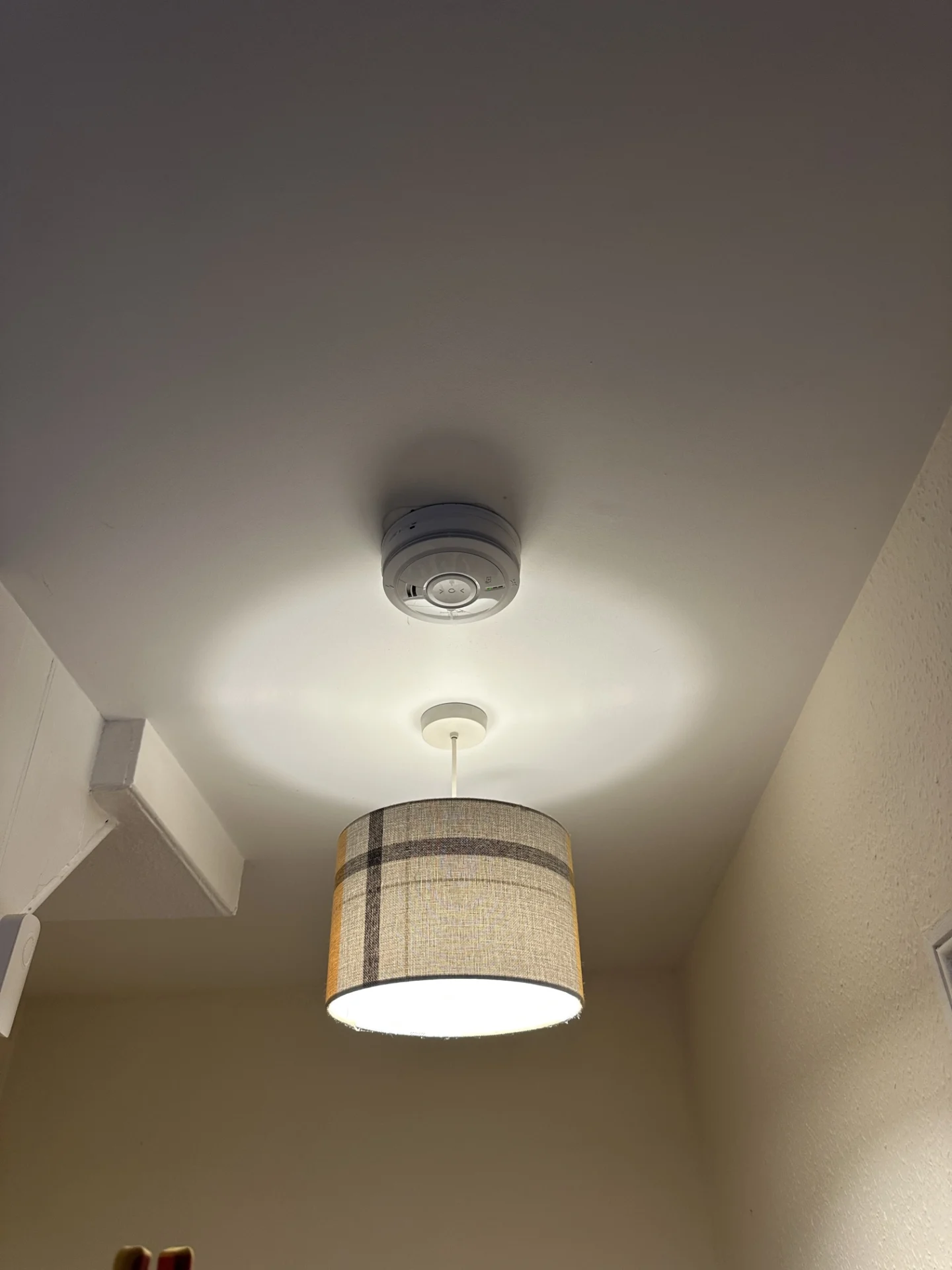
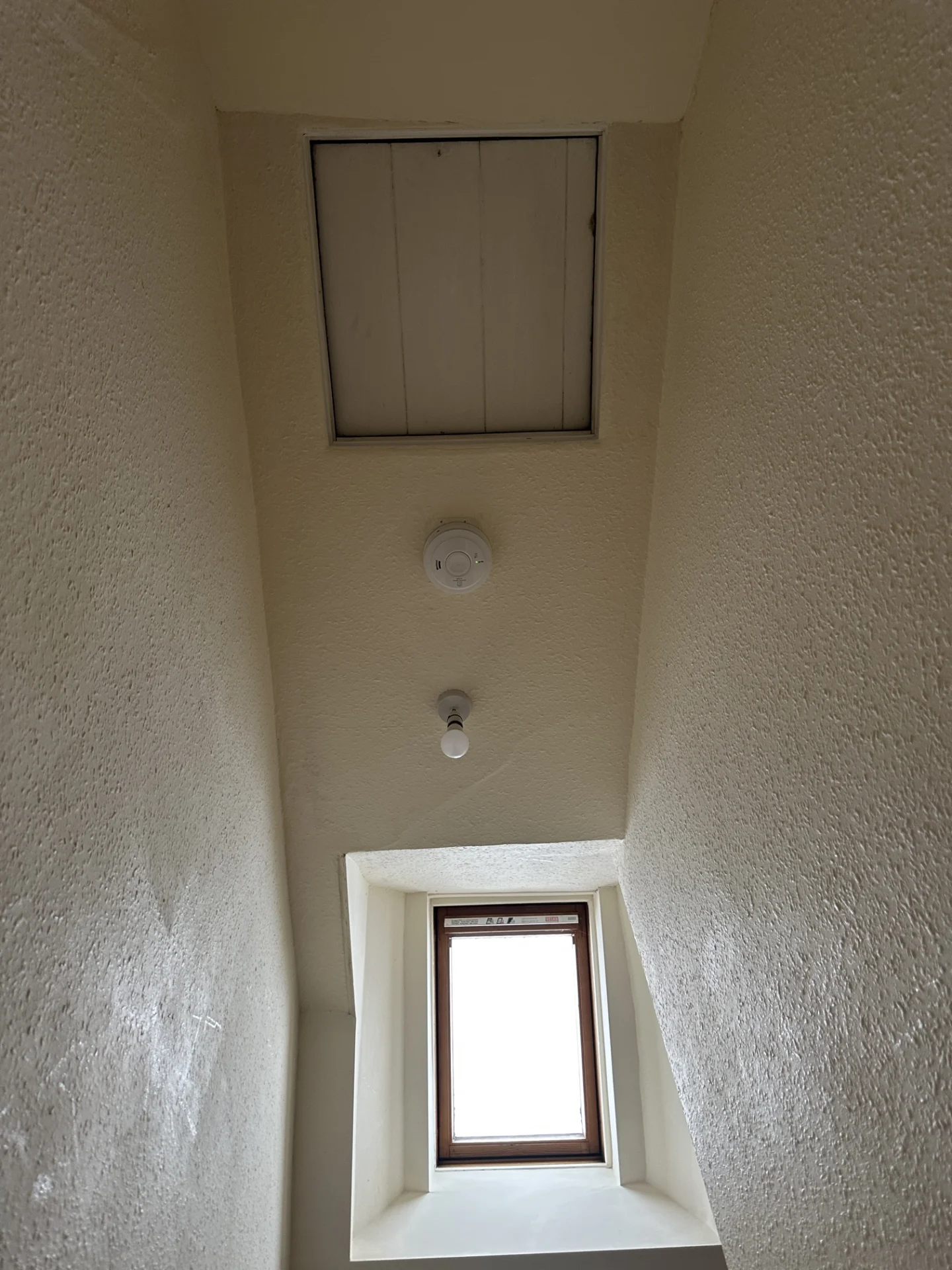
Away from the bathroom, attention turned to the smoke alarm circuit. An earth fault had been identified during the EICR, and tracing and rectifying that kind of fault requires a methodical approach – working back through the circuit to find where the insulation breakdown or wiring error has occurred. The fault was located and repaired, and two smoke alarms on the first and second floor hallway/landing areas were replaced. The old units had reached the end of their service life, and the replacements are 230V mains-powered alarms with auto-charging lithium back-up batteries, so they’ll continue to function even during a power cut.
A high earth loop impedance reading on one of the lighting circuits was another item that needed proper investigation rather than a quick fix. High Zs values mean the earth fault loop path has excessive resistance somewhere, which affects how quickly a protective device will operate under fault conditions. Tracing this kind of fault means working through connections systematically until the culprit is found – in this case a loose or poor connection was identified and rectified, bringing the Zs reading back within the maximum permitted value for the circuit’s protective device.
Several pendant light fittings around the property were also reterminated. During the EICR, exposed basic cable insulation had been found at a number of ceiling roses and lamp holders – a common finding in older properties where the fittings may have been disturbed over the years or originally installed without proper attention to how the cables were dressed. Each fitting was opened up, the cables reterminated correctly, and the insulation confirmed to be fully contained within the enclosure before being reassembled.
Finally, a 1-gang socket behind a bed in the small bedroom was found to have come away from the wall. It was refixed using appropriate fixings and confirmed secure. A minor job on its own, but loose sockets left unaddressed can lead to arcing at the terminals over time, so it’s not something to leave.
Across all of the circuits that were altered or disturbed, full testing was completed and recorded. Everything was tied together into the required Electrical Installation Certificate, with Building Control notified of the work as part of the Part P compliance process. The property left us with two compliant, modern consumer units, a fully operational and correctly protected smoke alarm circuit, and a bathroom stripped of the non-compliant installations that had been flagged in the original report.