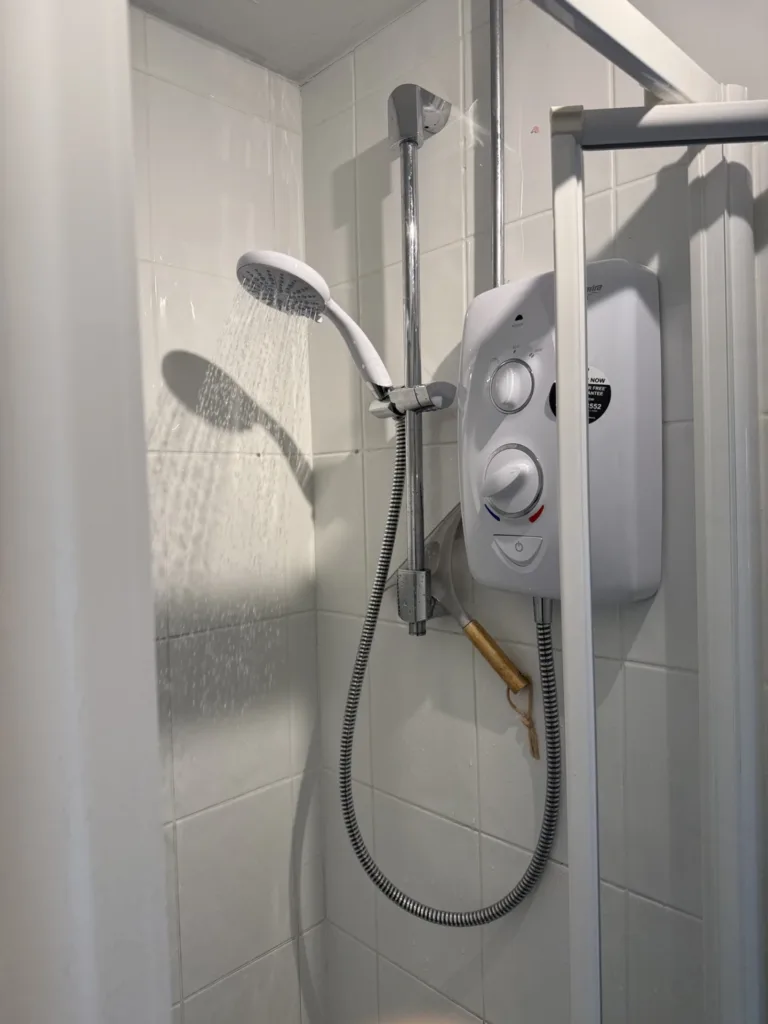
An electric shower cutting out unexpectedly is one of those household problems that tends to catch people off guard. One moment it’s working fine, the next it isn’t – and without knowing what to look for inside the unit, it can feel like the whole shower has given up the ghost. That was the situation this Newquay customer found themselves in when their Mira electric shower stopped functioning altogether. Rather than assuming the worst and replacing the unit, the fault was traced back to the thermal cut out (TCO) – a safety component that had failed and needed swapping out.
The thermal cut out is built into electric showers as a protective measure. Its job is to monitor the temperature within the heating element and cut the power if things start to get too hot, preventing damage to the unit and reducing the risk of overheating. It’s a passive component that most people never think about, but when it fails, the shower stops working. Depending on how the TCO has failed, the symptoms can vary – the shower might trip out mid-use, refuse to switch on at all, or cause the circuit breaker in the consumer unit to trip whenever the shower is turned on.
Testing confirmed the TCO had failed in this instance, which is a recognised failure point across most electric shower brands. The repeated heating and cooling cycles that come with regular daily use cause thermal stress on internal components over time, and eventually they reach the end of their working life. If the rest of the unit is in reasonable condition, a component-level repair like this is a practical option.
The repair process starts with safely isolating the shower circuit at the consumer unit before any work is carried out on the unit itself. Electric showers run on a dedicated high-current circuit, so confirming the power is fully isolated is the starting point before the casing comes off. With the power confirmed off at the unit, the casing is removed to access the internal components. The existing wiring is carefully documented before disconnection, so everything goes back correctly during reassembly.
Once the failed TCO is removed, a replacement is fitted in its place. Mira showers are among the most widely installed electric showers across UK homes, and spare parts for their range are generally straightforward to source. With the new thermal cut out fitted and the unit reassembled, the circuit is re-energised and a full functional test is carried out – checking the heating element responds correctly and that the TCO holds under normal operating conditions.
The shower came back into use working as it should. There’s a tendency to assume that when an appliance stops working, it needs replacing outright – but electrical faults often have a more contained cause than that. A washing machine engineer wouldn’t swap the whole machine for a failed capacitor, and the same principle applies here. Diagnosing down to the specific failed component, rather than defaulting to a full replacement, means a better outcome for the customer.
For homeowners in Newquay dealing with an electric shower that’s stopped working, a fault like this is worth getting properly diagnosed before any replacement decisions are made. A shower refusing to power on, tripping the circuit repeatedly, or cutting out shortly after use can all point to different components within the unit – and some of those are straightforward to repair. A tripping RCD could indicate a failing heating element, a solenoid valve issue, or, as in this case, a thermal cut out that’s reached the end of its life.
Electrical work on a shower circuit should always be carried out by a qualified electrician. Showers are one of the higher-risk areas in a domestic property from an electrical safety standpoint, given the combination of high current demand and proximity to water. Working on the internal components of an electric shower requires the right knowledge and equipment, and depending on what’s involved, the work may need to be notified to building control under Part P of the Building Regulations.
Thermal cut out failures in Mira showers become more common as units age. A shower that trips out shortly after switching on, or that can no longer maintain consistent heat, could well have a failing TCO – and testing that component specifically is the sensible starting point before writing the unit off.