Wave Electrical Solutions carried out a full EICR, consumer unit replacement and a range of electrical improvements at a residential property in Liskeard. Work included new cellar lighting, additional socket outlets, bedside wall lighting, a landing switch relocation and a complete overhaul of the external entrance lighting - replacing a failing, waterlogged setup with a new PIR floodlight.
This was a fairly comprehensive project at a residential property in Liskeard – one of those jobs that started with an inspection and grew into something more involved once the full picture of the installation became clear. That’s not unusual, and it’s exactly why an EICR is such a useful starting point before committing to any significant electrical work on a home.
The process began with an Electrical Installation Condition Report, or EICR, carried out to assess the overall safety and condition of the property’s wiring and circuits. An EICR involves inspecting and testing every circuit within the installation, checking everything from the consumer unit itself down to individual socket and lighting circuits. The resulting report gives homeowners a clear and honest picture of where things stand – what’s in good condition, what needs attention, and what represents a genuine safety concern. For anyone buying, selling, letting or simply wanting peace of mind about their home’s electrics, it’s the natural place to start.
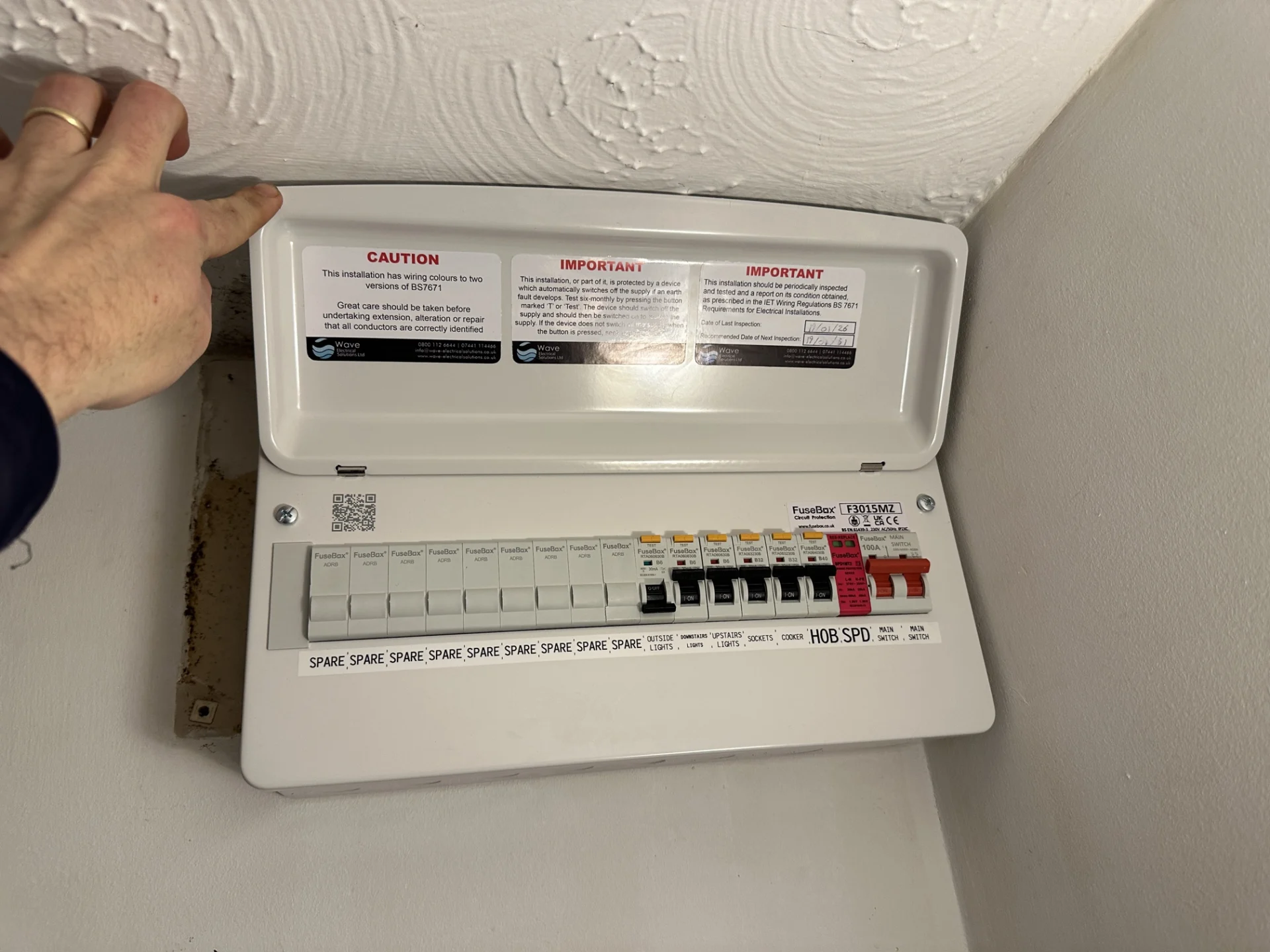
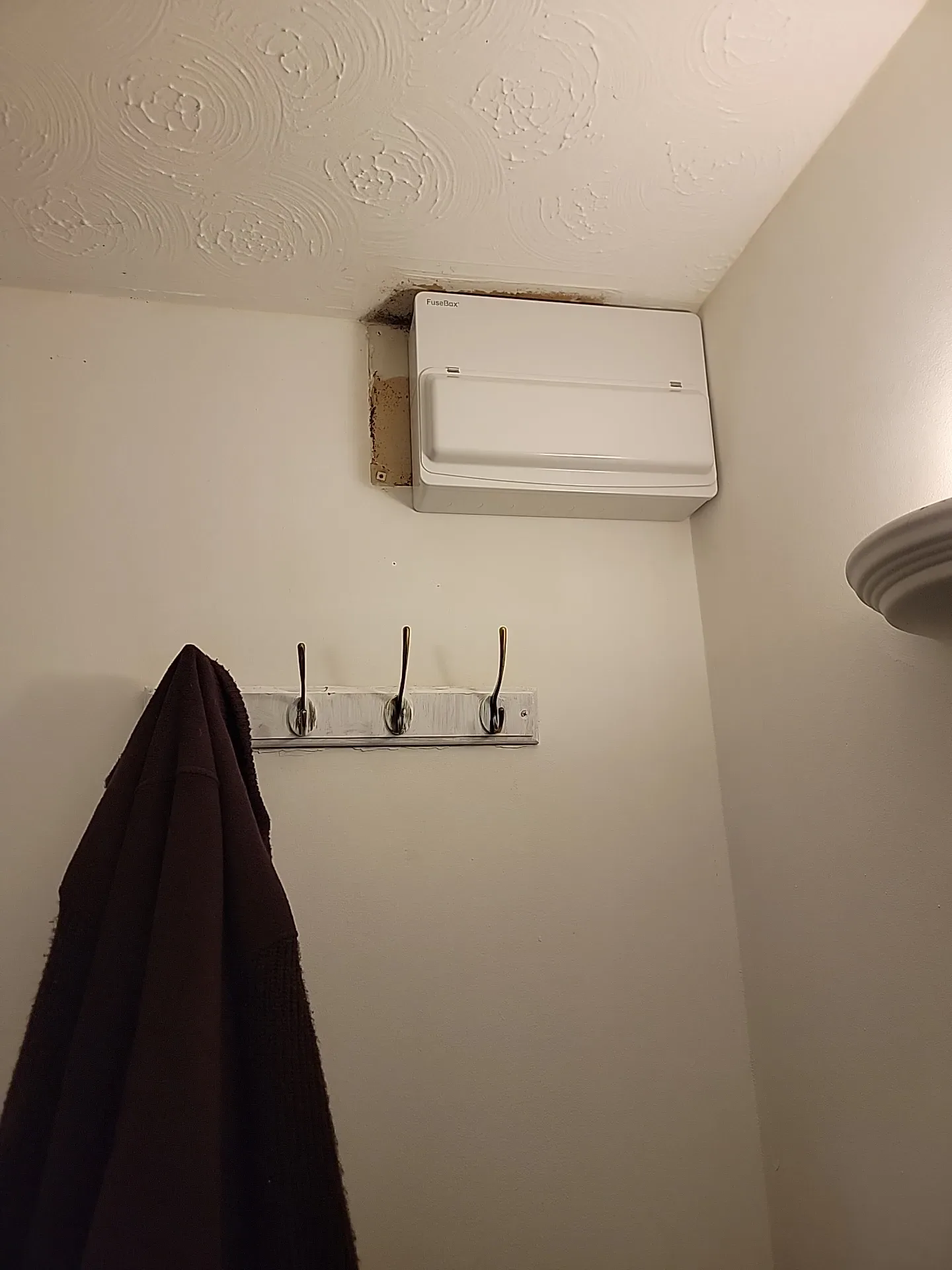
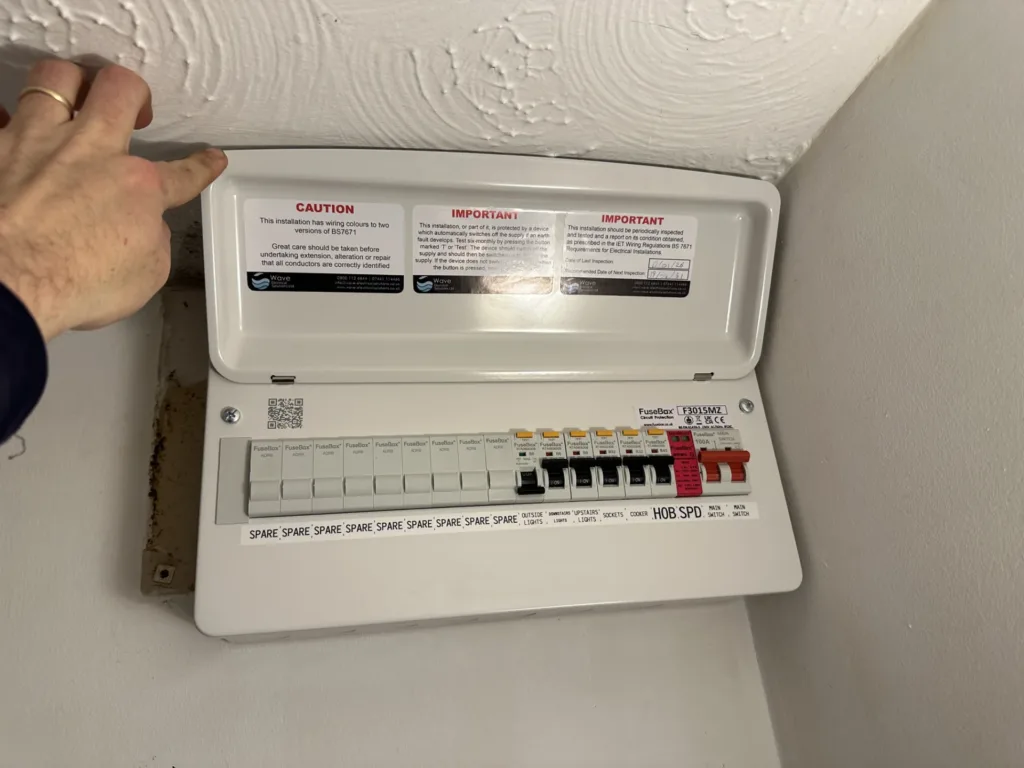
With the inspection complete and the condition of the installation fully understood, the next step was replacing the existing consumer unit. The old board was swapped out for a new 15-way fire-rated RCBO consumer unit, complete with an integrated Surge Protection Device. Each circuit in the new board is protected by its own individual RCBO – that’s a combined RCD and circuit breaker in one device – meaning that if a fault develops on one circuit, only that circuit trips, rather than taking out half the house. It’s a much more practical and safer arrangement than the older RCD setups, and it’s now the expected standard under the 18th Edition of the IET Wiring Regulations.
The SPD – Surge Protection Device – is worth a mention too. Voltage spikes and surges from the grid are more common than people realise, and they can cause real damage to sensitive electronics, from smart TVs to computers and home appliances. Having a built-in SPD provides a layer of protection that’s becoming increasingly important as homes fill up with more and more connected devices. As part of the consumer unit installation, the incoming meter tails were also upgraded to 25mm double-insulated cabling, bringing that part of the installation fully up to current standards.
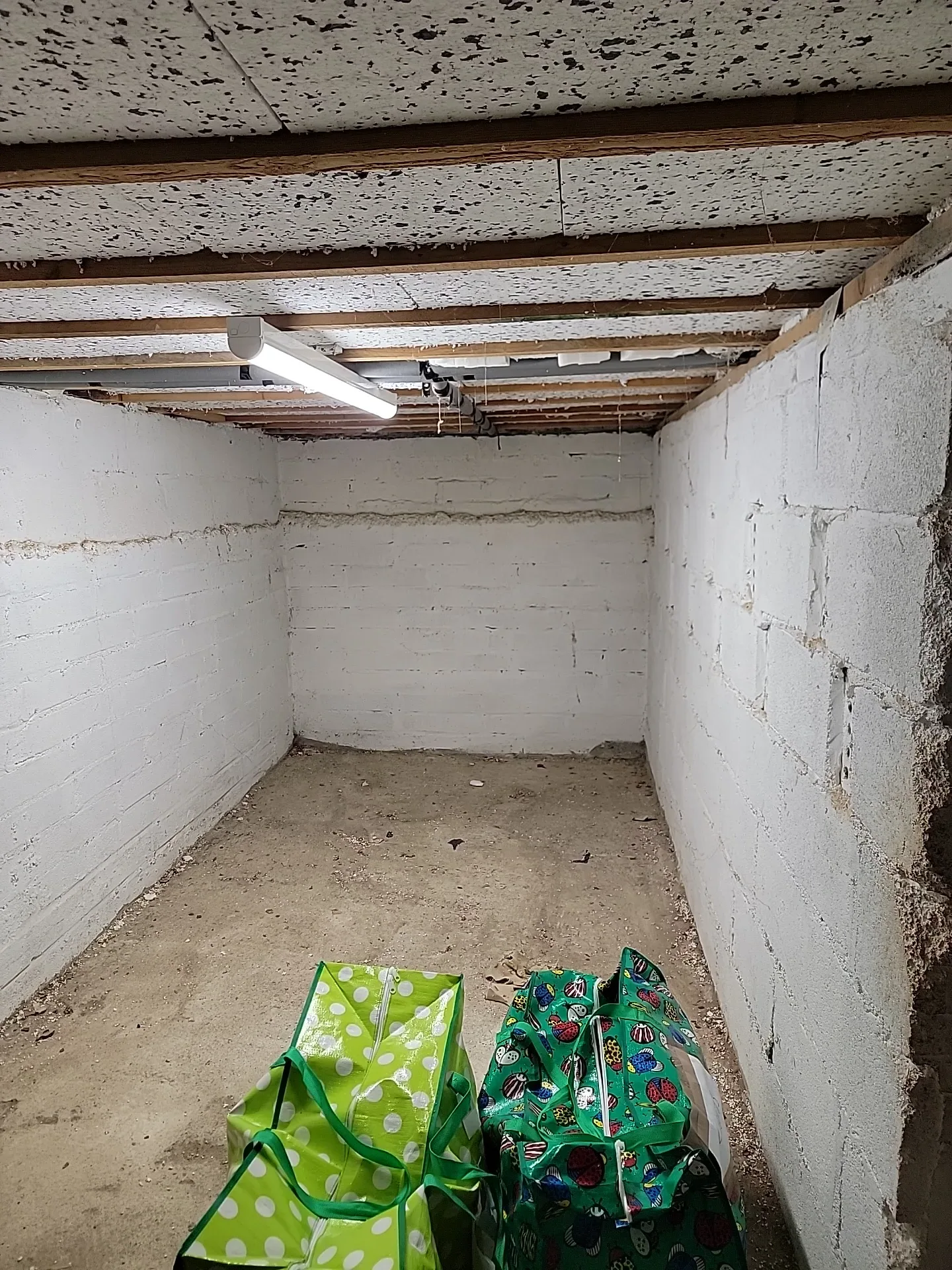
From there, the scope of work spread across several areas of the property. The cellar was a priority – it had no useful lighting to speak of, so two 4ft LED batten lights were installed, one in each section of the cellar, both controlled via a single switch. The supply was taken from an existing socket outlet within the cellar and fused down through a spur, keeping things tidy and self-contained. It’s a simple improvement but one that makes a real difference to the usability of the space.
In the small bedroom and office room, five new double socket outlets were added to the wall to the left of the window. It’s a common situation in older properties – not nearly enough sockets for modern living, especially in a room being used as both a bedroom and a workspace. The existing ring circuit was extended to serve the new points, giving the room a much more practical layout without the need for extension leads trailing across the floor.
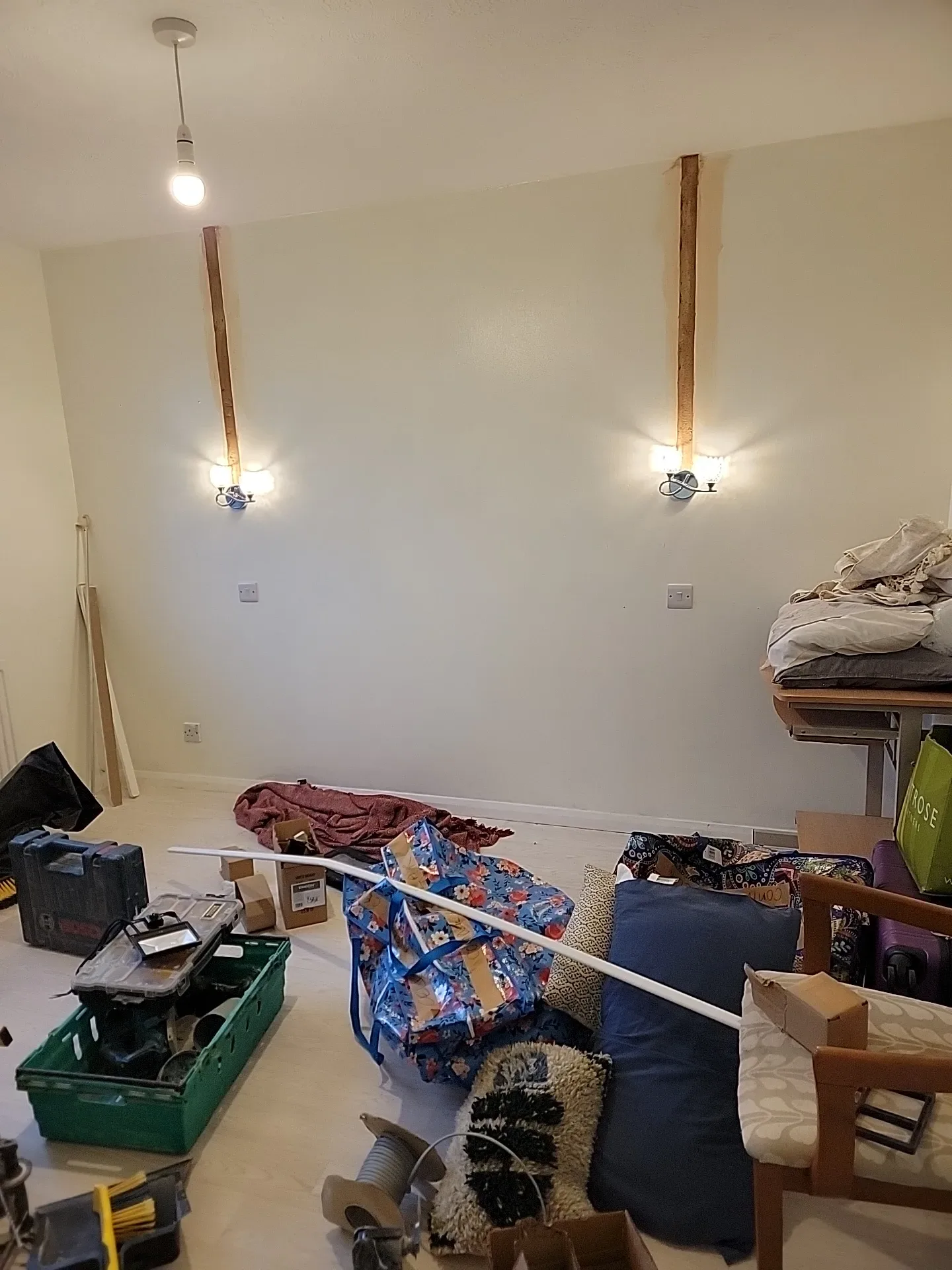
Bedroom 2 received a pair of bedside wall lights, supplied by the client, which were installed either side of the bed with individual switches at each position. Routing the cabling within the plasterboard walls kept the finish clean, with no surface trunking in sight. Where any holes were needed in the plasterboard to facilitate the cable runs, these were patched and first-filled, ready for final finishing by others.
The landing light switch also needed relocating. It had been positioned at the top of the stairs, which isn’t ideal from a practical standpoint – reaching back for a switch at the top of the stairs isn’t where most people want it. The switch was moved to the wall adjacent to the entrance of the master bedroom, which makes far more sense for everyday use. It was positioned in line with what was agreed with the client rather than centred on the wall, which was the arrangement that worked best for the space.
One of the more involved elements of the project was sorting out the external stairway lighting. The existing setup had deteriorated badly – the switches and light fittings had become waterlogged and were well past the point of being serviceable. These were decommissioned in preparation for the client to remove the fittings themselves. The wiring was then reconfigured to serve only the under-stairs storage area lighting, with a double pole switch installed adjacent to the consumer unit to provide a clean, accessible means of isolation. It’s a much safer and more sensible arrangement than what was there before.
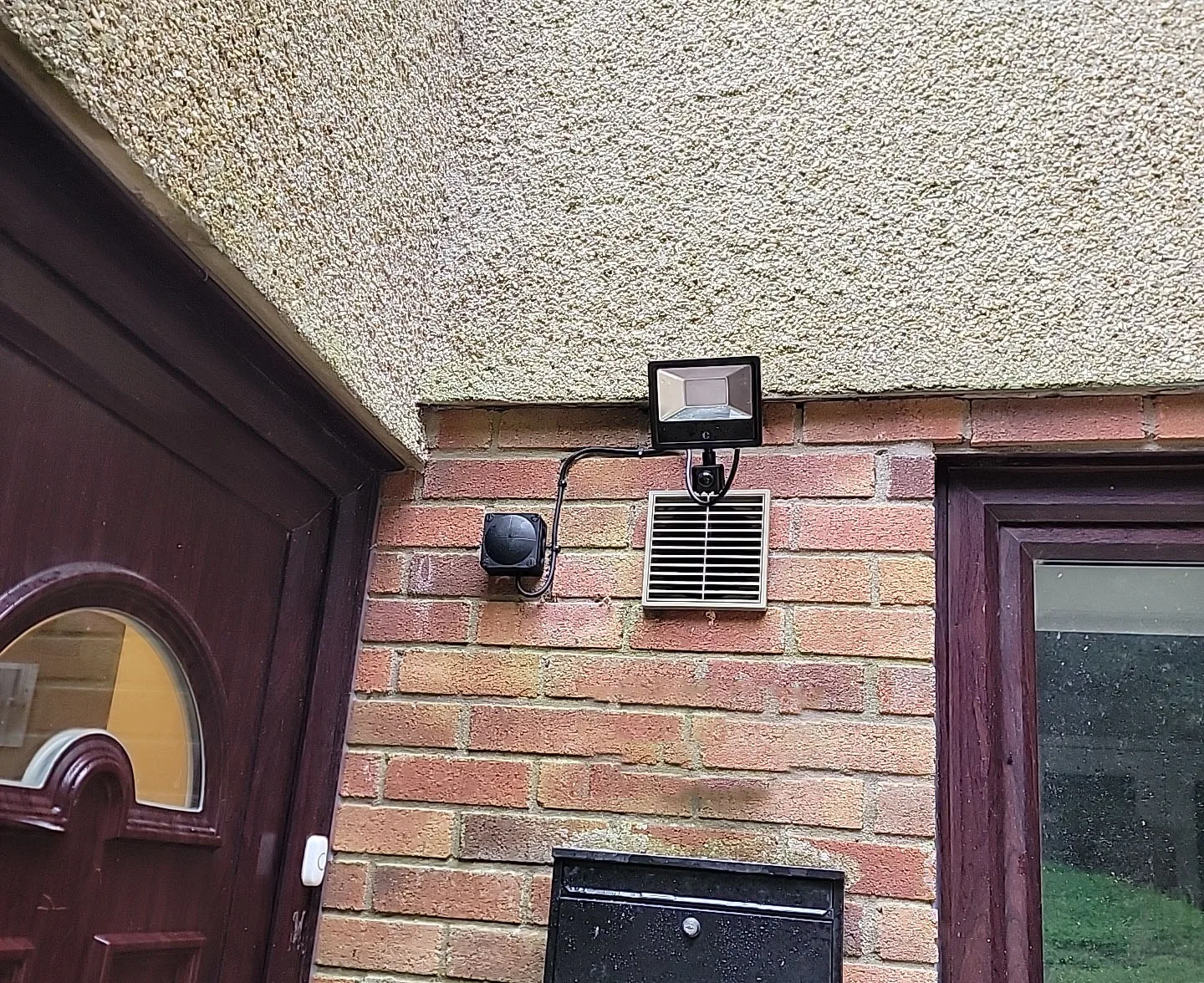
At the main entrance, the existing light fitting was replaced with a new PIR floodlight. Rather than having the outside light on a manual switch, the PIR sensor means it activates automatically when someone approaches, which is both more convenient and more energy-efficient. The external lights on the whole were also given their own RCBO within the new consumer unit, which ended up being a neater solution than the originally planned external switch – and the client agreed it looked better for it.
All in all, this was a solid project covering a good range of electrical work – from safety testing and compliance through to practical improvements that genuinely change how the property functions day to day.