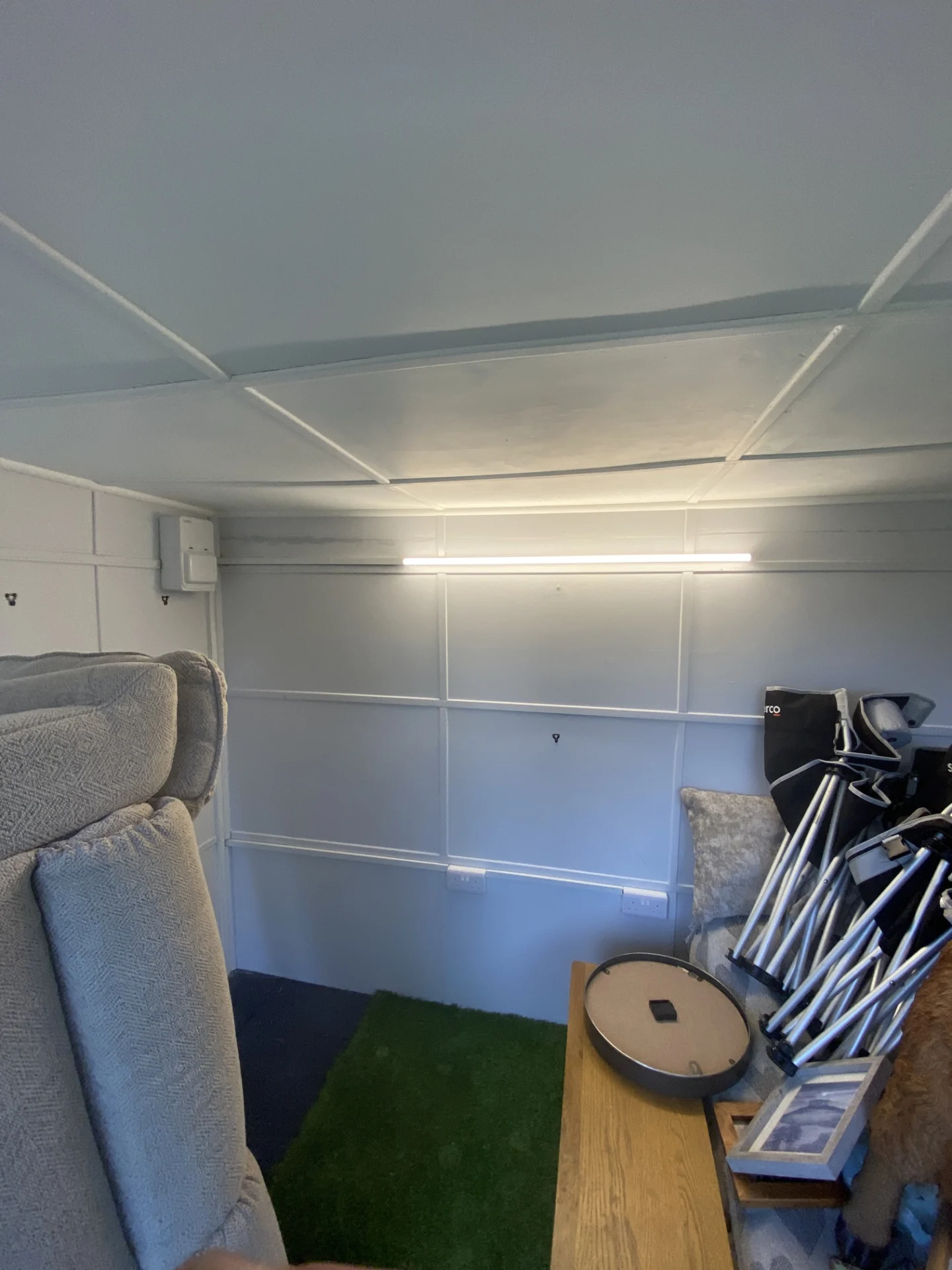
This job covered quite a spread of work for a property in Launceston, with tasks split between the main house and a detached outbuilding. Projects like this – where you’re dealing with several different areas at once – require a fair bit of coordination to keep everything logical and tidy, but the end result is always worth it when it all comes together.
The outbuilding side of things was probably the most involved part of the job. The building had no existing electrical supply, so the starting point was running a new 32A circuit from the main consumer unit in the house. The cable used for this was 6mm² steel wire armoured (SWA), which is the standard approach for outdoor sub-main supplies – it’s mechanically robust and suited to being run between buildings. Rather than burying the cable, the route taken was through the accessible loft space of the main house and then overhead to the outbuilding via a catenary wire system. A catenary wire is essentially a tensioned support wire strung between two points, with the electrical cable clipped to it – it keeps everything neat and off the ground without the disruption of trenching.
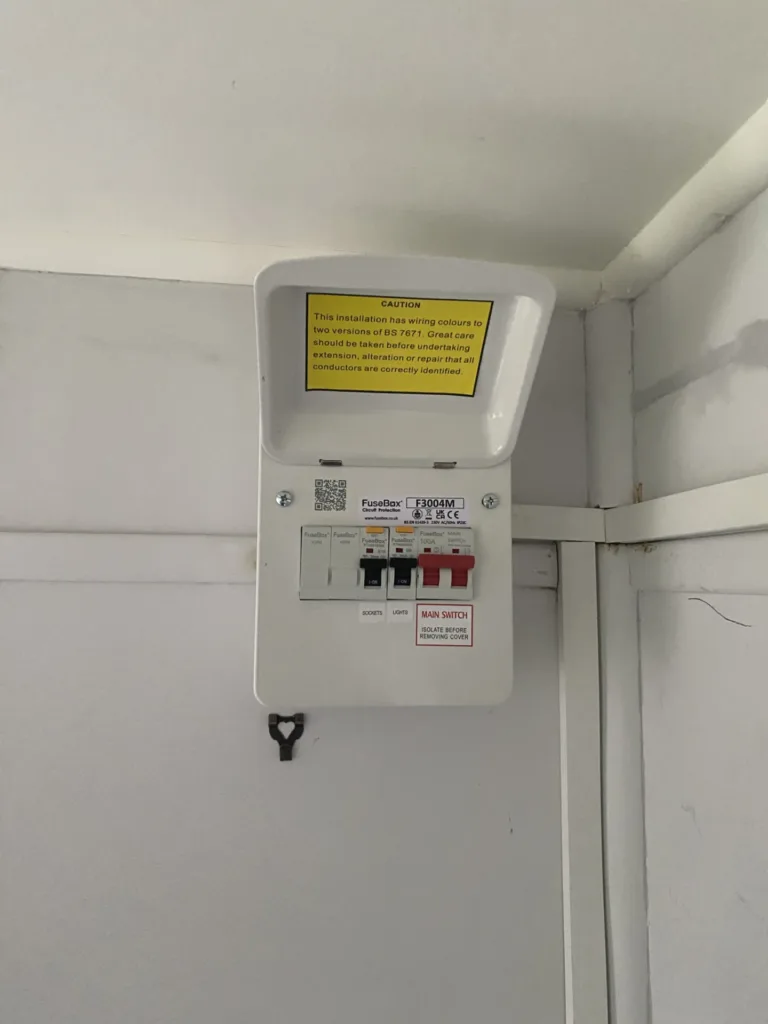
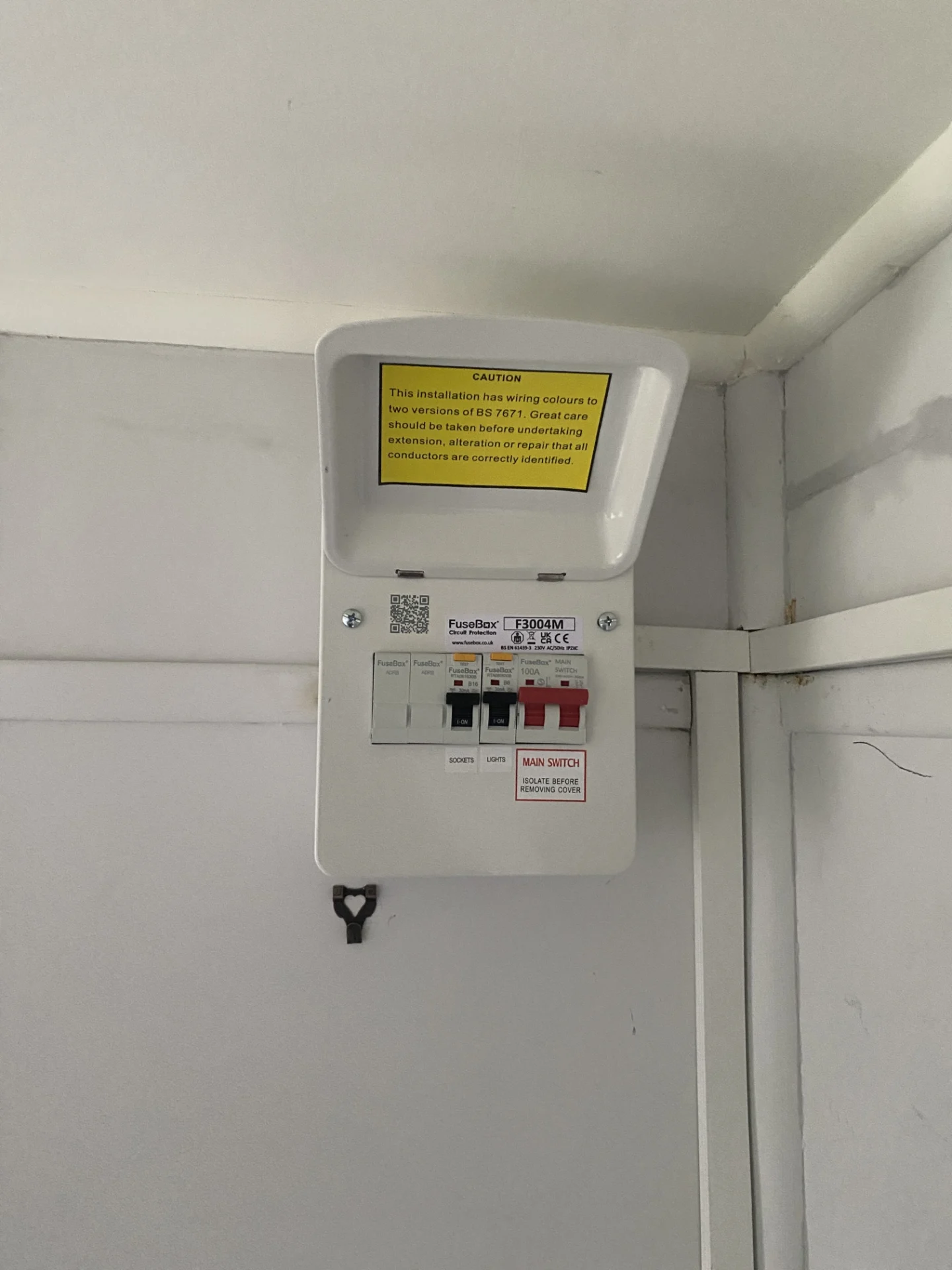
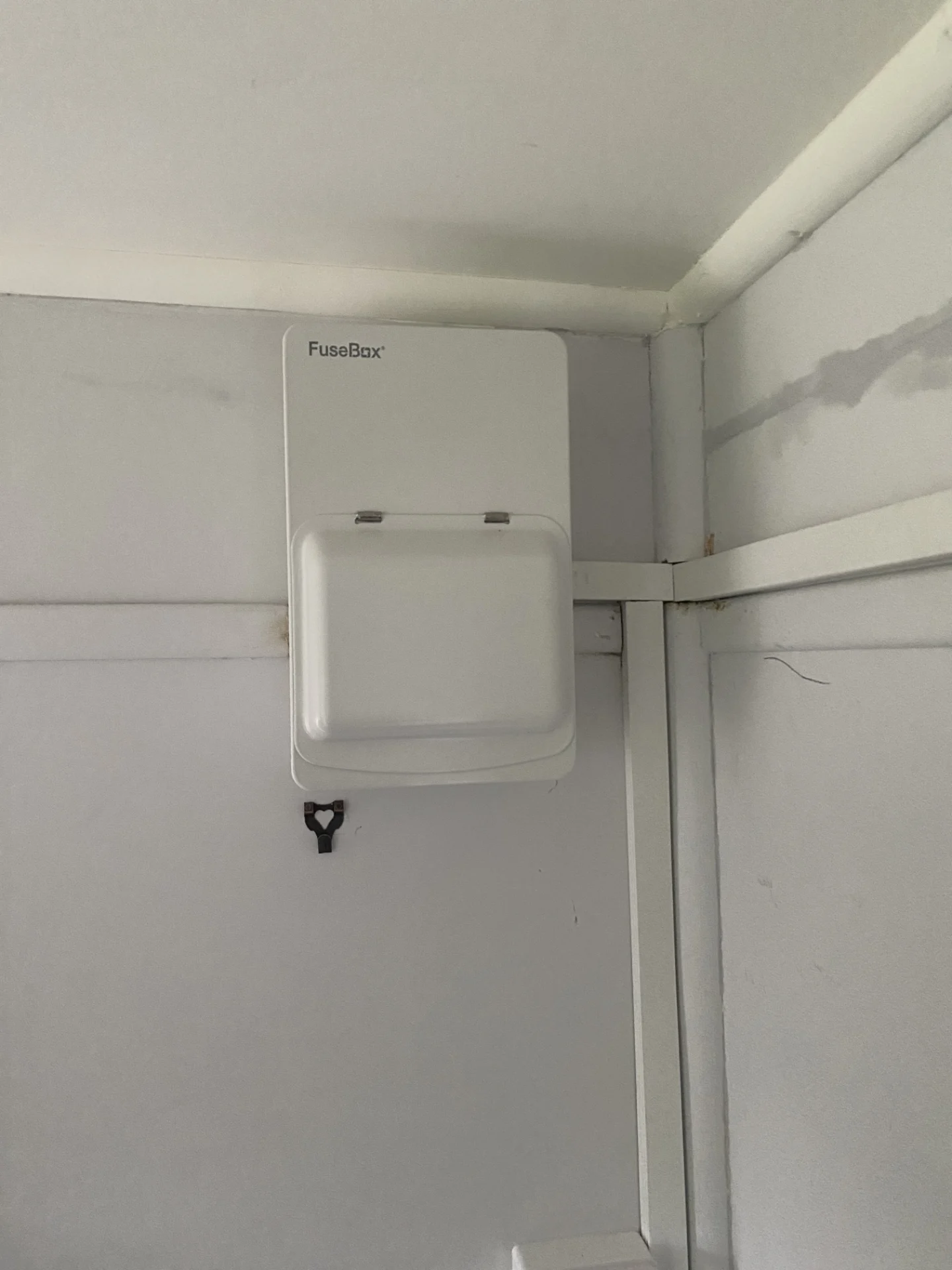
Once the supply reached the outbuilding, a 4-way consumer unit was installed to serve the new circuits inside. Having a dedicated board in the outbuilding means circuits are independently protected and isolated at source, which is far better than just tapping into a long extension from the house. The consumer unit was positioned near the entrance corner of the building, which kept the cable runs short and left the switch for the lighting directly accessible on the same wall.
The internal fit-out of the outbuilding was done with a tidy finish in mind. All cabling for the lighting and socket circuits was run in white PVC trunking, which was chosen to blend with the existing cladding on the interior walls. An 800mm warm white LED cabinet light was fixed centrally on the rear wall at ceiling height, giving a clean spread of light across the space. Two double socket outlets were installed on the rear wall – one on each side – which gives decent coverage without cables having to trail across the floor for anyone working in there.
Back in the main house, the bathroom extractor fan needed replacing. The original fitting was a standard ceiling-mounted fan, which worked but wasn’t ideal. It was removed and replaced with a 125mm inline fan unit installed in the loft space above, connected via insulated flexible ducting. Inline fans sit away from the bathroom ceiling entirely – the motor is positioned somewhere in the duct run rather than directly in the room – which makes them noticeably quieter than direct ceiling fans. The insulated ducting also helps reduce condensation forming inside the duct itself, which can be an issue with cheaper uninsulated alternatives. Both internal and external grilles were fitted as part of the installation to complete the ventilation path.
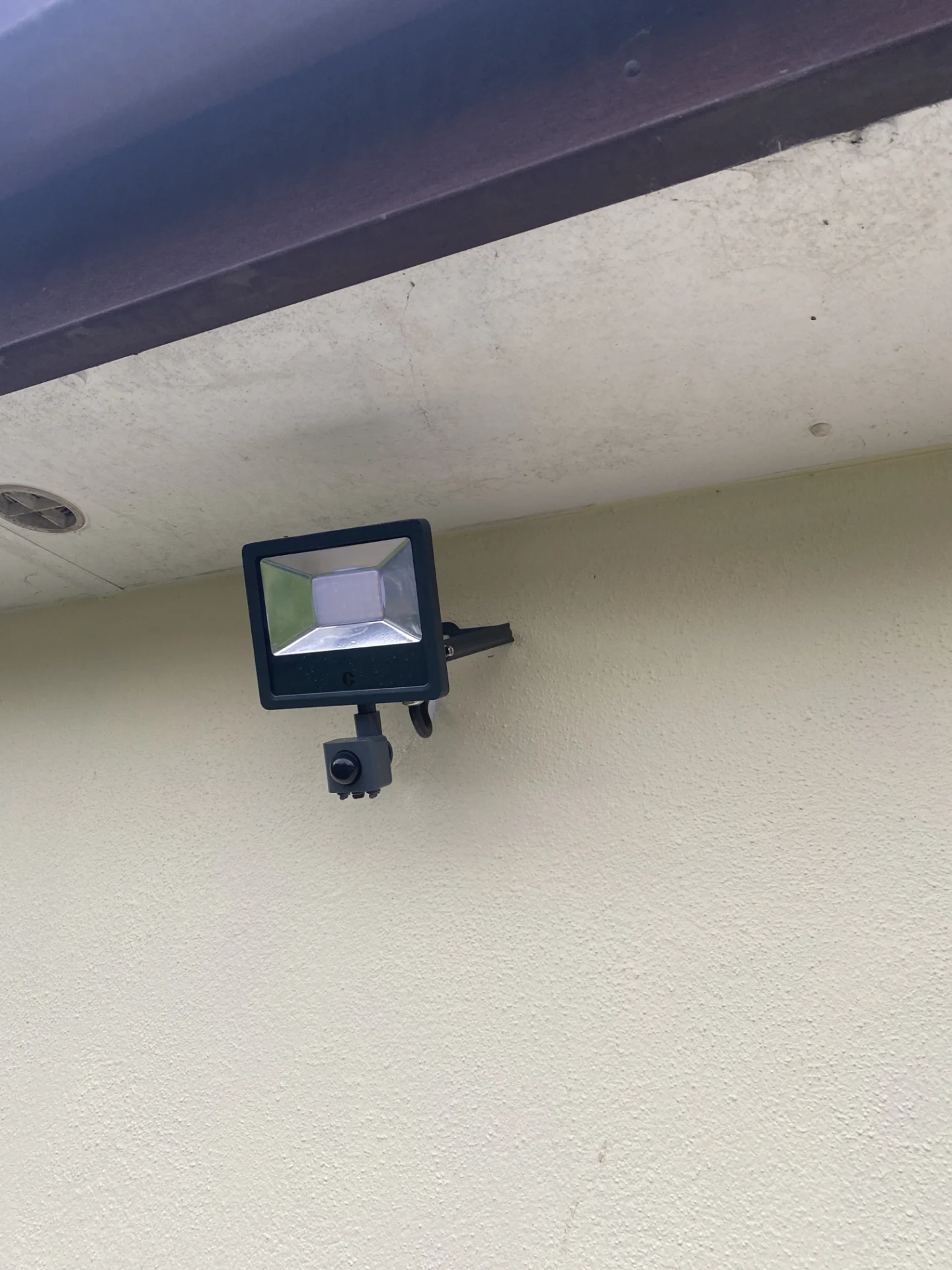
The exterior lighting at the rear of the property was also updated. The existing wall light adjacent to the back entrance door was removed and replaced with a 20W PIR flood light, but rather than putting it back in the same position, the fitting was relocated to the wall space between the window and the patio doors. This gave much better coverage of the rear entrance area than the previous position allowed. The PIR sensor means it operates automatically on movement, which is both practical and more efficient than leaving a light on constantly.
Inside the living room, the work involved some alterations to the wall lights at one end of the room. Two existing wall light fittings were disconnected and removed, with the cabling safely terminated in the loft space above. New client-supplied wall light fittings were then installed at the other end of the room – closer to where they were needed. To allow each fitting to be switched independently rather than sharing a single switch, slim surface-mounted architrave switches were installed below each fitting. Architrave switches are a practical choice in situations where there’s no wall depth available for a standard back box – they sit very flat against the surface and keep things looking neat without requiring any chasing.
Taken as a whole, the job addressed a mix of practical and comfort-driven improvements across the property. The outbuilding now has a properly supplied and protected electrical installation ready for whatever the space ends up being used for, the bathroom ventilation is quieter and more effective, and the lighting – both inside and outside – works better for how the homeowner actually uses the property day to day.