Installation of a 7.4kW MyEnergi Zappi EV charge point at a property in Cubert, making use of existing infrastructure whilst upgrading the electrical protection to support reliable electric vehicle charging.
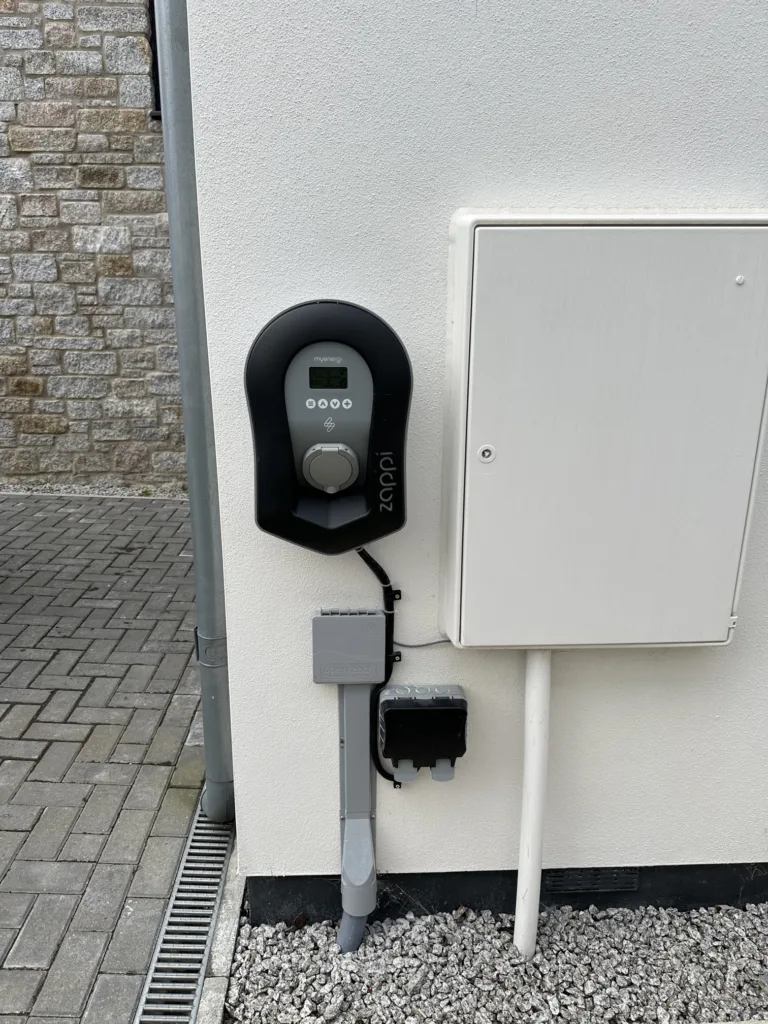
Electric vehicle ownership continues to grow across Cornwall, and having a dedicated home charging point transforms the EV experience. This installation in Cubert demonstrates how pre-existing electrical infrastructure can be adapted and upgraded to accommodate modern charging requirements whilst protecting the property’s electrical system.
The property came with an advantage that many new developments now offer – it had been described as ‘charger ready’ during construction. This meant the groundwork had already been done, with cabling previously installed specifically for future EV charging use. The existing setup included an IP-rated socket outlet served by these cables, but the homeowner wanted to move to a proper dedicated charge point. With solar panels already installed on the property, they’d identified the MyEnergi Zappi as the ideal solution. The Zappi’s ability to integrate with solar generation made perfect sense for their setup, allowing them to maximise the use of their own generated electricity when charging their vehicle.
Working with existing infrastructure always requires careful assessment. Whilst the cabling had been installed with EV charging in mind, the original circuit breaker protecting this circuit was rated at 32 amps. For a 7.4kW charge point operating at full capacity, this would mean the breaker sat right on the edge of its rating. Over time, this creates a situation where the breaker might trip unnecessarily, particularly during extended charging sessions or when the property’s electrical demand peaks. Nobody wants their car charging interrupted repeatedly, so the decision was made to uprate the breaker to 40 amps. This provided the headroom needed for reliable operation without constant nuisance tripping.
The charge point itself would be mounted on the exterior wall at the front side of the garage, positioned to allow straightforward access to the vehicle’s charging port. The homeowner had mentioned needing a 10-metre cable due to their parking arrangement, which influenced the decision to specify an untethered unit. With an untethered charge point, the user provides their own charging cable rather than having one permanently attached to the unit. This offers flexibility – different cable lengths can be used as needed, and if a cable gets damaged, it’s simply replaced without affecting the charge point itself.
Modern properties have finite electrical capacity, and adding a 7.4kW load represents a significant draw on the system. Running a washing machine, tumble dryer, electric oven, and starting to charge a car simultaneously could theoretically push the property’s main fuse beyond its limit. This scenario becomes more likely in homes with electric heating or other high-consumption appliances. The solution lies in load monitoring technology, which actively manages this challenge. A monitoring device tracks the property’s total electrical consumption in real time, communicating with the charge point to modulate its output accordingly. If the property’s demand rises – perhaps someone puts the kettle on whilst cooking dinner – the charge point automatically reduces its charging rate to prevent overload. When demand drops again, charging ramps back up. The car still gets charged, but the property’s electrical infrastructure stays protected without requiring expensive upgrades to the main supply.
The installation process made good use of the existing cabling, which had been thoughtfully installed during the property’s construction phase. Being able to repurpose this infrastructure saved considerable work compared to a full installation from scratch. The new breaker went into the consumer unit, replacing the original 32-amp unit with the 40-amp upgrade. The load monitoring device integrated into the system, positioned where it could accurately measure the property’s consumption whilst communicating with the Zappi unit outside. Cable glands sealed the entry points where the wiring passed through to the exterior mounting location, maintaining the weather protection needed for an outdoor installation.
Testing formed a crucial part of the work, as with any electrical installation. The circuit underwent comprehensive checks to verify its safety and performance before the charge point went live. These tests provide the data needed for the Electrical Installation Certificate, which documents that the installation meets current wiring regulations. This certification also supports the Building Control notification process, which applies to significant electrical work like adding an EV charge point. The testing covers everything from earth loop impedance to insulation resistance, verifying that the circuit will operate safely under all normal conditions.
The Zappi’s features suited this installation particularly well. Beyond the solar integration that initially attracted the homeowner, the unit offers scheduling options and consumption monitoring through its app. Users can review their charging costs, see how much solar energy contributed to each charge, and adjust settings to match their preferences. The black finish sits neatly against most exterior walls without drawing undue attention, whilst the clear display shows charging status at a glance.
Cubert’s mix of properties includes everything from traditional Cornish cottages to modern developments, and this installation shows how newer builds often incorporate forward-thinking infrastructure. The ‘charger ready’ designation meant the heavy lifting had been done during construction – conduits run, cables pulled, mounting positions considered. Adapting this to a full charge point installation simply required upgrading the protection, adding the load management, and fitting the unit itself. For homeowners in similar properties, this represents a straightforward path to home EV charging.
The combination of existing infrastructure, appropriate upgrades, and intelligent load management created a charging solution that works with the property rather than straining against its limitations. The homeowner can now charge their vehicle at home whilst making the most of their solar generation, with the peace of mind that comes from proper electrical protection and professional installation.