This St Austell property received a complete EV charger point installation featuring the Hypervolt Home Pro 7.4kW system, integrated with intelligent load monitoring technology to protect the home's electrical infrastructure whilst providing reliable electric vehicle charging capabilities.
Electric vehicle ownership continues to grow across Cornwall, and homeowners in St Austell are increasingly seeking reliable charging solutions that won’t compromise their property’s electrical system. This residential installation demonstrates how modern EV charging technology can be integrated safely into existing electrical setups whilst planning for future upgrades.
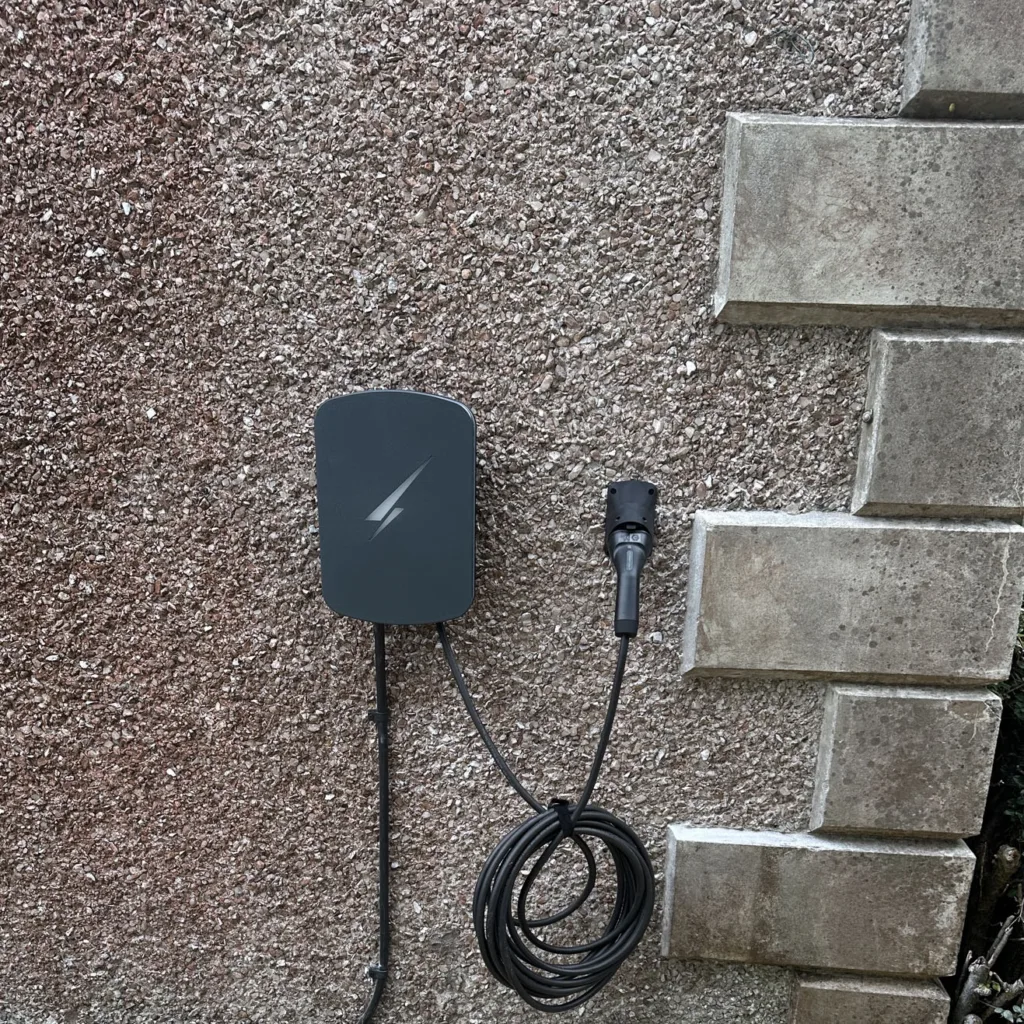
The property required an EV charger point installation that would deliver consistent charging performance without overloading the current consumer unit. Working with the homeowner’s requirements, the solution centred around installing a Hypervolt Home Pro 7.4kW charge point on the exterior wall. This model offers tethered charging, meaning the cable is permanently attached to the unit rather than requiring the vehicle owner to provide their own cable each time. The fixed cable design brings practical advantages – there’s no need to store a separate charging cable, and the integrated design prevents cable theft, a consideration that matters when charging equipment is mounted externally.
The electrical configuration for this St Austell EV charger installation required careful planning. The charge point connects to the property’s electrical supply through a dedicated 40-amp circuit breaker, temporarily installed within the existing RCD consumer unit. This interim arrangement provides appropriate circuit protection whilst the property moves towards a planned consumer unit upgrade. Running the electrical supply involved installing 25 metres of specialised EV cable, routed from the consumer unit location to the charge point mounting position. The cable run was carefully planned to maintain proper protection standards and allow for the eventual integration with the new consumer unit when that upgrade takes place.
Modern EV charger point installations in St Austell properties must address a fundamental challenge – domestic electrical systems weren’t originally designed to handle the sustained high loads that vehicle charging creates. A car drawing 7.4 kilowatts for several hours whilst the property is simultaneously running other appliances could push the main fuse beyond its rated capacity. The solution involves intelligent load monitoring technology, installed as part of this system to continuously track the property’s electrical consumption. The monitoring device communicates with the charge point, adjusting the charging rate dynamically based on available capacity. When household demand increases – perhaps someone switches on an electric oven or multiple appliances run simultaneously – the system automatically reduces power to the vehicle to prevent the main fuse from tripping. As household demand drops, charging power increases again. This dynamic balancing happens automatically without any input from the homeowner.
The Hypervolt system chosen for this installation brings particular advantages for properties where electrical capacity needs managing carefully. The unit’s smart capabilities extend beyond basic load monitoring to include features like solar integration potential and charging scheduling, though the immediate priority was protecting the existing electrical infrastructure. The 7.4-kilowatt output represents the maximum single-phase charging speed available for domestic installations, delivering roughly 30 miles of range per hour of charging for typical electric vehicles. That charging rate suits most domestic use patterns – vehicles charged overnight will comfortably replenish a day’s driving range well before morning.
Installation work began with thorough electrical testing to verify the property’s existing installation could support the new charging circuit. This testing formed part of the Electrical Installation Condition Report work carried out alongside the charger installation. Understanding the current state of the electrical system before adding significant new loads provides the information needed to specify appropriate protection and identify any remedial work that might be necessary. The testing revealed the consumer unit would require upgrading to accommodate the growing electrical demands on the property, leading to plans for a new 21-way consumer unit with surge protection device integration.
The temporary connection arrangement installed during this phase acknowledges the practical realities of phased electrical work. Rather than delaying vehicle charging capabilities until the consumer unit upgrade could be scheduled and completed, the installation provides immediate functionality whilst building in proper provision for the planned improvements. The cable installation includes sufficient length and appropriate routing to connect to the new consumer unit location once that upgrade proceeds. This approach meant the homeowner gained EV charging capability without unnecessary delay whilst maintaining proper electrical safety standards throughout.
Mounting the charge point on the exterior wall required consideration of both practical access and cable management. The tethered cable stores neatly when not in use, and the mounting position allows straightforward connection to vehicles parked in the designated charging location. Weather protection is inherent to the unit’s design – the Hypervolt charge point carries appropriate IP ratings for external installation and will withstand the coastal conditions common across Cornwall. The sleek black enclosure presents a tidy appearance that doesn’t dominate the property’s exterior whilst remaining easily accessible for daily use.
Circuit protection for the installation follows current regulations, with the 40-amp breaker providing appropriate overcurrent protection for the cable and charge point. The temporary integration with the existing RCD consumer unit maintains earth fault protection whilst the system operates in this configuration. When the consumer unit upgrade proceeds, the charging circuit will transfer to the new board, which will include modern surge protection devices to guard against transient overvoltages that can affect sensitive electronic equipment. The planned board specifications include appropriate breaker ratings for the property’s various circuits, creating a balanced distribution system with room for future electrical additions.
Documentation for the installation includes the Electrical Installation Certificate required for this type of work, recording test results and confirming compliance with the current edition of BS 7671 wiring regulations. This certification enables the submission of Building Control notification, a legal requirement for electrical installation work in domestic properties. The testing verified circuit continuity, insulation resistance, earth fault loop impedance, and the correct operation of protective devices, providing confidence that the installation meets safety standards and will perform reliably.
The load monitoring technology represents a pragmatic approach to EV charging in properties where service capacity might otherwise limit charging options. Some St Austell homes operate on supply arrangements that predate modern electrical demands, and upgrading the service itself can involve significant expense and utility company coordination. Dynamic load management allows these properties to support EV charging without necessarily requiring service upgrades, though the technology works equally well in properties with ample capacity as an additional safety margin. The monitoring device tracks real-time consumption, making split-second adjustments that protect the installation whilst maximising charging speed whenever conditions allow.
This installation in St Austell provides the homeowner with a charging solution that balances immediate needs with planned improvements, protects the existing electrical system through intelligent load management, and delivers the charging performance needed for daily electric vehicle use. The tethered Hypervolt charge point offers straightforward operation – simply plug in the vehicle and charging begins automatically, with the smart technology handling power management behind the scenes. The system stands ready for integration with the upgraded consumer unit when that work proceeds, maintaining continuity of charging capability throughout the electrical system improvements.