When a homeowner in Bodmin got in touch, the brief started straightforwardly enough – two faulty PIR floodlights needed attention, and an external socket was needed on the side of the property. As is often the case on domestic jobs, the details shifted a little once work was underway, and the final scope ended up being a considered rethink of how the exterior lighting was set up rather than a straight swap.
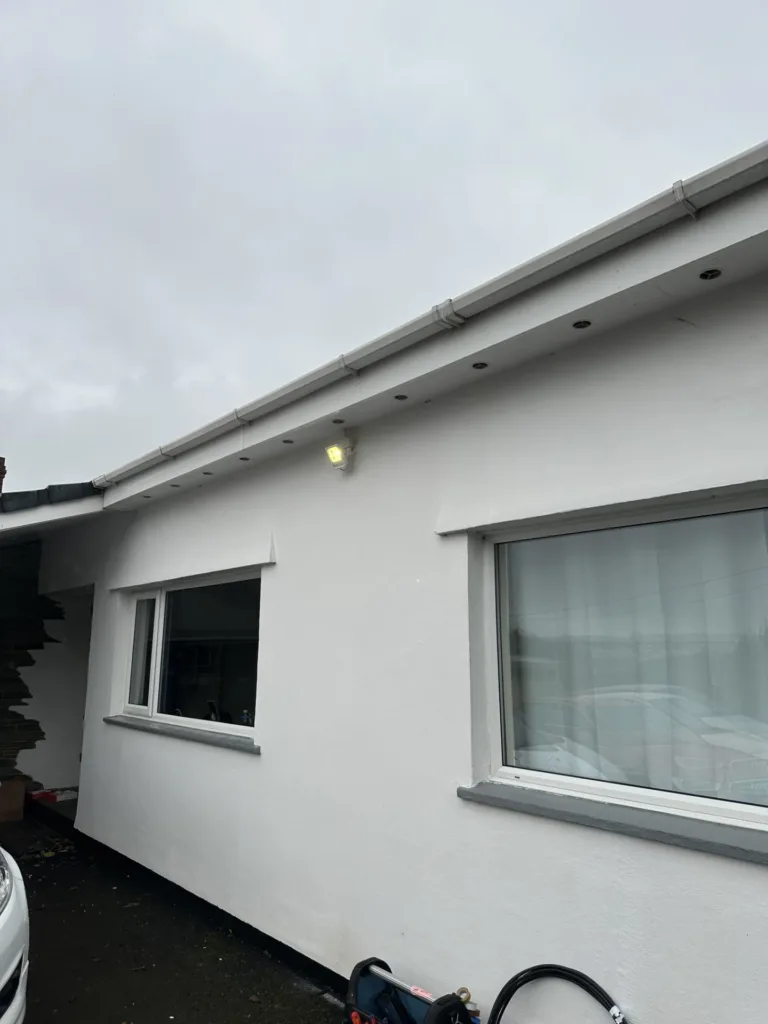
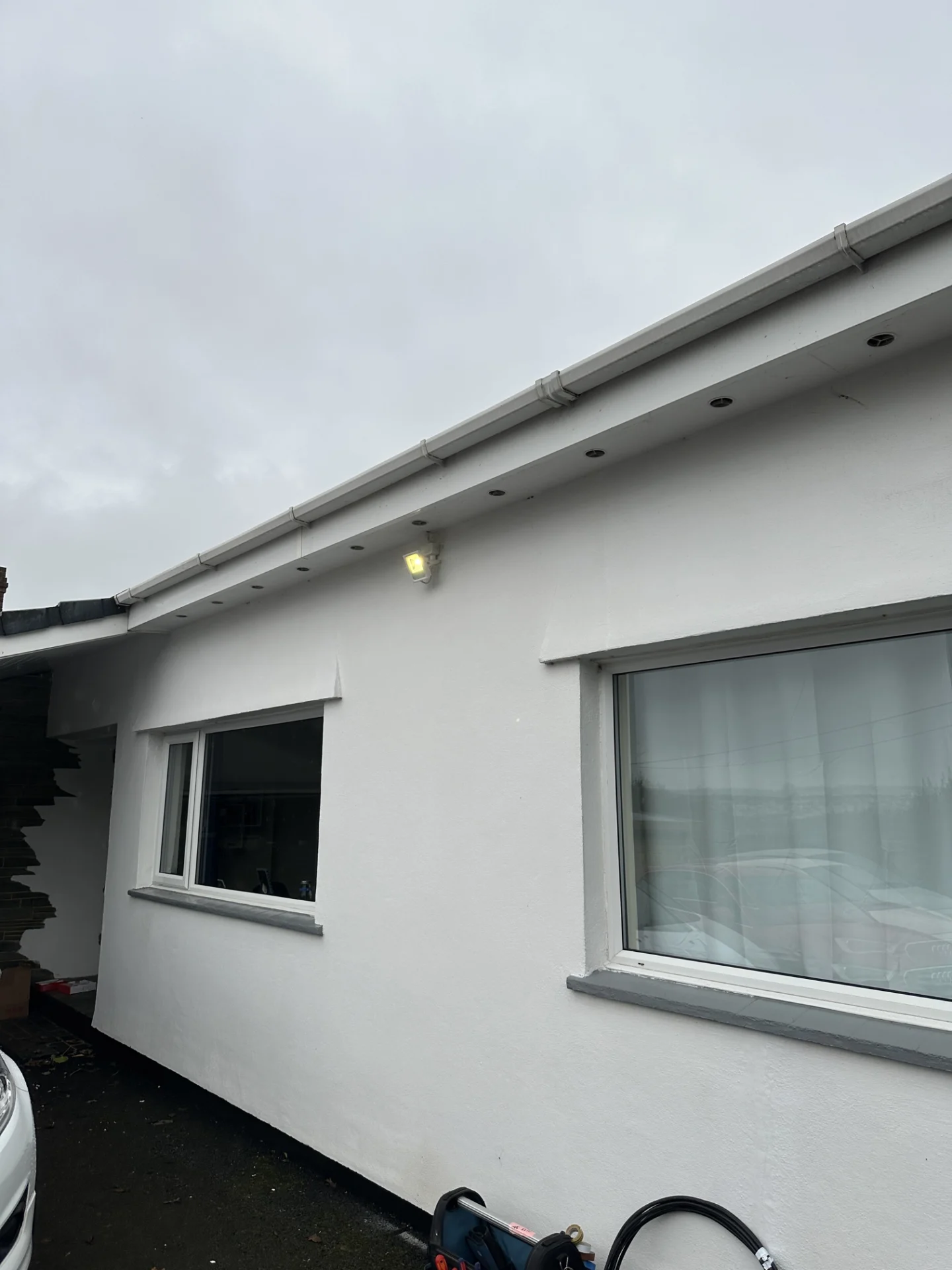
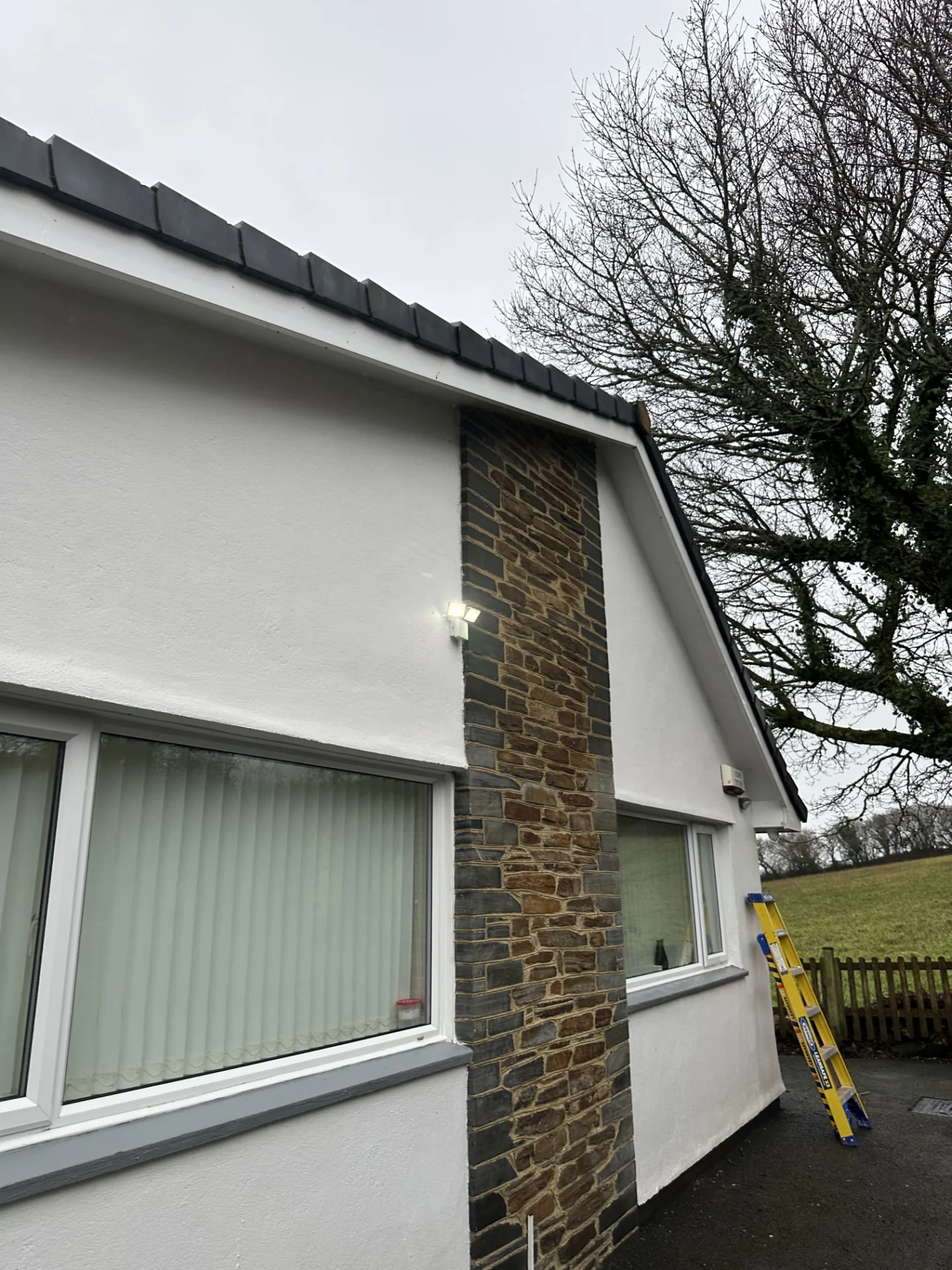
The property already had a standalone PIR detector elsewhere on the exterior, which meant there was no need for the replacement floodlights to also have motion-sensing built in. Rather than fitting like-for-like PIR units, the decision was made to install a non-PIR floodlight – a 20W unit – near the front of the property where consistent, controlled lighting was more useful than reactive triggering. The existing PIR floodlight that had been positioned near the front door was relocated around the corner to a more suitable spot, giving better coverage where the motion sensing was actually wanted.
Positioning floodlights properly is something that gets overlooked more than you’d expect. Putting a PIR unit in the wrong place – too close to a road, facing a busy area, or next to a tree that moves in the wind – leads to constant false activations or lights that miss what they’re supposed to cover. Working through where each light actually needs to be, and what it needs to do, makes a real difference to how functional the finished installation is day to day. This job was a good example of that: by separating the motion detection from the front entrance lighting, both functions work better independently.
The new floodlight was mounted using a small weatherproof enclosure at the wall connection point, keeping the external termination properly protected against the elements. For exterior electrical work in Cornwall, where the weather is rarely kind for long, getting that kind of detail right matters. A poorly weatherproofed connection point above a door or on a rendered wall can cause problems relatively quickly, particularly on exposed elevations.
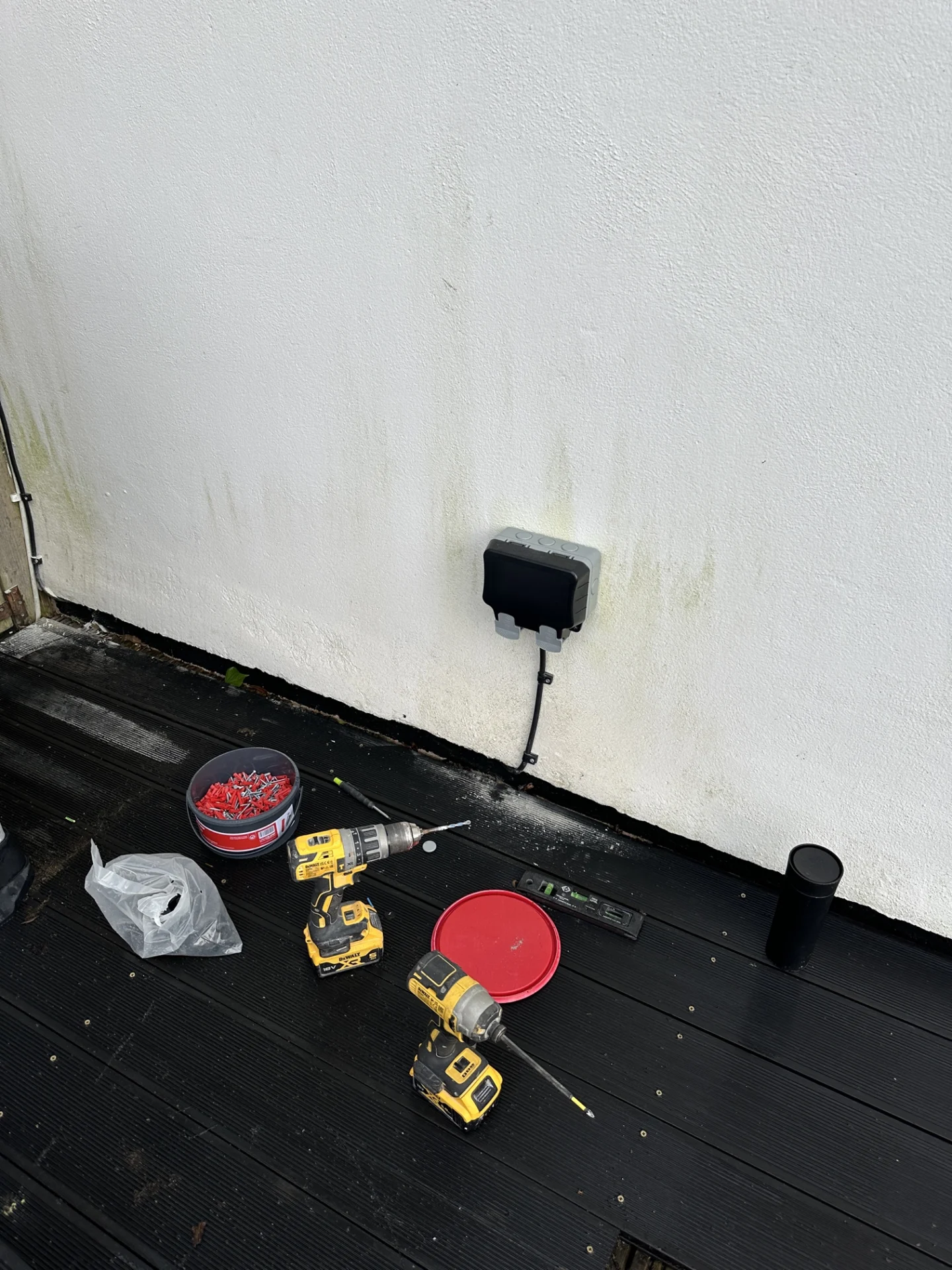
The external socket installation was the other main part of the job. An IP65 rated double socket was fitted on the side wall of the property, adjacent to the side fencing, giving the homeowner a proper weatherproof power point outside for general use. IP65 means the unit is protected against water jets from any direction, making it suited to outdoor use in a residential setting.
Getting the cable to that location required some thought. Rather than surface running cables down external walls – which is both unsightly and less robust long-term – the circuit was extended from the existing kitchen ring main. The cable was run up and through the loft space, then brought out through the soffit adjacent to the existing armoured cable route already present on the property. This kept the cable run largely concealed and made use of a penetration point that was already there, avoiding unnecessary additional holes through the building fabric.
The cable used for the run through the loft and down to the socket position was three-core armoured cable, which is the correct choice for an external installation of this type – it provides mechanical protection where needed and the three cores allow for proper earth continuity throughout the circuit. The supply was taken as a spur from the ring main within the loft, terminating into an adaptable enclosure before the cable continues its route to the socket position outside. This approach keeps the connection point accessible and properly contained.
Spurring from a ring main is a standard method for extending a circuit to a new outlet, provided the existing ring has sufficient capacity and the spur feeds no more than a single point. In this instance, the kitchen ring supplied the new external socket, which is typical for side-access sockets on domestic properties – they’re often used for garden tools, pressure washers, or other outdoor equipment, and the kitchen circuit is generally well-placed to supply that kind of load.
The job was completed in a single visit. Worth noting too that a dimmer switch replacement that had been part of the original scope was left for the homeowner to deal with separately – they’d decided to change the light fittings in that room first, so it made sense to hold off until that was done.
For anyone in the Bodmin area thinking about exterior electrical work – whether that’s improving security lighting, adding a weatherproof socket, or sorting out a cable run that’s seen better days – it’s the kind of work that benefits from being planned properly rather than approached as a quick fix. Getting the right IP rating on external fittings, routing cables correctly, and thinking about how different parts of the system interact all makes a difference to how reliable and safe the finished result is.