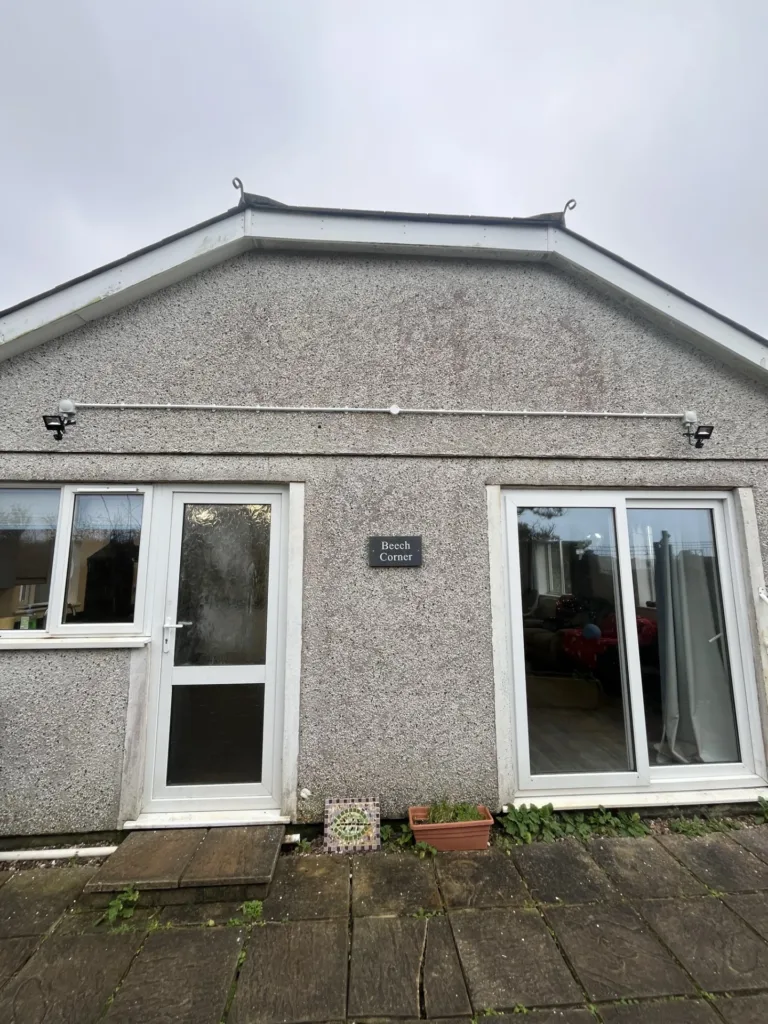
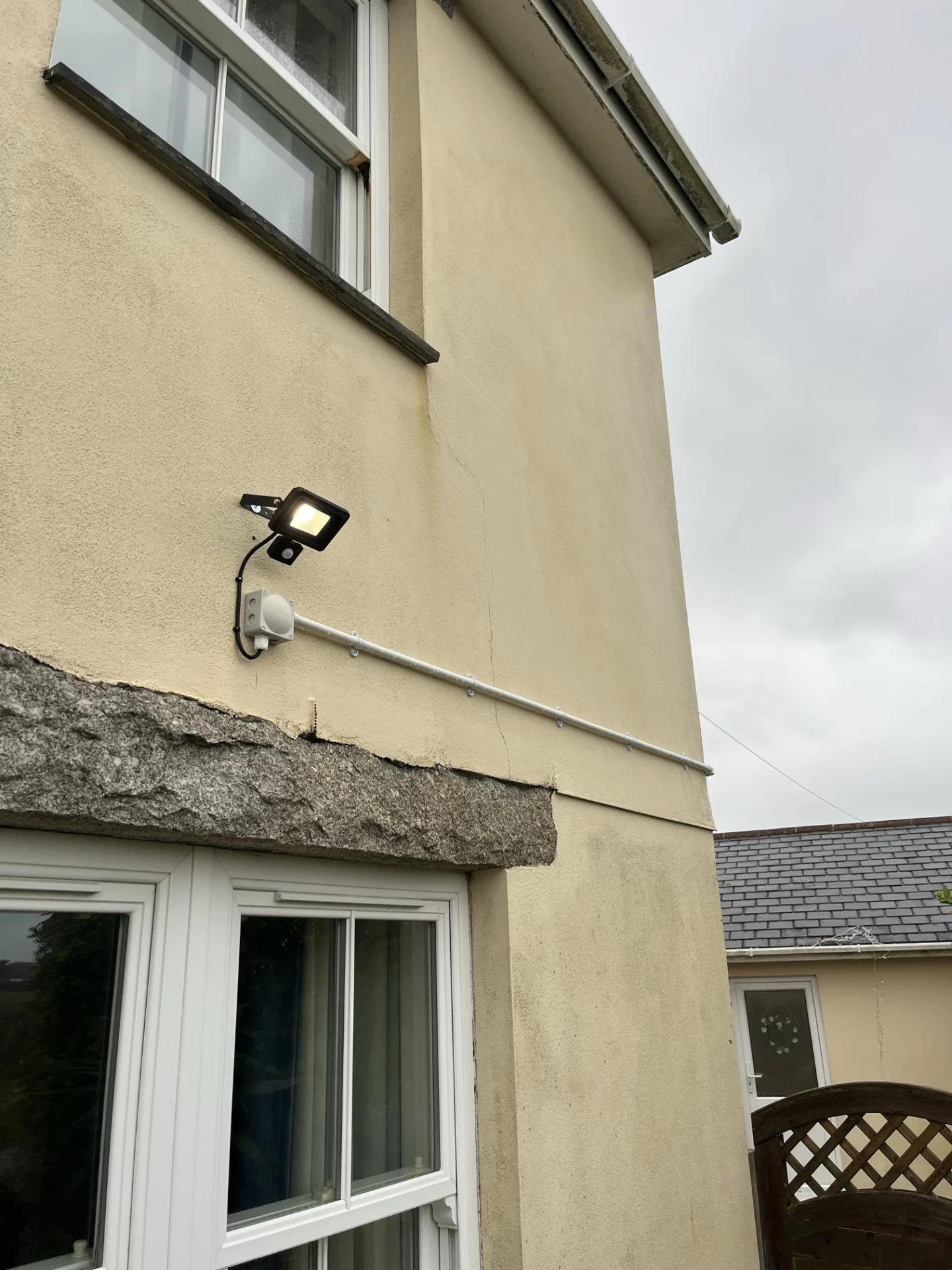
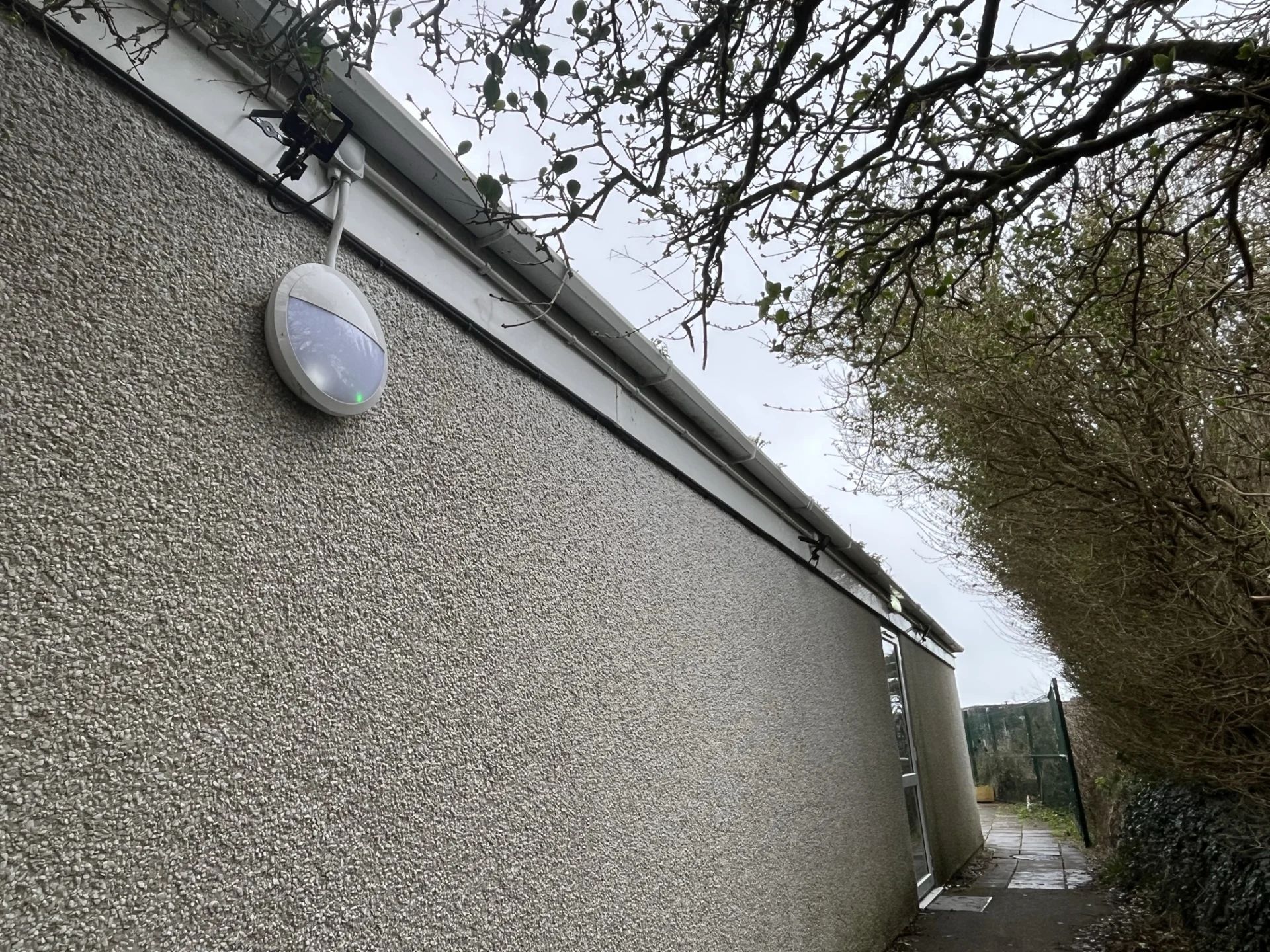
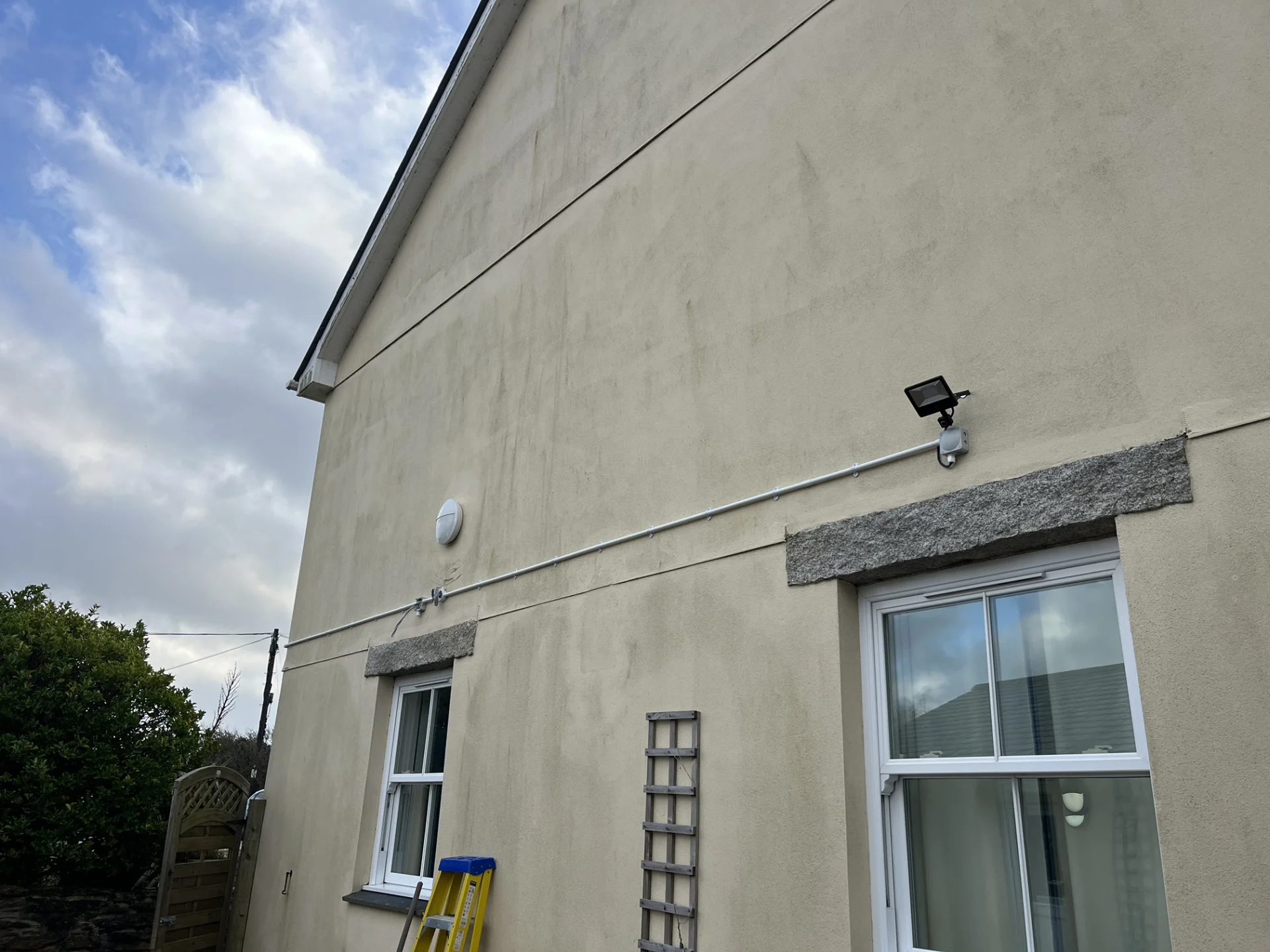
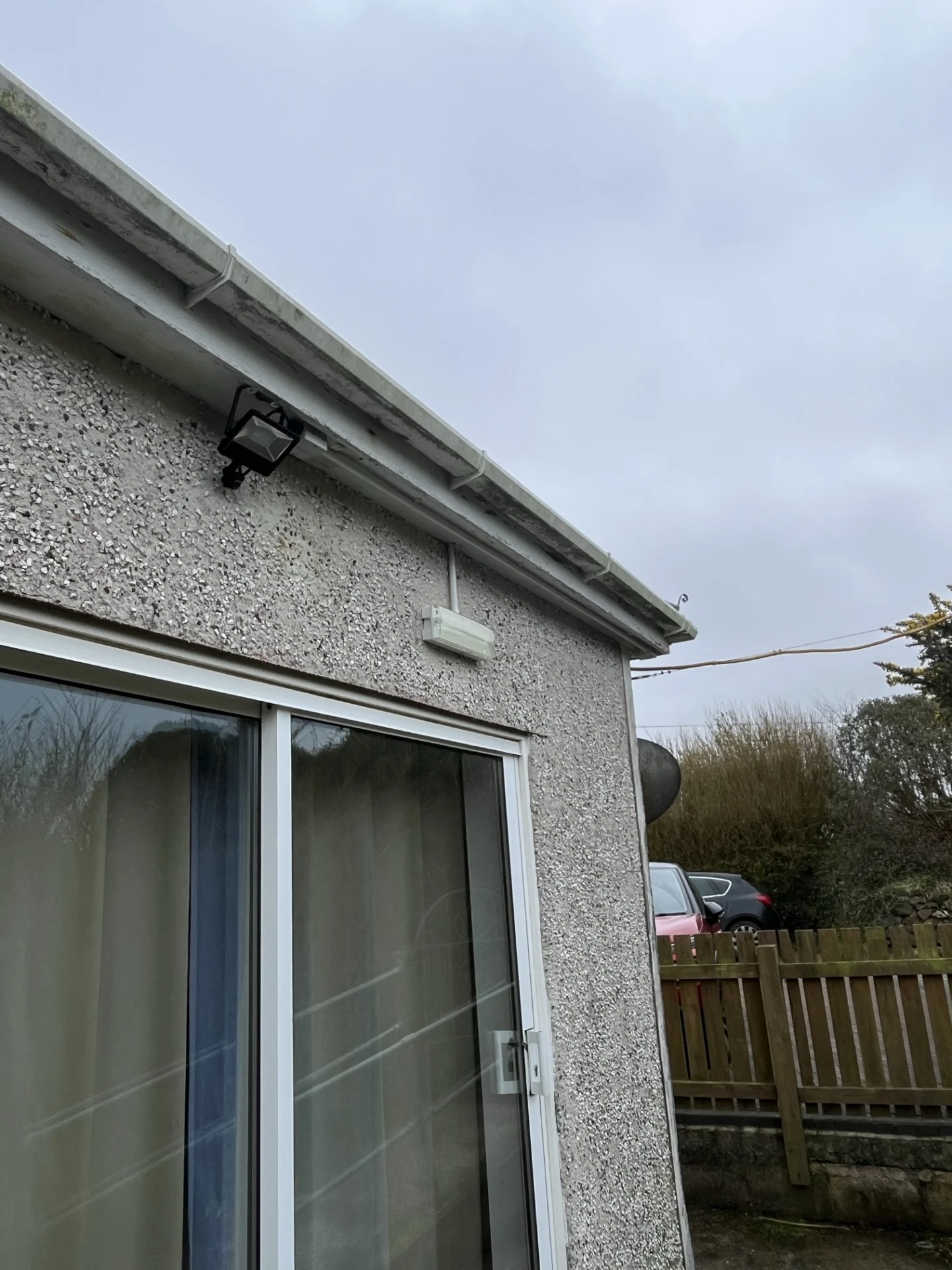
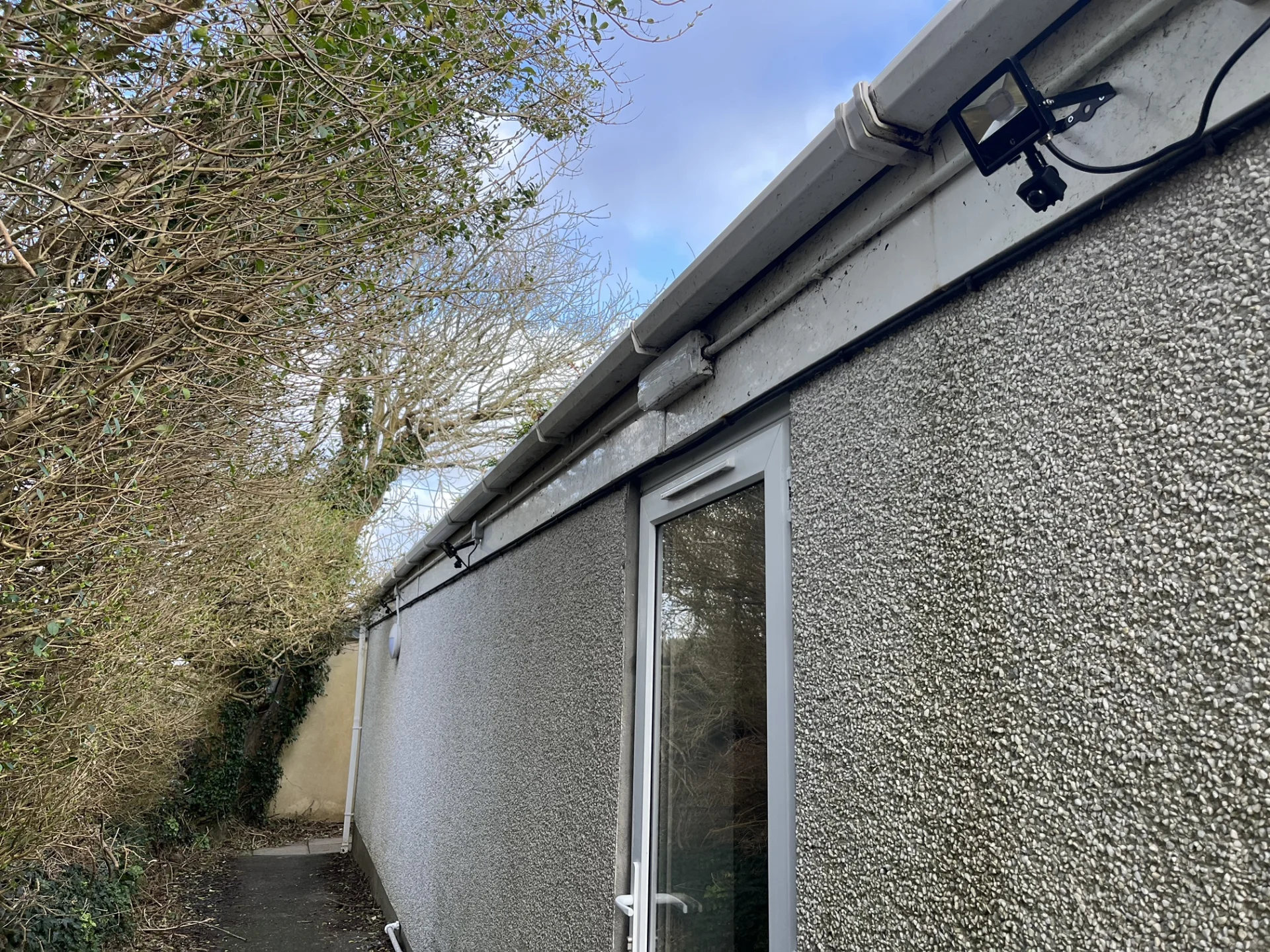
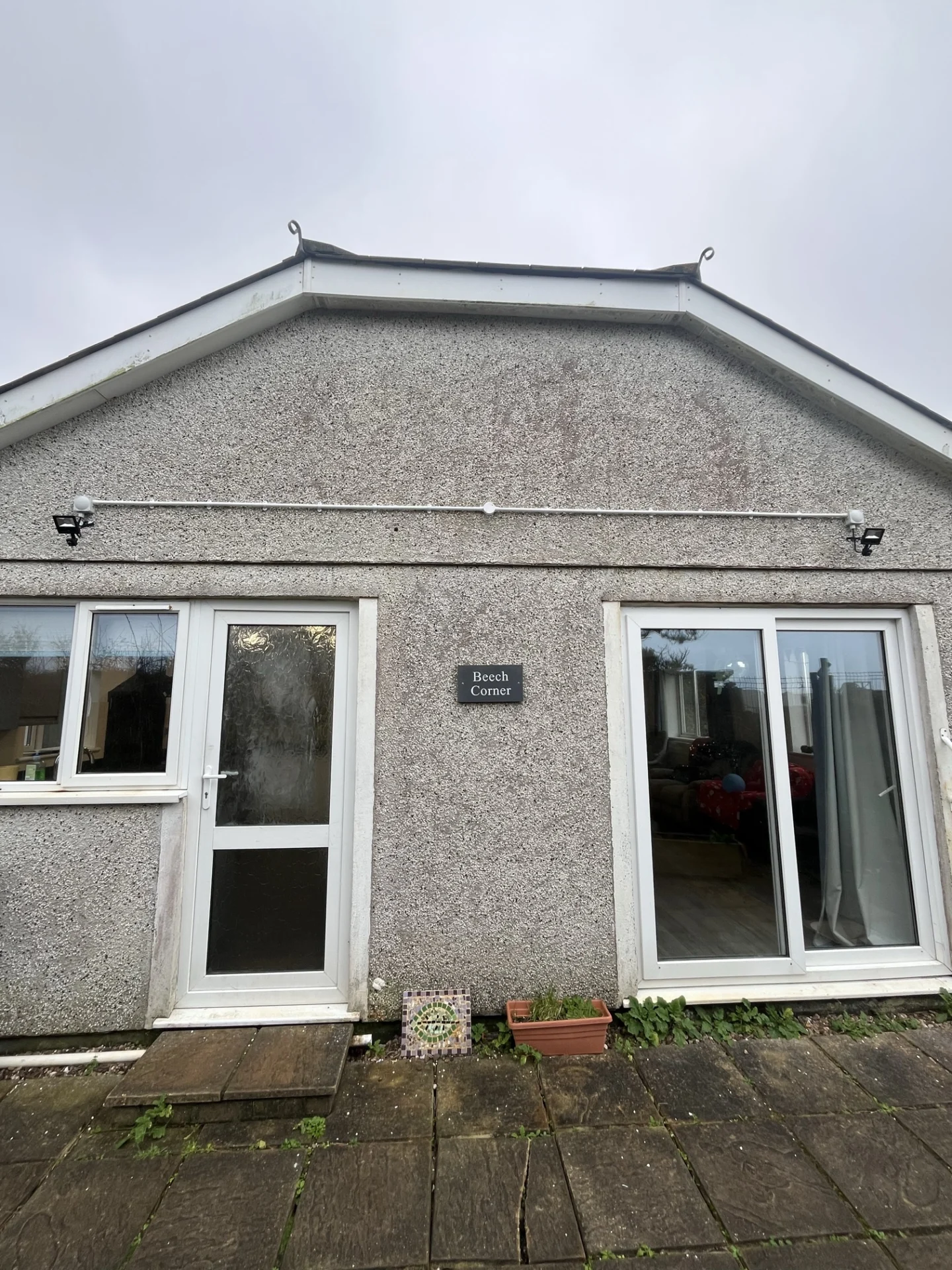
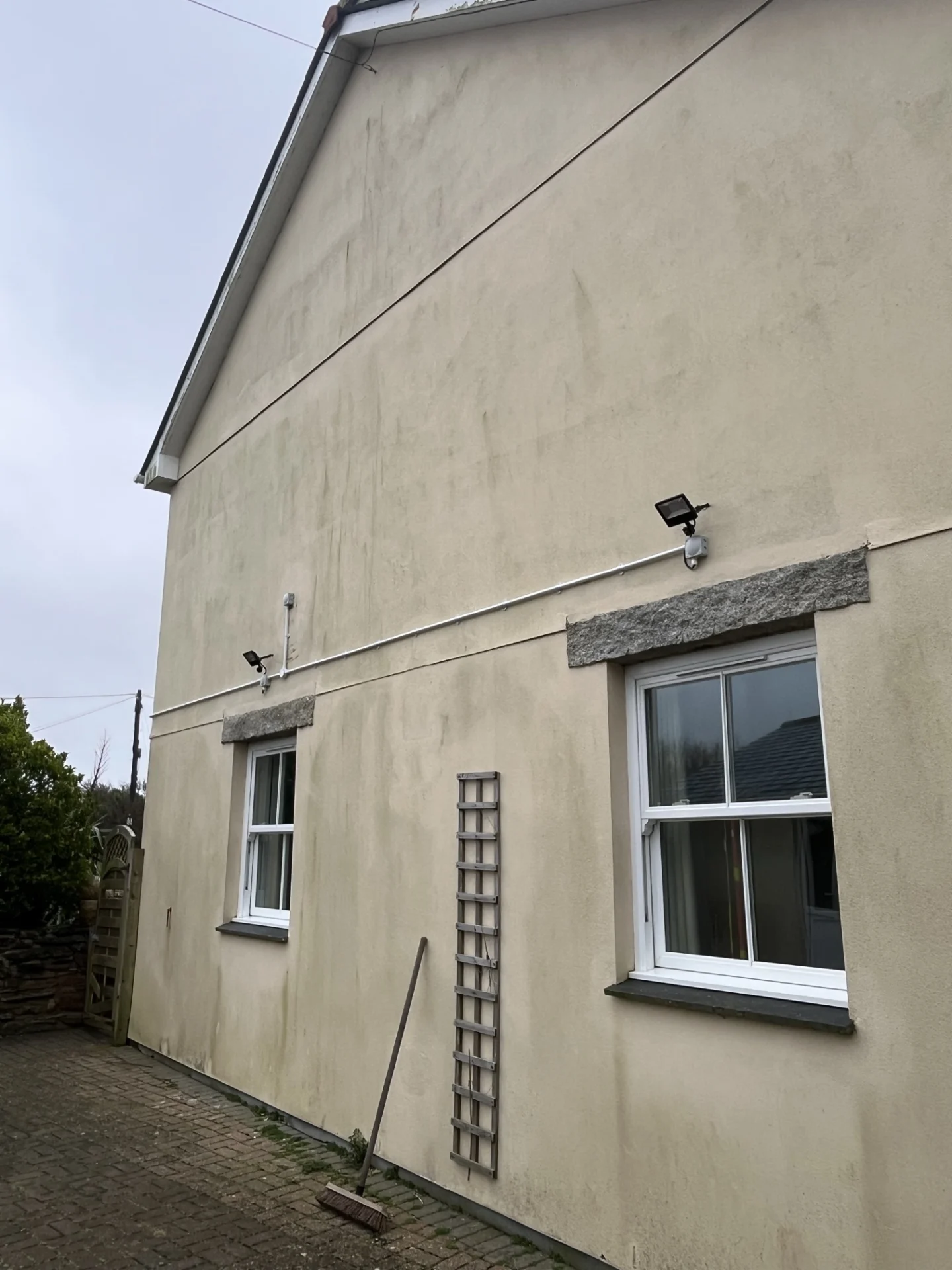
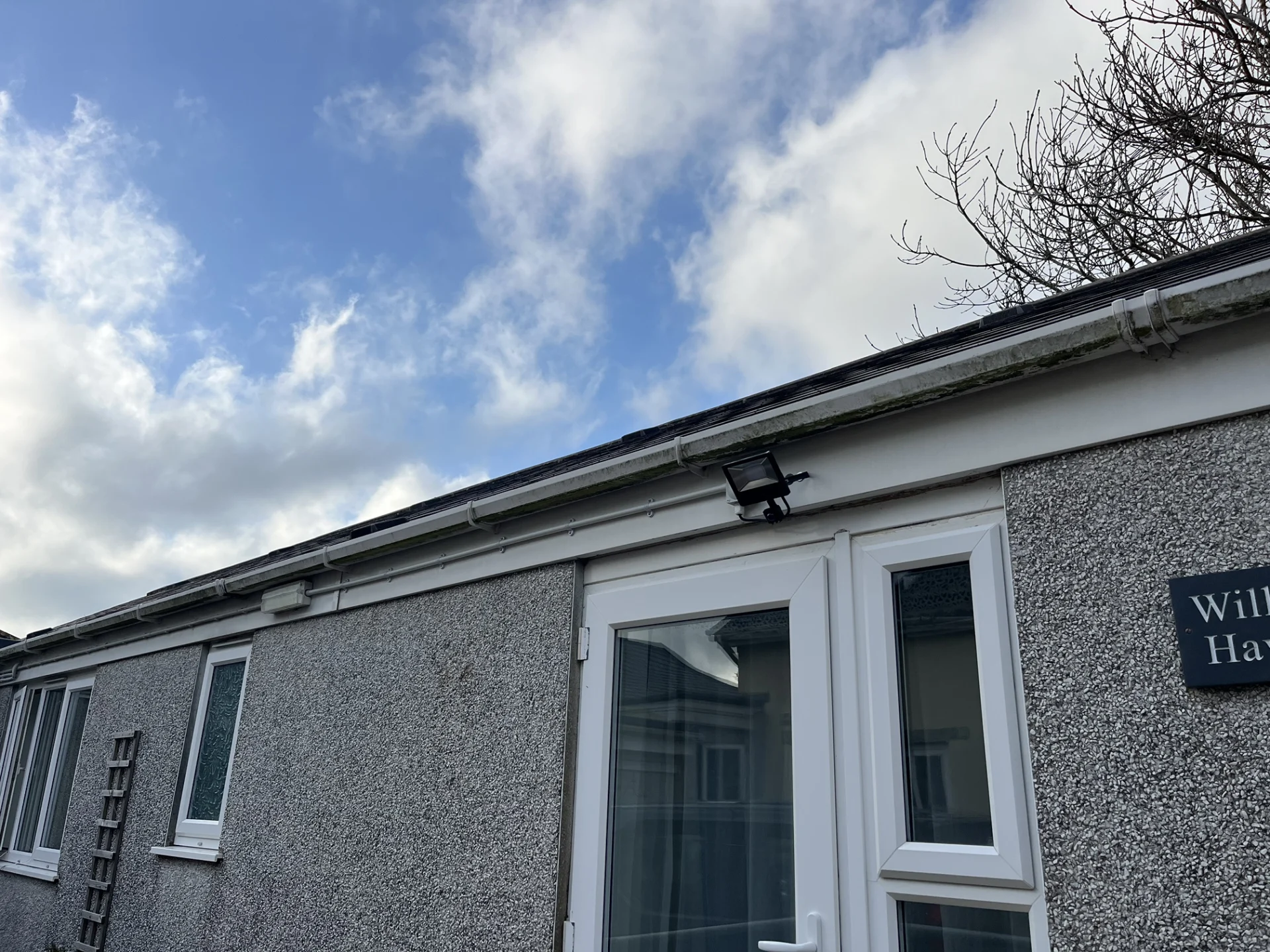
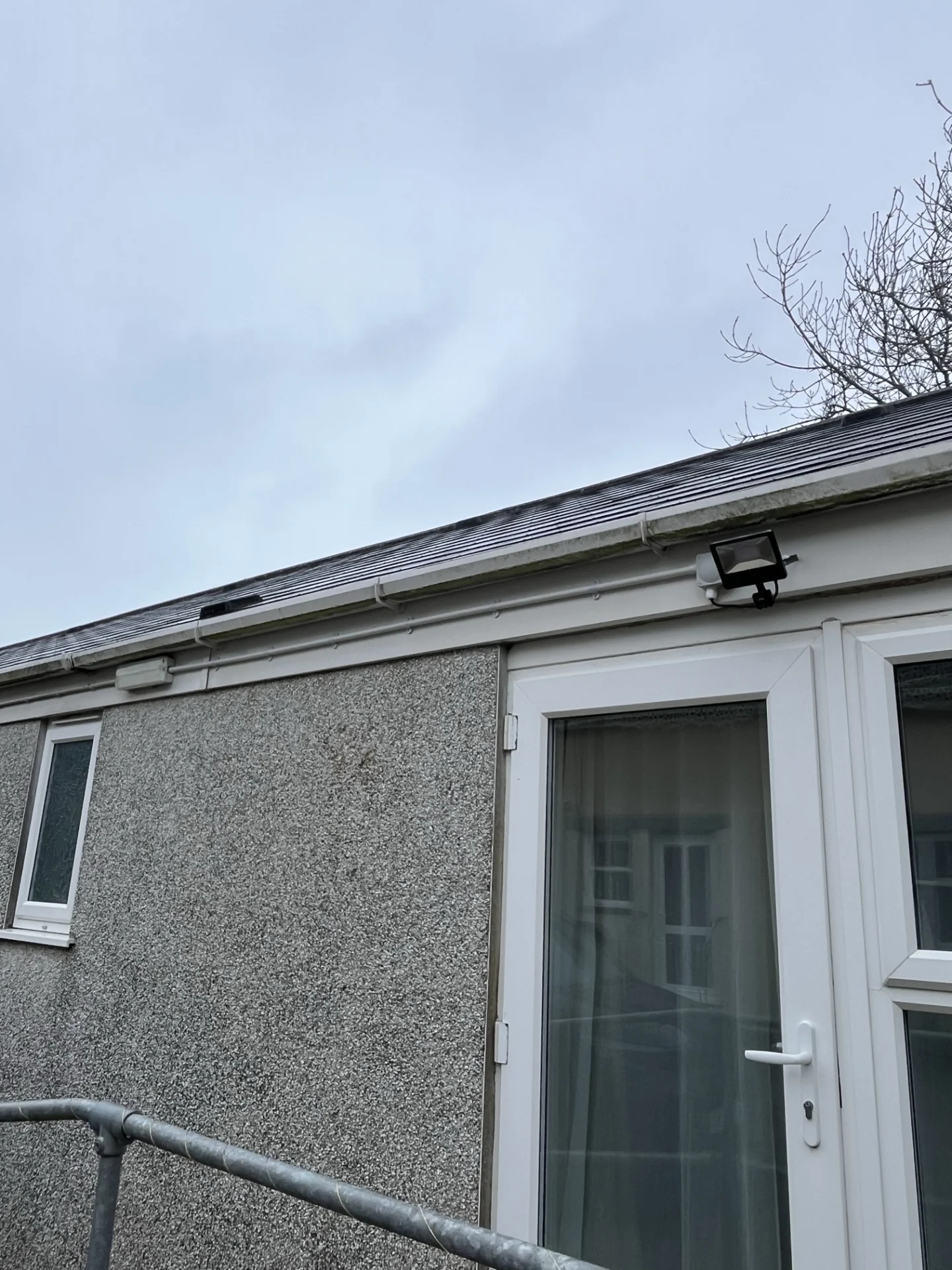
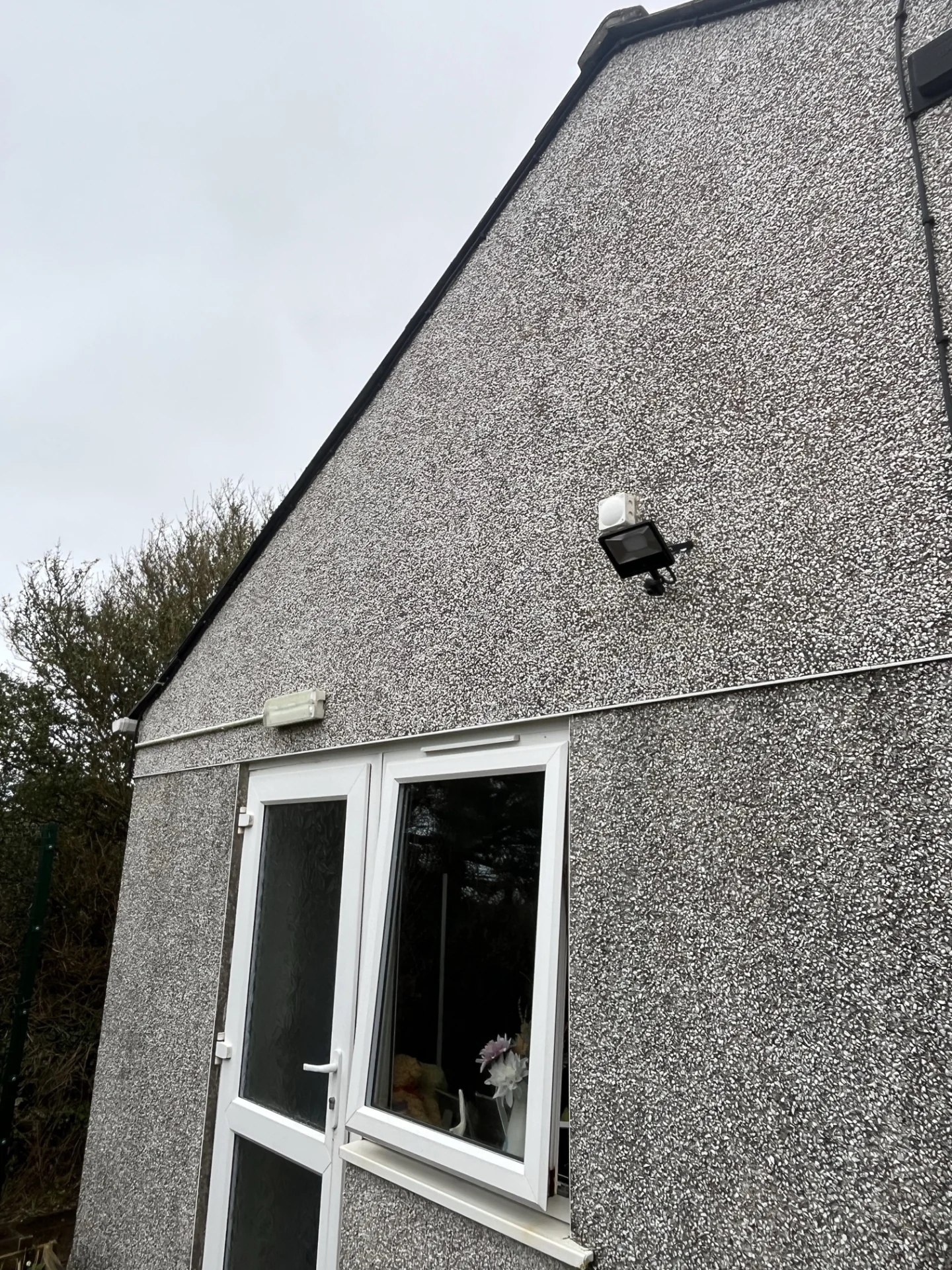
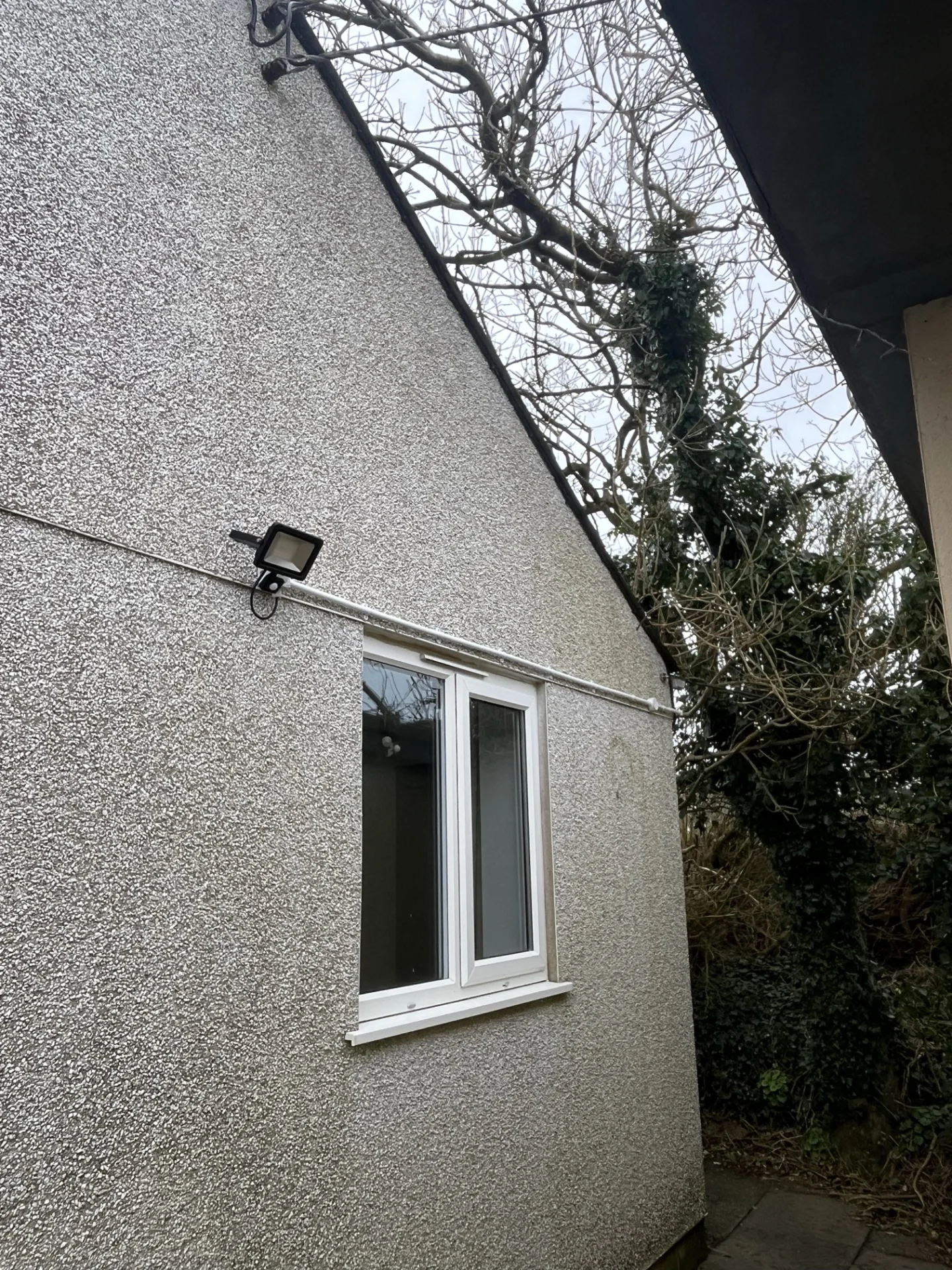
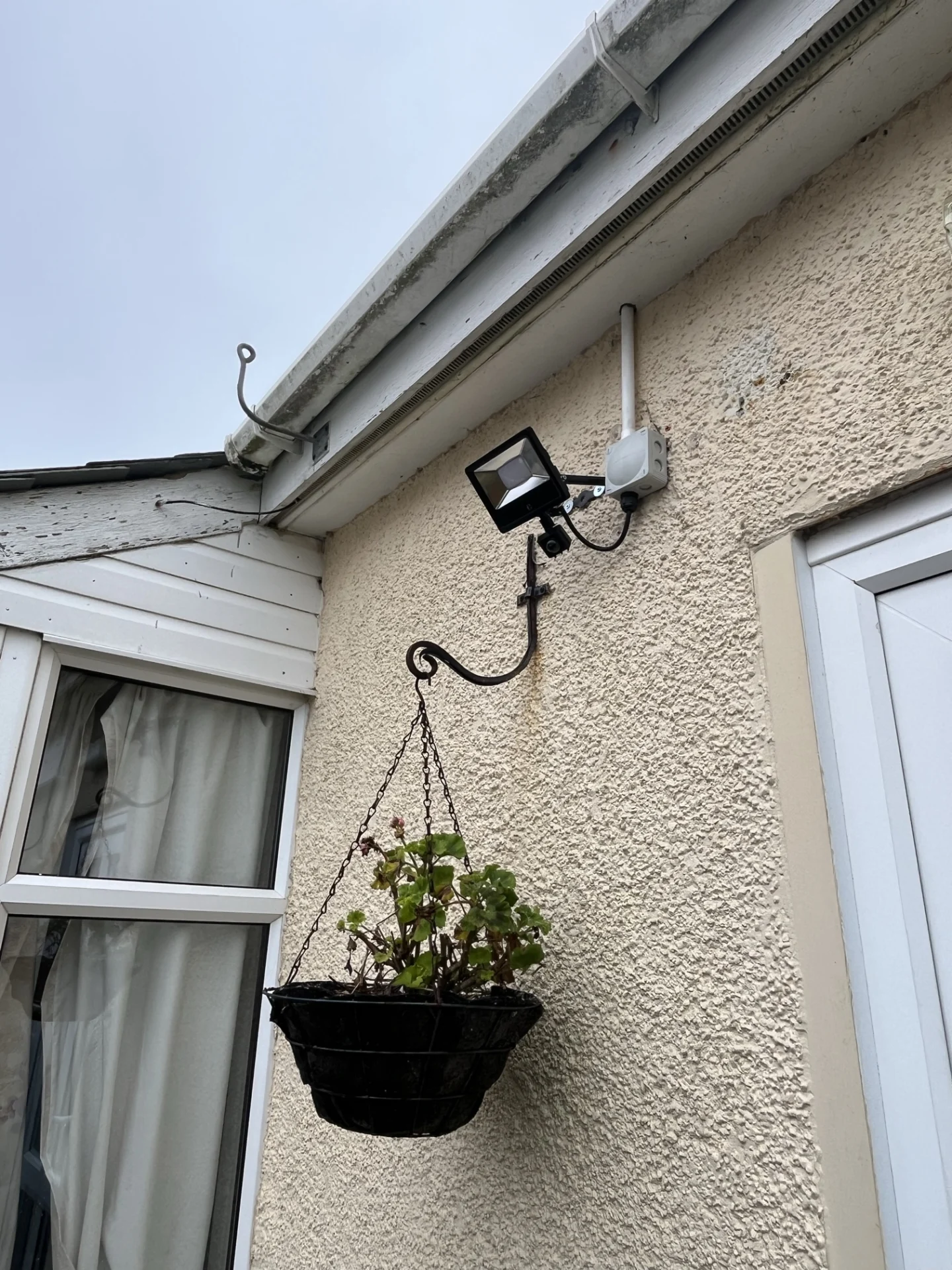
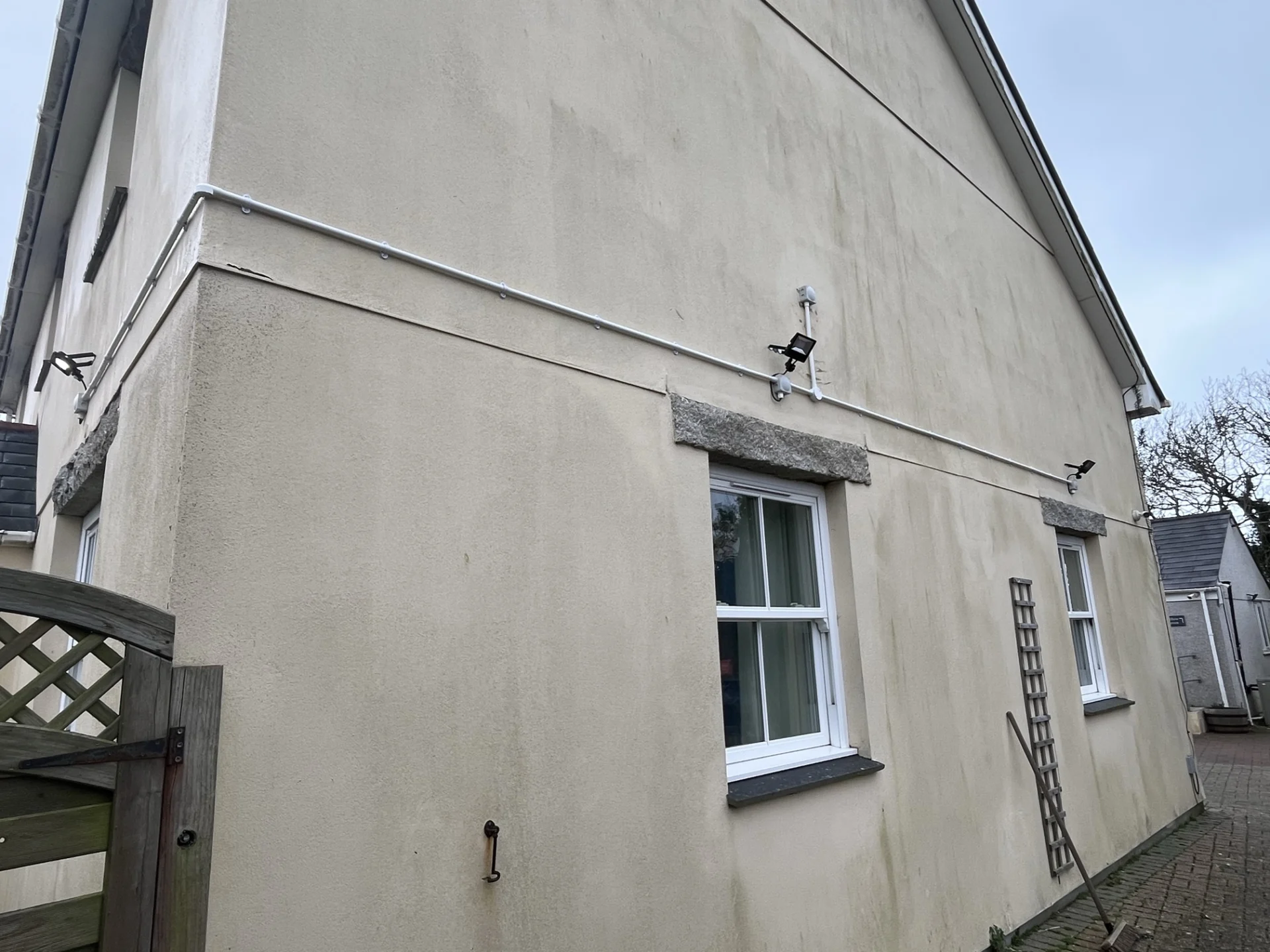
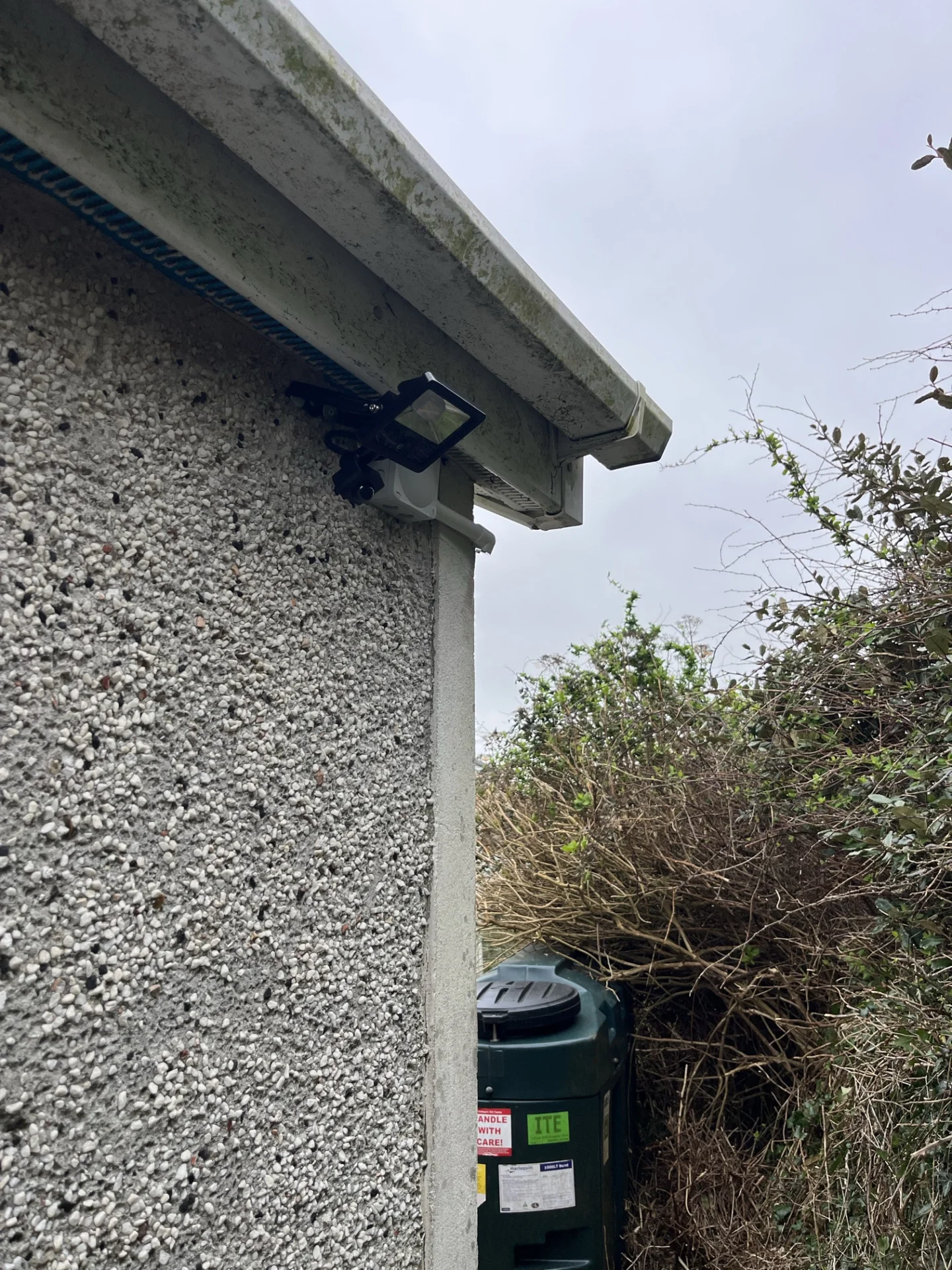
This was a fairly substantial exterior lighting job in St Agnes, covering several separate buildings on the same site. The brief was straightforward enough on paper – install and replace floodlights across multiple external elevations, with all new cabling to be contained within 20mm white PVC conduit. In practice, though, a project spread across multiple structures needs careful planning before a single cable goes in.
The scope involved the supply and installation of nine 10W PIR LED floodlights, five 20W PIR LED floodlights, and the replacement of three existing 20W LED floodlight units with new black-finish models to bring everything in line visually. That’s seventeen floodlights in total across the site, all tied into a consistent layout drawn up ahead of the works.
Working to a Layout Drawing
One of the things that made this project run smoothly was having a lighting layout agreed in advance. Rather than deciding positions on the day, the layout was mapped out beforehand, which meant every floodlight position was known before we arrived on site. That kind of preparation matters on a job like this – not just for time management, but because getting the coverage right across multiple building elevations requires thinking about angles, distances, and how the PIR detection zones interact with each other and the surrounding space.
Working from a pre-agreed drawing also means the client gets exactly what was quoted. There’s no ambiguity, and any potential issues with cable runs or mounting positions can be thought through ahead of time rather than improvised on the day.
PIR LED Floodlights Throughout
All of the new floodlights are PIR-activated LED units in a black finish. The split between 10W and 20W units wasn’t arbitrary – smaller 10W fittings were used where lower-level or shorter-range coverage was needed, while the 20W units handle areas requiring a bit more reach. Passive infrared detection means the lights activate on movement rather than running continuously, which suits external security and access lighting well.
The black finish was a specific requirement across the whole site. Where three existing floodlights were being replaced, the old units came out and matching black replacements went in, so the final result is visually consistent across all the buildings regardless of which fittings were new installs and which were swaps.
LED floodlights have come a long way, and the output from both the 10W and 20W units is genuinely strong for their wattage. They’re also far more practical for external installations than older halogen equivalents – lower running costs and considerably longer service life, which matters particularly on a site with this many fittings.
Cable Containment in PVC Conduit
All cabling to the new lighting positions was run in 20mm white PVC conduit. This is standard practice for external cable runs on rendered or masonry surfaces – the conduit protects the cables from the elements, physical damage, and UV exposure, and it gives the installation a clean, finished appearance rather than cables fixed directly to the wall surface.
On a job with this many fittings spread across different elevations and buildings, the conduit runs needed to be thought through carefully. Getting from the supply point to each fitting position neatly, with junctions and adaptors in the right places, is as much about good planning as it is about the physical work. The runs here were kept tight to the building lines, following the roofline and wall lines where possible to keep everything looking tidy.
St Agnes sits on the north Cornish coast, and like most of Cornwall’s coastal parishes, it sees its fair share of wind and rain. That’s worth considering on any external electrical installation – conduit joints need to be properly made, entries into boxes need appropriate sealing, and everything exposed to the weather should be rated and installed accordingly.
The Finished Installation
Across all the buildings, the end result is a well-covered, consistent external lighting setup. The PIR floodlights provide good coverage around entrances, pathways, and the various elevations of the site, activating when needed rather than burning all night. The conduit runs are neat and follow the lines of the buildings, and the uniform black finish across all seventeen fittings ties the whole installation together visually.
This type of external floodlight installation is something we carry out regularly across Cornwall – whether it’s a single domestic property needing a couple of new fittings or a larger site like this one requiring a coordinated approach across multiple buildings. The principles are the same: plan the layout, contain the cabling properly, use the right fittings for each position, and deliver a finish that looks as good as it performs.