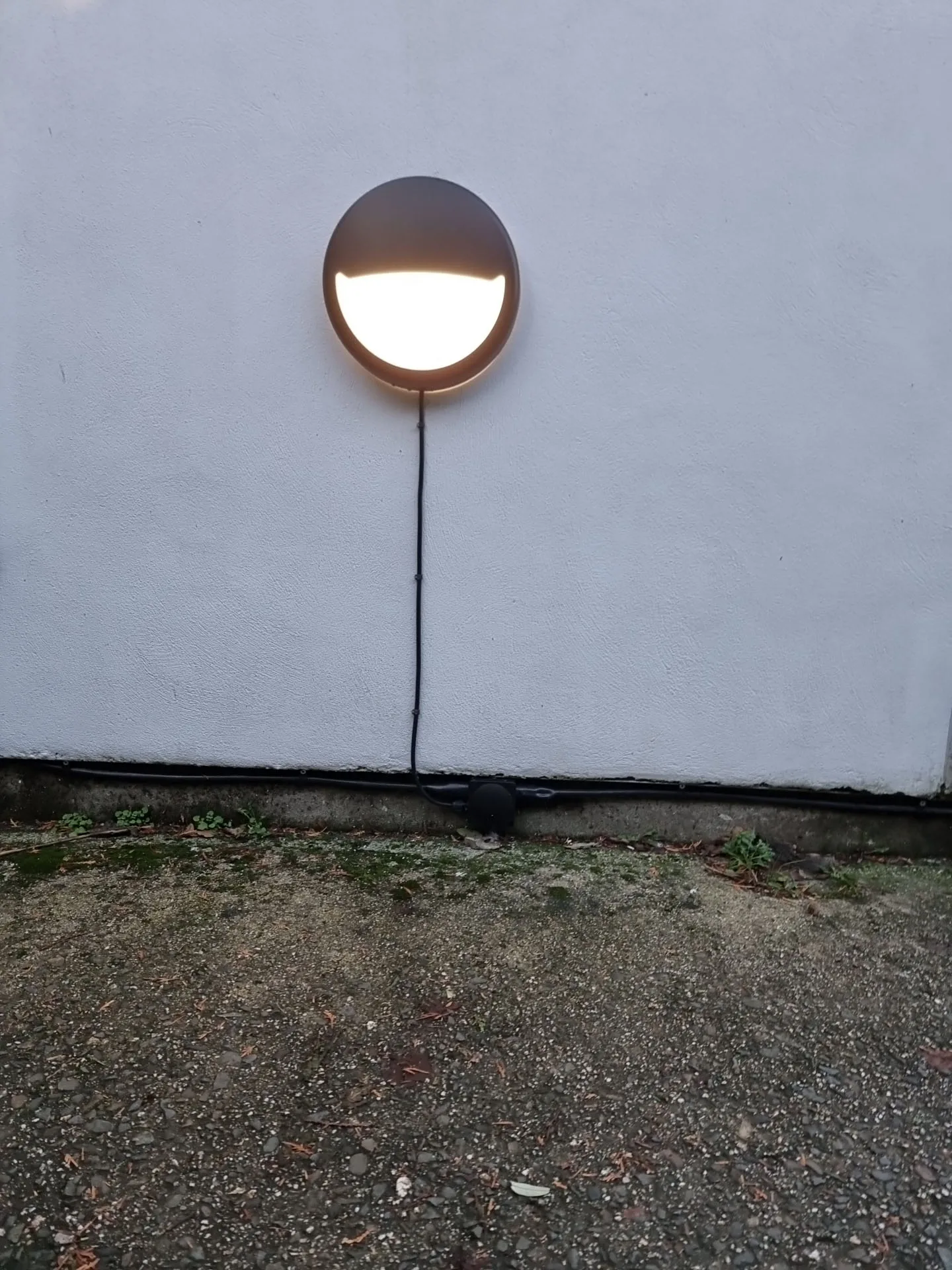
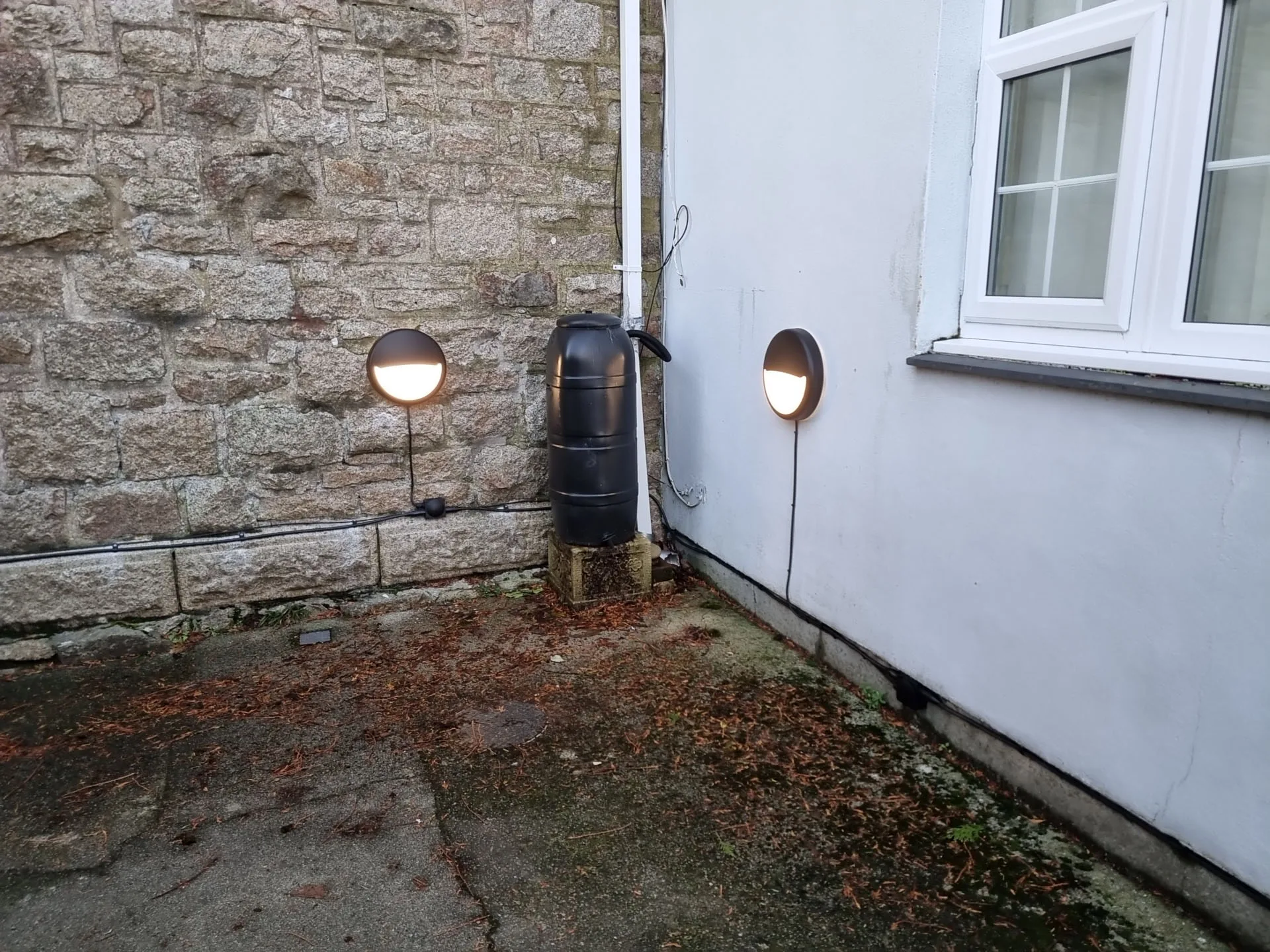
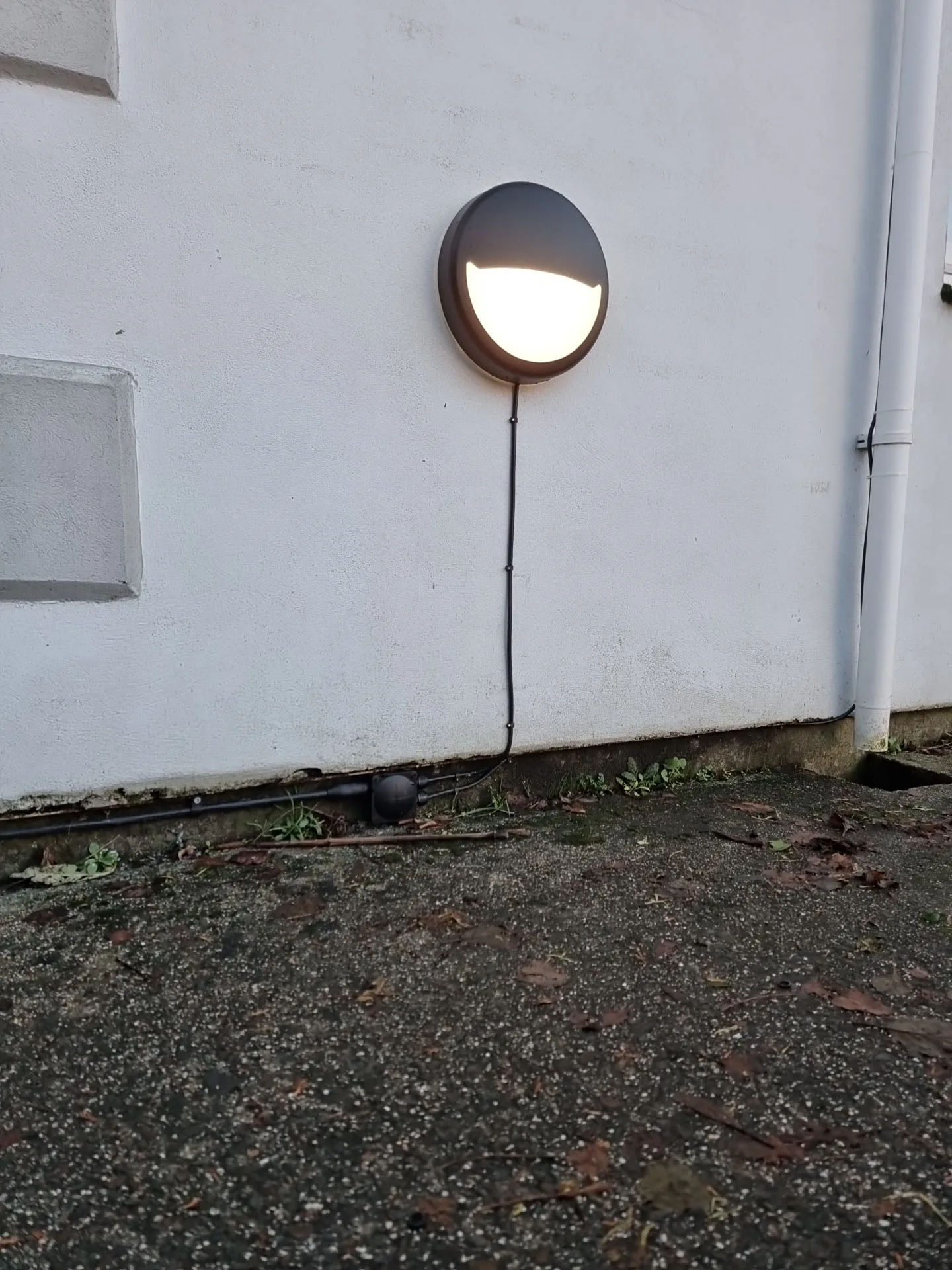
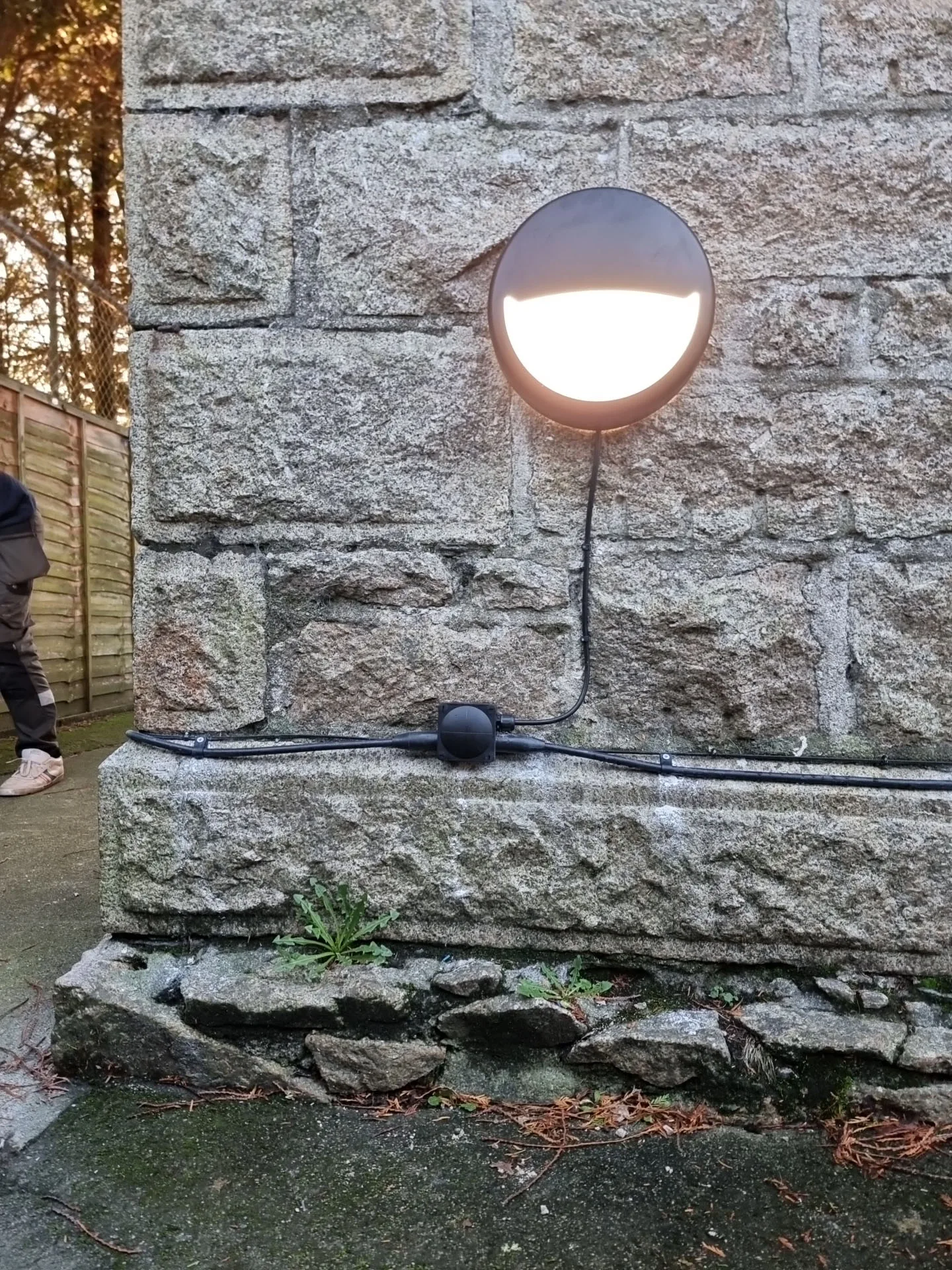
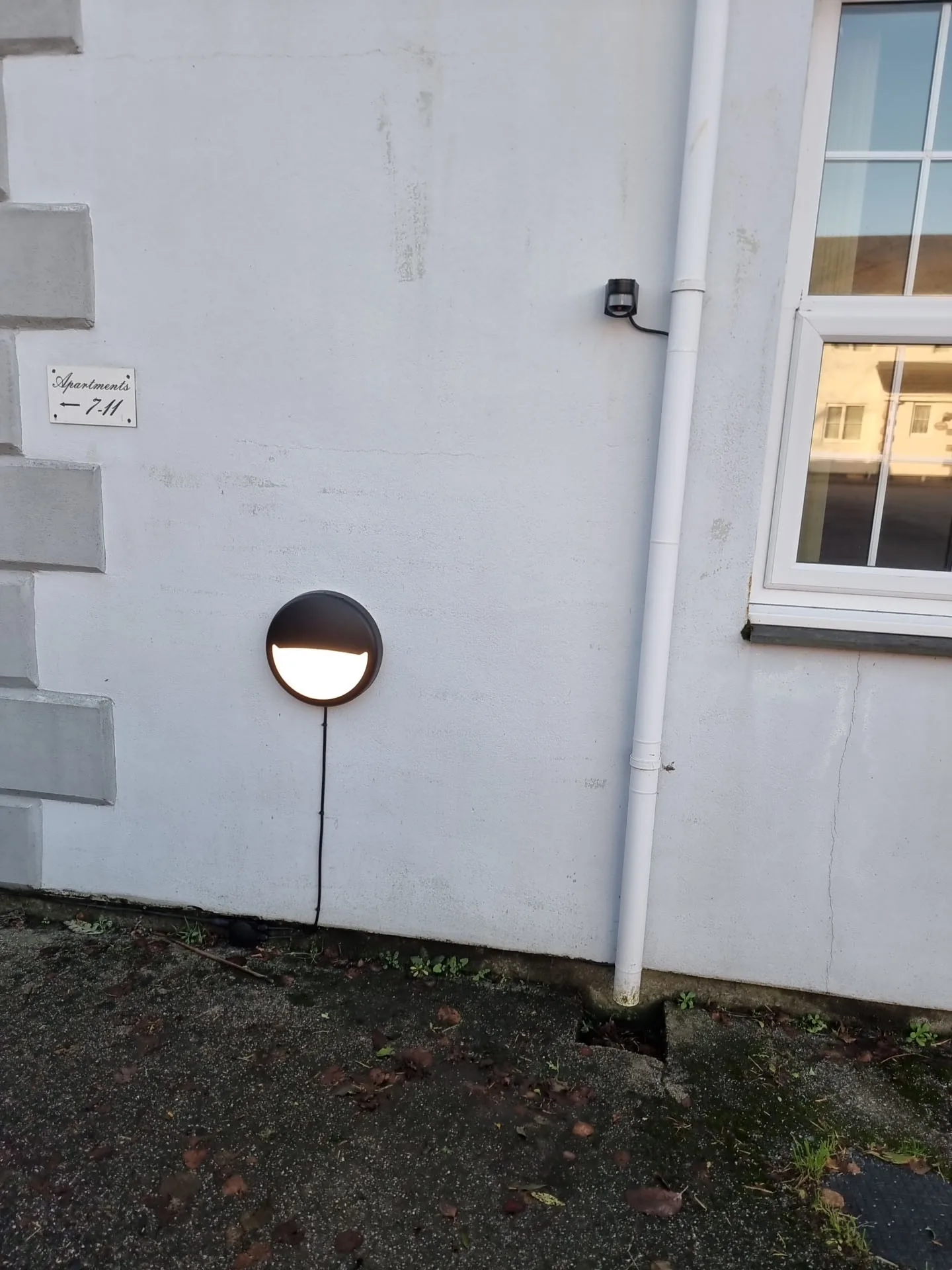
A comprehensive exterior lighting installation for a St Austell property featuring eight low-level walkway lights and a rear garden floodlight, all controlled through an integrated PIR sensor system. The work also included updates to interior lighting controls, replacing an old pull cord switch and reconfiguring hallway lighting with modern timer switches for improved convenience and functionality.
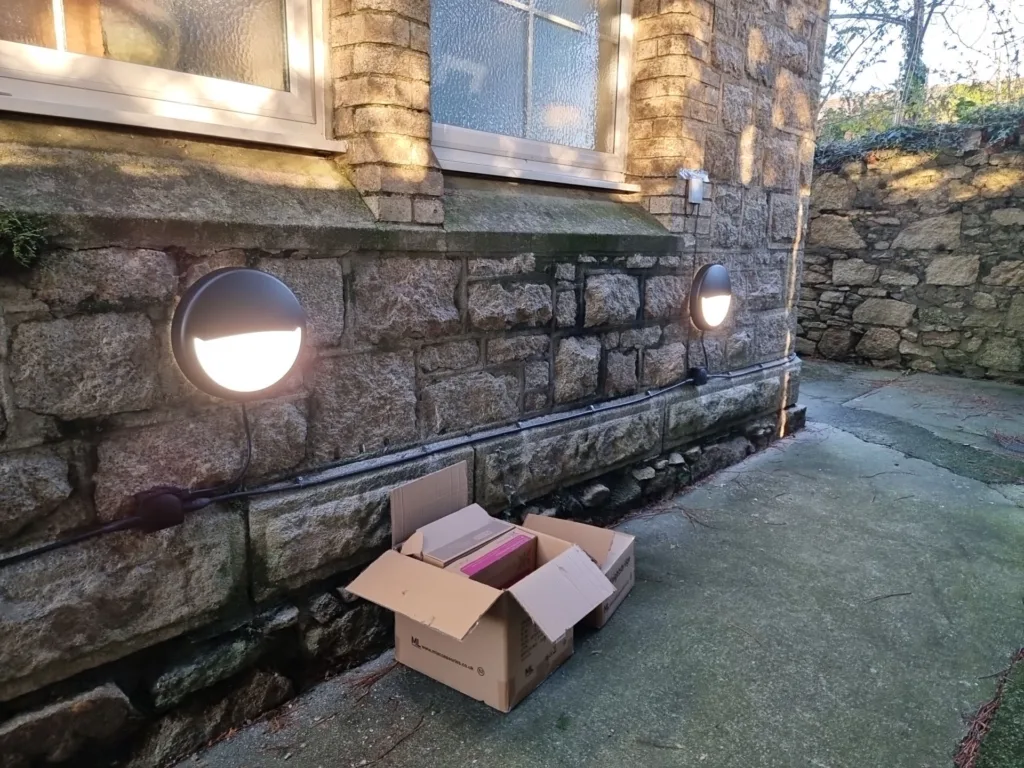
This St Austell property needed a complete overhaul of its exterior lighting system. The existing setup had become unreliable over time, leaving walkways poorly lit and creating concerns about both safety and security around the building perimeter. The client wanted something that would work seamlessly without constant manual intervention, which meant designing a system that could respond intelligently to movement whilst providing consistent coverage across multiple zones.
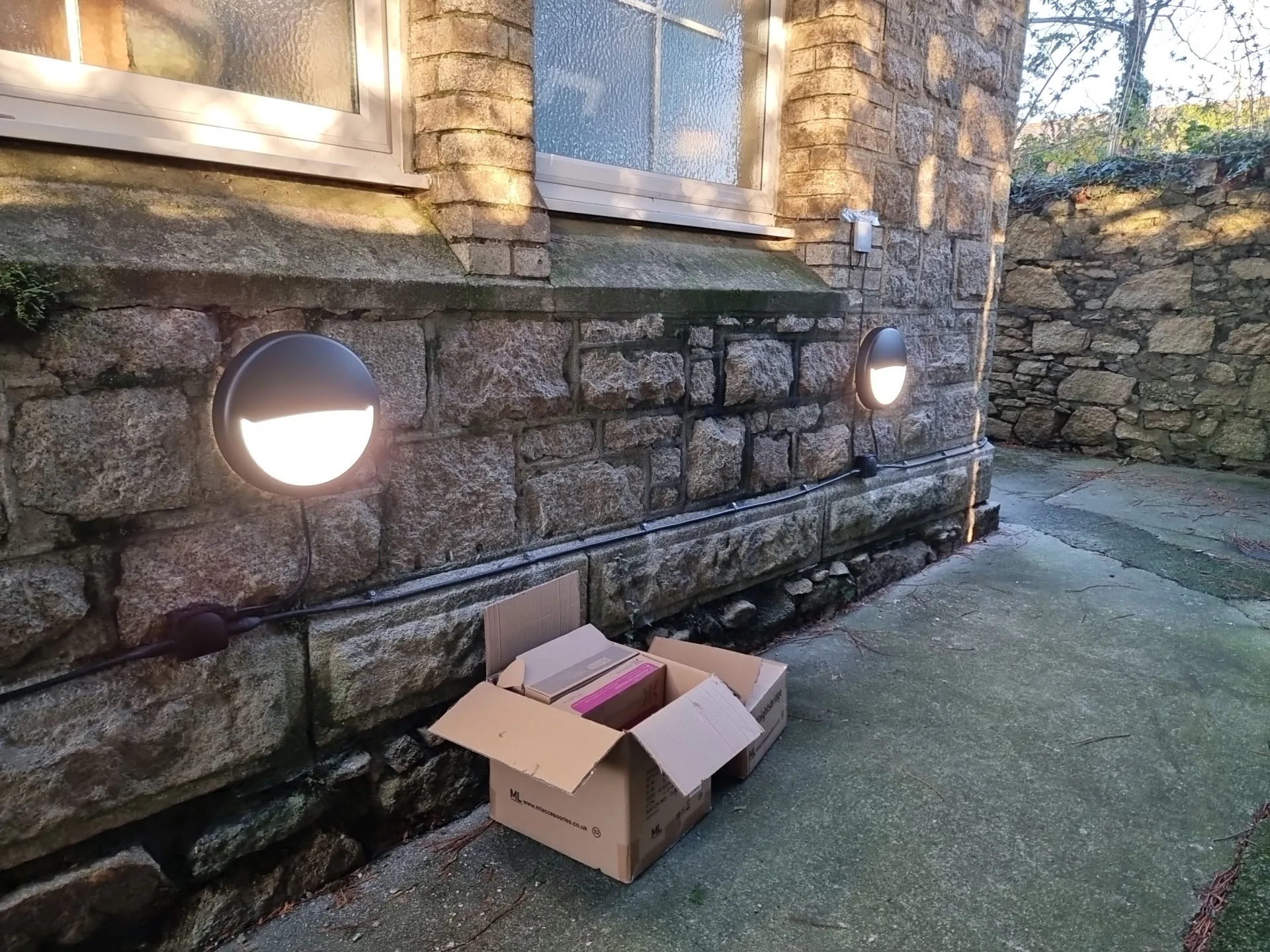
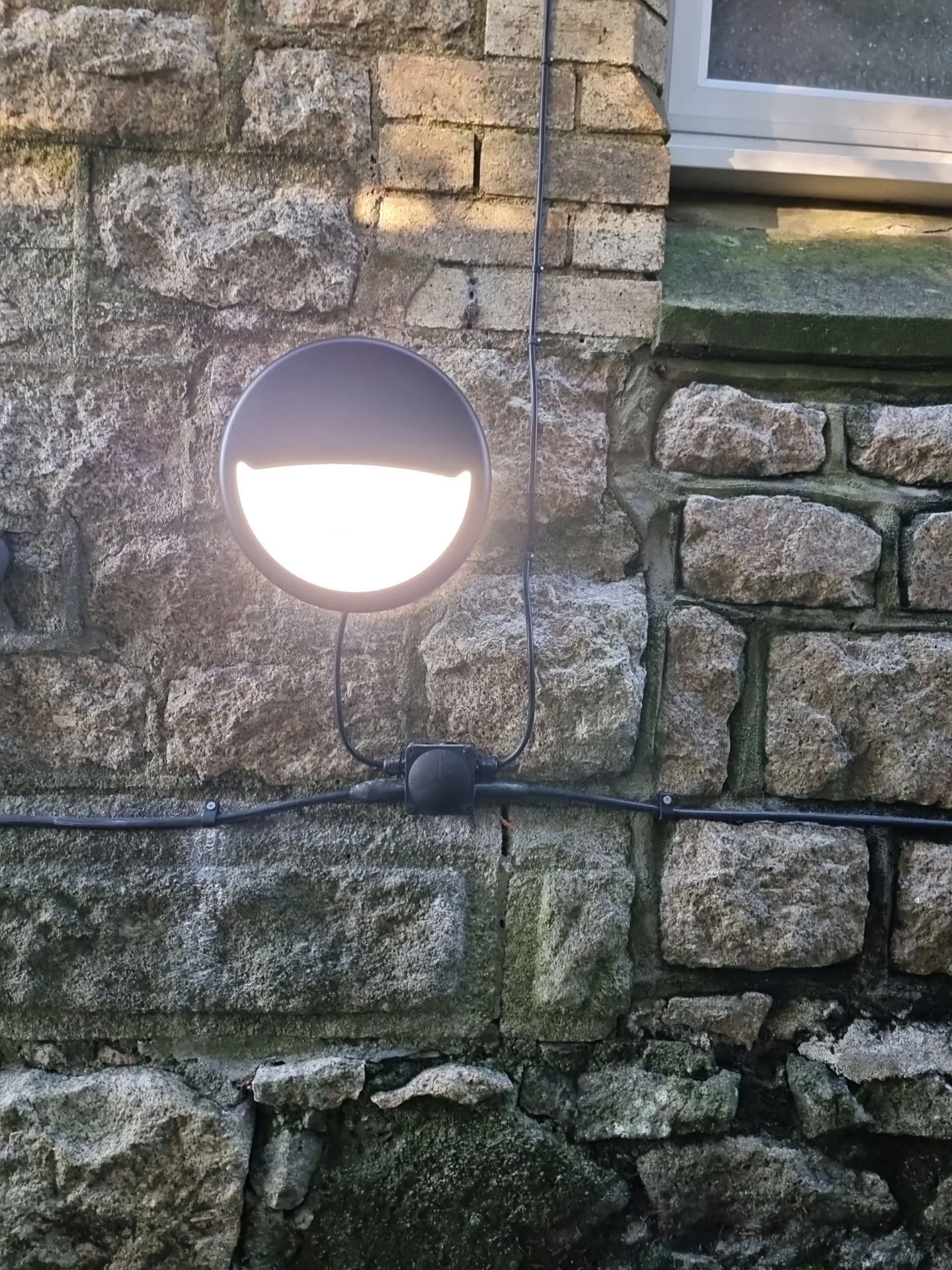
The scope of work centred around installing nine new exterior lights across the property. Eight of these were low-level wall lights positioned along the walkways surrounding the building. These weren’t just decorative additions but functional fixtures designed to provide safe passage after dark whilst complementing the building’s character. The positioning required careful consideration to avoid creating harsh shadows or blind spots whilst maintaining even coverage along the entire route.
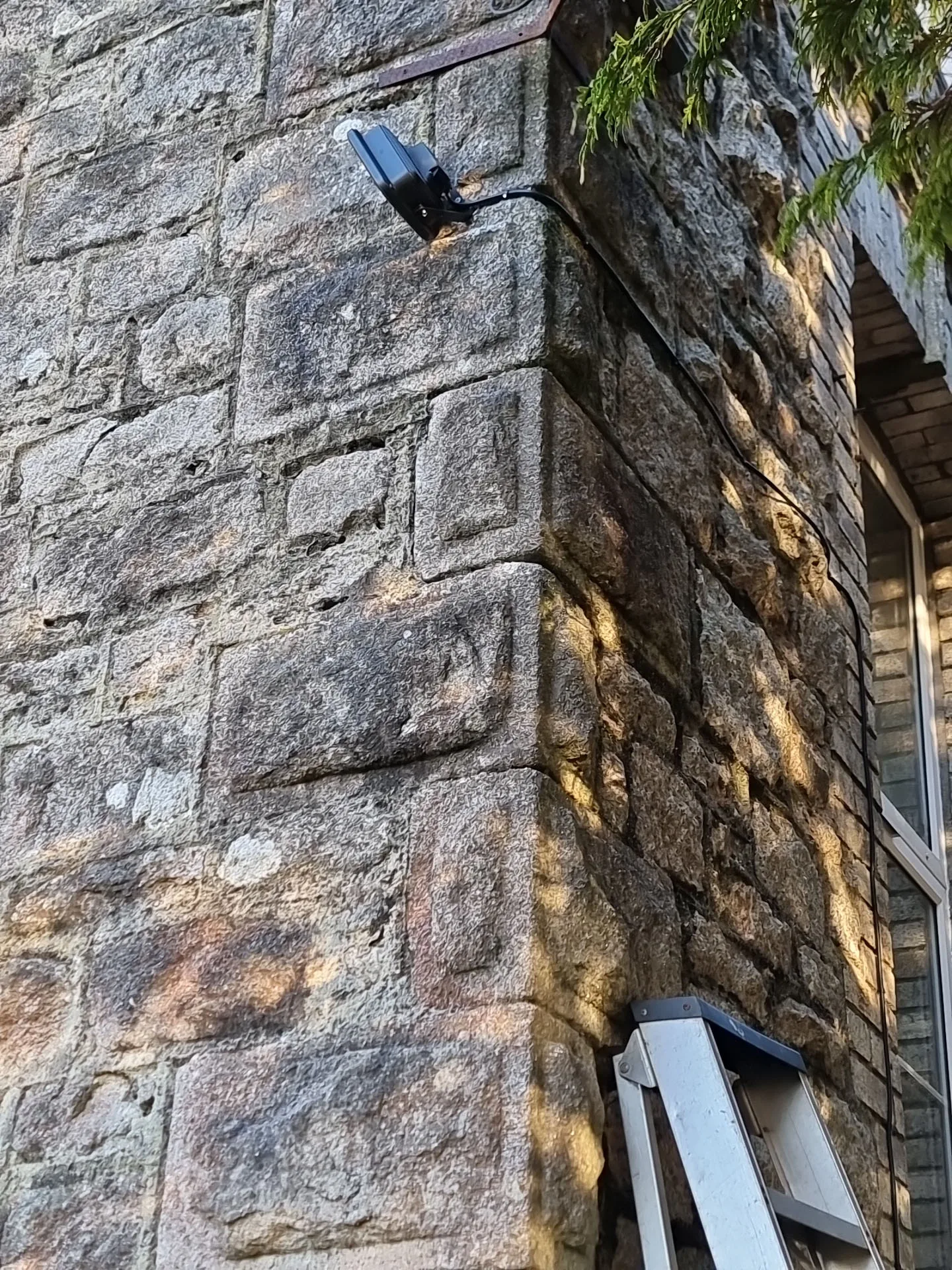
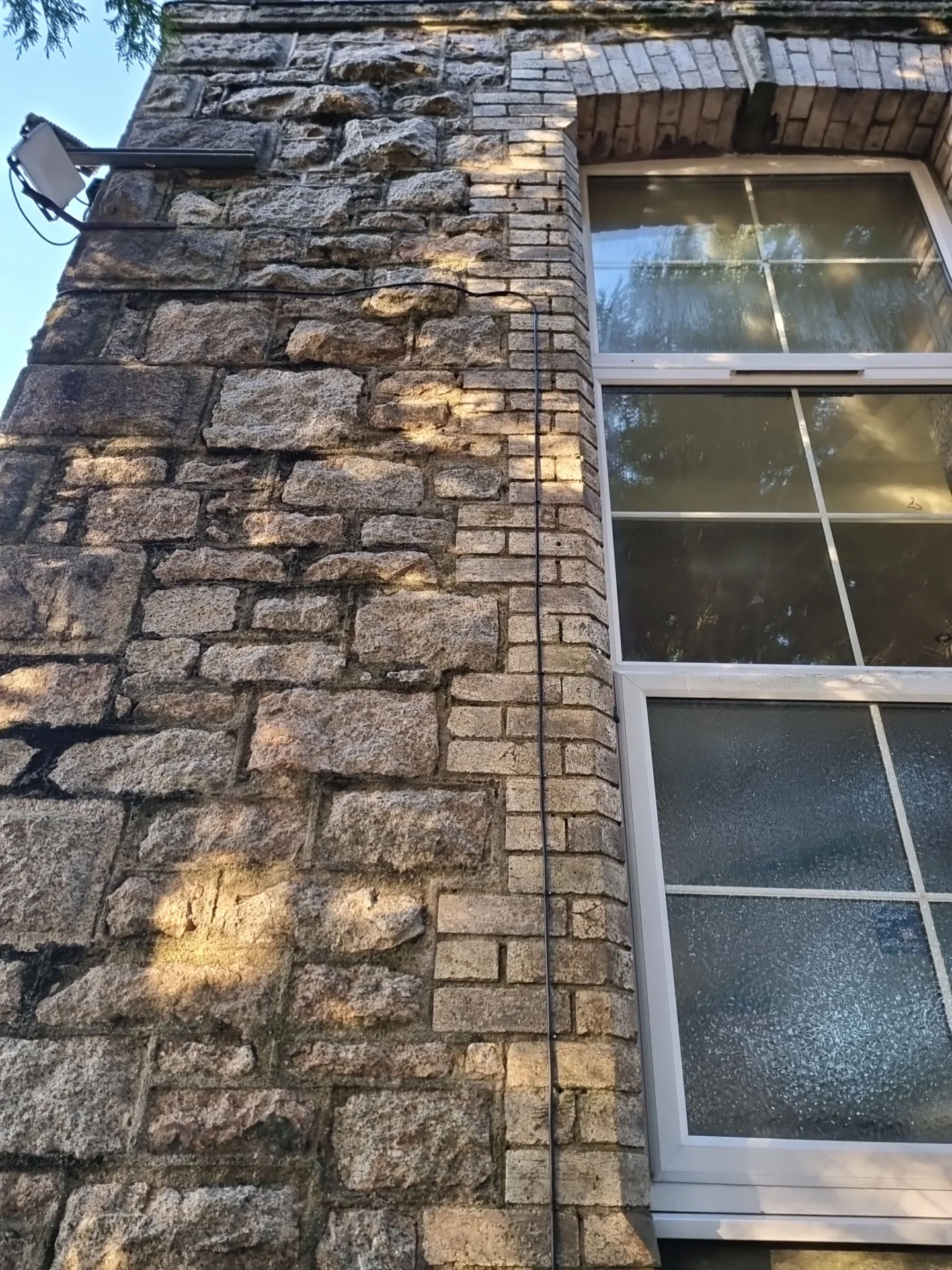
A floodlight installation in the rear garden completed the exterior lighting arrangement. This needed to tie into the same control system as the walkway lights, providing broader coverage for the garden area whilst responding to the same detection triggers. The challenge lay in creating a unified system where multiple lights across different areas could work together rather than operating as isolated units.
The control mechanism forms the intelligent heart of this installation. Three PIR sensors were positioned at strategic locations around the property, each monitoring different approach routes and entry points. The clever part lies in how these sensors communicate with the lighting – any one of the three PIR units can trigger all nine lights simultaneously. This means someone approaching from any direction activates the complete lighting system rather than just local fixtures, providing comprehensive security coverage and eliminating dark zones.
Running the necessary cabling for this system required running 75 metres of four-core steel wire armoured cable. This type of cable provides the durability needed for exterior installations where cables face exposure to weather and potential physical impact. The armoured construction protects the conductors whilst allowing burial or surface mounting as required by the site conditions. The installation followed the building’s exterior lines, with cables neatly clipped to walls where they ran above ground and properly protected where they crossed vulnerable areas.
Each connection point required appropriate weatherproof enclosures to house the cable terminations and junction points. Exterior electrical work demands attention to ingress protection ratings, with every enclosure selected to prevent moisture penetration whilst allowing necessary cable entries. The gland entries were sized correctly for the armoured cable, creating sealed connections that maintain the system’s weather resistance throughout its service life.
The existing defunct lighting system presented its own challenges during the early stages of work. Decommissioning meant tracing old circuits, safely isolating supplies, and removing redundant cabling and fixtures where practical. Some of the old infrastructure had degraded to the point where it posed potential hazards, making its removal particularly important rather than simply abandoning it in place.
Commissioning the PIR sensors required more than simply connecting power and hoping for the best. Each sensor needed individual adjustment to establish proper detection zones without creating false triggers. The sensors use passive infrared technology to detect heat movement within their field of view, but they can be overly sensitive without proper setup. Adjusting the detection angle, range, and sensitivity for each of the three units meant walking the approaches multiple times whilst fine-tuning settings until the system responded reliably to actual traffic whilst ignoring passing vehicles, swaying vegetation, or other environmental factors.
The interior work added practical improvements to complement the exterior upgrades. A pull cord switch in the service cupboard had reached the end of its useful life. These switches see regular use in utility areas where hands might be full or wet, making them prone to mechanical wear. Replacing it meant disconnecting the old unit, confirming the existing wiring remained in good condition, and fitting a new switch that would provide many more years of reliable operation.
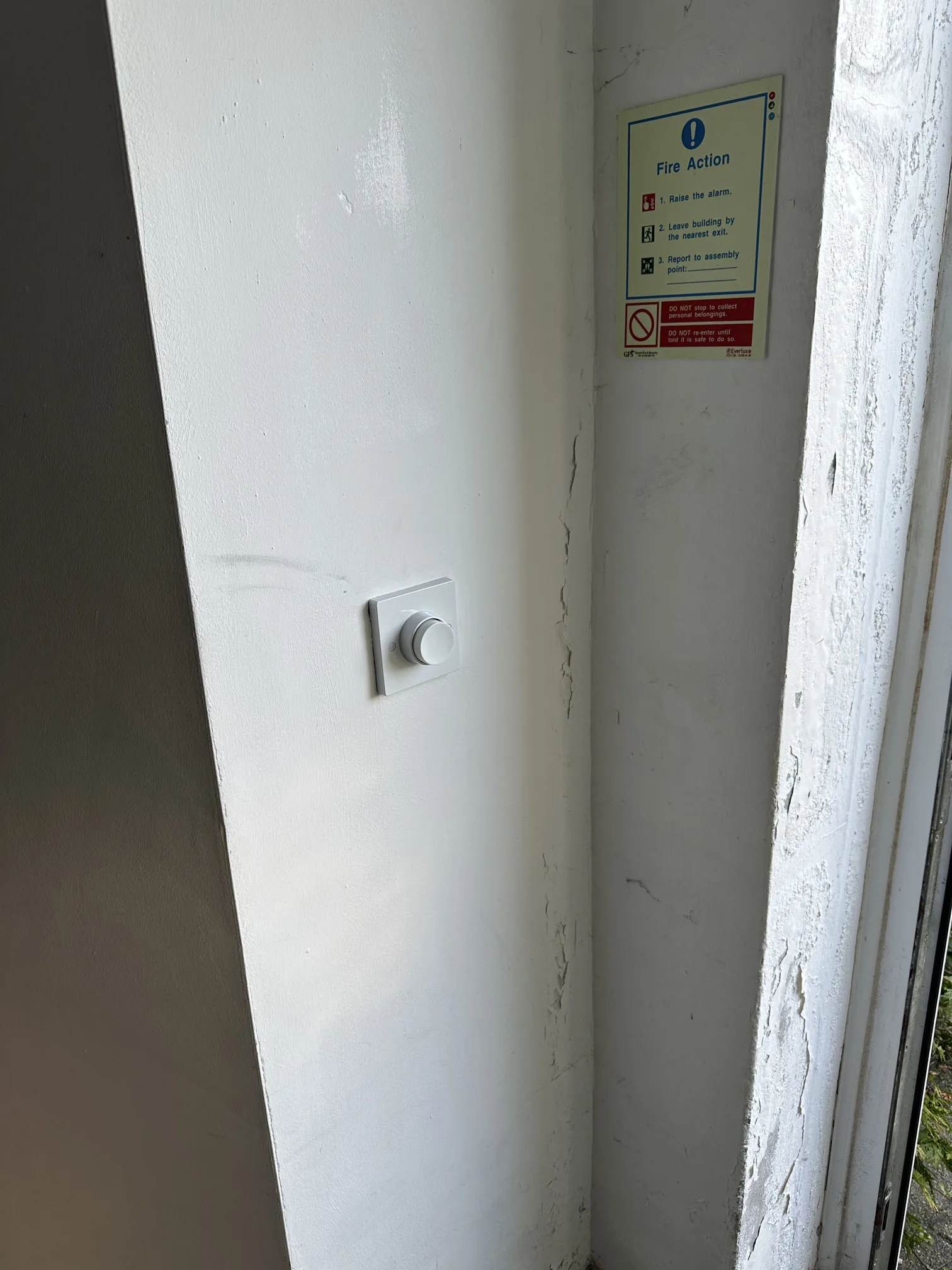
The hallway lighting control presented more significant changes. The original arrangement used a PIR sensor to automatically control the hallway lights, but the client found this approach created problems. PIR control in frequently used interior spaces can become frustrating when lights extinguish whilst the space remains occupied, or when they activate unexpectedly during quiet hours. The solution involved removing the PIR control entirely and implementing a three-way switching system using electronic timer switches.
These timer switches provide the convenience of automatic shut-off without the drawbacks of motion detection. When someone enters the hallway and presses any of the three switches positioned at different access points, the lights activate and remain on for a preset duration before automatically extinguishing. This gives enough time to move through the space without rushing whilst preventing lights being accidentally left on indefinitely. The three-way configuration means the system can be activated or overridden from multiple locations, providing flexibility for different traffic patterns through the hallway.
Implementing this switching arrangement required evaluating the existing wiring to confirm it could support the new control method. Three-way switching demands specific conductor arrangements between switch locations, and whilst the existing cable runs proved suitable for adaptation, the connections needed reconfiguring to work with the timer switches rather than simple toggle switches or the previous PIR arrangement.
Working in St Austell brings its own considerations. Properties in the area often feature granite or rendered exteriors that require different fixing approaches depending on the substrate. Drilling into granite demands masonry bits and patience, whilst ensuring weatherproof cable entry points requires careful sealing around each penetration. The local climate means exterior installations face regular exposure to rain and wind-driven moisture, making proper installation technique and quality weatherproofing essential rather than optional.
The completed installation transforms how the property functions after dark. The exterior lighting activates automatically as people approach from any direction, providing immediate visibility without fumbling for switches. The walkway lights create safe passage routes whilst the floodlight covers the garden area, with all fixtures working together as a coordinated system. Inside, the hallway lighting offers convenient push-button control with automatic shut-off, removing the previous frustrations whilst maintaining energy efficiency.
This type of comprehensive lighting upgrade demonstrates how modern control systems can improve both security and convenience. Rather than relying on timers that waste energy during daylight hours or manual switches that get forgotten, the PIR-activated exterior lighting responds only when needed whilst providing full coverage. The hallway timer switches offer similar benefits, combining the convenience of automatic control with the precision of manual activation. For the St Austell property owner, these improvements mean better lighting where it’s needed whilst reducing ongoing energy consumption compared to leaving lights on for extended periods.