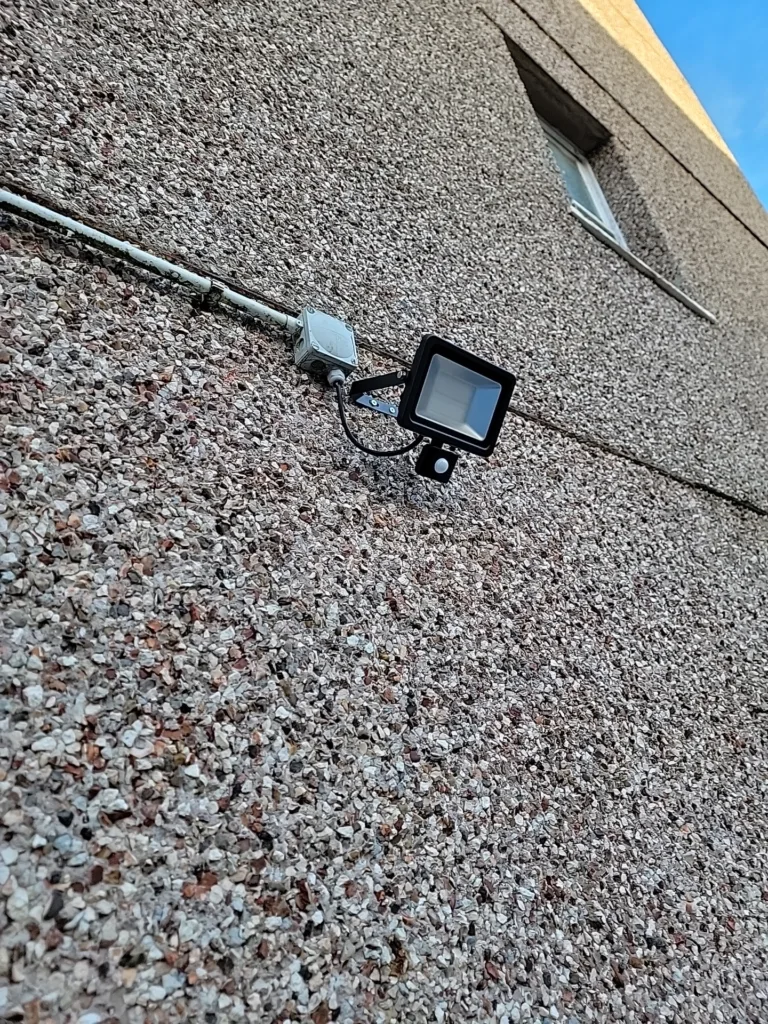
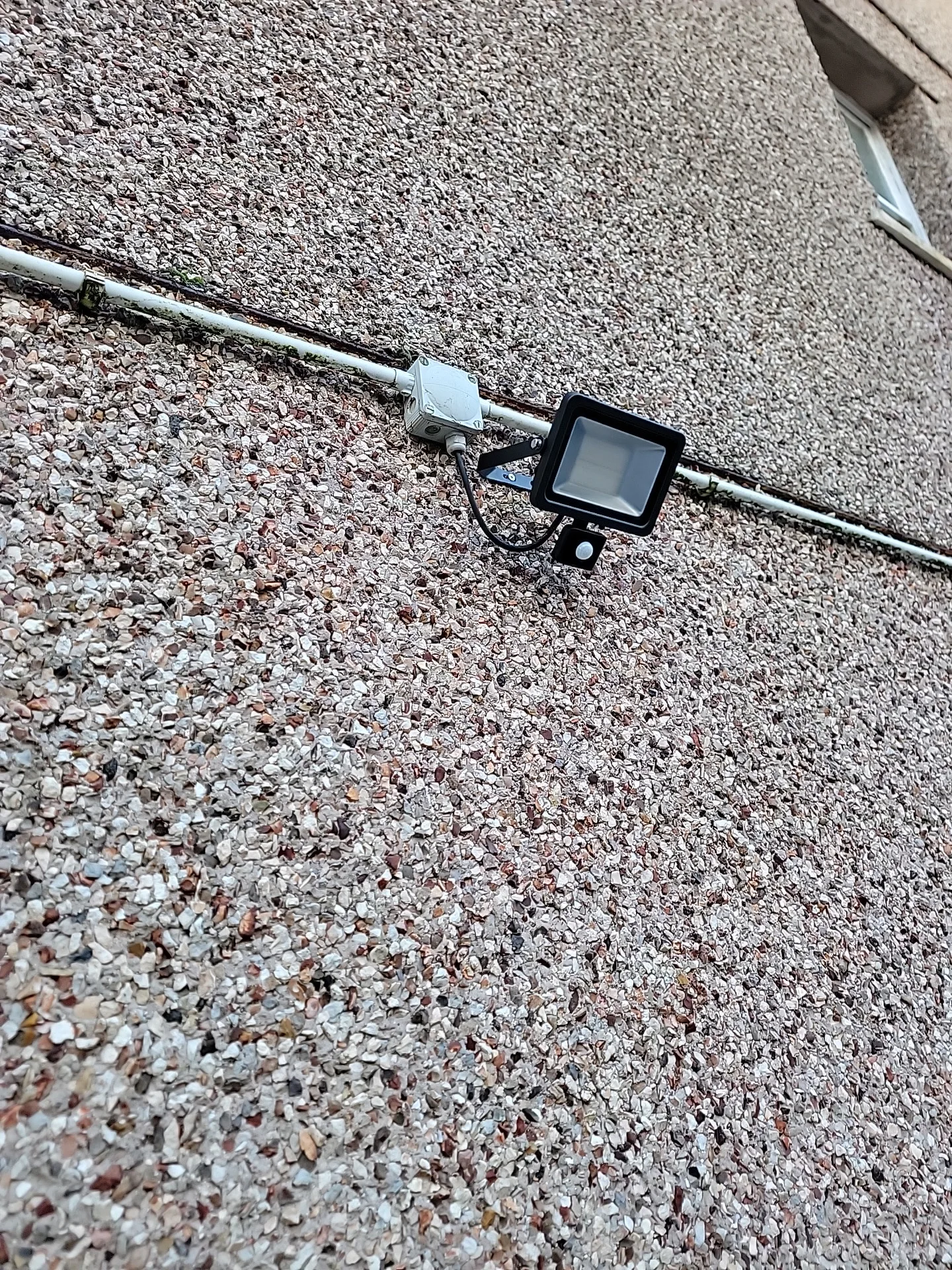
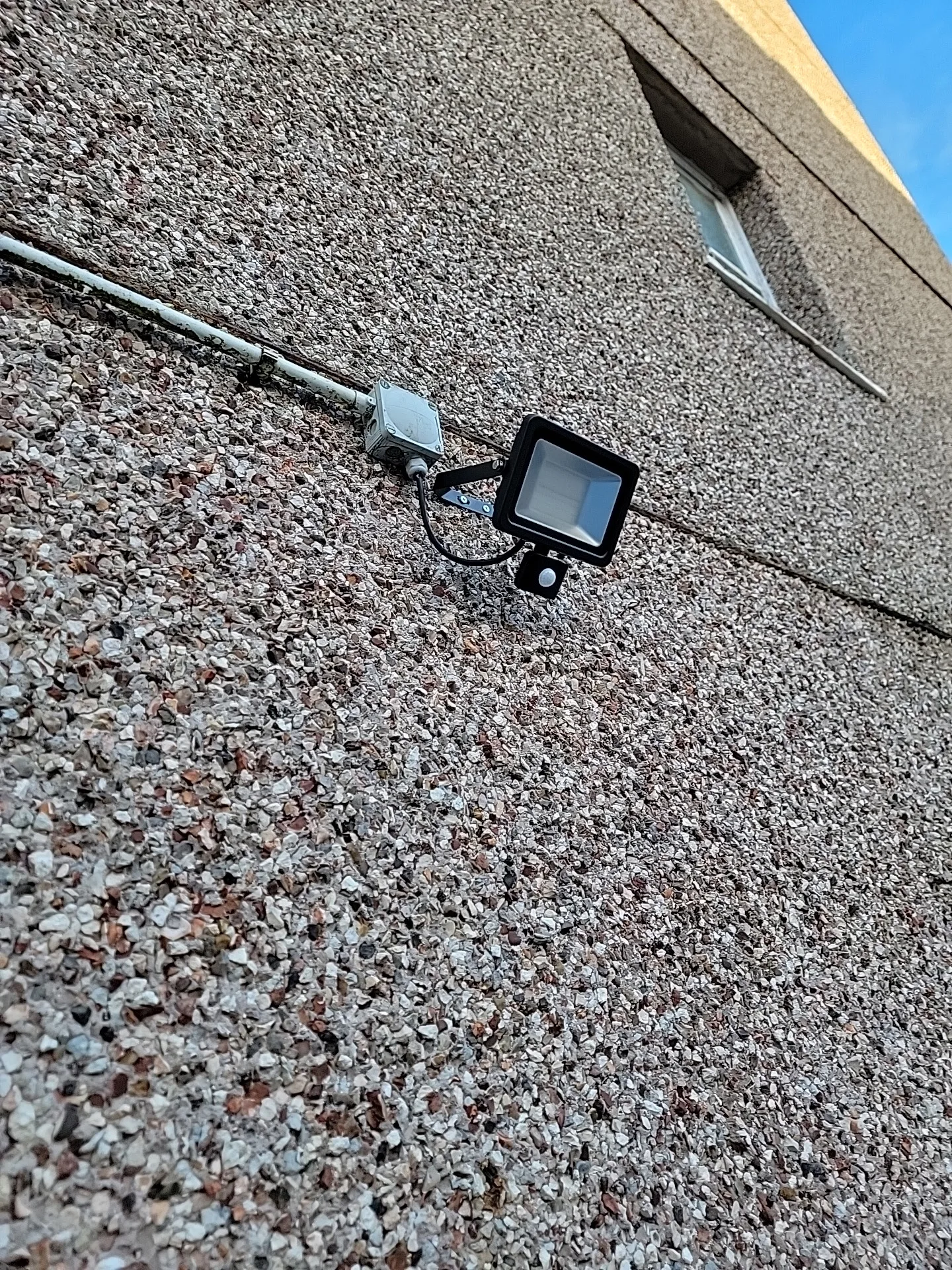
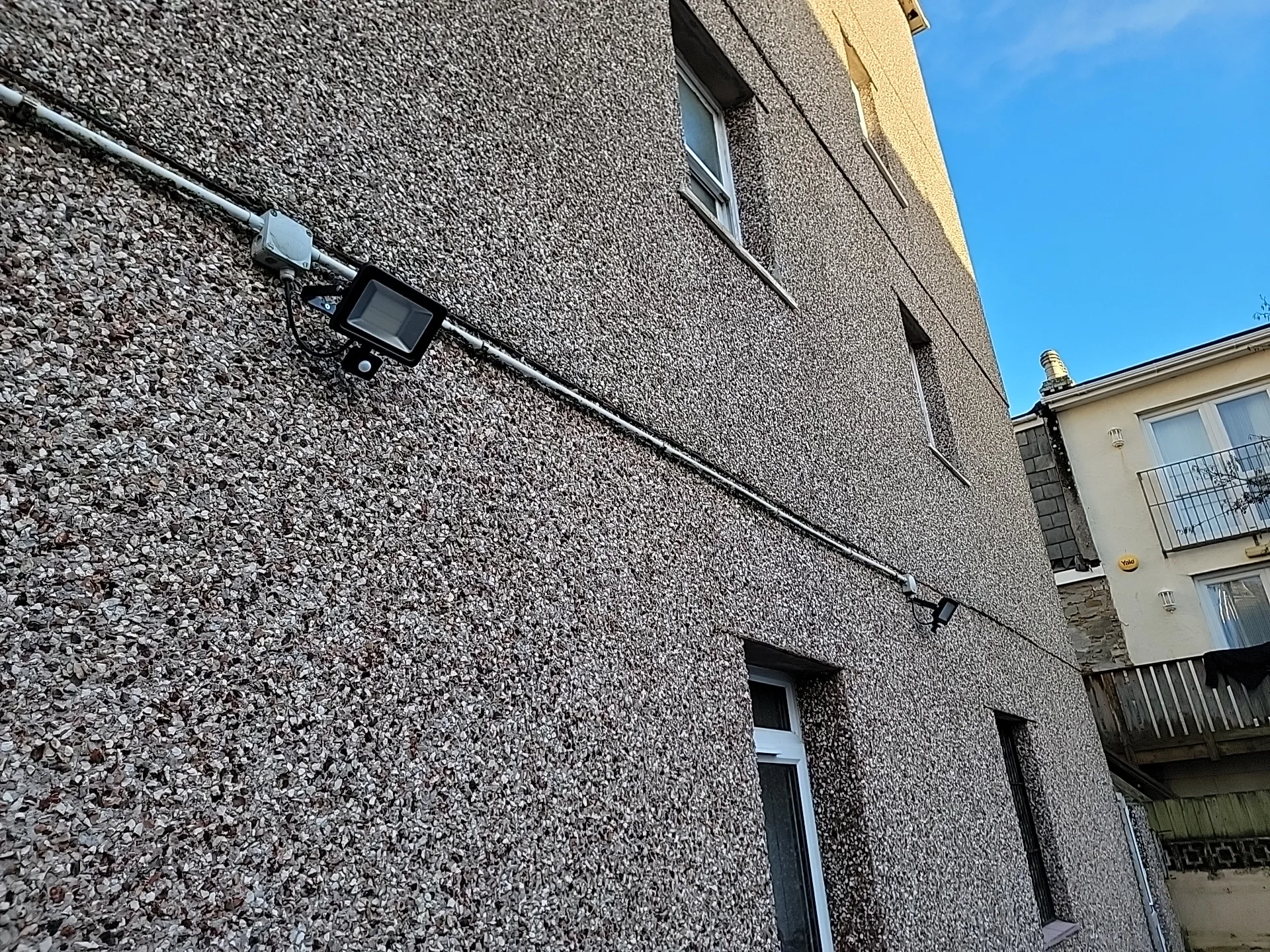
When the lighting outside a residential property stops working properly, it doesn’t take long before it becomes a real problem. Whether it’s tenants coming and going after dark, visitors navigating a shared stairwell, or simply the general security that comes with having working lights around a building, broken or ageing fittings need sorting sooner rather than later. That was exactly the situation we were called out to deal with at this property in Newquay – failed external floodlights and a stairwell bulkhead fitting that needed replacing as part of a communal area lighting overhaul.
Communal Area Lighting – Why It Matters
Communal lighting in residential properties often gets overlooked until something fails. It tends to run constantly, or close to it, which means fittings take a beating over time. Bulkheads in stairwells and corridors are especially prone to this – they’re expected to provide permanent, reliable illumination and when they stop doing that, the knock-on effect on residents can be significant. Poor lighting in shared spaces is a safety issue, not just an inconvenience.
In this case, the existing stairwell bulkhead needed a full replacement. The requirement was straightforward – a fitting that would stay on permanently, providing consistent light in the communal area without any need for manual switching or sensor control. We fitted a new bulkhead unit suited to exactly that purpose, restoring the reliable, permanent lighting that the space needed.
External Floodlight Replacement – Moving to PIR Sensor Fittings
The two external floodlights on the building had become unserviceable, which is a fairly common situation with older external fittings that have been exposed to the elements for years. Rather than attempt any kind of repair, the right call was to replace them entirely with modern, purpose-built units.
We supplied and installed two 20W IP65-rated black PIR sensor floodlights to replace the old ones. The choice of PIR – passive infrared – sensor fittings was a sensible one for this type of external application. Rather than burning constantly, these lights activate on movement detection, which has a few practical advantages worth understanding.
From an energy perspective, PIR floodlights use significantly less electricity than equivalents running around the clock. Over the course of a year, that difference adds up, which matters for any property where running costs are shared between residents or covered by a management arrangement. The 20W LED output on each fitting is more than adequate for external security and access lighting – modern LEDs at that wattage produce a genuinely impressive amount of light compared to older technologies.
The IP65 rating is equally important. External fittings need to be built for the environment they’re operating in, and IP65 means the units are fully protected against dust ingress and resistant to water jets from any direction. For a coastal location like Newquay, where salt air and wind-driven rain are part of daily life, that kind of robust weatherproofing isn’t optional – it’s essential. Fittings that aren’t adequately rated for outdoor use tend to fail much faster, so getting the specification right from the outset saves a lot of hassle down the line.
The PIR sensor also adds a practical security benefit. Movement-activated floodlights are well understood as a deterrent – a sudden burst of bright light when someone approaches tends to make people more visible and less anonymous, which discourages opportunistic behaviour around a property. For a communal residential building, that’s a worthwhile side benefit on top of the functional lighting purpose.
The Installation
Both floodlight fittings were mounted on the exterior of the building, connected via surface-run conduit and junction boxes to keep everything neat, weatherproof, and accessible for future maintenance. Each fitting was positioned to give good coverage of the relevant external areas, with the PIR sensors oriented to detect movement effectively in the zones they’re intended to cover. Getting the sensor angle and sensitivity right on installation makes a real difference to how well the fitting performs day to day – too sensitive and the light trips constantly, too restricted and it misses the area it’s supposed to illuminate.
The stairwell bulkhead replacement was handled as part of the same visit, keeping disruption to the communal areas to a minimum. With permanent-on requirements, it was important to make sure the wiring arrangement was correct and the fitting itself was appropriate for continuous use – not all bulkhead fittings are designed with that in mind.
Choosing the Right Electrician for Communal and External Lighting
Work on communal areas and external fittings at residential properties should always be carried out by a qualified electrician. It’s not just about doing the job properly – it’s about making sure the work is safe, compliant, and signed off correctly. External installations in particular need to be approached with the right materials and methods, because mistakes in outdoor electrical work can have serious consequences.
If you’ve got external lighting that’s failed, communal lighting that needs attention, or older floodlights that have seen better days, it’s worth getting them looked at sooner rather than later. A property without working external lights is a less safe one, and the fix is usually more straightforward than people expect.