A Newquay property needed a full refresh of its ventilation setup across three areas - a new kitchen extractor hood, a ground floor bathroom fan with new ducting routed through the external fascia, and a replacement grille for the first floor bathroom. The work involved core drilling, high-access ladder work, and a full commissioning of the new extraction system.
Poor ventilation is one of those things that tends to get ignored until it becomes a real problem. By that point, you’re often dealing with persistent condensation, lingering smells, or fans that are clearly not shifting any air no matter how long they run. That was the situation at this property in Newquay, where the extraction across the kitchen and both bathrooms needed attention – not just a quick fix, but a proper upgrade.
The scope covered three separate areas: the kitchen, the ground floor bathroom, and the first floor bathroom. Each one had its own set of challenges, and all three required a different approach to get right.
Kitchen Extractor Hood Replacement
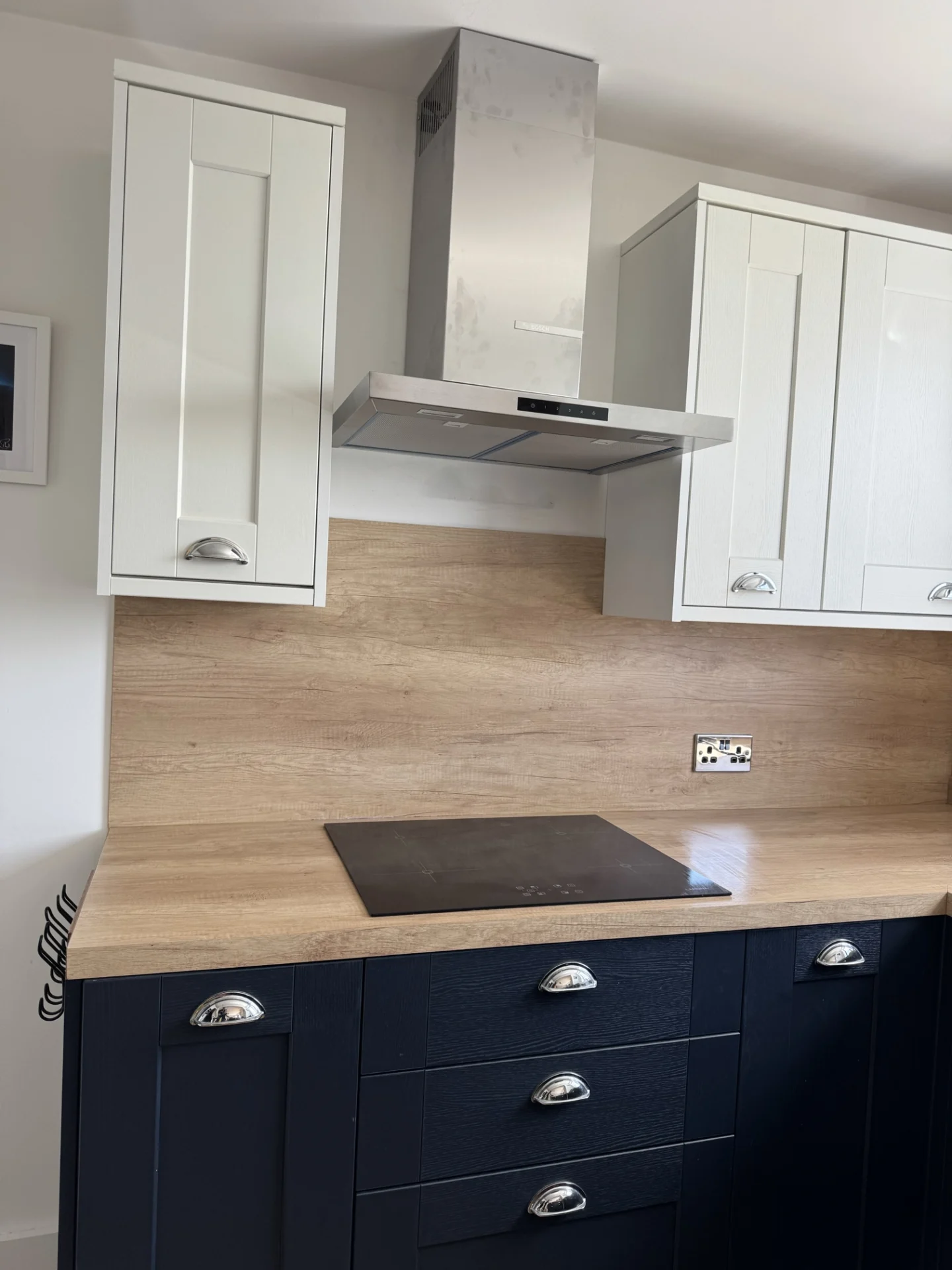
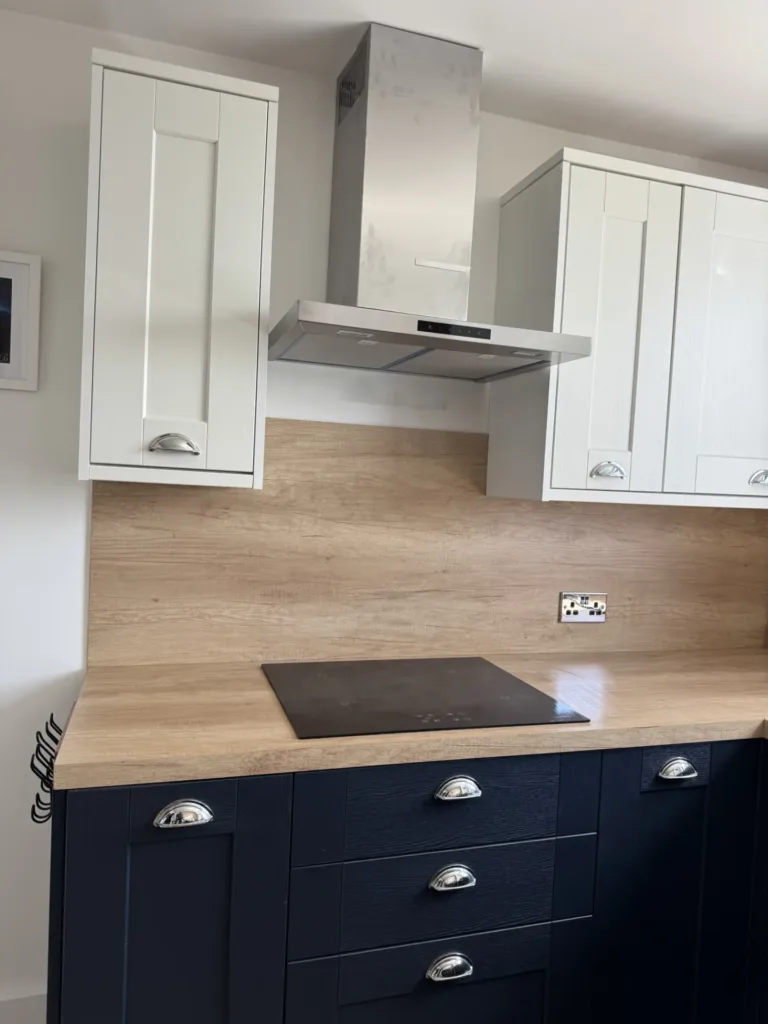
The existing kitchen extractor was being replaced with a new unit supplied by the homeowner – a 600mm chimney-style hood with an integrated light. Swapping out a cooker hood sounds straightforward, but the extraction side of the job needed more thought. The previous installation had used a 4″ duct run, and the new hood required a 5″ outlet to work properly. That meant the existing core hole through the external wall needed to be enlarged.
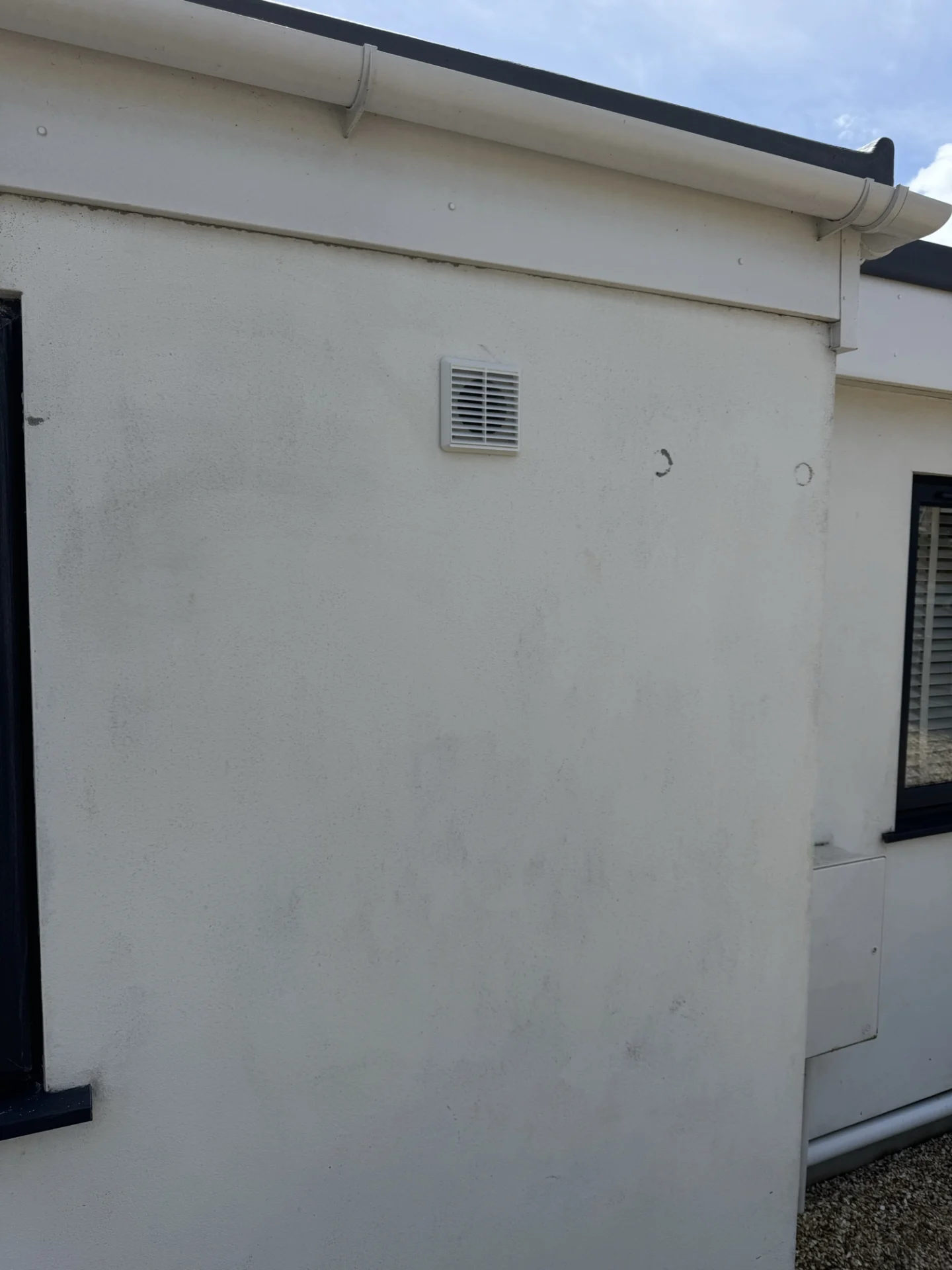
Rather than starting from scratch, the existing 4″ hole was used as a guide for the core drill, which kept the process clean and avoided unnecessary disruption to the surrounding wall. The hole was opened out to 5″, new aluminium ducting was run from the hood to the exterior, and a matching white back-draught grille was fitted on the outside. The white external wall made for a tidy, flush finish with the new grille plate sitting neatly against the render.
The hood itself was connected up and tested once the ducting was in place, with airflow confirmed through to the exterior vent before the job was called done.
Ground Floor Bathroom – Fan Replacement and New Duct Run
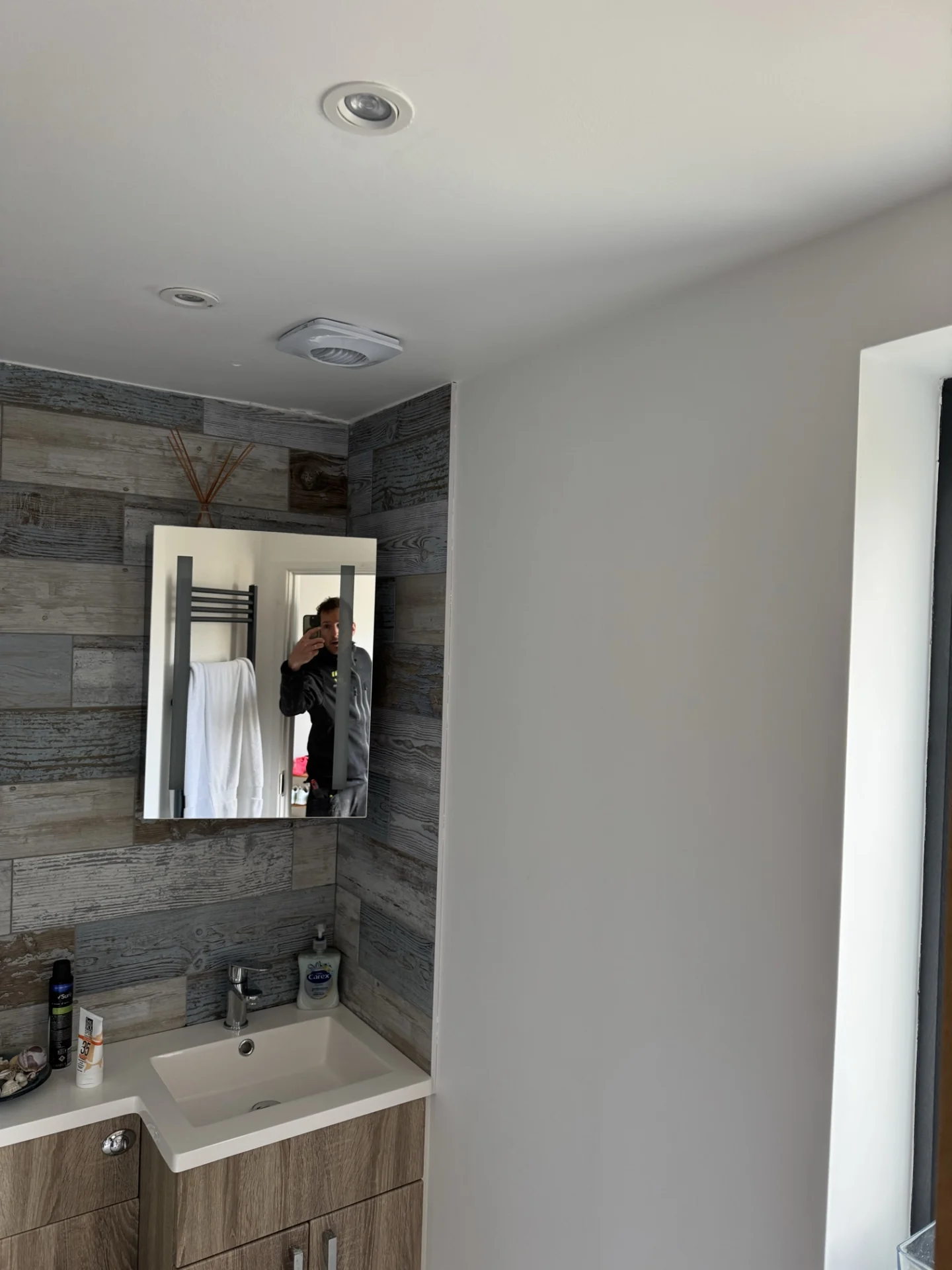
The ground floor bathroom had an existing extractor fan that simply wasn’t doing its job. The outlet behind the fascia had become blocked, meaning the fan was effectively running against itself with nowhere for the air to go. The unit in place was a humidistat-controlled model, but without a clear extraction path it made little difference.
The old fan was removed first to expose the ceiling void and get a proper look at the joist layout. Understanding where the joists sat was important for planning the most practical route for the new duct run – trying to thread ducting through a ceiling space without knowing the structure can lead to a lot of unnecessary work and a less than ideal result.
Once the routing was mapped out, a new 4″ hole was core drilled through the external fascia at the correct elevation. This is where the high-access ladder work came in – the fascia is set at height, so reaching it safely meant setting up properly rather than stretching from a step ladder. New uninsulated aluminium ducting was then run from the fan position through the ceiling void and out to the new external outlet, which was finished with a white grille plate.
A new surface-mounted extractor fan was installed and wired in, replacing the old unit entirely. The timer overrun on the new fan was set to around 20 minutes, which gives it enough run-on time after the light is switched off to clear any residual moisture from the room. That’s particularly useful in a bathroom with no window, where the fan is doing all the work on its own.
First Floor Bathroom – Exterior Grille Replacement
The first floor bathroom was a simpler job in comparison, but no less important. The existing exterior back-draught grille had become damaged and was no longer functioning as it should. A back-draught shutter that doesn’t close properly lets cold air back into the duct run, which can cause the fan to work harder and also allows moisture to travel the wrong way through the system.
The replacement grille was fitted in a grey/brown tone to match the surrounding exterior finish – a detail that matters when you’re working on a property where the aesthetics have clearly been thought about. Again, the position of the grille on the first floor meant working at height, with ladders set up correctly to access the outlet safely.
Why Ventilation Work Needs to Be Done Properly
It’s worth saying something about why this kind of work matters beyond the immediate fix. Building regulations require adequate ventilation in kitchens and bathrooms, and there are specific minimum extract rates that apply depending on the room. A bathroom fan that isn’t connected to a working outlet, or a kitchen hood venting into a duct that’s the wrong size, isn’t just ineffective – it can contribute to mould growth, structural damp, and in some cases affect indoor air quality noticeably.
Getting the duct sizing right matters too. Moving from a 4″ to a 5″ duct on the kitchen extraction significantly reduces the resistance in the system, which means the hood can move air more efficiently and at lower noise levels. It’s not something most people think about when they’re choosing a new cooker hood, but it has a real impact on how well the appliance actually performs day to day.
Core drilling is a standard approach for creating new or enlarged extraction outlets through masonry walls and fascia boards. Using the existing hole as a guide for the enlarged core is a cleaner method that avoids leaving unnecessary marks on the external finish – especially relevant on a rendered exterior where patching isn’t always straightforward.
For properties in Cornwall, coastal exposure can be hard on exterior fittings over time. Back-draught grilles in particular take a fair amount of weather, and a damaged shutter is worth replacing promptly rather than leaving it to deteriorate further and allow moisture ingress into the duct system.
This Newquay job covered everything from careful ladder access on the exterior to duct routing through ceiling voids – the kind of ventilation work that, when done right, you simply stop thinking about.