We relocated and replaced an existing consumer unit with a modern flush mounted consumer unit, positioned at high level in the hallway of this Newquay property. The work included extending and rerouting cabling to accommodate the new location, alongside utility room socket improvements, all carried out to comply with 18th Edition wiring regulations.
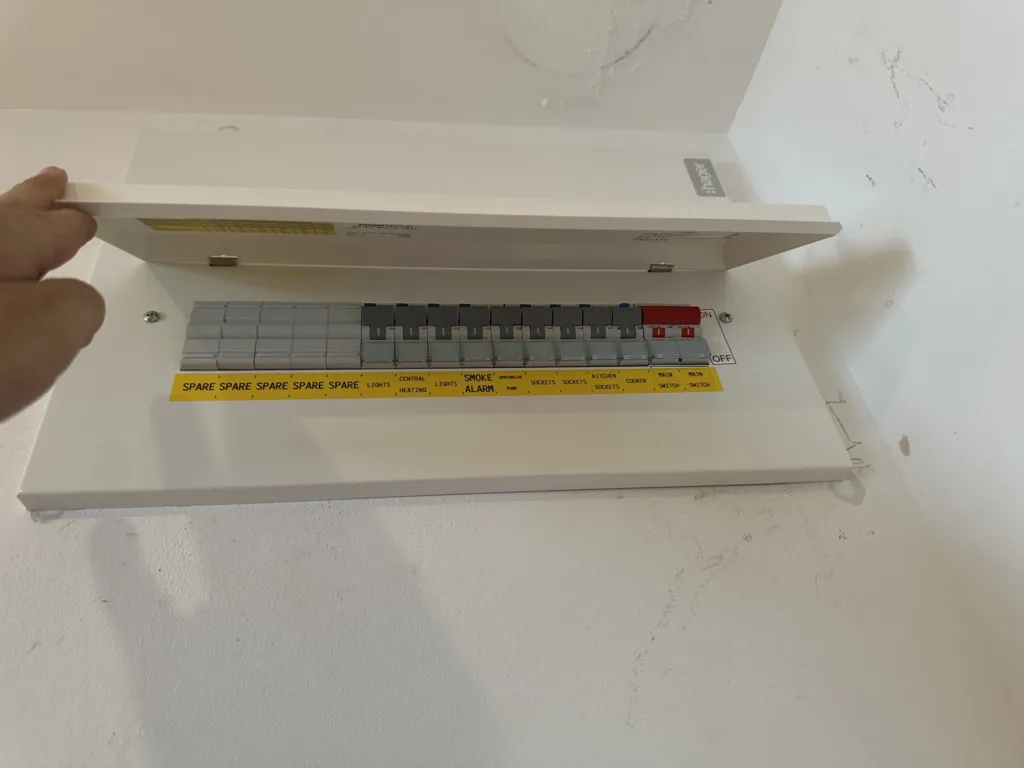
The decision to relocate a consumer unit might seem like a significant undertaking, but there are compelling reasons why homeowners choose to reposition their electrical distribution board. This particular installation in Newquay involved moving the consumer unit to a more practical location within the hallway whilst simultaneously upgrading to a flush mounted consumer unit that sits neatly within the wall rather than protruding into the living space.
Modern homes benefit from careful consideration of where the consumer unit is positioned. High-level installation in hallways offers several advantages, particularly in properties where floor space is valuable or where the original location proved inconvenient. The flush mounted consumer unit approach takes this further by creating a seamless appearance that integrates with the surrounding architecture rather than dominating it visually.
When relocating a consumer unit, the electrical supply cables require careful attention. Every circuit that previously terminated at the old location needs extending or rerouting to reach the new position. This involves methodical planning to work out the most efficient cable routes whilst maintaining compliance with current wiring regulations. The process isn’t simply about moving the box from point A to point B – it requires a complete assessment of the existing installation and how each circuit will transition to the new configuration.
Flush mounted consumer units differ significantly from their surface-mounted counterparts. Where a traditional consumer unit projects from the wall, sometimes by several inches, a flush mounted consumer unit sits within a recess cut into the wall itself. The front of the unit aligns with the wall surface, creating a far more discreet installation. This matters particularly in hallways and living spaces where every inch of clearance counts and where the visual impact of electrical equipment can affect the overall aesthetic.
The installation process for a flush mounted consumer unit requires additional preparation work. Before the new unit can be installed, a suitable recess must be created in the wall. This involves careful measurement and cutting to accommodate the consumer unit housing whilst avoiding any structural elements or existing services concealed within the wall. The depth of the recess needs to be sufficient to house the unit completely whilst allowing for proper ventilation and heat dissipation, which remains crucial for safe operation.
Selecting the appropriate size and specification of consumer unit depends on the number of circuits within the property. This installation utilised a 14-way board, providing adequate capacity for all existing circuits whilst allowing room for future additions. Each circuit receives its own protective device – in this case, RCBOs (Residual Current Breaker with Overcurrent protection) that combine both circuit protection and earth fault detection in a single device. This configuration offers superior protection compared to older installations that might rely on a single RCD protecting multiple circuits.
The circuit protection devices were carefully selected to match the requirements of each circuit. Lower-rated 6-amp RCBOs typically serve lighting circuits, whilst higher ratings such as 32-amp and 40-amp units protect circuits supplying heavy loads like electric showers, cookers, or electric vehicle charging points. Each RCBO operates independently, which means that if a fault occurs on one circuit, only that specific circuit trips rather than affecting others in the property.
Alongside the consumer unit relocation, the utility room required attention. Existing low-level cabling that was previously exposed needed repurposing to supply a recessed double socket outlet. This work involved making the cabling safe and testing it before determining how it could be reused effectively within the new configuration. Rather than leaving cables exposed or simply covering them, proper integration into recessed sockets creates a cleaner, more practical installation.
The socket serving the washing machine also received an upgrade. Previously surface-mounted, it was recessed into the wall to create a neater finish and reduce the protrusion into the utility room space. Recessed sockets work particularly well in utility areas where appliances are positioned close to walls and where every bit of accessible space matters for manoeuvring and maintenance.
Compliance with the 18th Edition of the wiring regulations governed every aspect of this installation. These regulations set out the requirements for electrical installations in the UK, covering everything from cable sizing and protection to earthing arrangements and documentation. Any alteration to fixed wiring that includes replacing or relocating a consumer unit requires notification to Building Control, which in turn requires proper testing and certification.
The electrical testing process involves comprehensive checks of the installation. Insulation resistance testing verifies that circuits are properly isolated from earth and from each other. Continuity testing confirms that protective conductors are correctly connected throughout. Earth fault loop impedance measurements check that protective devices will operate quickly enough in fault conditions. RCD testing verifies that these safety devices will disconnect the supply within the required time when earth leakage occurs. Each test produces specific readings that must fall within acceptable parameters as defined by the wiring regulations.
Upon completion of testing, an Electrical Installation Certificate documents the work carried out and confirms compliance with the wiring regulations. This certificate forms part of the Building Control notification process and provides the property owner with formal documentation of the installation. The certificate includes circuit details, test results, and confirmation that the work meets the required standards.
Proper labelling of the consumer unit helps occupants and future electricians understand the installation. Each circuit receives clear identification showing which area or appliance it supplies. In this case, labels indicated circuits for central heating, lighting zones, smoke alarms, kitchen sockets, cooker circuits, and the immersion switch, amongst others. Clear labelling becomes particularly valuable during maintenance work or when isolating specific circuits for future alterations.
The high-level positioning of the consumer unit in the hallway created a practical installation that stays accessible whilst remaining unobtrusive. High-level mounting keeps the consumer unit away from floor-level risks such as flooding and also positions it where it’s less likely to be accidentally knocked or interfered with. Accessibility remains straightforward for testing and maintenance, but the unit sits above everyday traffic flow through the hallway.
Cable management played a significant role in achieving a professional finish. All cables entering and leaving the consumer unit were neatly routed and secured, with appropriate containment used where cables run exposed. The connection method within the consumer unit utilised maintenance-free connectors that ensure reliable, long-term performance whilst simplifying future modifications or additions to the installation.
The combination of relocating the consumer unit and upgrading to a flush mounted consumer unit created a solution that addressed both practical and aesthetic considerations. The property now benefits from modern circuit protection, clear organisation of electrical circuits, and an installation that integrates seamlessly with the interior space rather than dominating it visually. The utility room improvements complemented the main works, creating a cohesive upgrade to the electrical installation throughout the relevant areas of the property.