This one came in from a returning customer in Falmouth who’d picked up three electric radiators and needed them properly wired in. One for the living room, one for the main bedroom, and one for a second bedroom that also serves as a home office. The radiators themselves were already purchased – our job was to get a clean, safe electrical supply to each of them and hardwire them in correctly.
It’s a fairly common request. People buy the units, do their research, and then realise the electrical side isn’t something they want to tackle themselves or leave half-done. Getting it right matters – a radiator drawing consistent load needs a proper dedicated connection, not a plug thrown into a ring main socket.
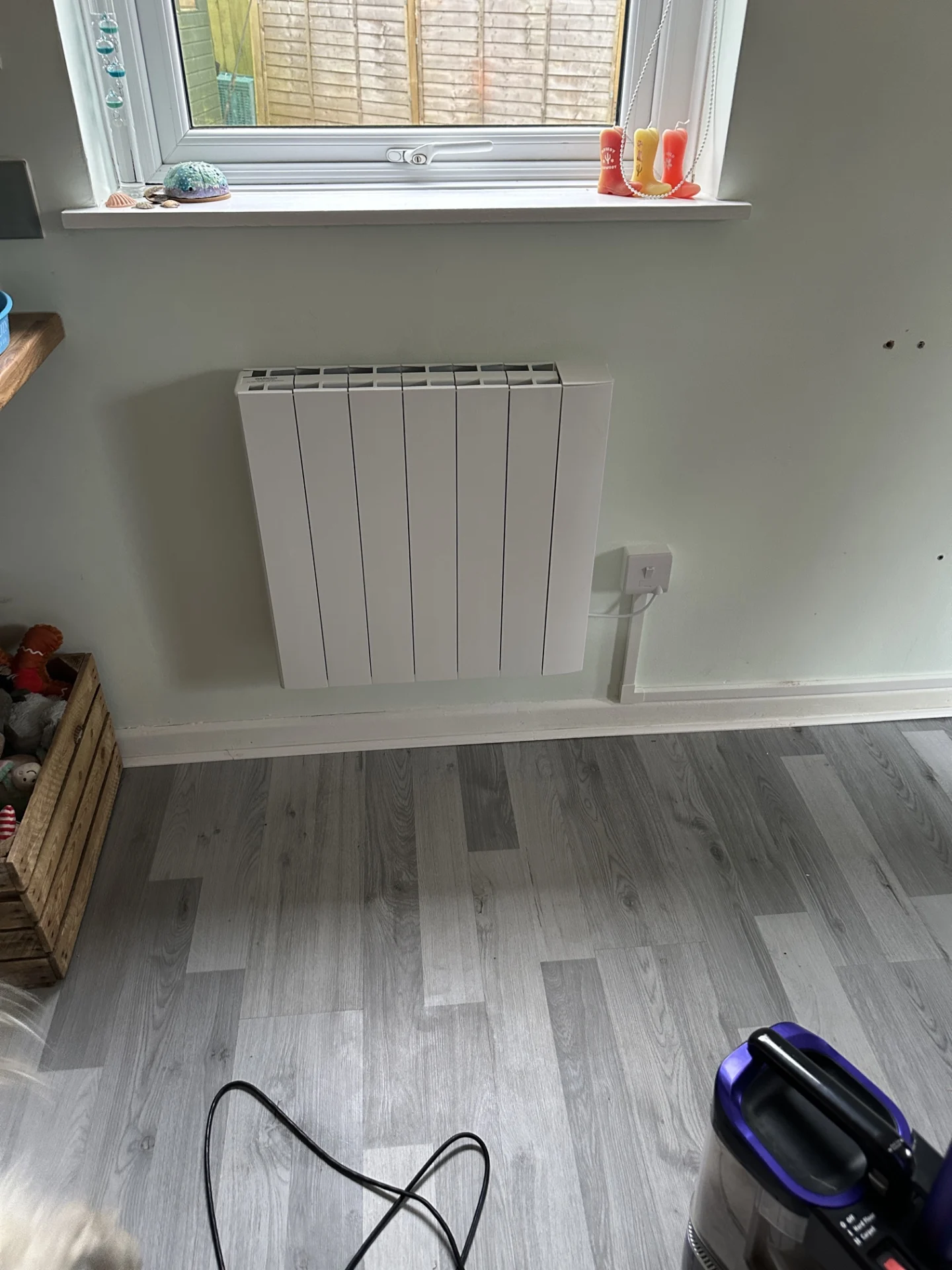
Living Room
The living room needed a bit more planning than the bedrooms. There wasn’t a socket in the ideal spot to spur from, so the supply was extended from an existing ground floor socket circuit – taken from an outlet already on the left-hand side of where the new radiator was going in. The cable run was kept tidy by housing it in 25mm PVC trunking along the wall. That’s the right approach in a main living space where exposed cabling would look out of place against an otherwise finished room.
The radiator was connected via a fused spur with flex outlet – a proper fixed connection rather than a plug and socket arrangement. For a radiator being used as a permanent heat source, that’s the way to do it.
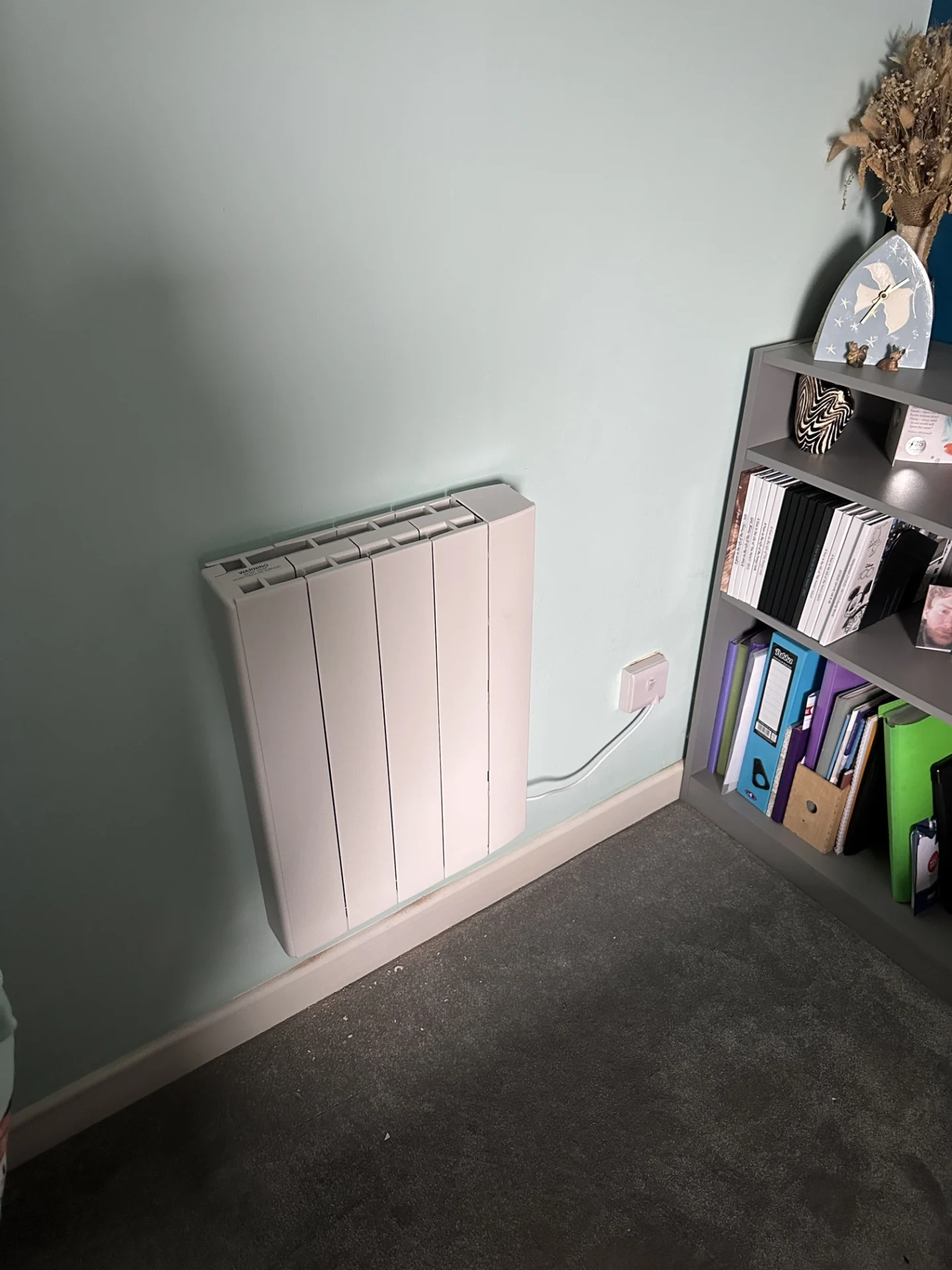
Bedroom 1
The first bedroom was more straightforward. An existing socket outlet was already positioned close to where the radiator was going, which made the spur route obvious. Supply was taken from that outlet, a fused spur installed, and the radiator connected up. Clean and quick, but done to the same standard throughout.
Bedroom 2 / Office
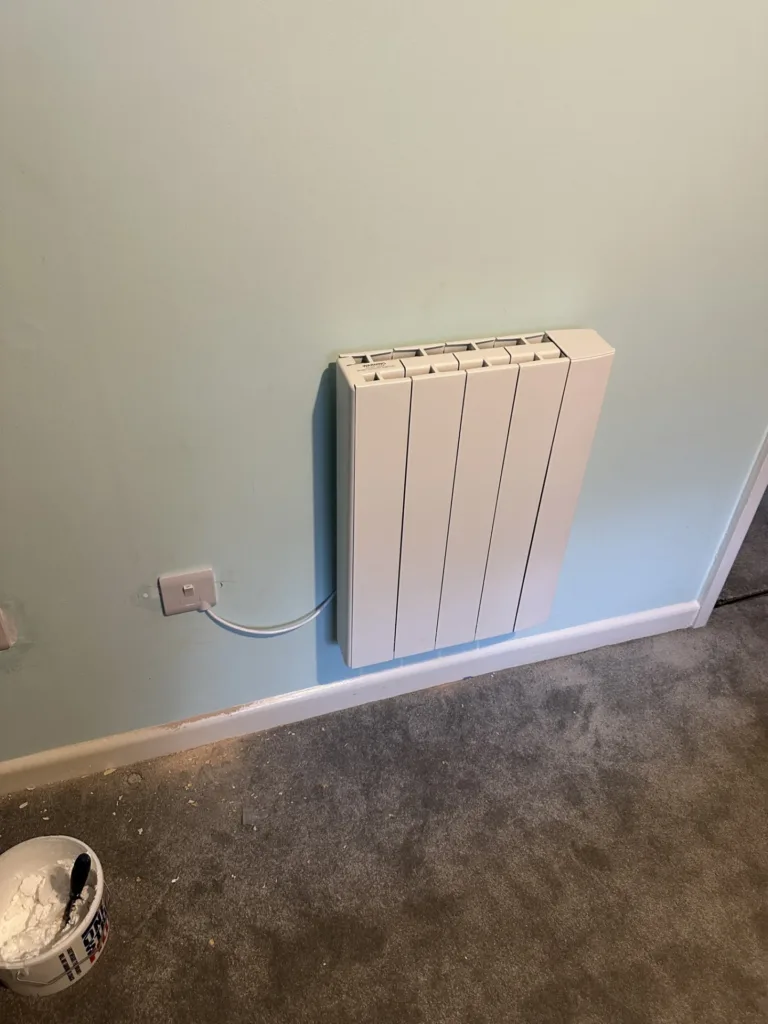
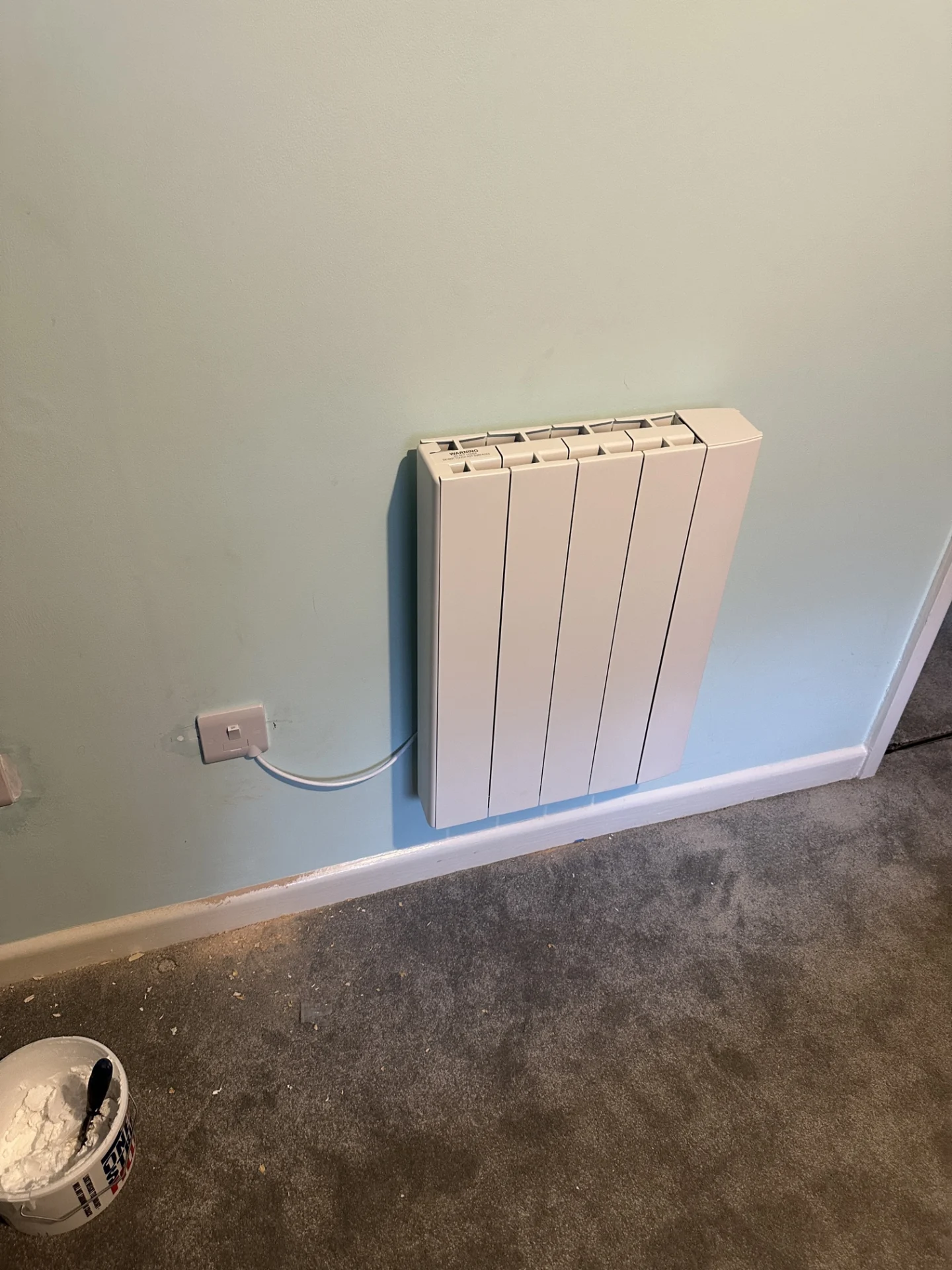
The second bedroom took a slightly different approach to the cable routing. Again the supply came as a spur from an existing socket on the same wall, but rather than surface-running anything, the cable was taken internally through the stud wall. That meant cutting into the plasterboard, threading the cable through the wall cavity, and then patching the board back once the cable was in place.
The finish – filling, sanding, and making good the decoration – was agreed upfront to be the customer’s own work to complete. That’s a common split on jobs like this, particularly where someone’s already got decorating underway or is happy to handle it themselves. The important thing from our side was that the cable was in, the board was patched, and the radiator was connected and working before we left.
Hardwiring vs Plug-in: Does It Actually Matter?
It comes up on almost every electric radiator job. Technically, a radiator with a standard plug can go into any 13A socket – and plenty of people do just that. But for a radiator that’s going to be running regularly as a room’s primary heat source, a hardwired fused spur connection is the better long-term solution.
The spur takes the radiator off the ring main and gives it its own feed, which reduces the cumulative load on the general socket circuit. It also means the connection is fixed – there’s no plug that can be knocked loose, no socket that could be used for something else at the same time, and no uncertainty about whether the circuit is carrying more than it should. The switched fused spur itself gives a local isolation point too, so if the radiator ever needs to come down – whether for decorating, servicing, or replacement – it can be isolated at the wall without anything else being affected.
None of this is complicated, but it does need to be done by someone who knows what they’re doing. Pulling a spur from an existing circuit, routing cable correctly, and terminating into a fused outlet isn’t something to improvise, and the consequences of getting it wrong with a heat-producing appliance running long hours are obvious enough.
Electric Radiators as a Heating Solution in Falmouth
Falmouth has a wide variety of housing stock. There are plenty of older properties – terraced houses, cottages, converted flats – where gas central heating either isn’t present or where extending an existing wet system would be a major undertaking. For those situations, electric heating is a realistic and often practical answer, particularly with the more capable radiator designs now available.
Modern electric radiators are a step removed from what most people associate with electric heating. They respond quickly, allow room-by-room temperature control, and most have integrated programmers or wireless connectivity that lets you manage heating schedules properly. The key thing is that the electrical installation behind them is done right – correctly sized cabling, a proper dedicated supply, and installation that isn’t going to cause problems six months down the line.
For this customer in Falmouth, the three rooms are now set up with reliable, independently controlled heating on dedicated supplies. Each radiator has its own fused spur, which means they can be controlled, isolated, or replaced entirely independently of each other. It’s a tidy, well-planned setup – which is exactly what a returning customer deserves.