There’s a lot more to fitting a home EV charger than mounting a unit to a wall. Done properly, the installation involves a series of decisions about how the electrical supply is managed, how the property is protected, and how the whole system is tied together safely. This project at a residential property in Bude is a good example of what a complete, compliant EV charging installation actually looks like in practice.
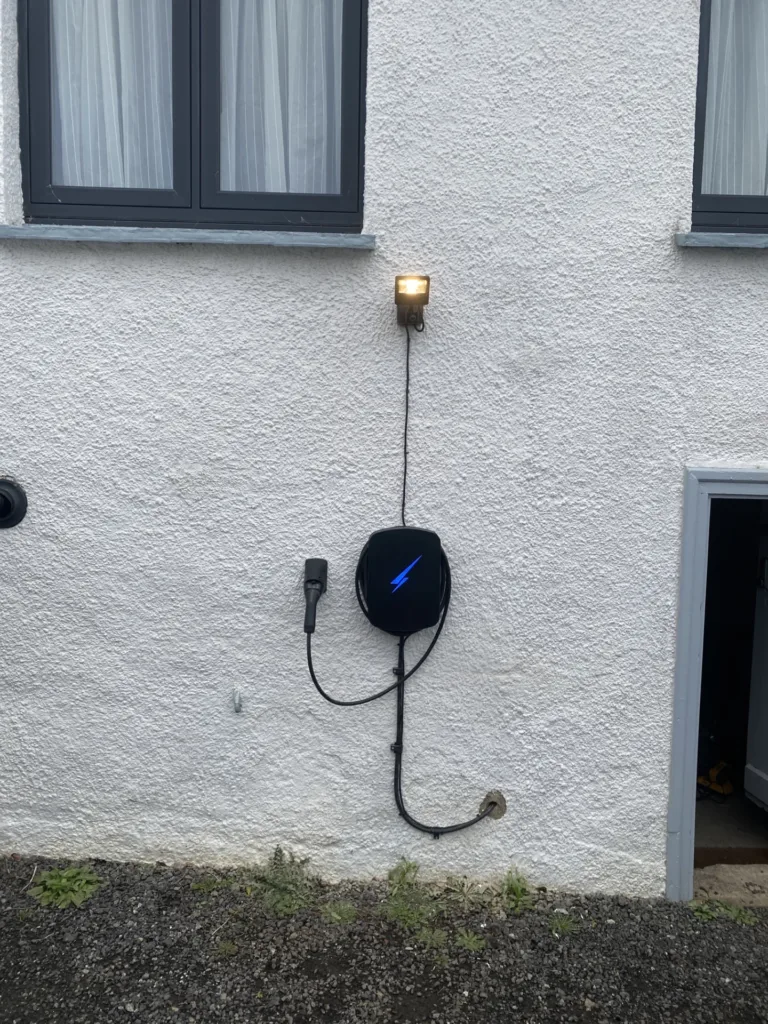
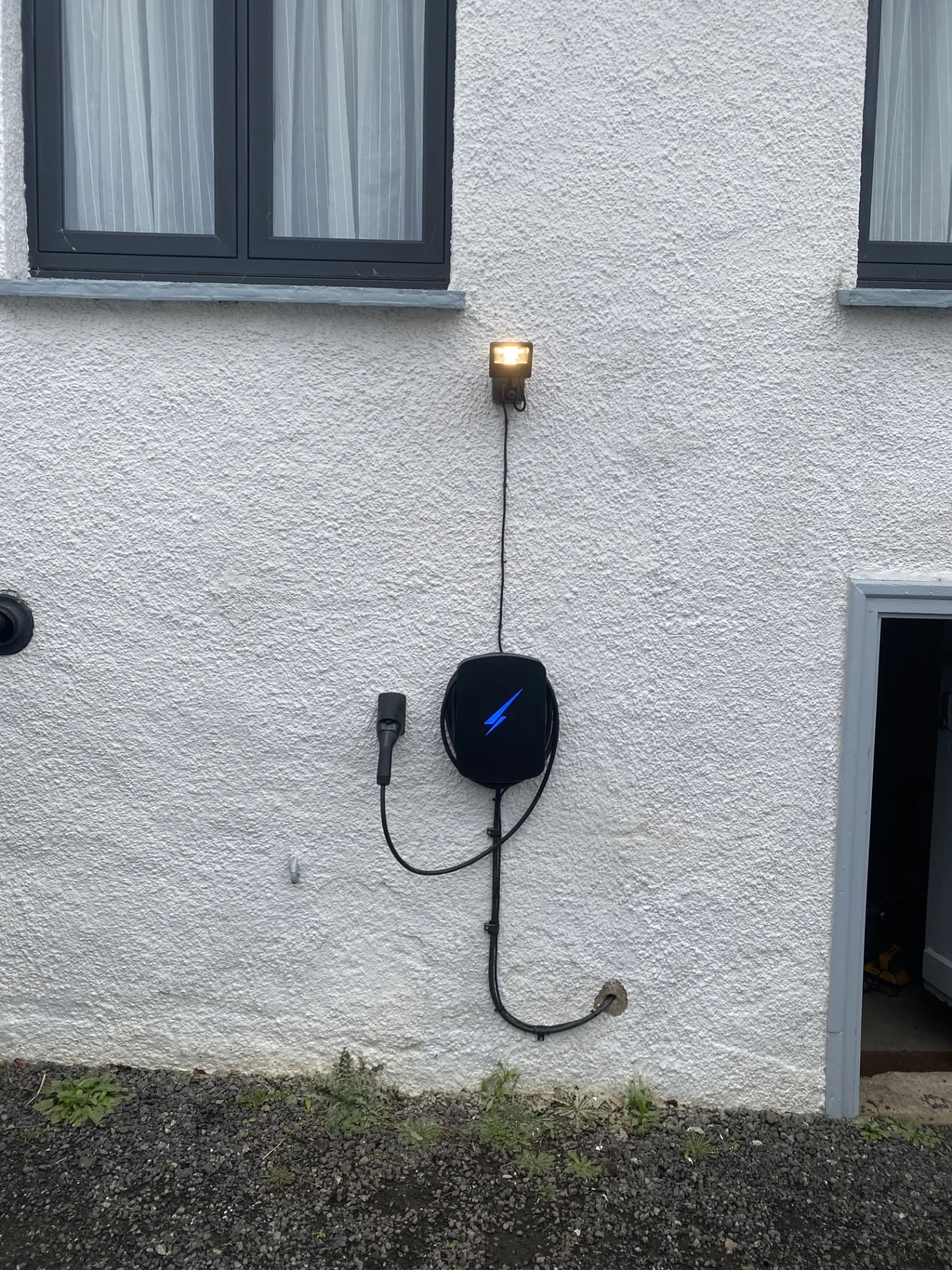
The charge point chosen was a Hypervolt 7.4kW tethered unit in black, wall-mounted on the exterior at the side of the property. Tethered simply means the charging cable is permanently fixed to the unit rather than stored separately – you plug straight in without needing to carry a cable with you. For most homeowners, that’s a straightforward convenience that works well in day-to-day use.
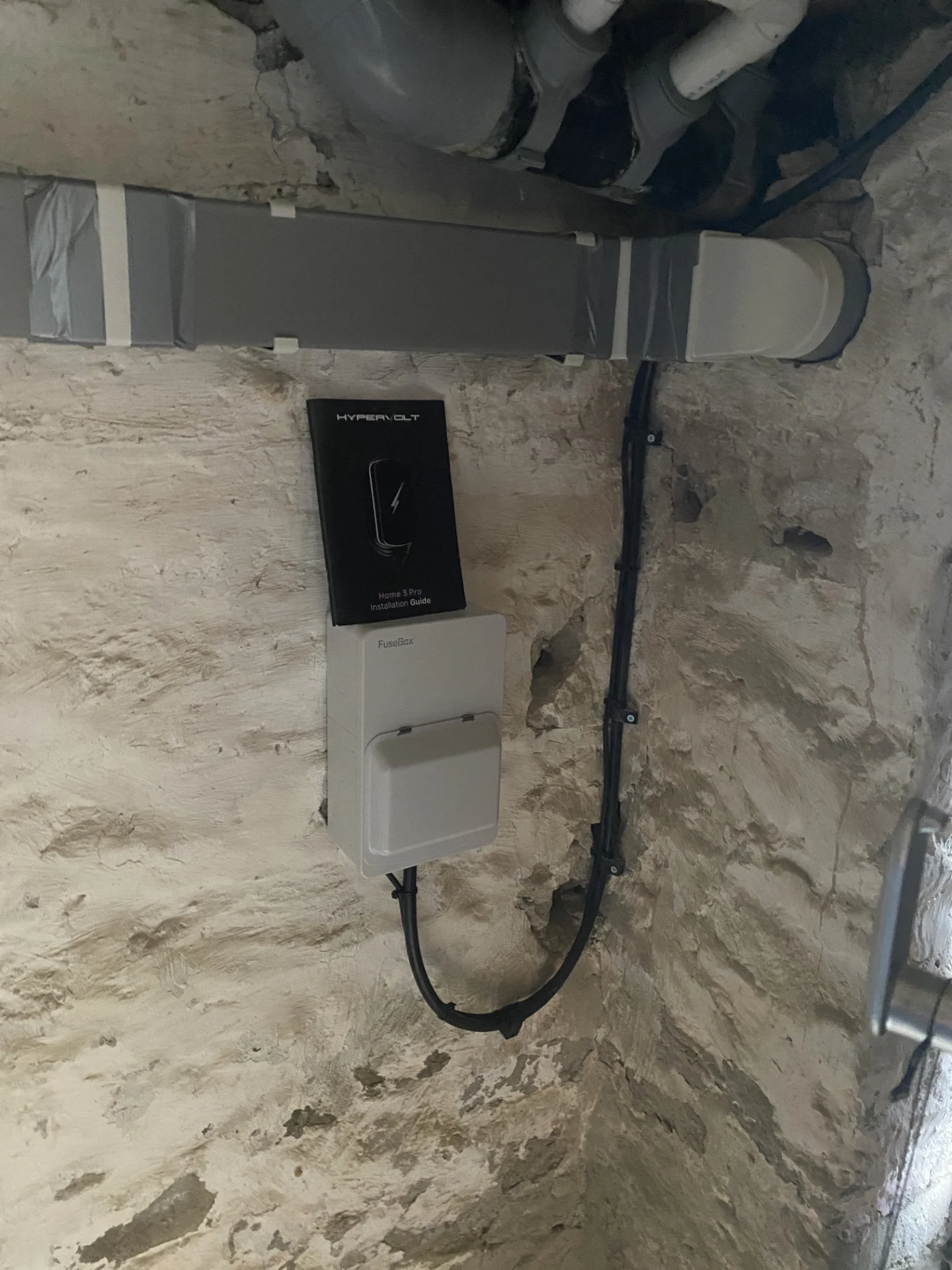
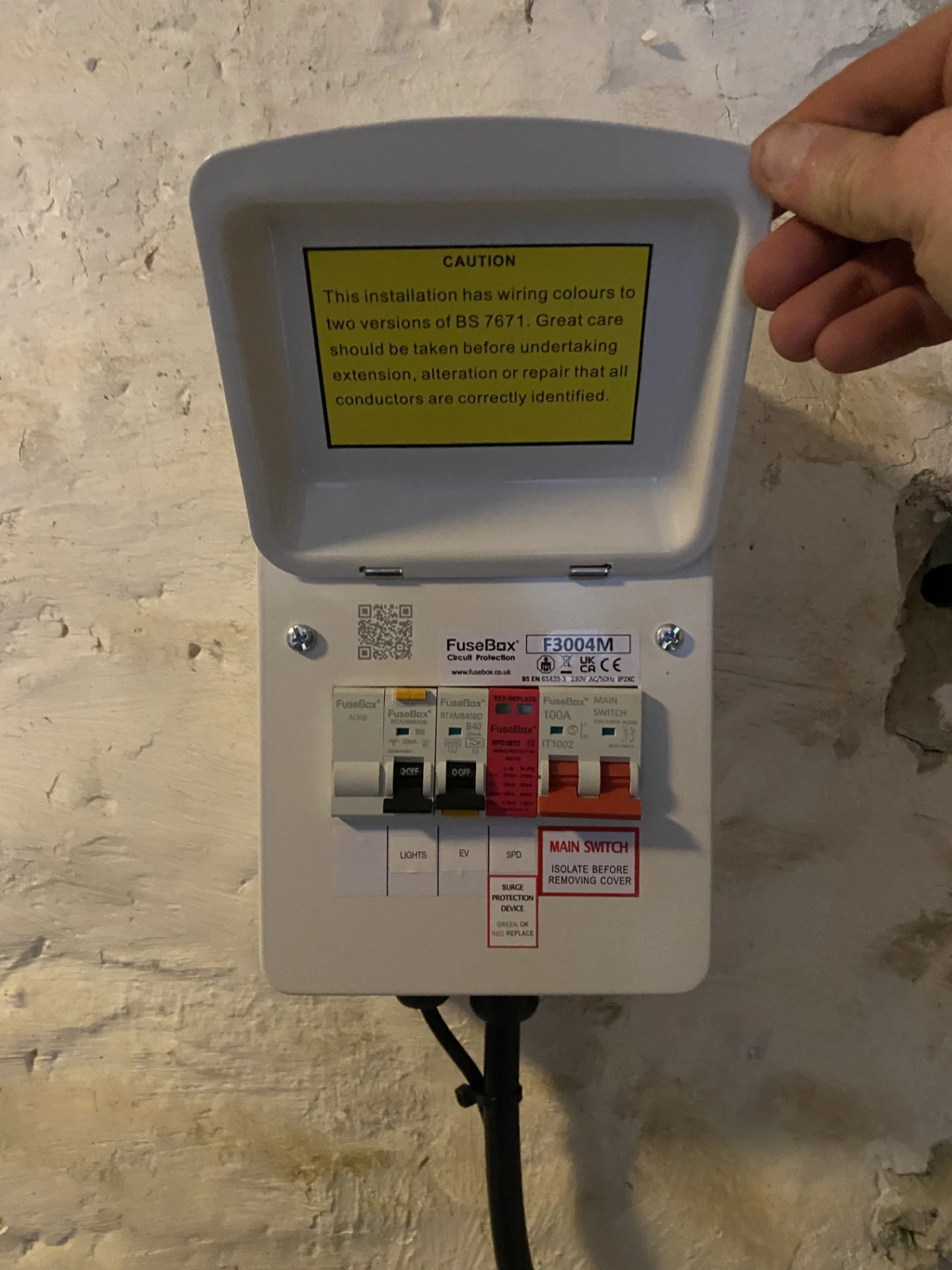
Rather than running the charger from the existing consumer unit, a dedicated EV consumer unit was installed in the cellar, fed from the property’s incoming meter tails via 100A Henley block connectors. This approach keeps the EV circuit completely separate from the rest of the property’s electrical installation, which is standard practice for higher-draw circuits. The unit itself is a FuseBox F3004M housing a 40A bi-directional circuit breaker for the EV circuit, with an integrated Surge Protection Device. The SPD is there to protect the charger and connected electronics from voltage spikes coming in from the grid – not something that happens often, but the consequences of an unprotected surge on smart charging equipment can be costly.
One of the more important parts of this installation was the load monitoring device. This sits on the supply and continuously reads the electrical demand of the property. When other appliances are drawing heavily – say, an electric shower, oven, and heating all running at the same time – the load monitor signals the charger to reduce its output accordingly. The charger then adjusts dynamically, keeping everything within the capacity of the incoming supply. Without this, there’s a real risk of tripping the main fuse, particularly in older properties where the incoming supply headroom is limited. Most modern EV charger installations benefit from it, and it’s become a routine part of how these systems are set up correctly.
The supply cable from the EV consumer unit to the charge point was routed at low level along the side of the property and clipped neatly. Running cable at low level rather than high keeps it out of sight and makes the overall installation look considered rather than thrown together.
A 10W PIR IP65 floodlight in black was fitted directly above the charge point, also fed from the dedicated EV consumer unit. The supply for the light was run to follow a similar route to the charger cable, with an isolation switch located in the cellar for straightforward isolation when needed. The floodlight is motion-activated, so it comes on automatically when someone approaches the charging area – useful on dark evenings and during winter months when daylight fades early. Having both the charger and the light on the same dedicated circuit keeps the wiring logical and means both can be isolated at a single point.
Once everything was installed, the Hypervolt system was fully paired and commissioned to confirm it was operating correctly – connecting to the app, verifying load monitoring communication, and checking all functions were working as expected before leaving site. Smart chargers do occasionally need re-pairing if a router is changed or network settings are updated, but that’s outside the scope of the installation itself.
Full electrical testing was carried out across all installed circuits, with an Electrical Installation Certificate produced and Building Control Notification submitted as required for this type of work. These aren’t just paperwork formalities – they provide a verified record that the installation meets the current 18th Edition wiring regulations, which matters both for insurance purposes and if the property is ever sold.
Properties in Bude, like much of Cornwall, often have older electrical infrastructure, and it’s worth taking the time to assess what the supply can realistically handle before specifying an EV installation. Getting the setup right from the outset – proper circuit protection, load management, dedicated supply – means the system works reliably over the long term without putting unnecessary strain on the property’s existing electrics.