Faulty lighting in a rental property rarely goes unreported for long. Tenants notice it straight away, and when two rooms are affected at the same time it becomes something that needs addressing quickly. This job in Wadebridge came through after a tenant flagged that both the kitchen and bathroom lights had stopped working. The landlord arranged for the work to be carried out without delay.
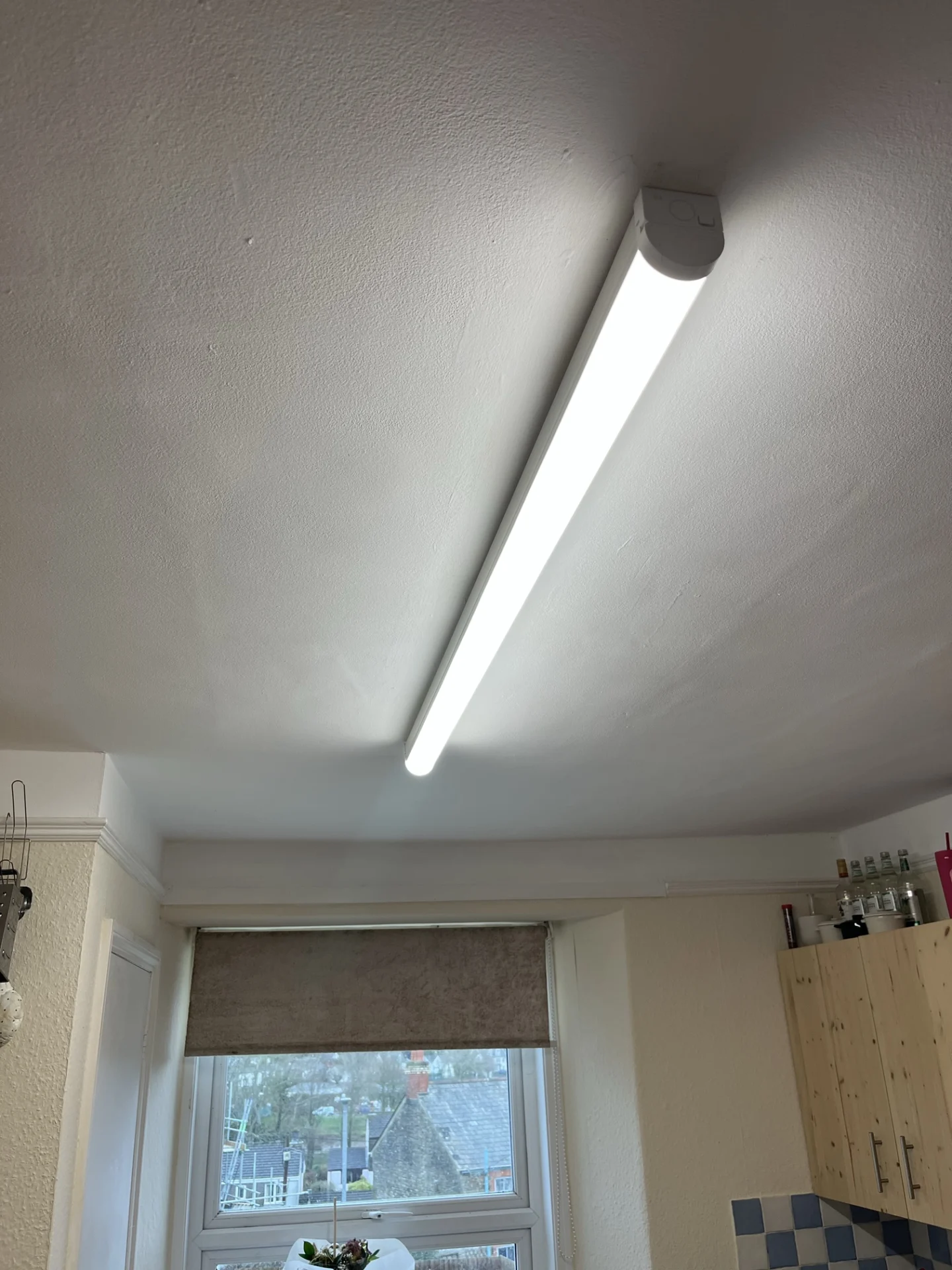
The kitchen was fitted with a 5ft fluorescent tube light – the kind that’s been a common sight in kitchens and utility spaces for decades. Fluorescent fittings have a reasonable service life, but they do eventually fail. The tube itself can degrade over time, the starter can stop functioning, or the ballast – the component responsible for regulating the current through the tube – can deteriorate to the point where the fitting becomes unreliable. Once a fitting reaches that stage, chasing individual replacement parts often isn’t the most sensible route, particularly when the unit itself has been in service for a number of years. In this case, the decision was made to replace the whole fitting with a new 5ft LED batten.
LED battens have largely taken over from fluorescent strip lights in both domestic and commercial settings, and it’s not difficult to understand why. They draw considerably less electricity for the same – often better – light output, carry a much longer rated lifespan, and remove the complications around disposing of fluorescent tubes, which contain small amounts of mercury and have to be treated as hazardous waste. For a kitchen ceiling, where the priority is consistent, functional light across a working area, a LED batten is a practical and dependable choice. The new fitting was surface-mounted and connected to the existing lighting circuit, keeping the installation straightforward.
The bathroom was a separate job but was handled during the same visit. Electrical fittings in bathrooms can’t simply be swapped for any standard ceiling light – they need to meet specific requirements set out under BS 7671, the UK wiring regulations, because of the moisture environment. Bathrooms are divided into zones based on proximity to water sources such as baths, showers, and basins. Fittings must carry an appropriate IP (Ingress Protection) rating for the zone they sit within. The IP rating system indicates how effectively a product is sealed against the ingress of water and particulates – the higher the second number in the rating, the greater the level of water resistance.
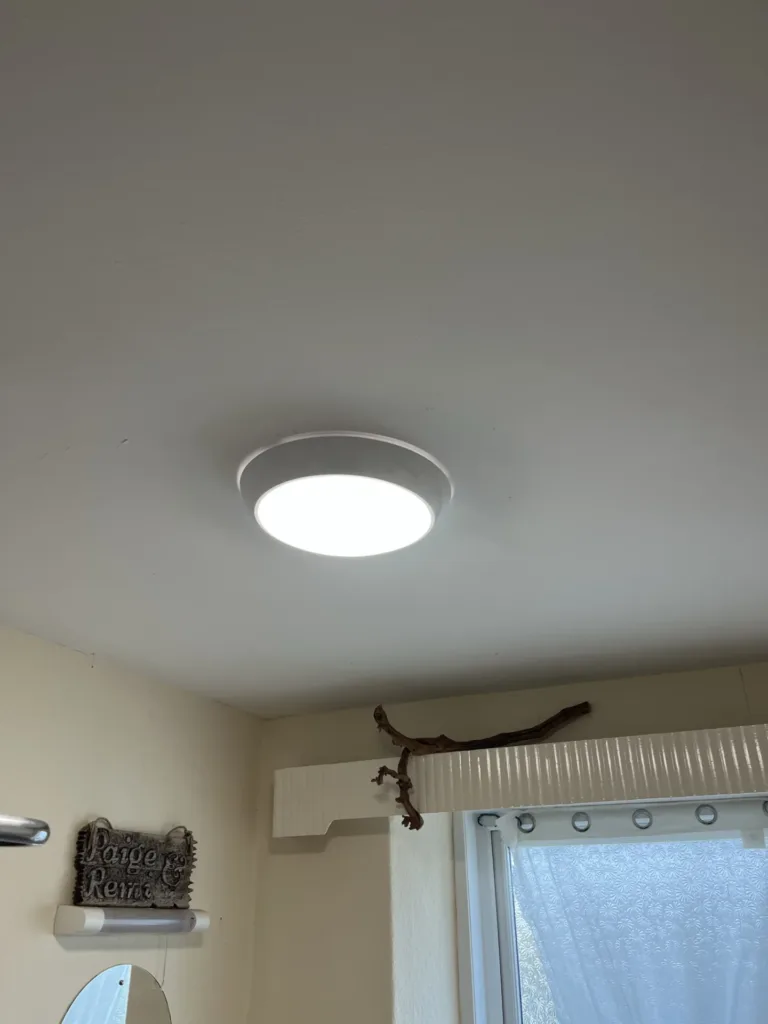
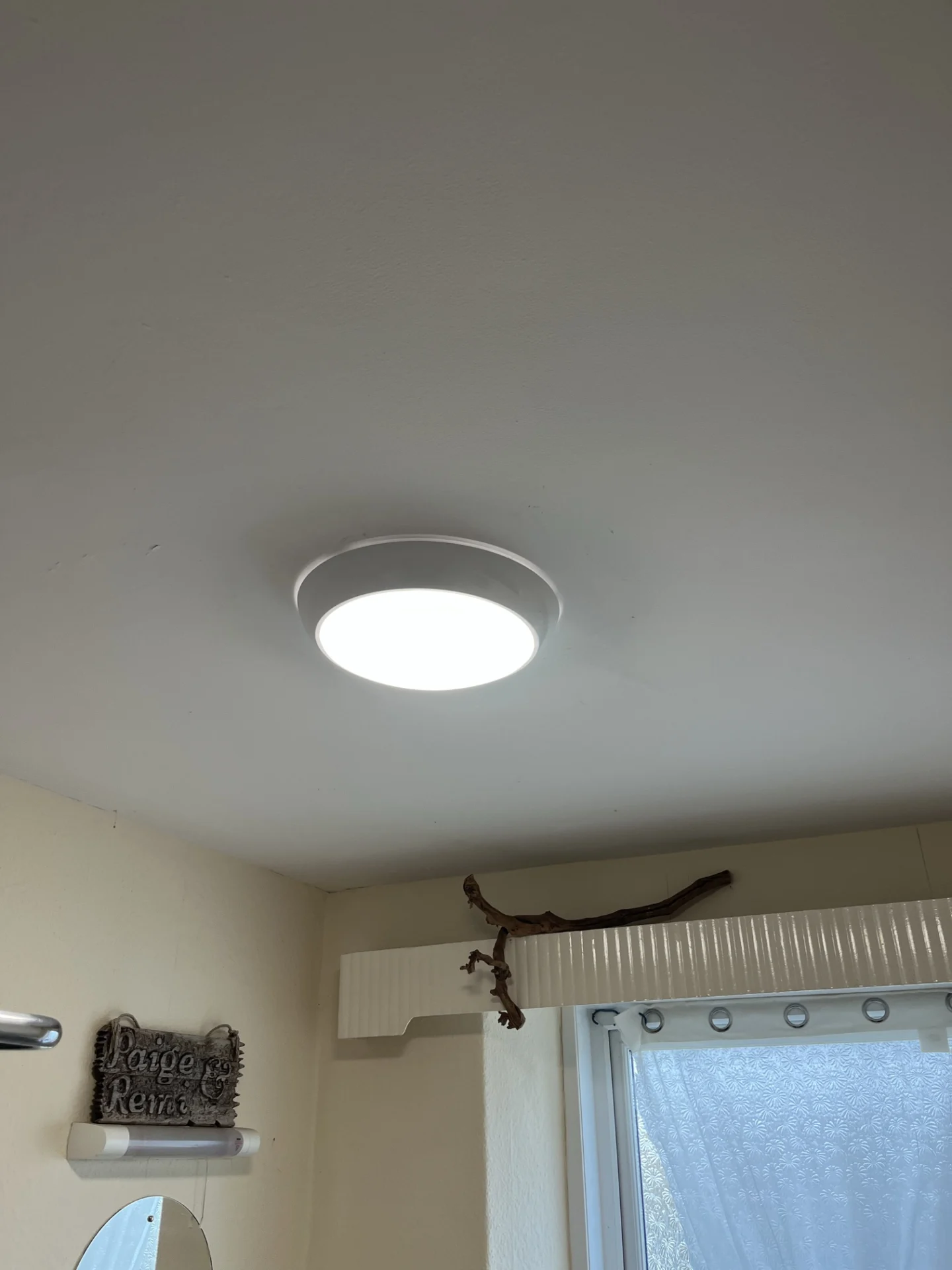
For this bathroom, the replacement chosen was a round LED bulkhead carrying the required IP rating. Bulkheads are a practical and widely used option in bathrooms precisely because their fully enclosed construction provides the moisture resistance the room demands. They sit neatly on the ceiling without taking up much visual space, and the LED light source means low running costs and a long service life. The fitting was wired into the existing circuit, replacing the faulty unit at the same ceiling position.
Rental properties in Wadebridge and across North Cornwall generate a steady flow of electrical maintenance work, and lighting faults sit near the top of the list. Fittings wear out, tubes fail, and in a tenanted home the occupant often isn’t in a position to deal with it themselves – particularly when the type of fitting or the wiring involved calls for a qualified electrician. Landlords have a legal responsibility under the Landlord and Tenant Act 1985 to keep installations and fixed fittings in safe, working order throughout a tenancy. When a tenant raises an issue, acting on it promptly is both the practical and the responsible course of action.
Fluorescent tube fittings in particular tend to get left in place until they give out completely, rather than being proactively replaced. With LED now the standard across most of the domestic lighting market, sourcing a like-for-like fluorescent tube replacement is becoming more awkward, and upgrading to an LED batten at the point of failure is generally the more sensible move. The same logic applies in the bathroom – when a fitting fails in a room with specific IP requirements, fitting a modern, correctly rated replacement removes the guesswork and means the job is done properly.
Both circuits at this Wadebridge property were in good order; it was purely the fittings themselves that had given up. Once replaced, both lights were tested and confirmed working before we left site.