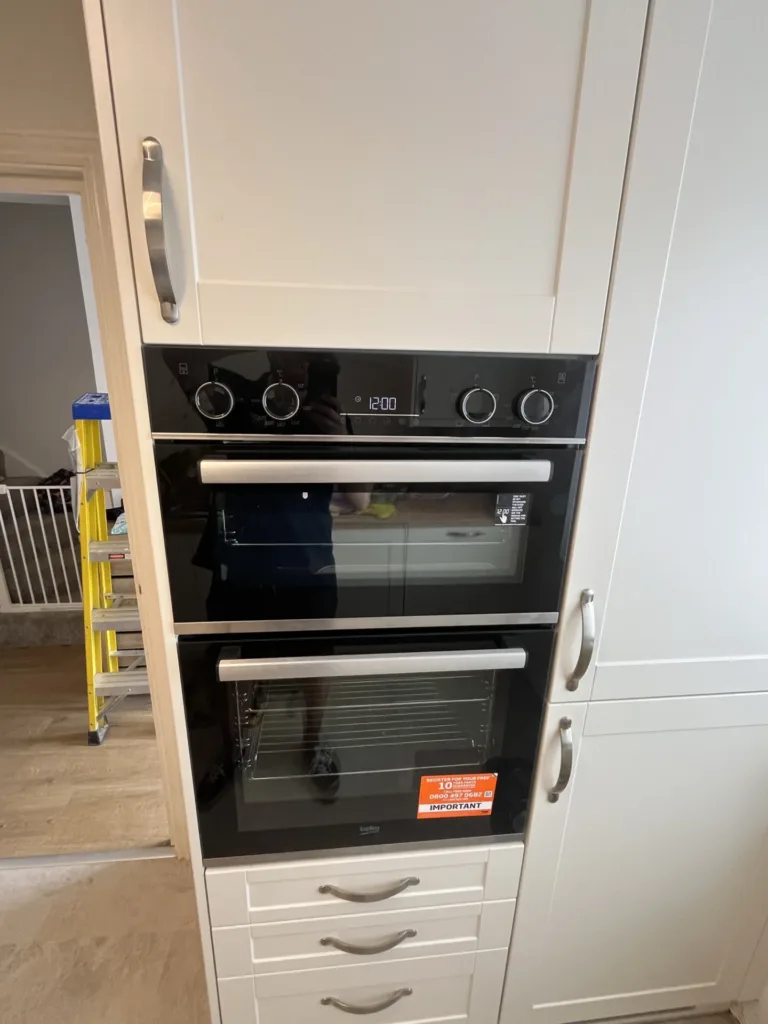
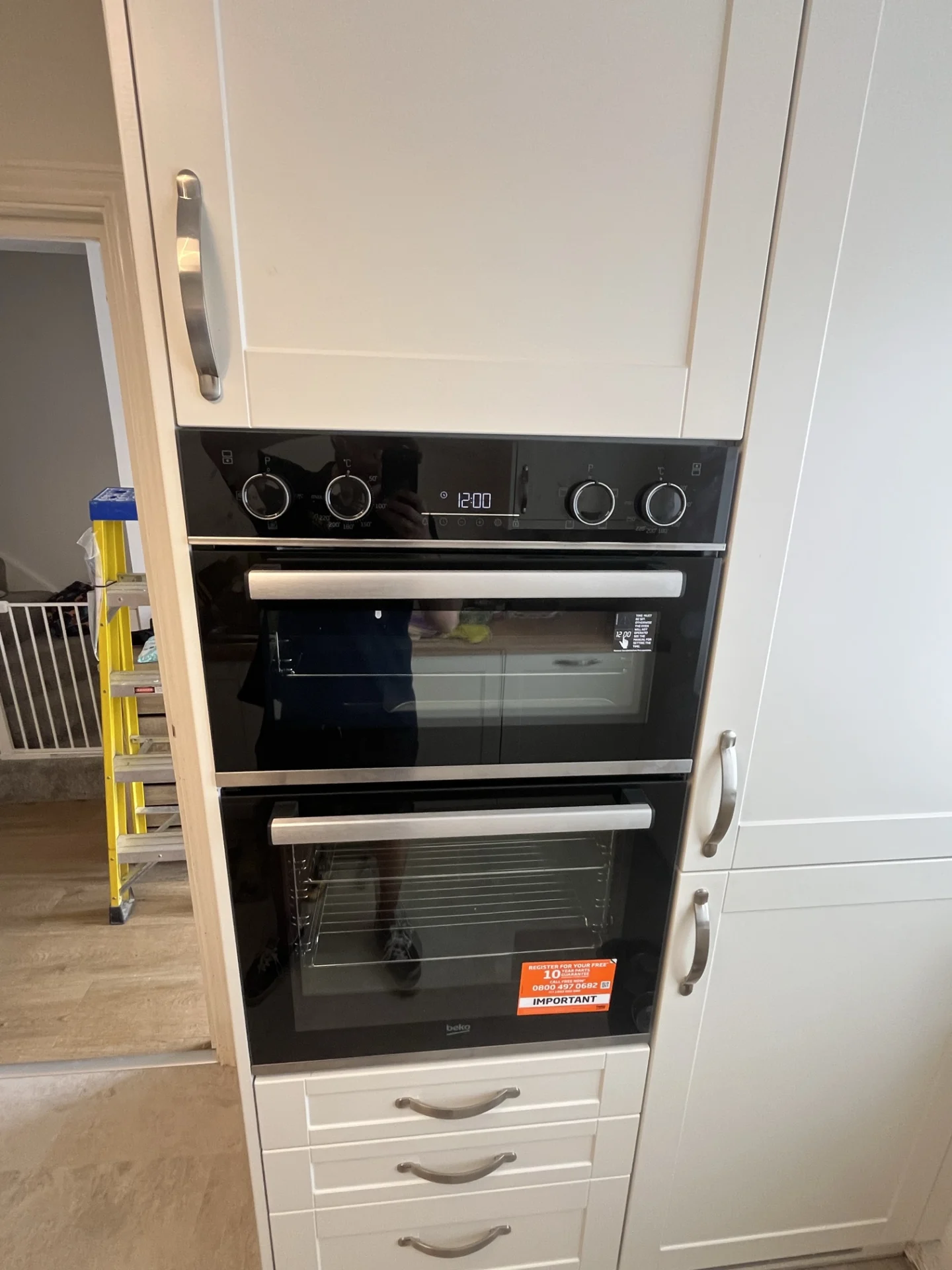
Kitchen electrics rarely get much attention until something goes wrong or the accessories start looking dated. This residential job in Newquay was driven by the latter – the customer wanted all the existing kitchen outlets and accessories replaced with new units, and a ceiling extractor fan fitted at the same time. It’s the sort of job that doesn’t involve structural changes or rewiring from scratch, but done properly it makes a real difference to how the kitchen looks and functions day to day.
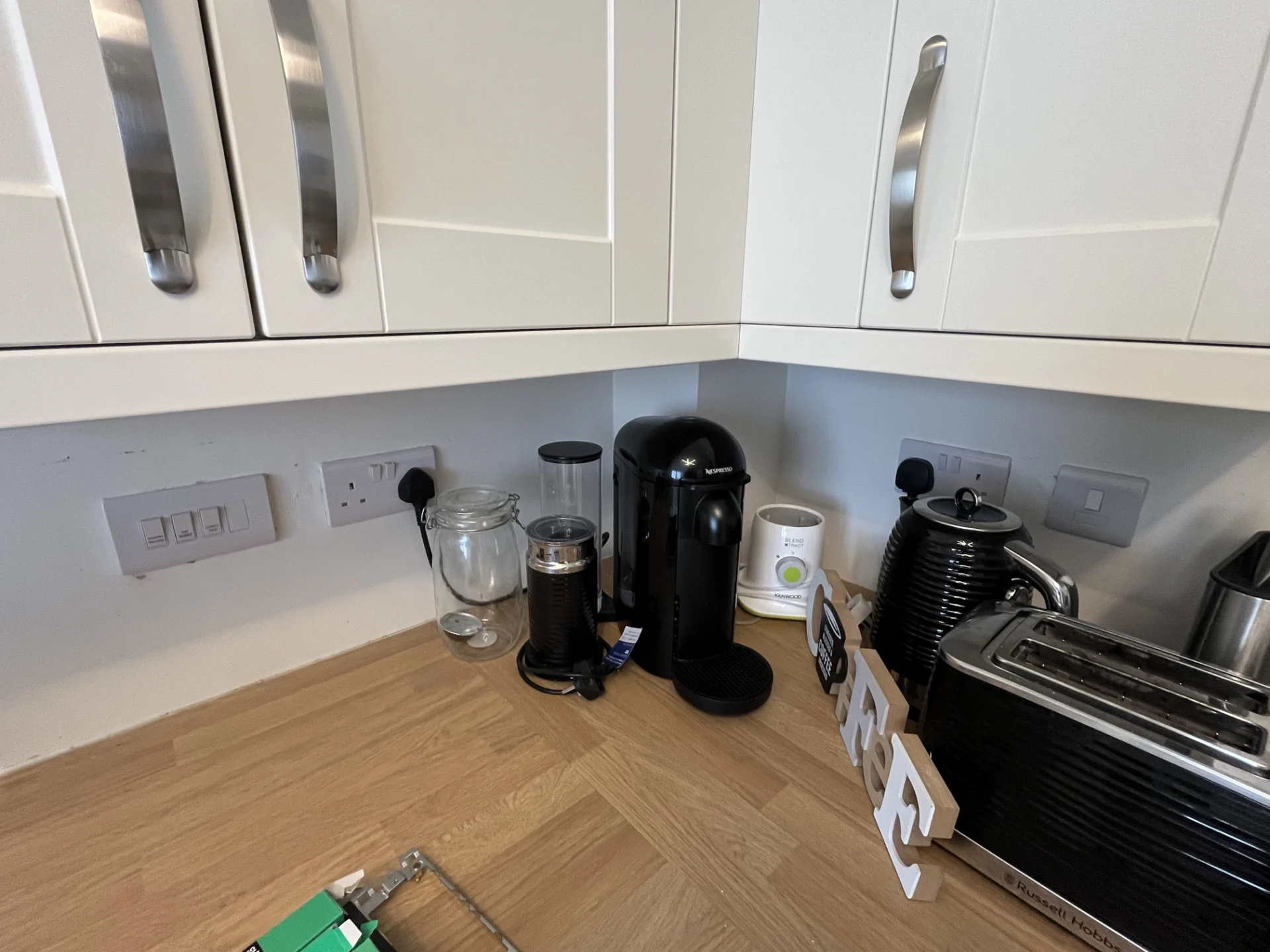
Three 2-gang socket outlets were replaced across the kitchen, covering the worktop positions used for general appliances and smaller kitchen equipment. These are the outlets that see the most regular use – coffee machines, toasters, small food processors – and replacing them brought everything to a consistent finish. The existing sockets were removed and new units fitted in the same locations, which kept cable disruption to a minimum and avoided any unnecessary damage to surrounding surfaces.
A 4-gang isolator plate was also part of the replacement works. Three of the four switches are clearly labelled – one each for the dishwasher, washing machine, and cooker hood – with a blanking module fitted in the fourth position. Individually labelled isolators make a practical difference in a kitchen where several built-in appliances are running from a shared circuit and the wiring disappears behind cabinetry. In a busy household where the kitchen sees constant use, knowing exactly which switch controls which appliance takes the guesswork out of isolation. Rather than tracing cables or working through a consumer unit to find the right circuit, the right switch is immediately identifiable at the plate. That matters for day-to-day use and for any future servicing or repair – particularly where a service engineer needs confirmation that the circuit is isolated before working on a built-in appliance.
Two switched fused spurs were replaced alongside the isolator plate. Fused spurs are used where appliances are wired directly into the circuit rather than via a standard plug and socket arrangement. In kitchen installations, this typically applies to built-in appliances set into cabinetry where a conventional socket wouldn’t be accessible. The fused element provides circuit protection at the connection point itself, and the switch gives a local means of isolation close to the appliance – useful both during installation and any future maintenance.
A 2-gang light switch and a fan isolator were also renewed, keeping all the accessories consistent with the rest of the replacement works. The fan isolator ties directly to the second part of the job – providing a separate, local means of isolation for the extractor fan circuit.
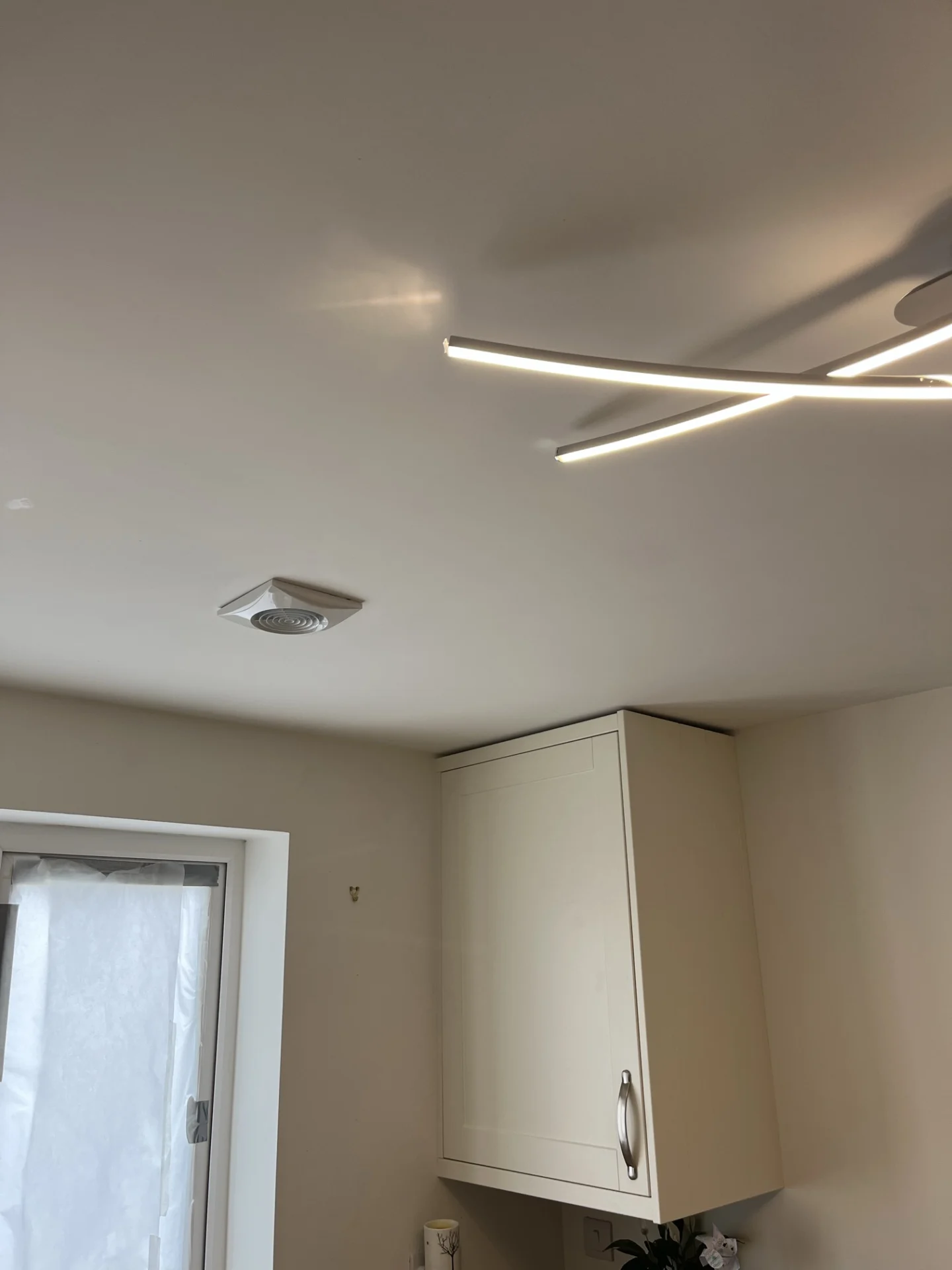
The fan side of the job involved supplying and fitting a 100mm ceiling-mounted extractor fan, wired with a timer-overrun function. A standard extractor runs while the switch is on and stops the moment it’s turned off. With the overrun in place, the fan continues running for a set period after switch-off. Cooking generates moisture and odours that don’t clear instantly; they linger for a few minutes once the hob is off and pots are moved. The overrun keeps the extraction going long enough to deal with that, rather than stopping at the point cooking finishes. A 100mm fan is a common choice for domestic kitchen extraction – the output balances adequate air movement with noise levels that aren’t intrusive in everyday use. In practical terms, the overrun reduces the moisture that settles on surfaces and windows over time.
Wiring for the overrun requires a permanent live feed to the fan unit alongside the switched live. When the switch is turned off, the switched live drops away but the permanent live remains connected, allowing the fan’s timer to run down its overrun cycle before the motor stops. The existing circuit was checked before the installation to confirm it supported this wiring arrangement, and the fan was connected with the overrun fully active.
The 100mm fan was fitted to the kitchen ceiling and connected through to the circuit, with the fan isolator in place as the local isolation point for the installation. Ceiling extraction draws cooking vapour and steam upward and away, working with the natural movement of warm air rather than against it. The overrun period was set during commissioning, calibrated to clear residual moisture from cooking without the fan running unnecessarily once the kitchen is idle.