First fix electrical installation for a kitchen renovation in Newquay, including cable installation for dedicated socket circuits, appliance connections, consumer unit upgrade, and preparation for final fitting.
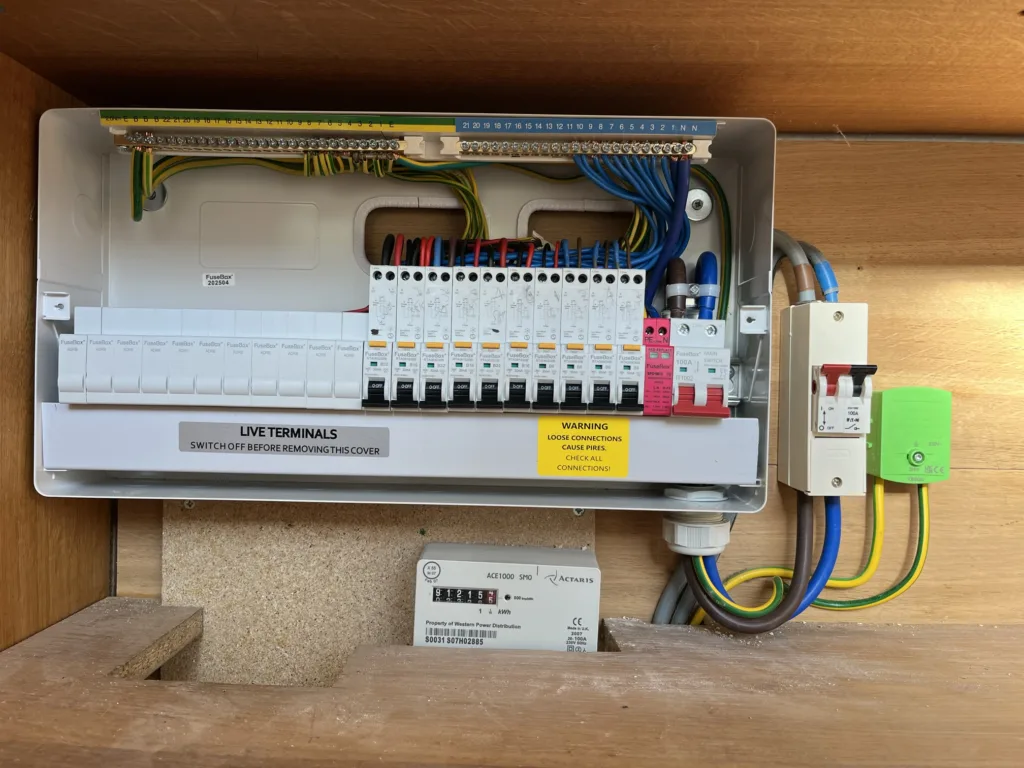
Kitchen renovations present an opportunity to address outdated electrical systems and bring everything up to current safety standards. This first fix installation in Newquay involved establishing the electrical infrastructure that will serve the new kitchen – replacing the property’s consumer unit, running dedicated circuits, and preparing all the cable routes before the plastering and kitchen fitting begins.
The existing electrical setup relied on a fixed wired extension lead to serve the kitchen sockets, which isn’t an ideal arrangement for a modern kitchen with multiple appliances. The first step was to decommission this makeshift solution and run cables for a proper dedicated circuit that will safely handle the electrical load from worktop appliances, kettles, toasters, and everything else that makes a kitchen functional. We ran a 25A circuit using 4mm cable, which provides plenty of capacity whilst being protected by an RCBO at the consumer unit. This type of protection combines overload and fault current detection in a single device, offering better safety than older fuse systems.
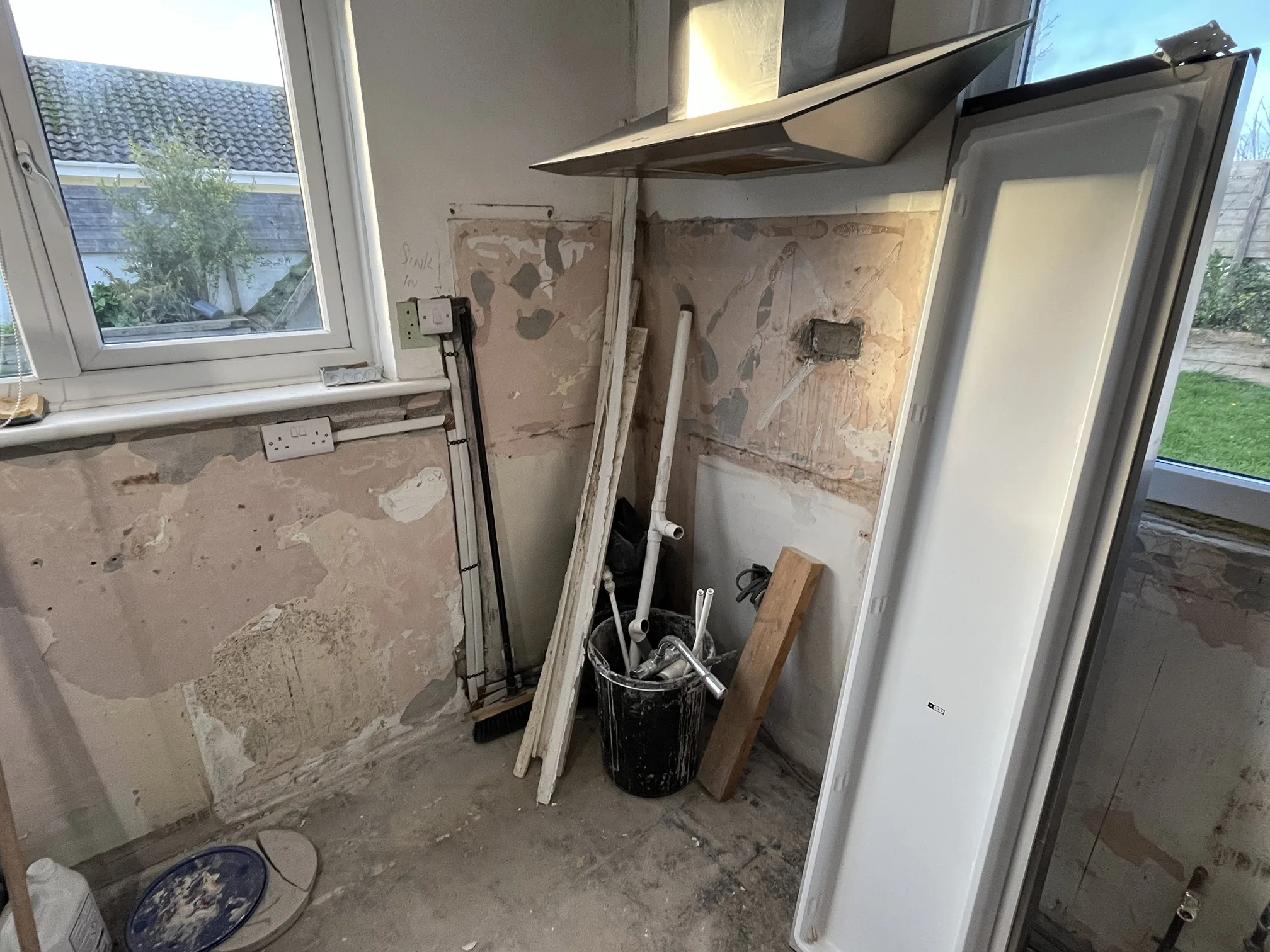
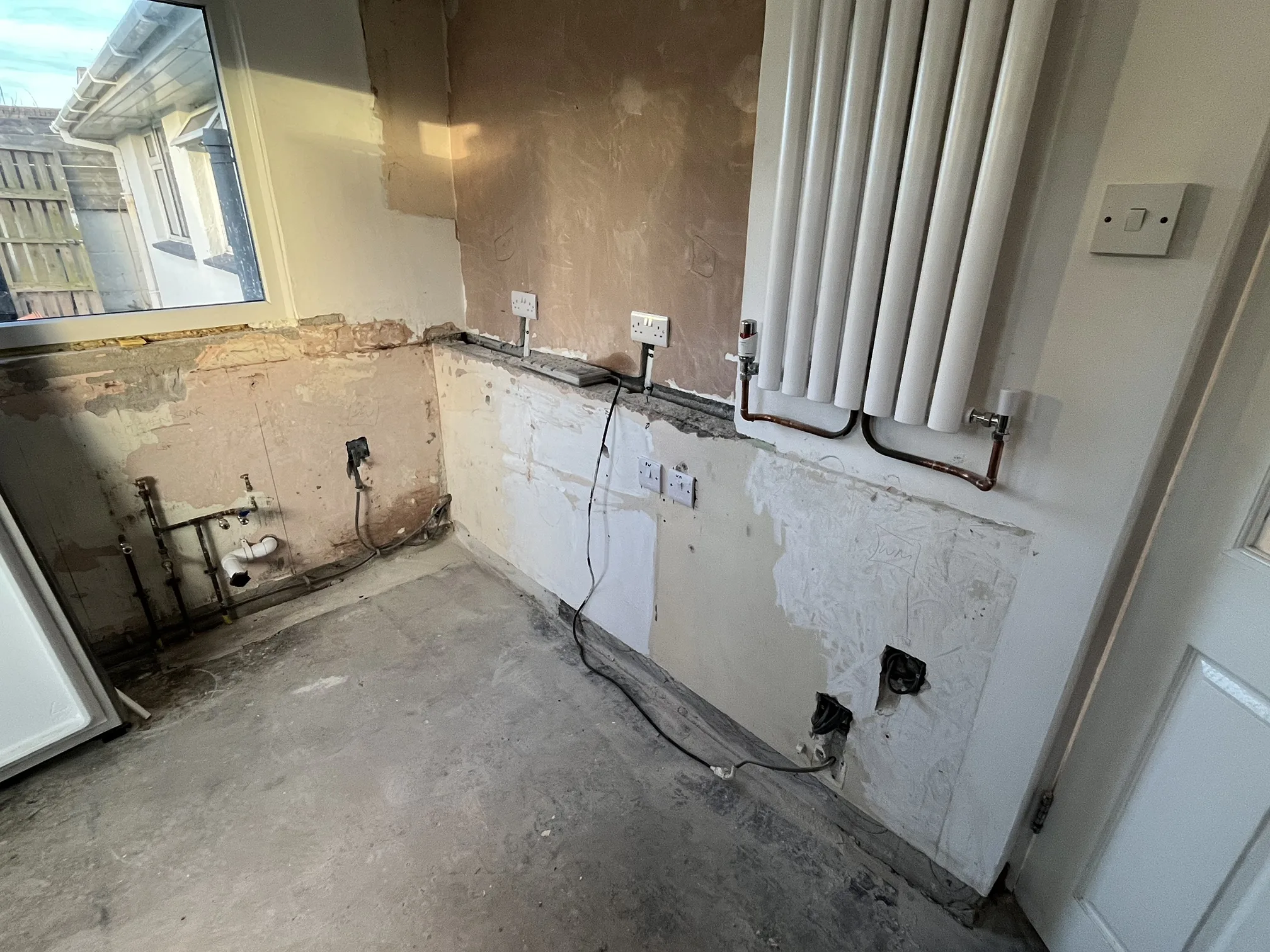
The cable positioning needed careful consideration since the kitchen units will eventually conceal much of our routing. We’ve prepared three socket locations below the worktop level, distributed strategically around the kitchen workspace. Two positions went on the wall adjoining the main house, whilst another was marked below the window to serve that area. The cables run through channels we created in the masonry walls using dustless extraction equipment, which keeps the mess to a minimum during installation. Once the cables are in place, we fill these channels with bonding coat plaster, leaving them ready for the decorator to finish properly. Some cables needed to run at low level where they’ll be hidden behind the kitchen units once fitted, so we clipped these directly to the wall rather than burying them.
Modern kitchens demand dedicated supplies for major appliances, so we’ve run cables for two appliance outlets with countertop isolator switches. These will serve the washing machine and dishwasher once the second fix is completed, giving the homeowner easy access to switch off these appliances without having to pull them out or reach behind units. The cable routes are prepared and protected, ready for the final connections when the kitchen units are in place.
The existing cooker circuit had an isolator switch that was surface mounted, which would have looked out of place in the renovated kitchen. We’ve fully recessed the back box into the masonry wall by chasing out the brickwork to accommodate flush mounting. At the oven location itself, we’ve run cables and prepared the position for a cooker connection outlet plate, which will make the final connection straightforward once the oven arrives and the second fix takes place. All the chasing work has been first-filled during our visit, leaving clean lines for the finishing trades to work with.
An old alarm panel and its power outlet were no longer required, so these came down as part of the renovation. The electrical supply cabling for these didn’t just get disconnected at the visible end – we traced it back into the loft space, pulled it back as far as practical, and terminated everything safely. This approach means the wall locations are left completely safe rather than having hidden live cables that might cause problems years down the line.
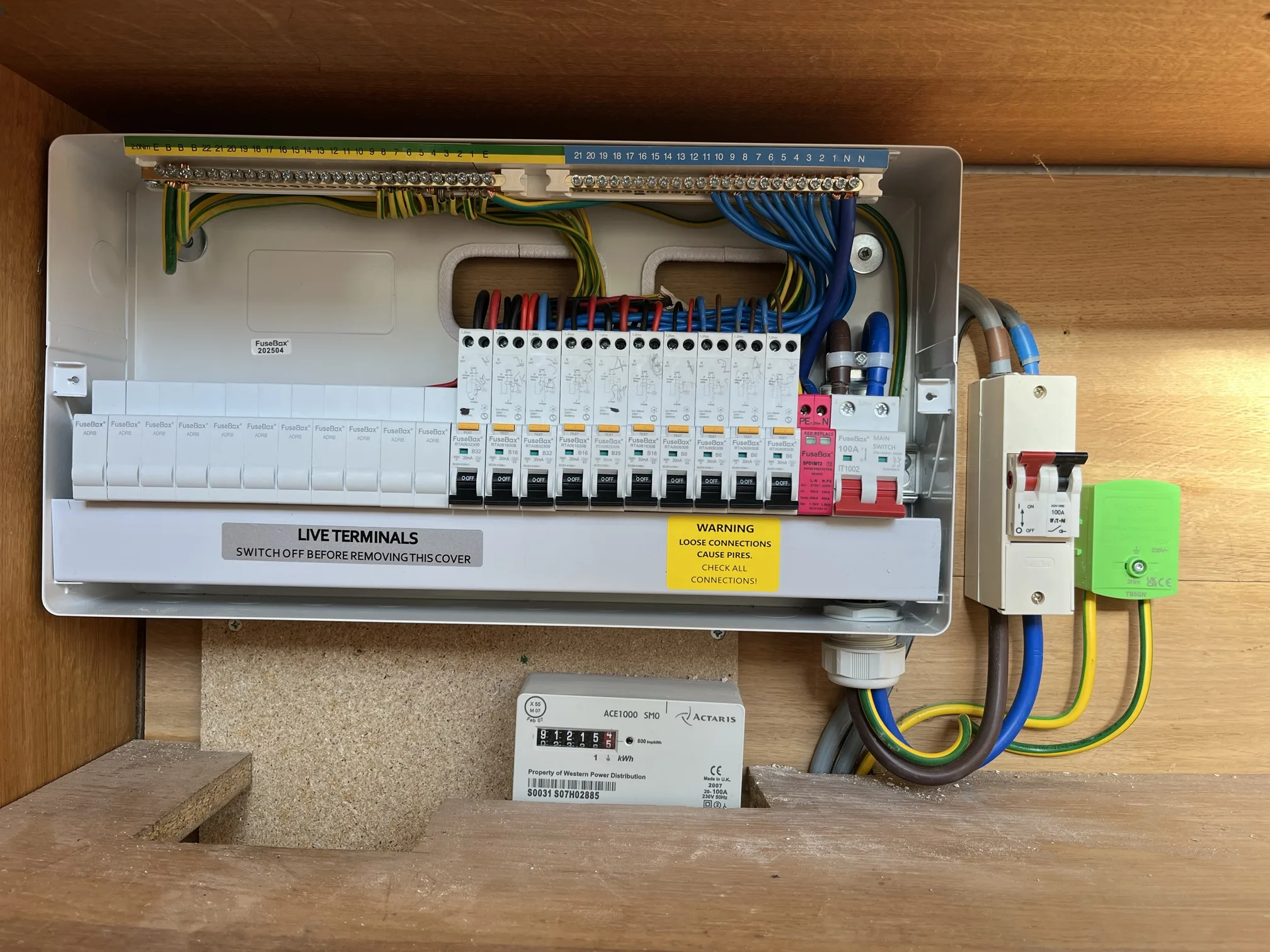
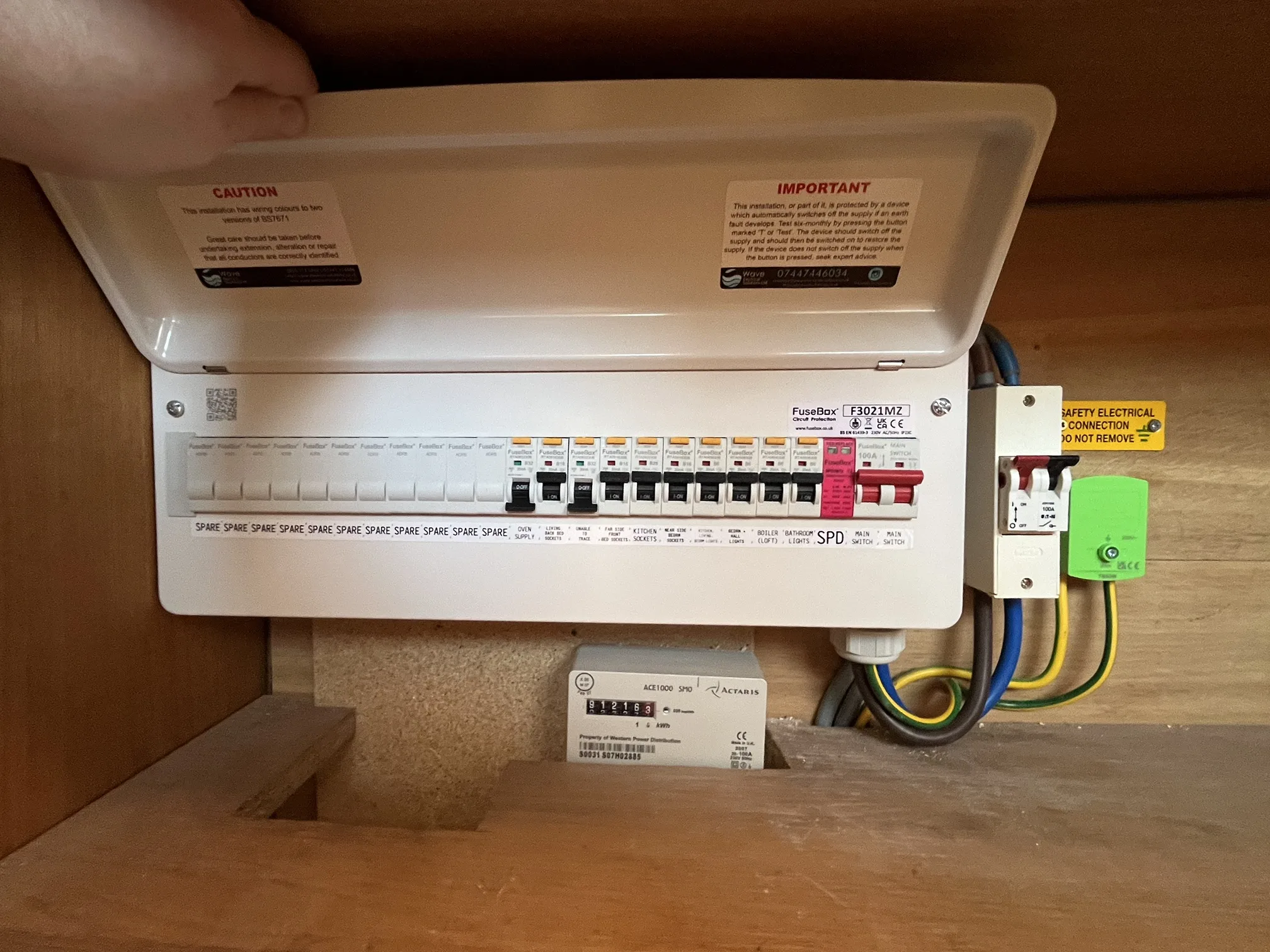
The property’s consumer unit replacement formed a significant part of this project. The existing board needed upgrading to meet current electrical standards and to accommodate the new kitchen circuit alongside improved protection for the rest of the house. We installed a fire-rated 21-way RCBO consumer unit fitted with an integrated surge protection device. Each circuit gets its own RCBO, which means a fault on one circuit won’t affect the others – much better than the old-style boards where multiple circuits shared protection devices. The fire rating provides additional safety in the event of an internal fault, whilst the surge protection device guards against voltage spikes from the grid that can damage modern electronics.
The meter tails – the thick cables connecting the electricity meter to the consumer unit – needed upgrading to 25mm double insulated cable to properly support the upgraded installation. This isn’t always necessary, but older properties often have undersized meter tails that wouldn’t safely carry the current demanded by a modern home with electric vehicle charging points, multiple high-power appliances, and so on. Getting this right now prevents issues later.
Electrical testing forms a required part of any installation work like this. At the first fix stage, we verify the cable installations are correct and properly protected, though the full testing and certification happens once the second fix is complete and all connections are made. The final Electrical Installation Certificate will document the entire installation, and that gets submitted to Building Control as notification of the electrical works, which is a legal requirement for this type of work. During our initial checks, we sometimes identify issues with existing circuits that weren’t part of the original scope – perhaps old wiring that’s deteriorated or connections that don’t meet current standards. We highlight these to the homeowner, and if they want them rectified, we provide a separate quotation for that additional work.
The kitchen renovation timeline requires careful coordination between trades. The electrical first fix happens whilst the walls are open and accessible, before the plastering and decoration begins. This installation created the infrastructure the kitchen will need to function properly – the circuits, the cable routes, the protection devices – all positioned where they’ll be concealed by units or plastered over. The second fix, where faceplates get fitted and connections to appliances are made, comes later once the decoration is complete and the kitchen units are installed. Getting the first fix right matters because correcting problems after the kitchen’s fitted becomes expensive and disruptive.
Working with masonry walls requires proper technique and equipment. The dustless extraction tools we use contain most of the dust generated when chasing channels for cables, making the whole process cleaner for everyone. The channels need sufficient depth to protect the cables whilst leaving enough wall material for structural integrity. Cable routing follows safe zones defined in the wiring regulations, reducing the risk of someone drilling into a cable years later during unrelated work.
Consumer unit installations need to comply with BS 7671, which is the current wiring regulation standard in the UK. The 18th Edition of these regulations introduced various requirements around surge protection, fault protection, and circuit design that older installations don’t meet. Upgrading the consumer unit brings the whole electrical installation closer to current standards, improving safety across the property even beyond the kitchen circuits. The integrated surge protection device is particularly valuable given how much sensitive electronic equipment modern homes contain – computers, televisions, smart home devices, and appliances all benefit from protection against voltage fluctuations.
The transformation from a kitchen relying on an extension lead to one with properly designed, dedicated circuits represents a substantial improvement in both safety and functionality. This first fix work establishes the foundation for a modern electrical system that can handle simultaneous loads from multiple appliances without tripping protection devices or creating potential hazards. The cables are run, the channels are filled, and the consumer unit is upgraded – everything is prepared for the plastering, decoration, and kitchen fitting stages that follow.