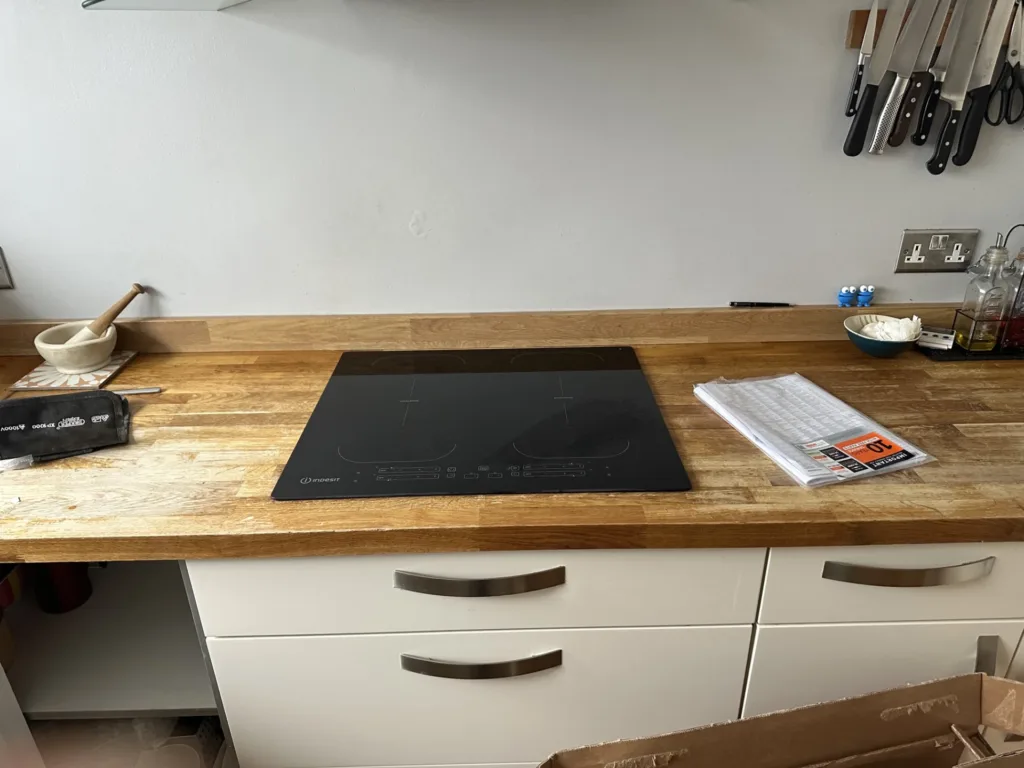
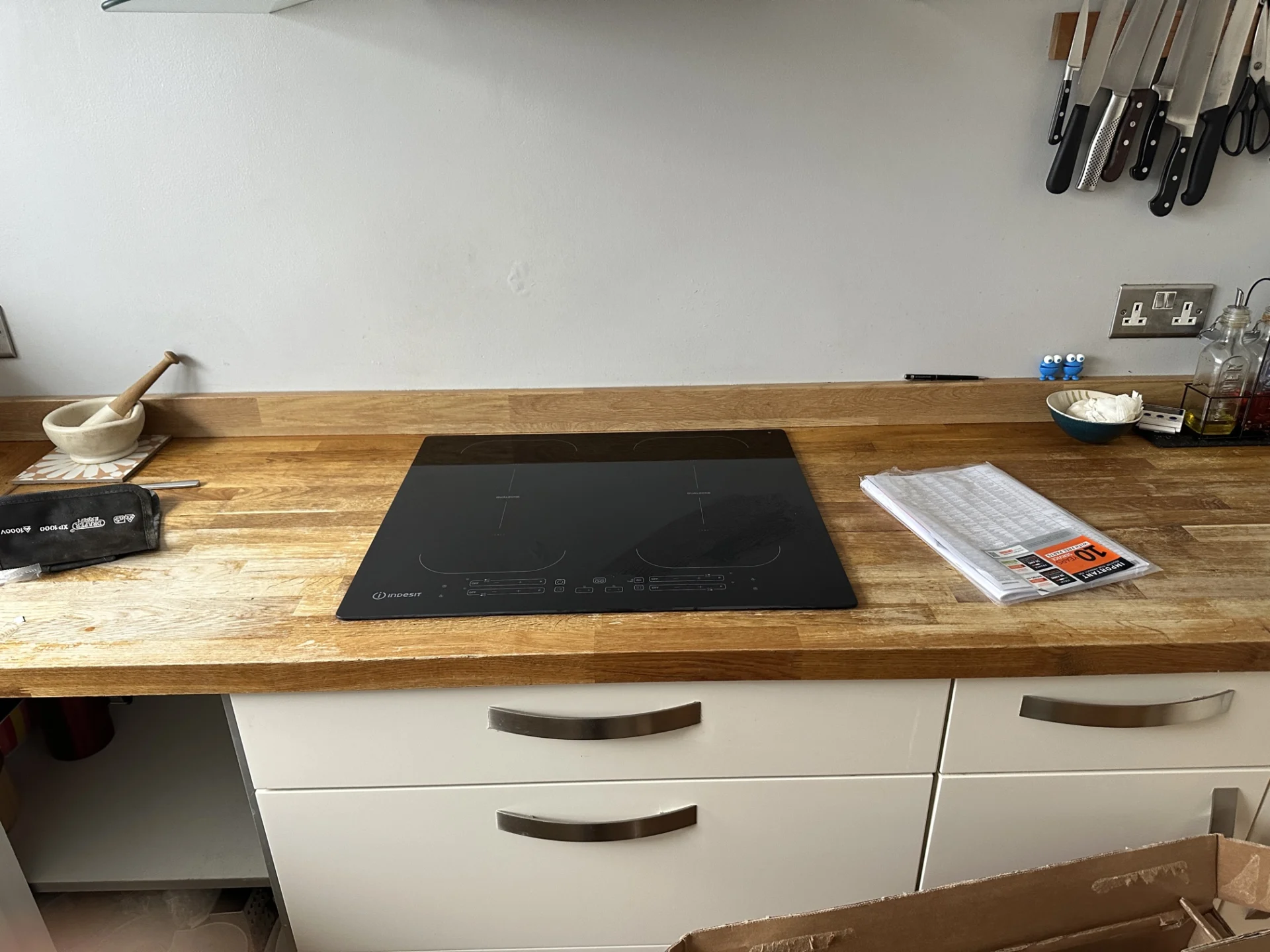
Electrical work in a home doesn’t always mean full rewires or consumer unit upgrades. Sometimes it’s the smaller, more targeted jobs that make the biggest difference to day-to-day life – and this Newquay property was a good example of that. The client needed two separate things sorted: a kitchen hob outlet installed correctly so a new hob could be connected safely, and a bathroom pull cord switch that had seen better days replaced with a unit that actually worked reliably.
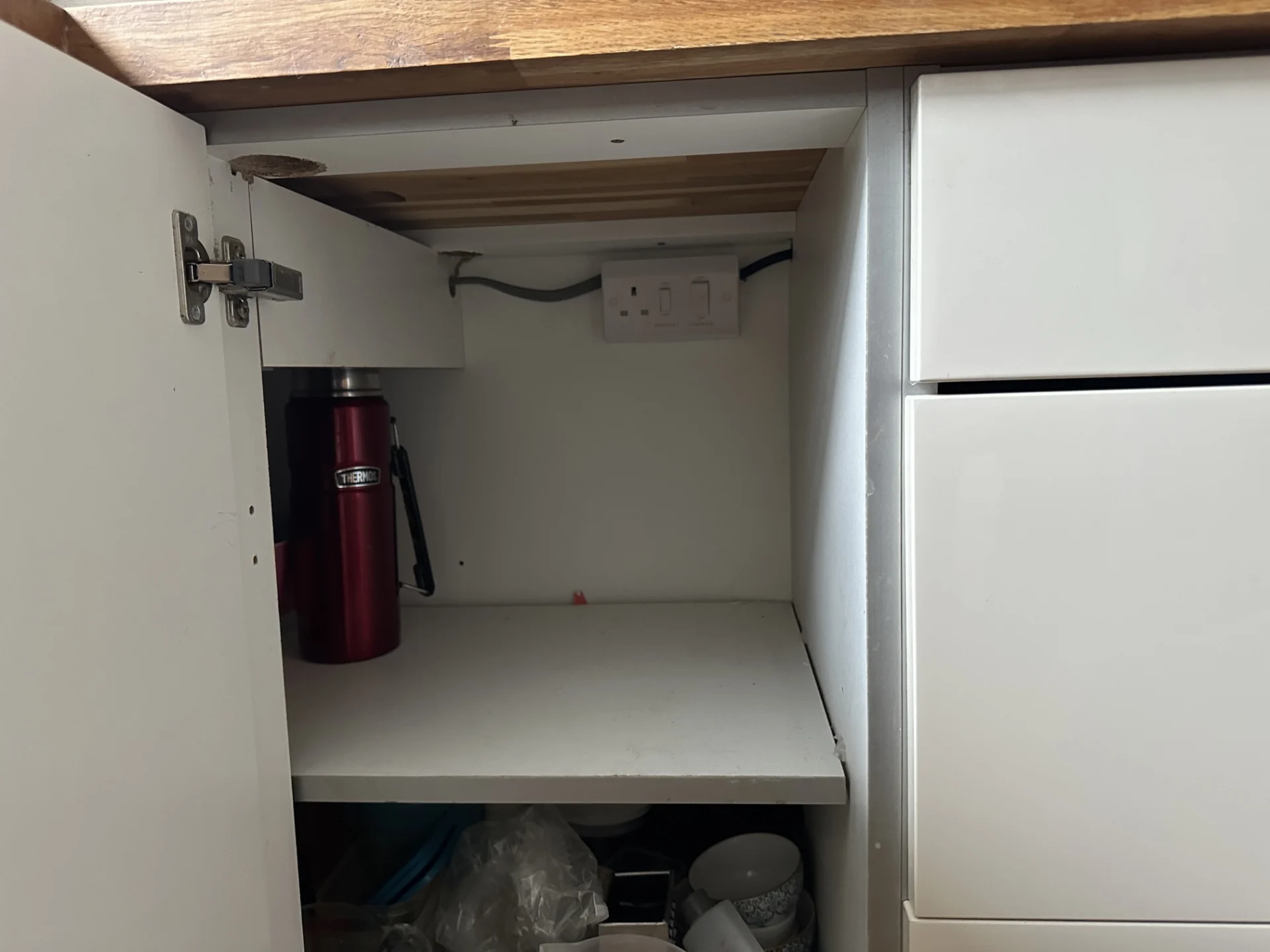
The existing setup in the kitchen wasn’t fit for purpose. There was a standard two-gang socket inside one of the base cupboard units – the kind you’d use for a kettle or a toaster – and someone had been using it, or at least intending to use it, to power the hob. That’s not how it should be done. A hob is a high-demand appliance, and it needs a dedicated circuit and an appropriately rated outlet, not a standard 13-amp socket.
For an induction or electric hob, the correct approach is a dedicated radial circuit running from the consumer unit, wired in 6mm cable to handle the load, feeding into a proper cooker outlet plate. That outlet plate gives you a suitable connection point for the hob’s supply cable, along with a means of isolation – so the appliance can be safely disconnected without having to go back to the consumer unit every time. The existing two-gang socket inside the cupboard was removed entirely and replaced with a cooker outlet plate, positioned inside the unit where it sits neatly out of sight but remains accessible. Once the wiring was in place, the client-supplied hob was connected up and tested. The isolation switch arrangement in the kitchen was also addressed as part of the same visit, making sure there was a proper means of switching the circuit off from within the kitchen itself – a requirement under Part P of the Building Regulations for new cooker circuits.
It’s worth touching on why this matters. Kitchen hobs, particularly induction models, draw a significant amount of current during normal use. Running that kind of load through a standard socket and plug arrangement creates a genuine risk – of overheating at the socket, of tripping protection devices that aren’t rated for sustained high loads, or worse. A dedicated outlet and circuit removes those risks and means the hob performs the way it’s designed to.
This comes up fairly regularly, particularly in older properties or in kitchens where the original electrical layout wasn’t planned with modern appliances in mind. When a kitchen was originally wired, it may have had a gas hob and a basic oven, both of which had very different electrical demands compared to today’s induction hobs or range cookers. As appliances change, the electrical infrastructure sometimes needs to catch up. Any fixed cooking appliance needs its own circuit with suitable protection at the consumer unit, appropriate cable sizing for the expected load, and a local means of isolation – usually a double-pole switch or a cooker outlet plate with an isolator built in. This isn’t about over-engineering things; it’s just how the regulations are written, and for good reason. Getting this right at the point of installation avoids problems down the line and means the appliance warranty isn’t compromised by an improper electrical connection.
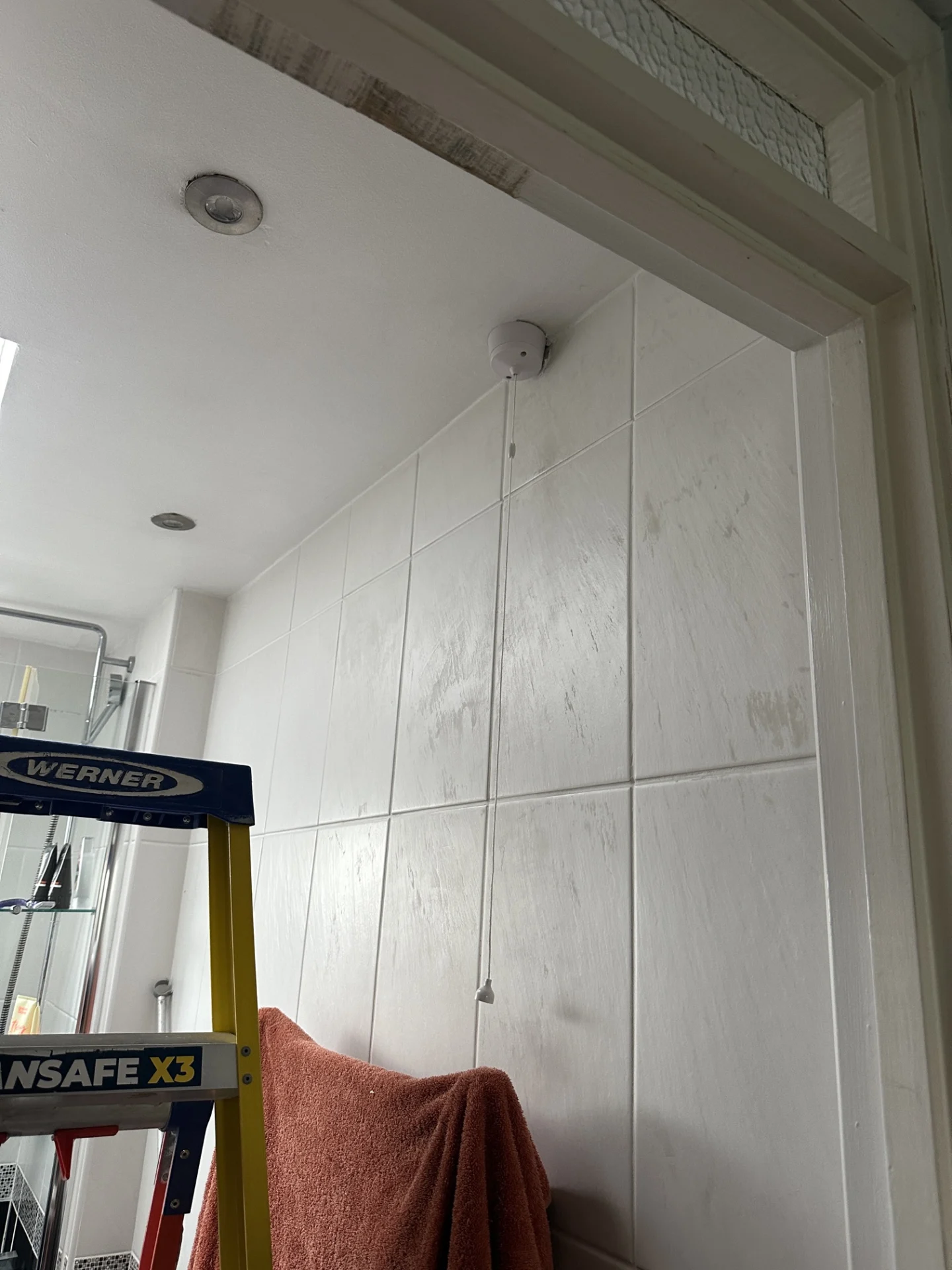
The second part of the visit was more straightforward. The bathroom pull cord light switch had failed and needed replacing. Pull cord switches in bathrooms are a standard fitting – because you can’t have a standard wall switch within a certain distance of a bath or shower due to the risk of contact with water, pull cord ceiling switches are used instead. They’re rated for the purpose and positioned out of reach of anyone in the bath or shower. When one fails, whether it’s the mechanism internally, the cord itself, or the switch contacts, replacement is the right call. The switch position, the wiring connections, and making sure the replacement unit is suitable for the zone it’s located in all need to be considered. The faulty unit was removed, the new switch fitted, and the circuit tested to confirm everything was working correctly before leaving site.
Two separate issues, one visit. That’s often how it works – a homeowner has a couple of things that need attention, and it makes more sense to get them dealt with together. The kitchen hob connection is now done correctly, with a proper outlet and dedicated circuit, and the bathroom has a functioning pull cord switch again.