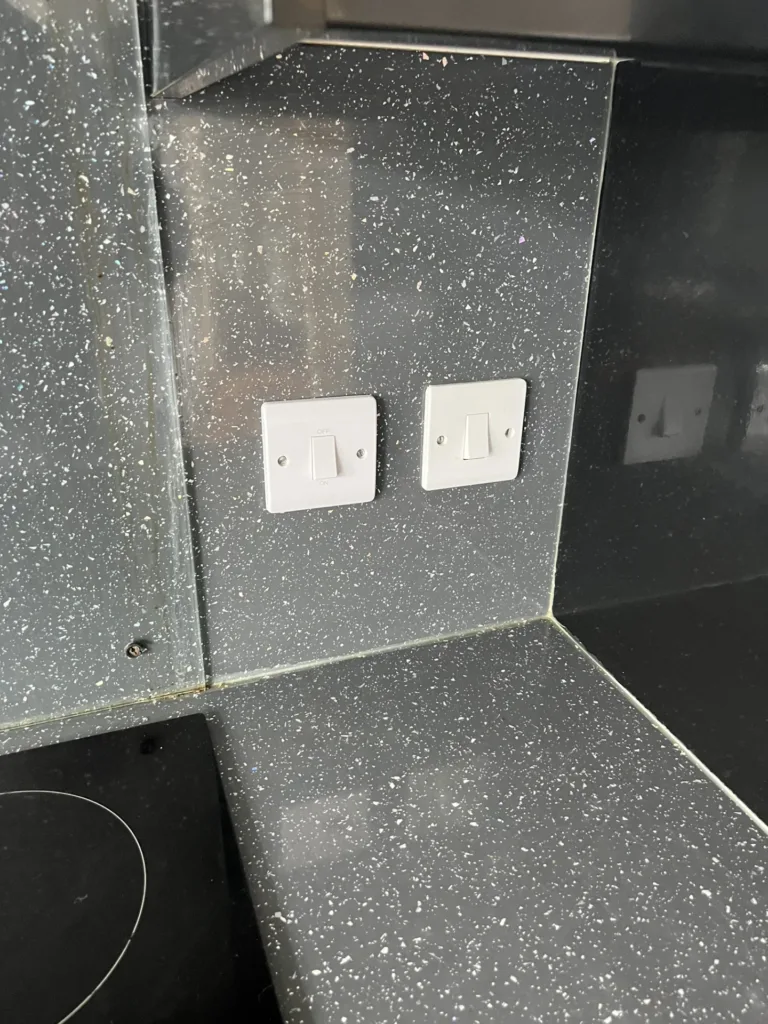
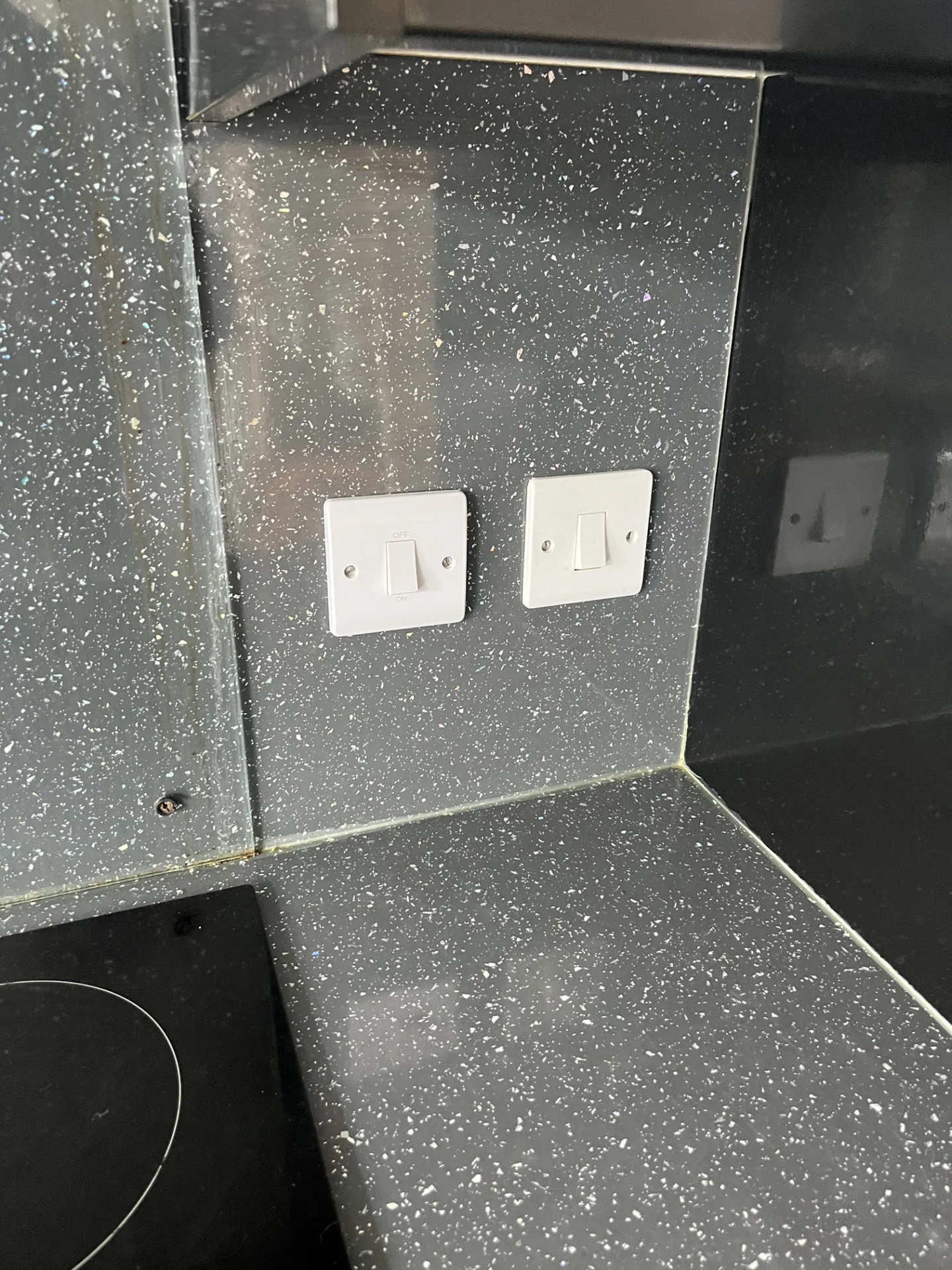
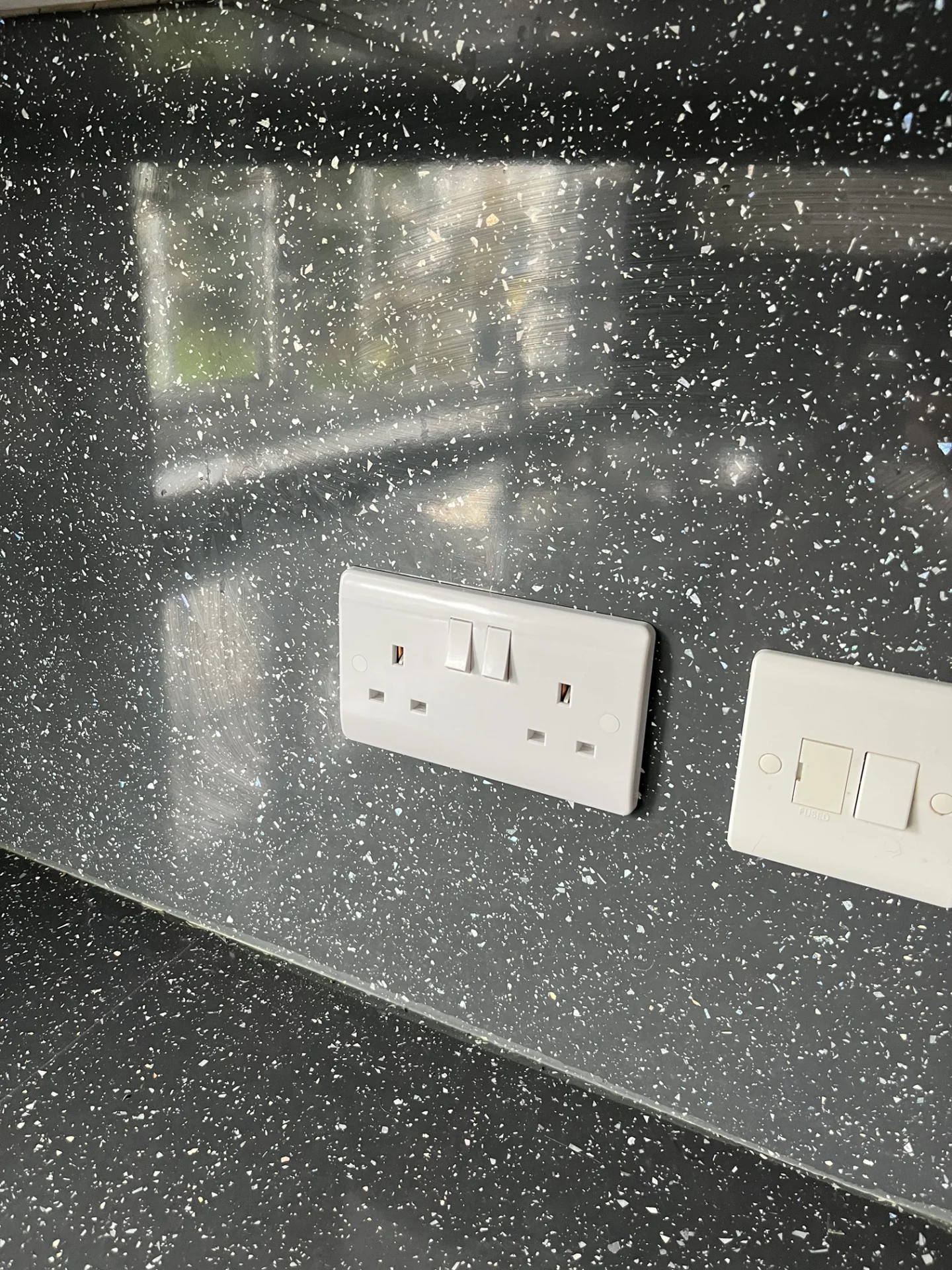
A property in Lanreath – a village set back from the coast a few miles outside Looe – needed some kitchen electrical work completing. Two counter top double socket outlets required replacement, alongside a 45a 1-gang isolator switch that had been identified as a potential hazard due to its interaction with the metal back box it was mounted on.
Kitchens are probably the hardest-working room in any property when it comes to the electrics. Counter top sockets are in use every single day – kettles, toasters, food processors, coffee machines, phone chargers – and that constant demand takes its toll over time. The contacts inside a socket outlet wear down gradually, switch mechanisms can become stiff or intermittent, and the faceplate may start to sit poorly against the wall surface. In a domestic setting these things are often put up with far longer than they should be, partly because a socket that still works most of the time doesn’t feel urgent. For a rental property or holiday let, though, it’s a different story – you can’t leave worn or substandard socket outlets in a kitchen that guests or tenants are relying on day to day.
The two double sockets in this Lanreath kitchen were positioned at counter level, right where the demand on them is highest. Counter top sockets are within easy reach of the worktop constantly, they sit in the splash zone from the sink, and plugs go in and out of them many times a day. Replacing them with new units resolves any wear-related issues and brings that portion of the installation back to a proper standard. The work involves removing the existing faceplates, checking the wiring terminations inside the back boxes and making them off correctly, then fitting and securing the new socket outlets. It isn’t especially complex, but the quality of those terminations matters – a poor connection in a frequently used socket will cause problems sooner or later, and a loose or arcing terminal in a kitchen is not a situation you want to ignore.
The 45a 1-gang isolator switch was a more specific concern. This type of switch is standard in kitchens as a means of isolating the cooker or hob circuit – 45 amps is the typical rating for a double-pole switch used to disconnect a cooker, and the regulations require an accessible isolation point close to the appliance itself. The switch needs to break both live and neutral simultaneously, reliably, over years of regular use.
What had been identified here was a problem with how the existing switch unit related to the metal back box behind it. With certain switch designs, the internal live terminal arrangement sits close enough to the metal enclosure that there’s a genuine risk of contact – through vibration over years of use, through the geometry of the unit not being well matched to a metal back box, or through slight movement in the installation. A live terminal making contact with a metal back box creates a short circuit path. If the back box isn’t correctly earthed, or if the earth connection in that part of the circuit has any weakness, the box itself can become live at mains voltage. In a kitchen, where someone might be barefoot on a hard floor and reaching past a metal tap or wet surface, that’s a situation that carries real risk.
The approach was to remove the existing isolator switch and fit a correctly specified replacement – a unit rated for the load and dimensioned so that the internal live conductors remain properly separated from the metal enclosure, regardless of how the unit sits within the back box. It’s the sort of issue that doesn’t always come to light unless someone looks carefully at the installation, but it’s exactly the kind of fault that matters when you’re dealing with a high-current circuit in a room where people are regularly in contact with earthed metalwork.
Both the socket replacement and the isolator switch were completed at the Lanreath property and tested once the new components were in. The counter top sockets are back in full working order, and the cooker isolator is now correctly specified and safely installed.
For properties in and around the Looe area – whether residential homes, rental accommodation or holiday lets – kitchen electrics are an area that tends to need attention as an installation gets older. Counter top sockets and cooker isolation switches see heavy use year on year, and replacing them when they reach the end of their serviceable life is straightforward work that makes a real difference to the safety and reliability of the installation.