Three electrical jobs at a Plymouth home, all sorted in one visit. That’s a fairly common way people approach things – a list builds up, and it makes more sense to get everything done at once than to call out separately for each task. Here it was a kitchen fridge socket, a new shed power supply with some remedial wiring removal, and a bathroom light switch relocated from inside the room to the wall outside the door.
Starting in the kitchen, a dedicated socket for the fridge was needed. Without one in the right position, fridges tend to end up either sharing an outlet with other appliances or plugged into an extension, which isn’t the best arrangement long term. In a kitchen where sockets are often already carrying a kettle, toaster, and microwave, having the fridge on its own outlet makes practical sense. The existing socket circuit was extended from a suitable point within the kitchen units, with a new double socket outlet installed directly to serve the fridge. Cabling was run within 25mm white PVC trunking at low level, contained neatly inside the unit. It’s the kind of small job that’s easy to put off, but having a proper dedicated outlet there makes a real difference to how the kitchen functions day to day.
The shed element involved more than just a straight new installation. There was already some wiring heading out to the outbuilding, but it was old and no longer serving any active purpose. Before anything new went in, the existing cables were confirmed dead – that step always comes first before pulling any wiring out. Once verified, the redundant cabling was removed as far as was reasonably achievable. Leaving old, unused wiring in place isn’t ideal, particularly in an outbuilding where it might be assumed to be live by someone who doesn’t know the history of the installation.
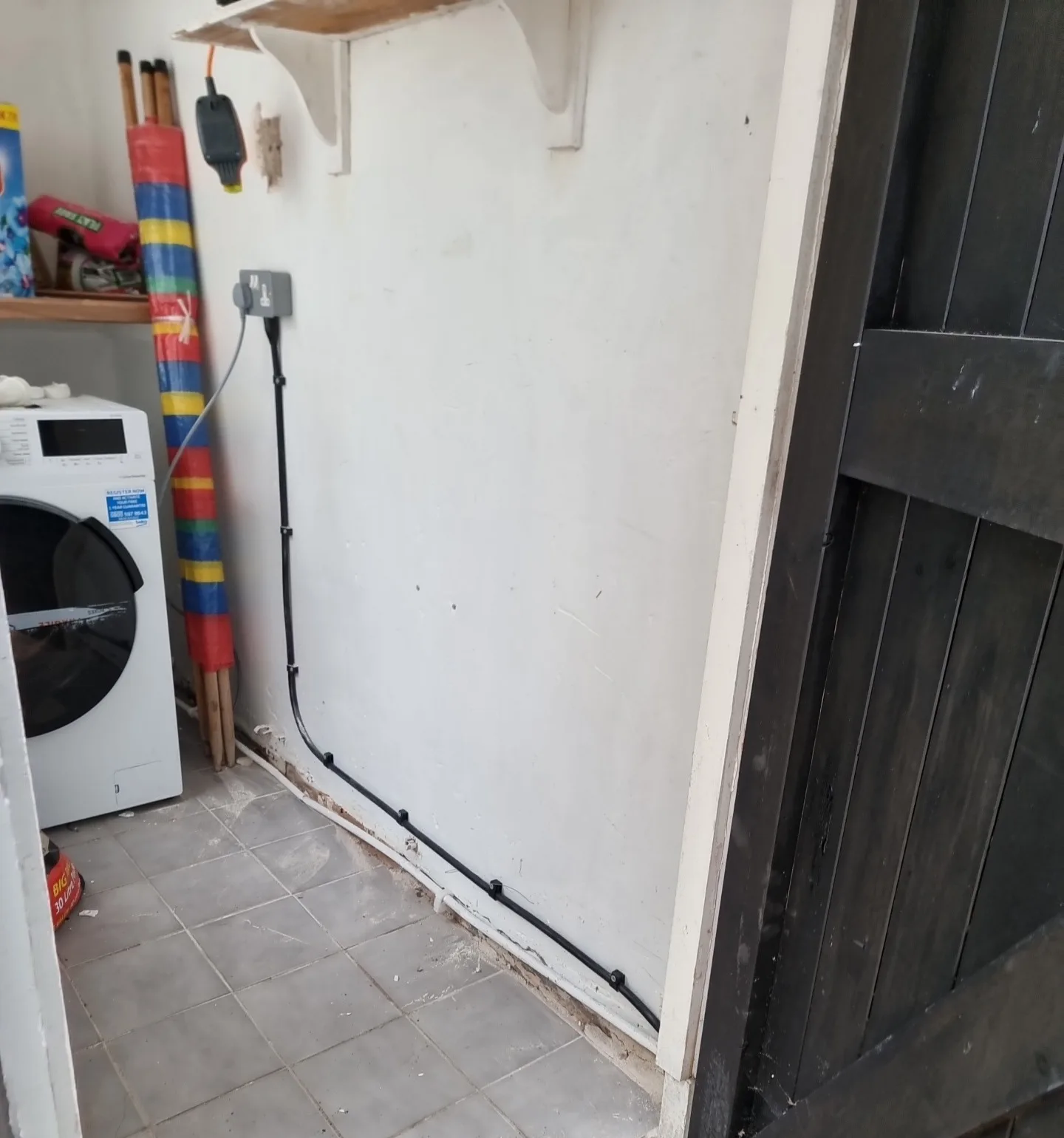
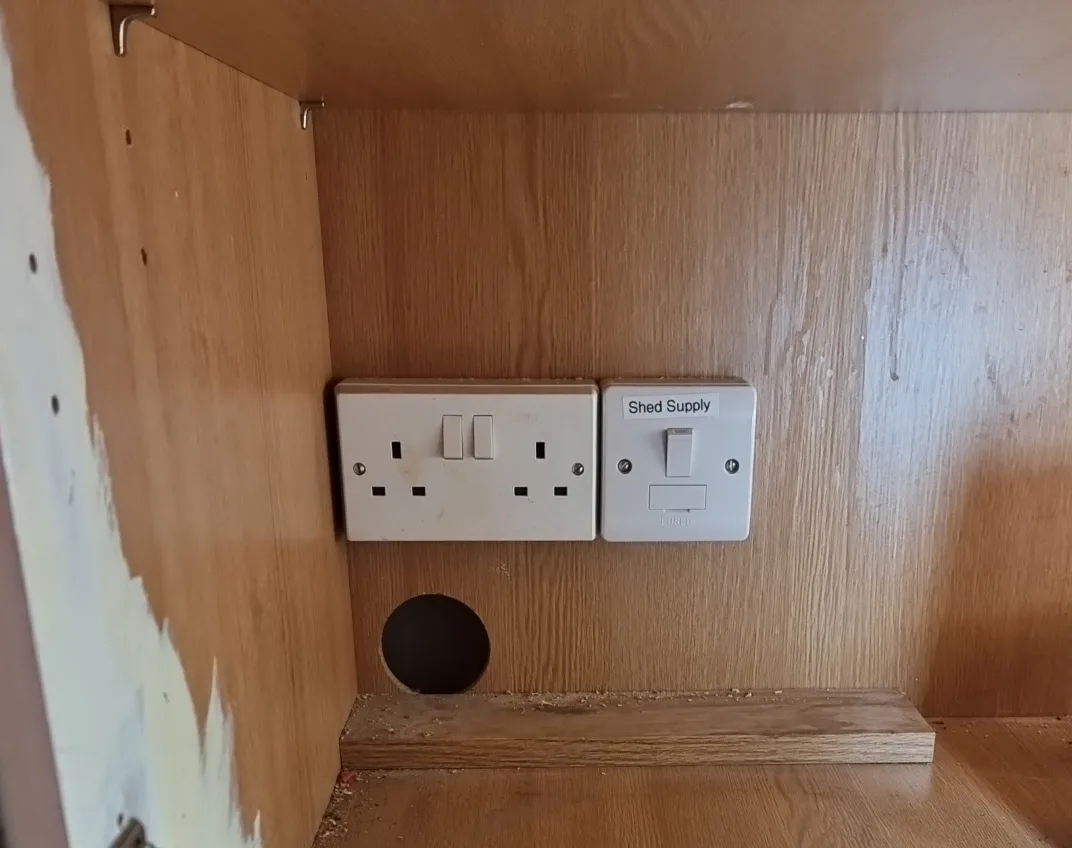
With the old wiring cleared, a fused switch spur was installed from the kitchen socket circuit to provide a dedicated supply for the shed. Steel Wire Armoured cable – SWA – was then used for the cable run from the kitchen out to the outbuilding. SWA is the standard choice for any outdoor or exposed cable run, and for good reason. The conditions a cable faces in a garden environment – moisture, temperature changes, and physical knocks from tools or general activity around the garden – require something more robust than standard cabling clipped on the outside of a wall. The steel wire armouring provides that mechanical protection, keeping the cable intact against the kind of damage that would otherwise eventually compromise it. The cable was clipped securely at low level along the exterior garden wall, running from the fused switch in the kitchen through to the shed. Inside the outbuilding, a surface-mounted double socket was fitted, giving the customer a reliable power point where there hadn’t been a properly installed one before.
Using a fused switch spur as the source also means the shed supply has its own isolation point. If the power to the outbuilding needs cutting without going to the consumer unit, it can be done from the kitchen directly – a practical detail that’s easy to overlook but genuinely useful to have.
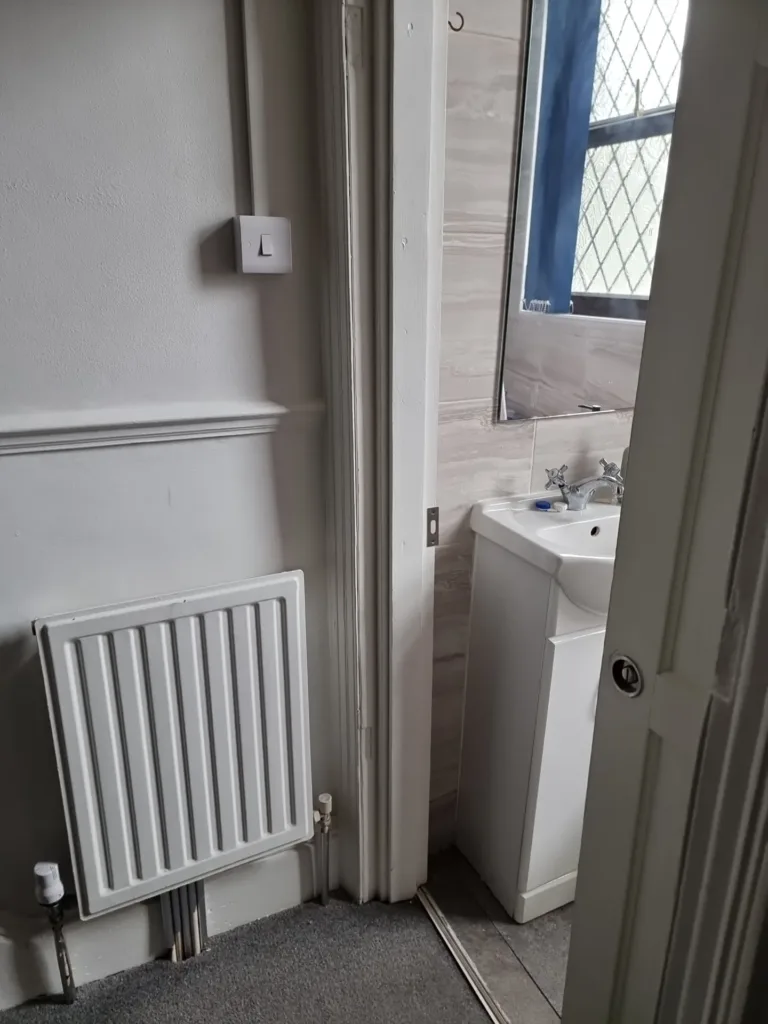
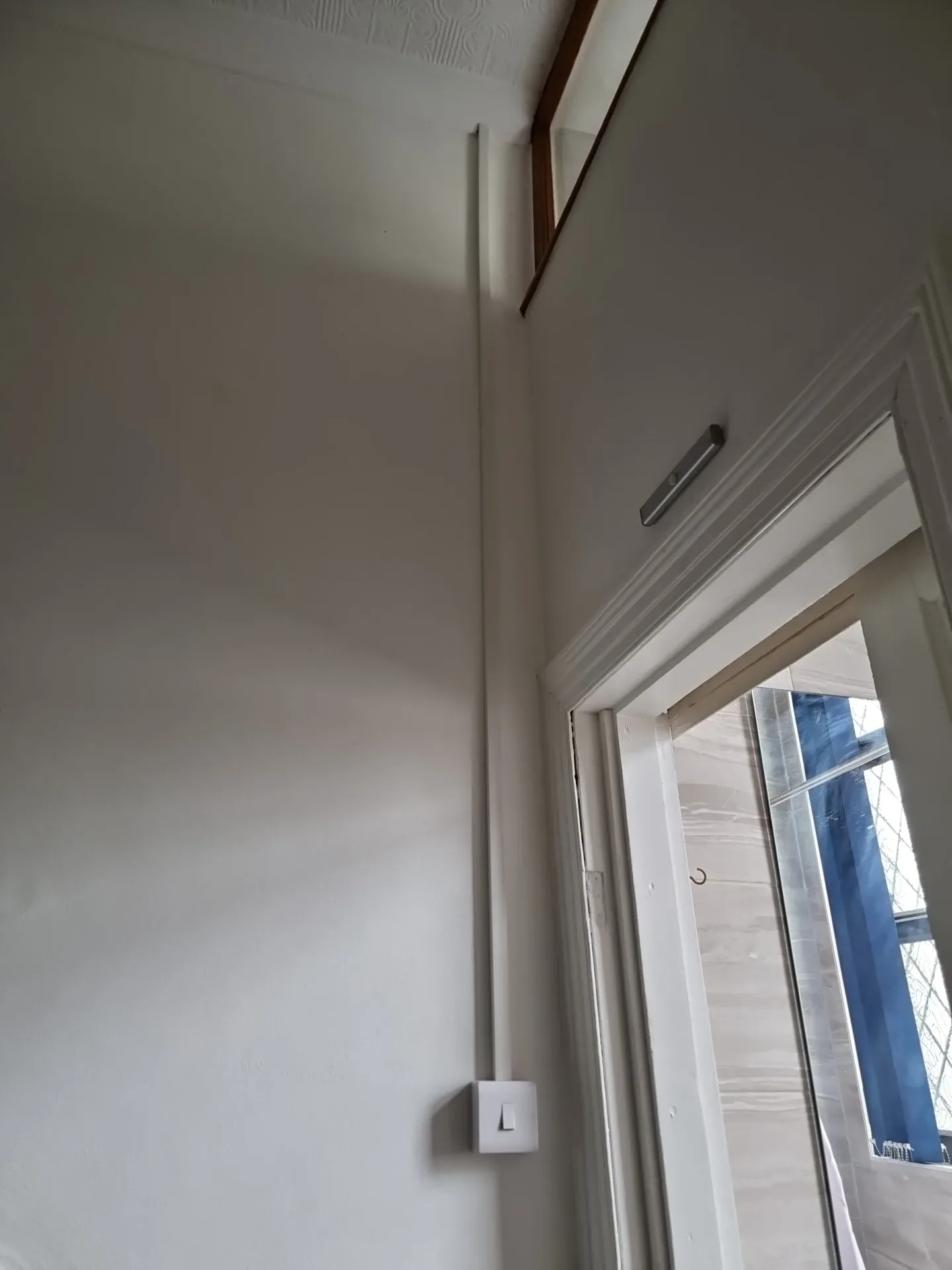
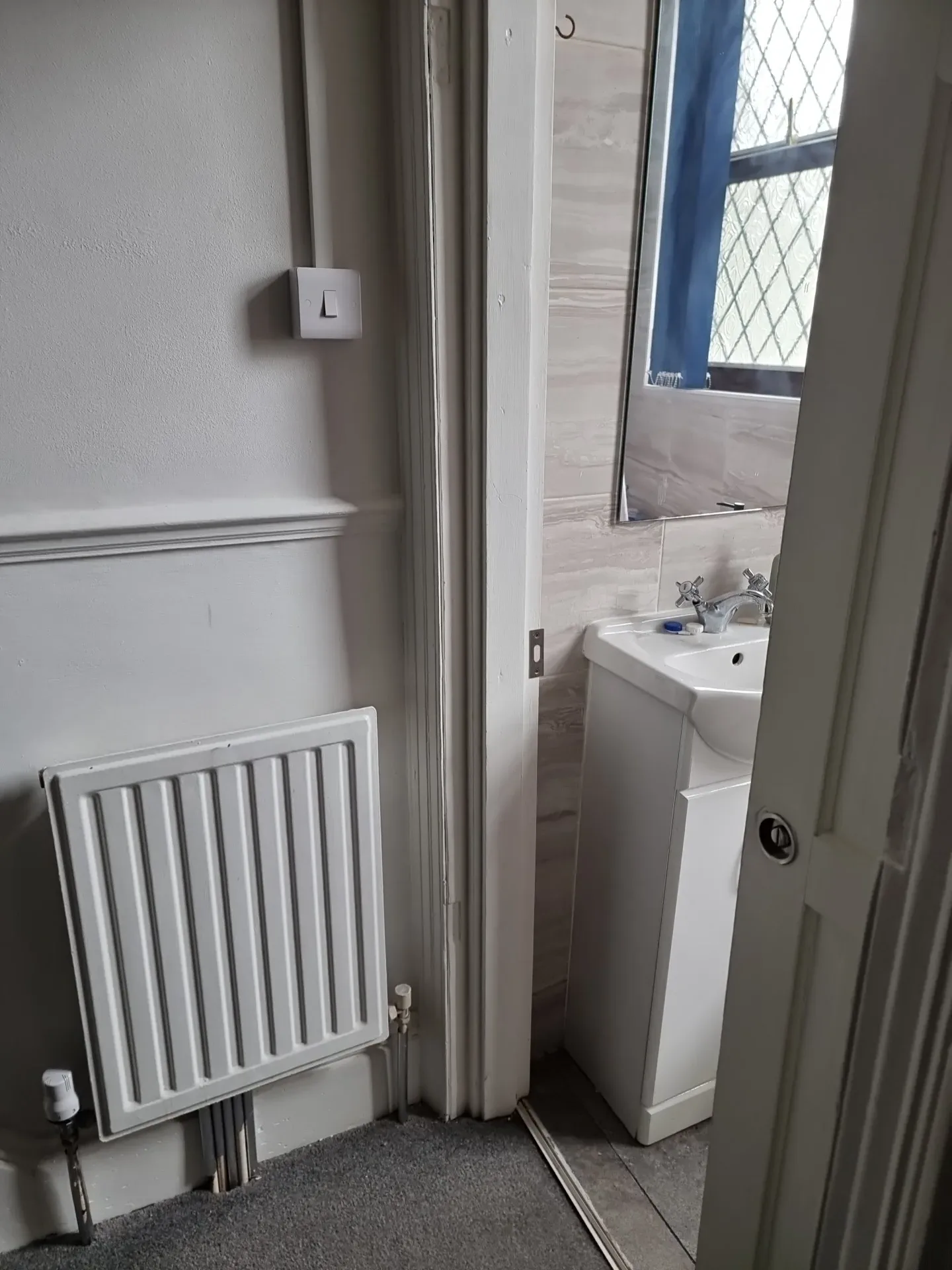
The bathroom job is one that comes up fairly regularly. The existing light switch was a pull cord inside the room, which the customer wanted replacing with a standard wall-mounted rocker switch positioned just outside the bathroom door. Pull cords are common in older properties and they work fine, but a rocker switch on the wall outside the room suits a lot of people better – it’s more intuitive, and it means the light can be turned on before stepping inside.
There’s a practical compliance point here too. Bathroom zone regulations under BS 7671 set restrictions on where switches and accessories can be sited within the room itself, based on proximity to water sources like the bath and basin. Positioning a switch on the wall just outside the door places it completely outside those zone boundaries – which is why this solution works well in older properties where the original wiring wasn’t positioned with current requirements in mind.
The switch was surface mounted on the wall to the left of the door, with cabling run within 25mm white PVC trunking. Inside the bathroom, the old pull cord fitting left a hole in the ceiling once removed. Getting to it cleanly was awkward – not the most accessible position to deal with – but it was filled and finished properly rather than left as a rough patch. No visible trace of where the pull cord had been.