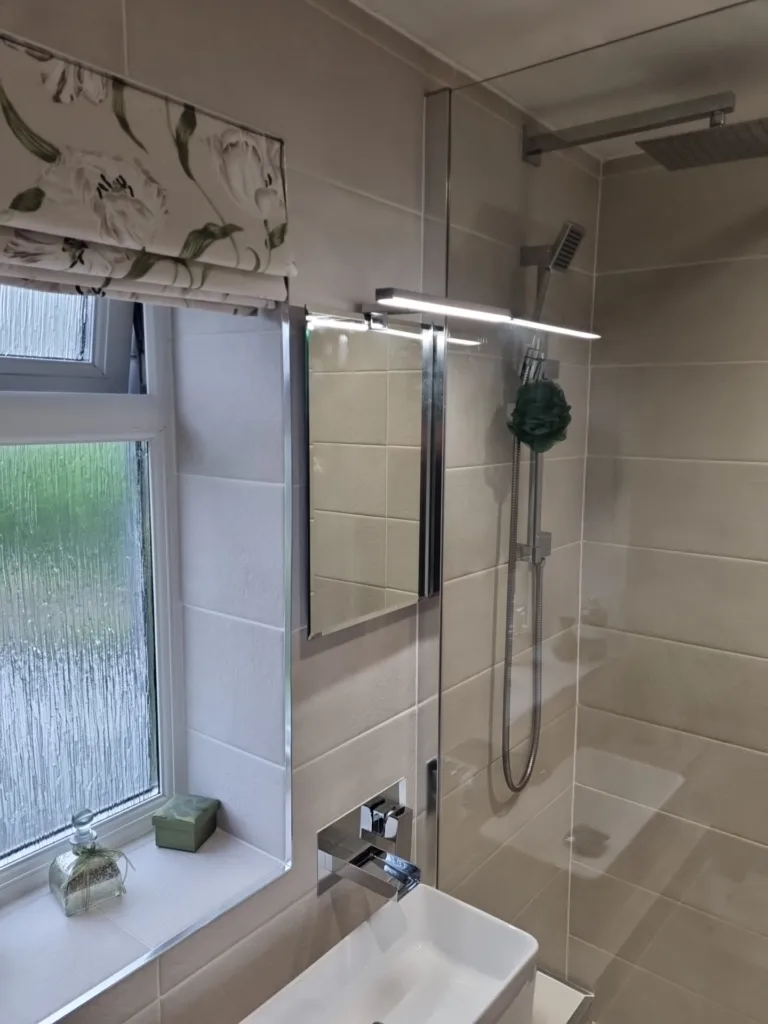
Electrical faults in bathrooms aren’t something you want to sit on. Unlike a flickering light in a hallway or a tripping socket in a kitchen, anything going wrong in a wet zone carries a different level of risk – and that makes a proper investigation all the more worthwhile rather than just swapping out the fitting and hoping for the best.
That’s exactly the situation a homeowner in Camelford found themselves in. Their LED mirror unit had stopped working altogether, and rather than assume the mirror itself had failed, they did the right thing and called for a proper inspection. On paper, a dead mirror light sounds like a straightforward job. In practice, the diagnostic testing told a different story.
A Wiring Fault, Not a Fitting Problem
What the investigation revealed fairly early on was that the mirror unit itself wasn’t the issue. The fault sat within the wiring installation feeding it – specifically pointing toward a loose or poorly made connection in the circuit. That’s a distinction worth making, because it changes everything about how the job gets approached.
Replacing the mirror would have done nothing. The fault would have followed the new fitting just the same, and the homeowner would have been no further forward. Getting to the actual root cause meant working through the circuit methodically, checking connections at the relevant points rather than making assumptions about where the problem was hiding.
Loose connections in bathroom circuits can sit in locations that aren’t immediately obvious – above ceilings, inside junction boxes, or further back toward the consumer unit. Tracking one down means a systematic process of elimination rather than a quick look and a guess.
The Investigation
The visit began with an on-site inspection of the existing electrical installation. Diagnostic testing was carried out to confirm what had been reported and to start narrowing down where the fault originated. From there, attention turned to the connections feeding the circuit, working through the most likely causes in order.
The job was scoped from the outset to identify and, where possible, fix the fault using standard materials and parts during the visit – and that’s exactly how it played out. The connection issue was located, made good, and the mirror was back working before leaving site. No return visit needed, no parts to order.
That isn’t always the case with fault investigations. Where something more involved turns up – wiring that needs rerouting, connection points behind fixed finishes, or faults pointing to a broader installation issue – that gets documented separately and quoted as a distinct piece of work. Being upfront about that from the start means there are no surprises about scope or cost.
Bathroom Electrical Zones and Why They Matter
Domestic bathrooms in the UK are divided into zones that govern which types of electrical equipment can be installed and how they must be wired. Zone 0 covers the inside of the bath or shower itself, Zone 1 directly above, and Zone 2 extending further out. Most bathroom lighting and mirror circuits operate outside of those inner zones, but the wiring standards are no less important for it.
LED illuminated mirrors have become a common feature in bathroom renovations over the past several years, and they’re generally well suited to bathroom environments when installed correctly. Where people get caught out is assuming that because a fitting is sold as bathroom-rated, the installation behind it is automatically fine. The wiring still needs to meet the same standards as any other circuit, and the connections need to be sound.
Faults like this one can be completely invisible to a homeowner until something stops working. There’s no burning smell, no obvious scorch marks, no tripped breaker – the light just doesn’t come on. But underneath that, the installation has a real problem that left unattended could cause further issues further down the line.
Fault-Finding as a Process
One of the things that separates a proper electrical fault investigation from a quick fix attempt is the approach. Starting with the symptom and working backwards, rather than swapping out components and hoping something changes, is the only reliable way to understand what’s actually gone wrong.
Where a fault investigation turns up something more involved than expected, that gets communicated clearly before any additional work proceeds. Homeowners deserve to know what they’re dealing with and what the options are – not just a bill for work they didn’t anticipate.
A Sensible Approach to Electrical Problems
This kind of job is a reminder that electrical problems in bathrooms are worth taking seriously from the outset. The fault here wasn’t dramatic – no visible damage, no obvious cause – but the testing pointed to something that needed proper attention rather than a guess and a component swap.
Getting a qualified electrician in to investigate and test properly, rather than assuming a fitting is faulty and replacing it, is the more reliable route. In this case, the fault was traced, fixed, and the mirror left fully working – all within the one visit.