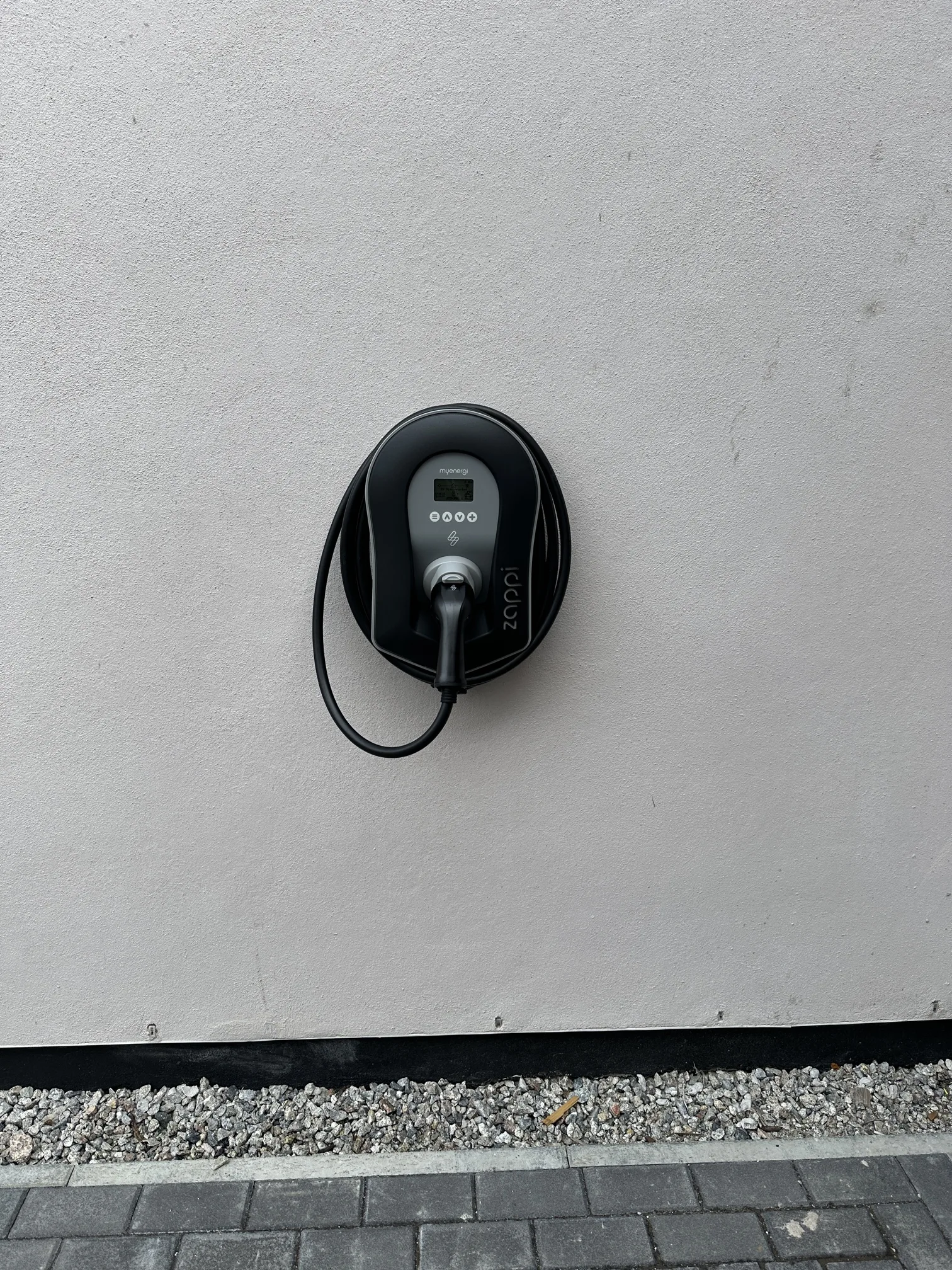
Converting an existing driveway socket to a smart EV charging solution required careful consideration of circuit capacity and load management. This Carluddon property now benefits from a tethered MyEnergi Zappi charge point with wireless monitoring technology that prevents electrical overload whilst maximising charging efficiency

Electric vehicle charging at home presents unique electrical challenges that extend beyond simply swapping a socket for a charge point. The existing driveway socket at this Carluddon property was supplied via a 32A circuit using 6mm² cabling, which initially appeared adequate but required modification to support reliable EV charging without risk of nuisance tripping.
The installation centred on a tethered MyEnergi Zappi charge point, selected for its intelligent load management capabilities and proven reliability in domestic settings. Removing the previous IP-rated double socket outlet revealed the existing supply cable remained in good condition, allowing us to reuse the established circuit path rather than running entirely new cabling through the property. This approach reduced installation time whilst maintaining full compliance with current wiring regulations.
Circuit protection presented the first technical consideration. Whilst the original 32A breaker met requirements for the socket outlet, EV charging demands differ significantly from typical outdoor power usage. Electric vehicles draw sustained loads for extended periods, often several hours at a time, creating thermal stress on protective devices that occasional garden tool usage never approaches. Nuisance tripping during overnight charging sessions would frustrate any homeowner and potentially leave vehicles inadequately charged when needed.
Upgrading to a 40A Type A RCBO addressed these concerns directly. Type A devices provide protection against both standard AC residual currents and pulsating DC residual currents, which some EV charging systems can generate. The increased rating accommodates the sustained loads typical of vehicle charging whilst the RCBO’s combined overcurrent and residual current protection maintains safety standards without compromise. This change transforms the circuit from one designed for intermittent use into infrastructure capable of nightly charging cycles.
Load management introduces another layer of complexity in EV charging installations. Most domestic electrical installations were designed decades before electric vehicles became commonplace, with incoming supply capacities calculated around traditional household consumption patterns. Adding a 7kW charge point to a property simultaneously running an electric shower, oven, and heating system can exceed the main fuse rating, causing supply issues that affect the entire property.
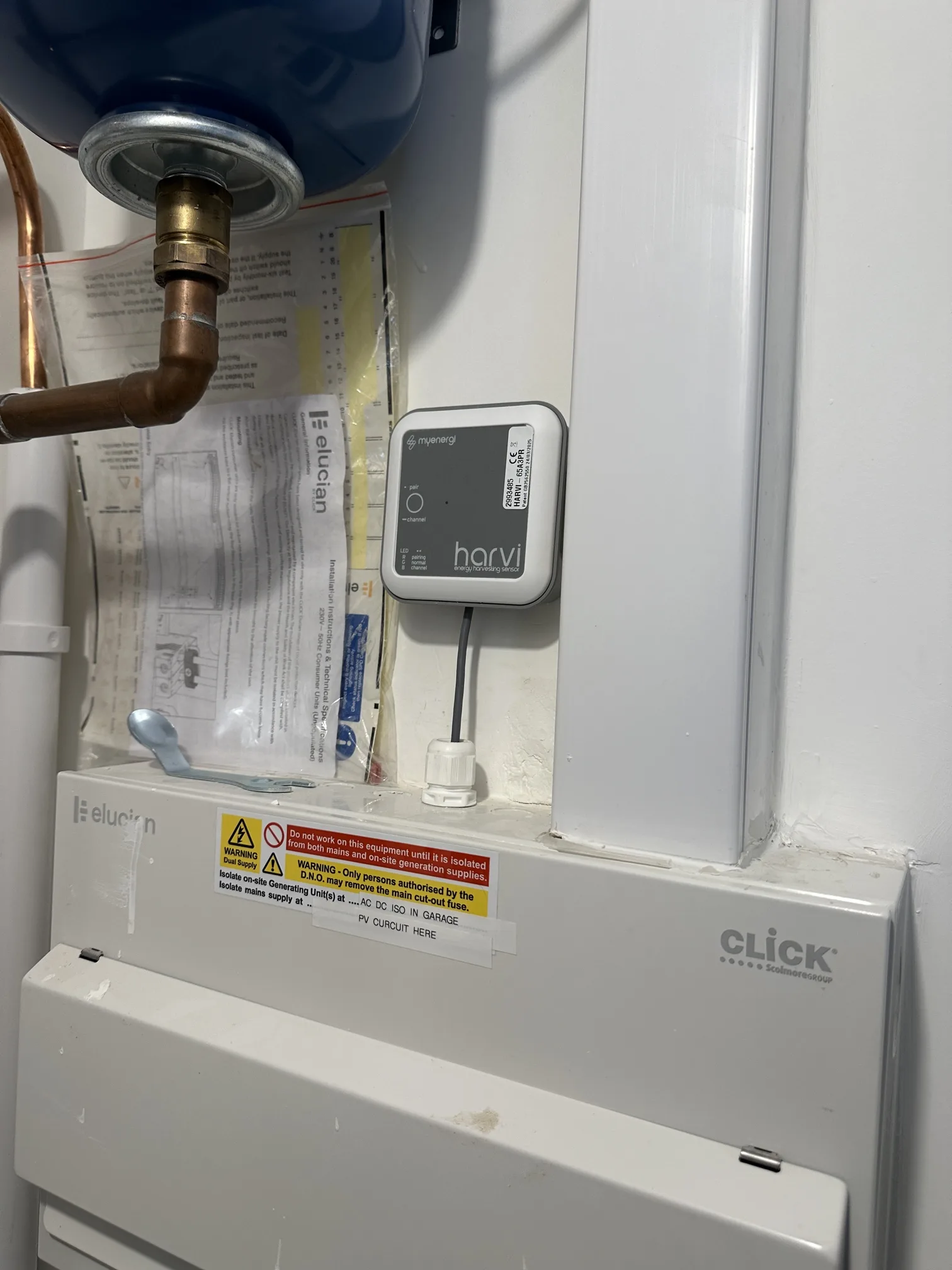
The absence of a data cable on the existing circuit initially suggested running new conductors alongside the power supply. However, the MyEnergi Harvi device offered a more elegant solution that avoided additional cable installation work. This wireless monitoring system observes the property’s overall electrical load in real time by measuring current flow at the consumer unit. The Harvi communicates this information to the Zappi charge point, which then adjusts its charging output to prevent the combined household load from exceeding safe limits.
This dynamic load management operates transparently to the homeowner. When household demand is low, perhaps during night hours when most appliances sit idle, the Zappi can deliver its full charging rate to the vehicle. Should someone start cooking dinner whilst the car charges, the Harvi detects the increased load within seconds and signals the charge point to reduce its output accordingly. The vehicle continues charging, just at a moderated rate that keeps total property consumption within acceptable parameters. Once the cooking appliances switch off, charging ramps back up automatically.
The system’s wireless nature eliminated the need for data cabling between the consumer unit and the charge point location on the driveway. Installation involved mounting the Harvi device adjacent to the consumer unit where it could monitor current flow, then pairing it with the Zappi during commissioning. The devices communicate via their own wireless protocol, maintaining connection across typical domestic distances without requiring any additional home networking infrastructure.
Commissioning the installation extended beyond simply powering up the charge point. The Zappi required configuration to recognise the Harvi device and understand the property’s supply characteristics. We programmed the maximum available current based on the incoming supply fuse rating, accounting for typical baseline household consumption to establish appropriate charging parameters. The Harvi calibration involved measuring actual loads under various household conditions to verify its readings matched true consumption patterns.
Testing confirmed the load management system responded correctly across different scenarios. Running multiple high-demand appliances triggered the expected reduction in charging rate, whilst returning to low background loads allowed charging to resume at higher outputs. The charge point’s display provides clear feedback about current charging rates and any load management interventions, giving homeowners visibility into the system’s operation without requiring technical knowledge.
Full electrical certification accompanied the installation, documenting the circuit modifications, protective device upgrades, and charge point specifications. Building Control notification proceeded through the standard channels, meeting regulatory requirements for permanent electrical installations. These administrative elements might seem perfunctory but provide important records for future property transactions and insurance purposes.
The transformation from a simple outdoor socket to an intelligent EV charging installation demonstrates how modern electrical technology can adapt existing infrastructure for new purposes. Rather than treating the charge point as an isolated addition, integrating load management creates a charging solution that works harmoniously with the property’s electrical system. The homeowner gains reliable overnight charging without concerns about overloading circuits or tripping breakers, whilst the wireless monitoring approach avoided disruptive cable installation work through interior spaces.