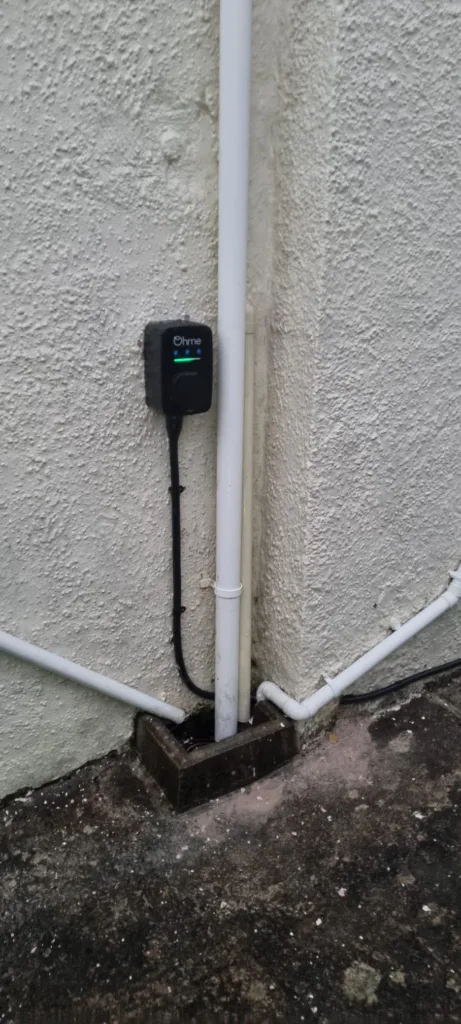
An Ohme ePod electric vehicle charger was fitted to a property in Plymouth, complete with load monitoring technology to protect the existing electrical system while providing reliable charging for an electric vehicle.
The switch to electric vehicles brings with it the need for proper home charging infrastructure. This property in Plymouth required an EV charging solution that wouldn’t compromise the existing electrical installation whilst providing dependable charging capability for the homeowner’s electric car.
The installation centred around fitting an Ohme ePod unit, a 7.4kW charger chosen for its balance of charging speed and compatibility with domestic electrical supplies. The untethered design means there’s no permanently attached cable, giving the homeowner flexibility to use different charging cables as needed. This approach also keeps the installation neat when the charger isn’t in use, with the unit mounted cleanly on the exterior wall at the side of the property.
Getting power to the charge point involved running a dedicated circuit from the property’s consumer unit. The supply cable was clipped at low level along the exterior wall, following the most practical route whilst maintaining a tidy appearance. This external routing method keeps the cabling accessible for any future maintenance whilst avoiding unnecessary internal disruption during the installation.
Inside the consumer unit, a 40A circuit breaker was installed specifically for the EV charger. This dedicated protection device means the charging circuit operates independently from other electrical circuits in the property. The existing RCD protection needed upgrading to a Type A unit to meet current regulations for EV charger installations. Type A RCDs provide the necessary protection against both standard AC faults and pulsating DC faults that can occur with electric vehicle charging equipment.
One consideration with home EV charging is the potential load on the property’s electrical supply. Charging an electric vehicle draws significant current, and if other high-demand appliances are running simultaneously, there’s a risk of overloading the main fuse. To manage this, a load monitoring device was incorporated into the installation. This technology continuously measures the total electrical demand of the property and automatically adjusts how much power the EV charger draws. If the washing machine, oven, and electric shower are all running whilst the car charges, the monitoring system reduces the charging rate to keep the total load within safe limits. Once other appliances switch off, charging returns to full speed. It’s a seamless process that prevents nuisance trips and protects the electrical infrastructure without requiring any input from the user.
The Ohme ePod itself brings smart functionality to the charging process. Through its connected features, the homeowner can schedule charging to take advantage of cheaper night-time electricity rates if they’re on a suitable tariff. The unit also integrates with various energy tariffs and can automatically select the most cost-effective charging times. For properties with solar panels or battery storage systems, though not applicable in this particular installation, the Ohme system can prioritise charging from renewable sources when available.
Plymouth’s coastal location means exposure to the elements, so the charger needed to withstand typical British weather conditions. The ePod unit carries appropriate weatherproofing ratings for outdoor installation, and the mounting position was selected to provide some shelter whilst remaining easily accessible for plugging in the vehicle. The black finish of the unit gives a discreet appearance against most wall colours.
Testing formed an important part of the installation process. Once everything was connected, comprehensive electrical testing verified that the new circuit met all required safety standards. This testing included insulation resistance checks, earth continuity verification, and RCD functionality tests. The results were documented in an Electrical Installation Certificate, providing formal confirmation that the work complies with current wiring regulations. This certification also facilitates the Building Control notification that’s required for this type of electrical installation.
The untethered configuration means the homeowner uses their own charging cable, which typically comes with the electric vehicle or can be purchased separately. This cable connects between the charge point and the car’s charging port. Whilst some people prefer tethered units with a permanently attached cable for convenience, the untethered approach offers flexibility and can be neater when not in use. If preferences change, tethered units remain an option for future consideration.
For anyone in Plymouth considering an EV charger installation, several factors influence the approach. The location of the existing consumer unit relative to where you park affects cable routing options. The capacity of your incoming electrical supply matters when determining whether load monitoring is necessary. Some properties might need supply upgrades, whilst others have sufficient headroom in their existing service. The type of vehicle and how it’s used influences charging speed requirements. Someone doing high mileage might benefit from faster charging capabilities, whereas occasional users might find 7.4kW perfectly adequate for overnight charging.
Local authority requirements can vary, and some installations might need planning permission, particularly in conservation areas or on listed buildings. For most standard installations on residential properties, permitted development rights typically apply, but it’s worth checking specific circumstances. The charge point’s position needs to allow safe vehicle access whilst not obstructing pavements or creating hazards for pedestrians.
The installation process for this Plymouth property was completed with minimal disruption. Working methodically through the cable routing, consumer unit modifications, and final testing meant the system was ready to use within a working day. The homeowner left with a fully functional charging point, all necessary certification, and the knowledge that their electrical system was properly protected against overload.
Electric vehicle charging at home offers practical advantages over relying solely on public charging infrastructure. You start each day with a full charge, costs are typically lower than public rapid chargers, and there’s no waiting for available charging bays. The overnight charging pattern suits most driving habits, particularly for commuting and local journeys. Longer trips might still involve public charging stops, but the home charger handles daily requirements comfortably.
As electric vehicle adoption continues across Devon and the wider Southwest, more homeowners are looking at charging infrastructure. The technology has matured considerably, with units now offering smart features, improved reliability, and better integration with home energy systems. Installation standards have developed too, with clear regulations governing everything from cable sizing to earthing arrangements. This framework provides confidence that properly installed systems will perform safely and reliably for years to come.