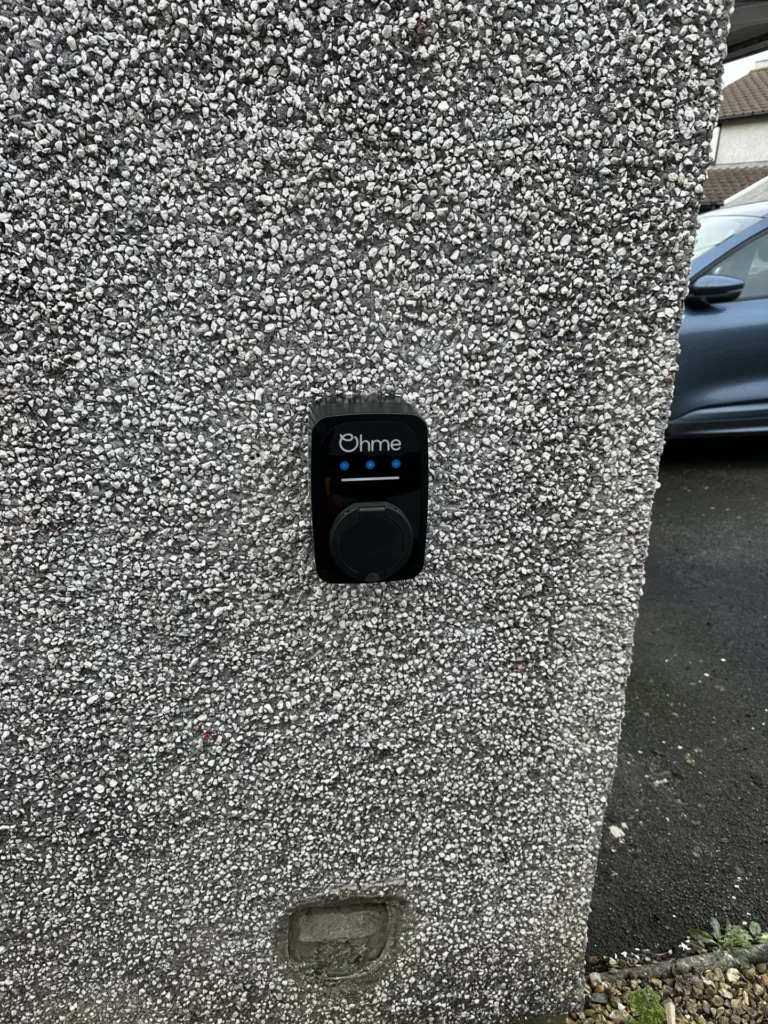
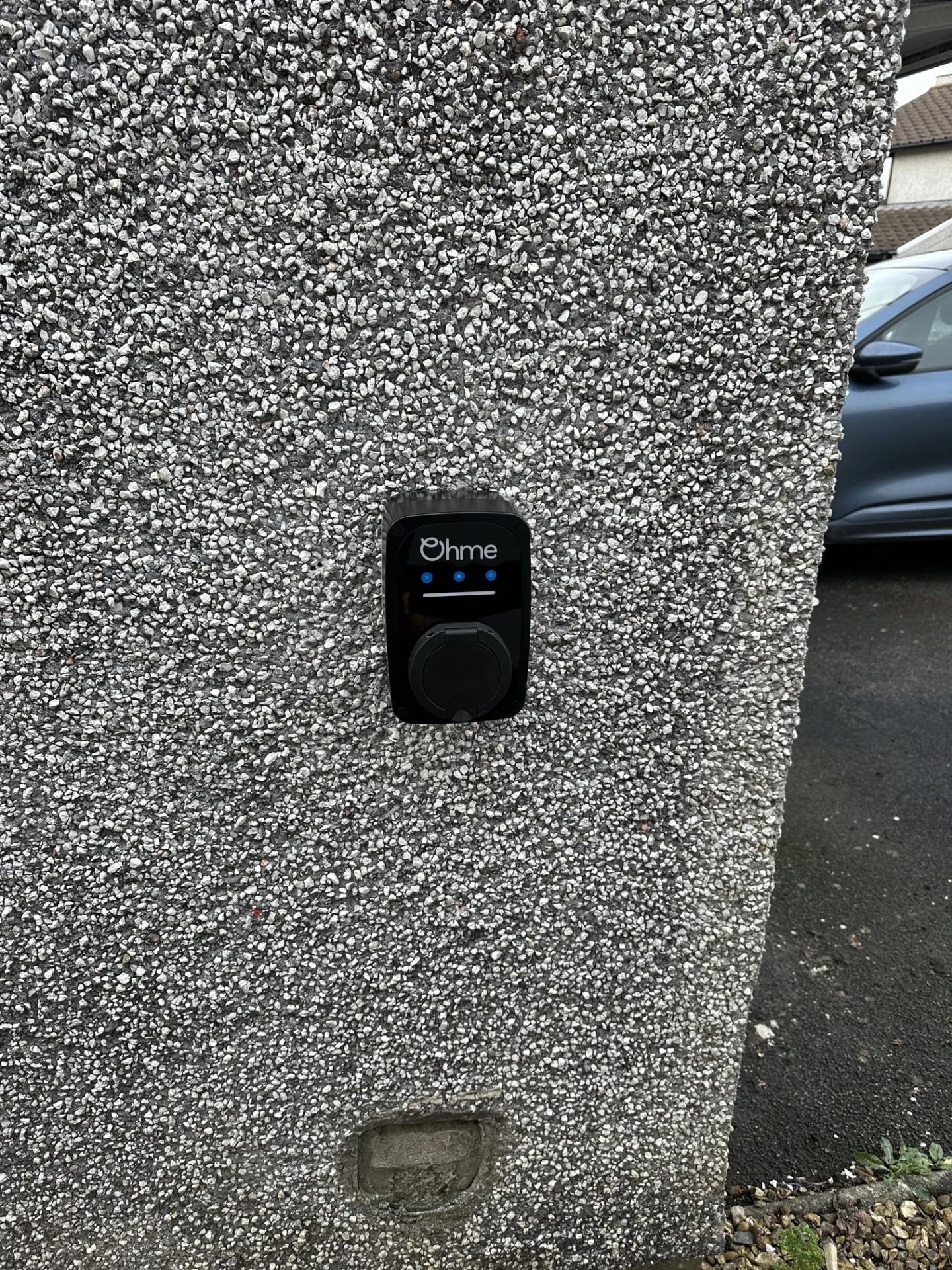
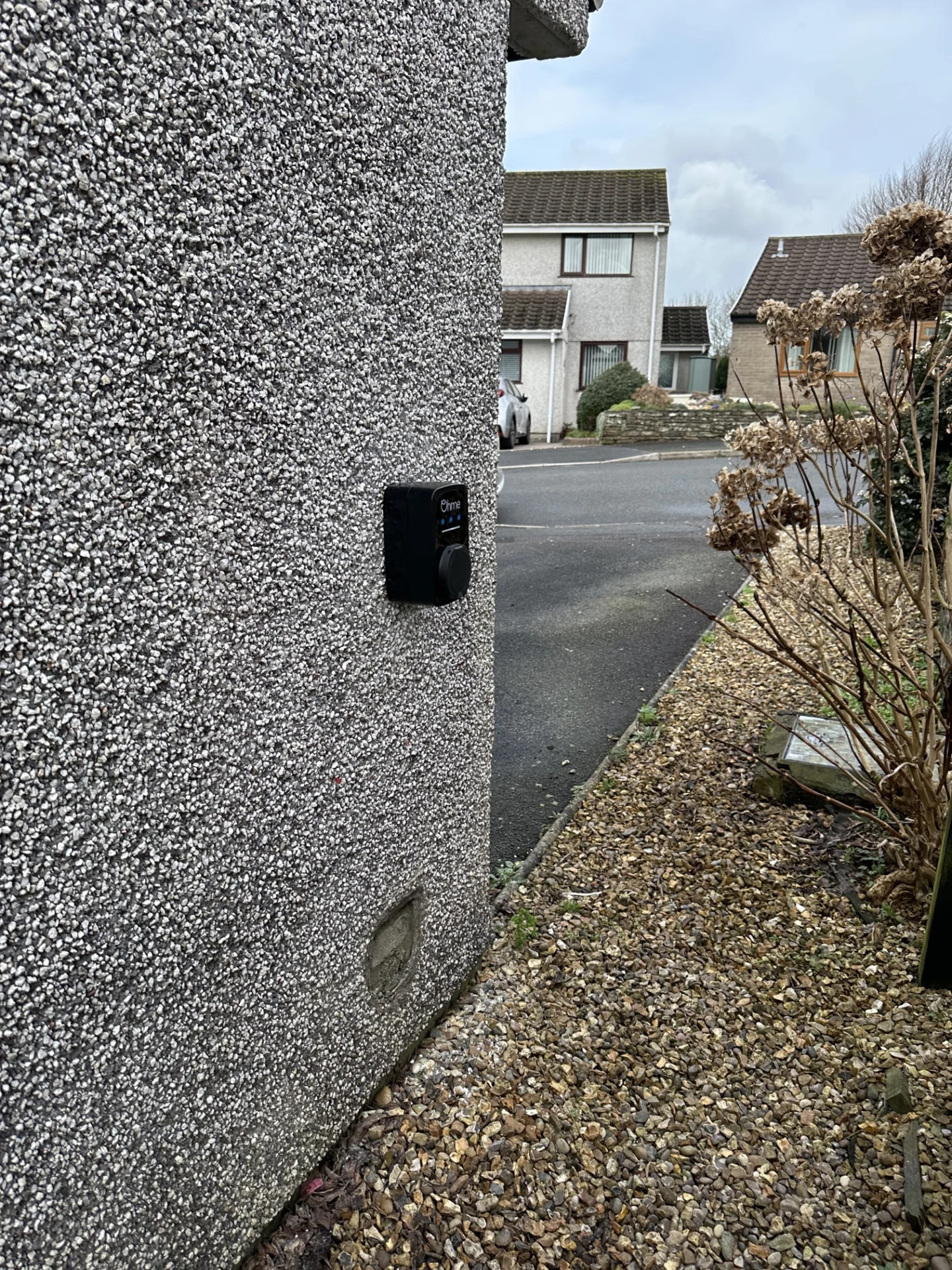
More households across Cornwall and beyond are making the switch to electric vehicles, and with that comes the need for a reliable home charging setup. This project in Saltash involved installing a 7.4kW Ohme ePod untethered EV charge point on the exterior wall of a residential garage, along with all the dedicated electrical infrastructure needed to support it safely and compliantly.
The Ohme ePod is a compact, smart charge point that gives EV owners a good deal of flexibility. Because it’s untethered, there’s no fixed cable attached to the unit – the driver plugs in their own cable, which connects to both the charger and the vehicle. That suits a lot of people, particularly those with more than one type of EV in the household, since different vehicles can use different cable types. The unit itself is controlled through the Ohme app, which opens up features like smart charging schedules, real-time energy monitoring, and the ability to take advantage of off-peak electricity tariffs.
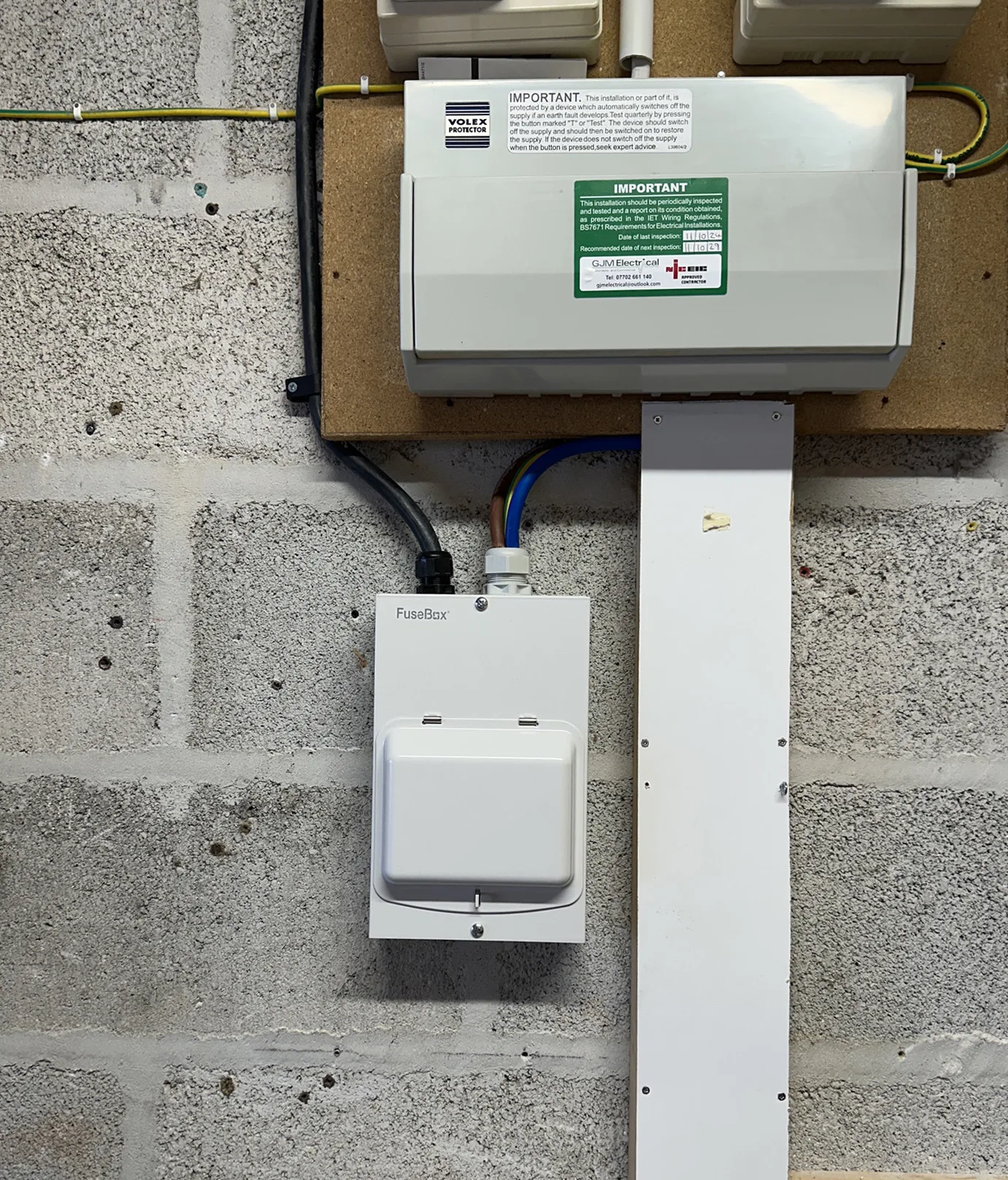
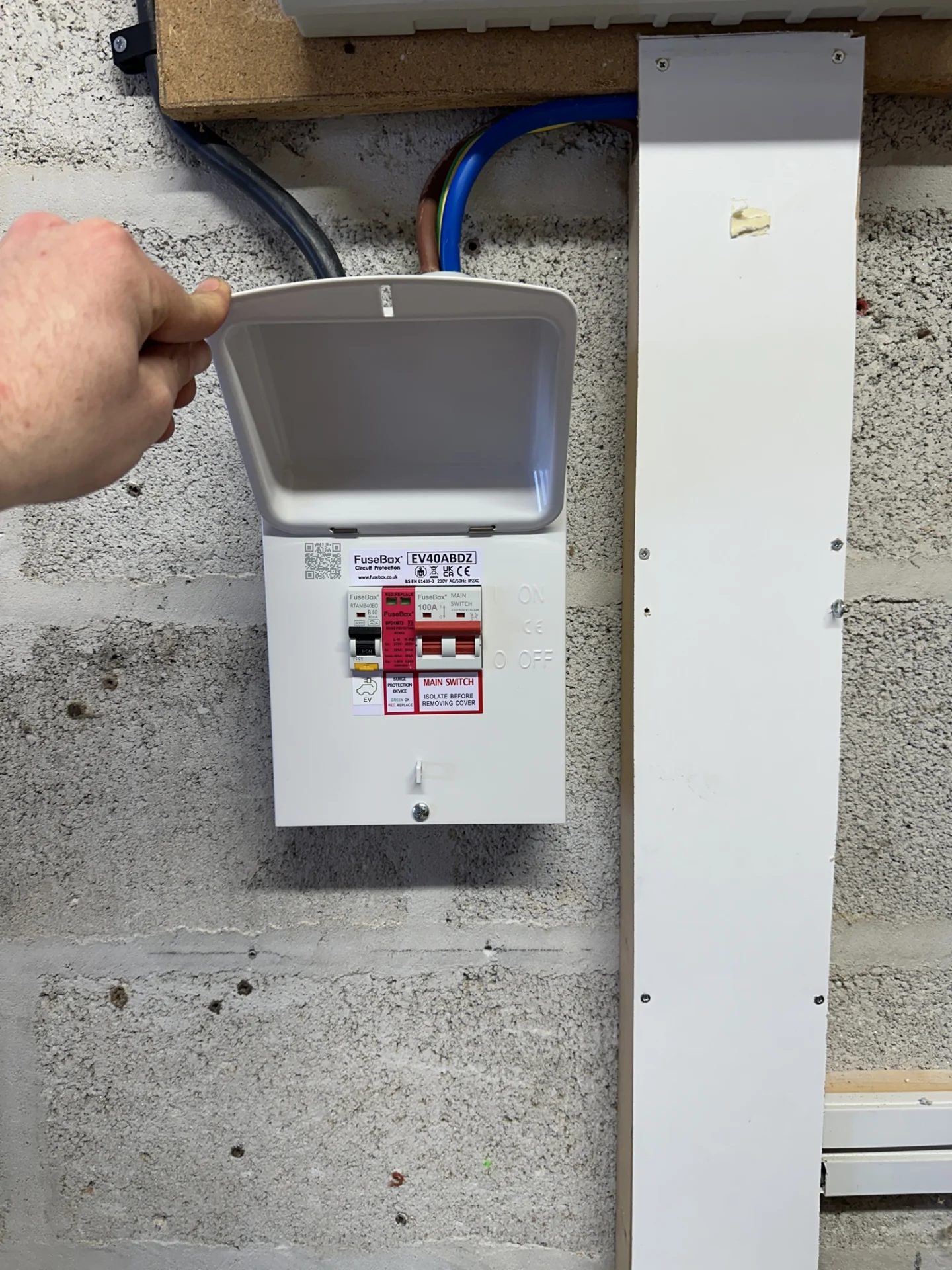
Getting the most from a charge point like this requires more than just mounting it to a wall. The electrical supply needs to be properly sized, protected, and separated from the rest of the property’s circuits. At this property, that meant installing a dedicated EV consumer unit – a FuseBox EV-specific unit housing a 40A RCBO and a main 100A switch. This unit was fitted inside the garage, giving the charge point its own independent circuit with proper overcurrent and earth fault protection built in.
One of the more important aspects of this installation was the integration of a Surge Protection Device (SPD) within the consumer unit. The grid supply isn’t always clean – voltage spikes and surges do occur, and without protection, connected electronics are vulnerable to damage. The SPD absorbs those transients before they can affect any downstream equipment, which is worth having on any installation where you’ve got smart electronics involved.
To connect the new consumer unit to the property’s existing supply without interfering with the main board, the incoming meter tails were split using 100A Henley blocks. This is a clean and reliable method of tapping into the incoming supply, allowing the EV consumer unit to sit alongside the existing installation rather than being fed from it. The result is two parallel feeds from the meter – one for the house as normal, and one dedicated entirely to the EV charging circuit. All wiring to the charge point was run in 6mm HO7 cable, rated and sized appropriately for the 7.4kW load over the cable route length.
A load monitoring device was also part of this installation. When an EV charger is drawing up to 7.4kW, there’s a realistic risk of pushing a property’s total demand beyond what the incoming supply can comfortably handle, particularly during periods of high household usage. The load monitor sits between the supply and the charger and watches the overall demand on the property in real time. If the load climbs too high, it automatically reduces the charge rate to compensate, then increases it again once headroom is available. It’s an effective way of protecting against tripped fuses or supply issues without having to upgrade the incoming service.
The Ohme ePod was mounted on the exterior wall at the front of the garage, positioned for straightforward access from the driveway. Once physically installed and wired, the unit was commissioned through the Ohme platform – paired to the property’s network and tested to confirm correct operation before handover.
All circuits were tested on completion, with the results used to produce the required Electrical Installation Certificate (EIC). The installation was also notified to Building Control in line with Part P requirements, as applies to all new EV charger circuits of this type.
This type of installation has become a fairly routine part of what we do, but each property has its own layout and existing setup to work around. At this Saltash property, the combination of the dedicated consumer unit, SPD, Henley block supply split, and load monitoring gives a robust and well-protected charging solution that will serve the household reliably as EV use grows.