Exterior electrical work on a domestic property always comes with a fair amount to think about – weatherproofing, cable routing, safe supply points. This Bodmin job was a good example of how two relatively straightforward tasks can still require careful planning to get right, particularly when the goal is a neat, lasting result rather than a quick fix.
The customer had a faulty exterior wall light on the rear of the property that needed replacing. Rather than swap it like-for-like, they wanted to take the opportunity to upgrade to something more practical – a PIR LED floodlight that would offer better coverage and only activate when needed. Alongside that, there was no outdoor socket anywhere on the rear of the house, which had become a genuine inconvenience for anything from garden tools to charging outdoor equipment.
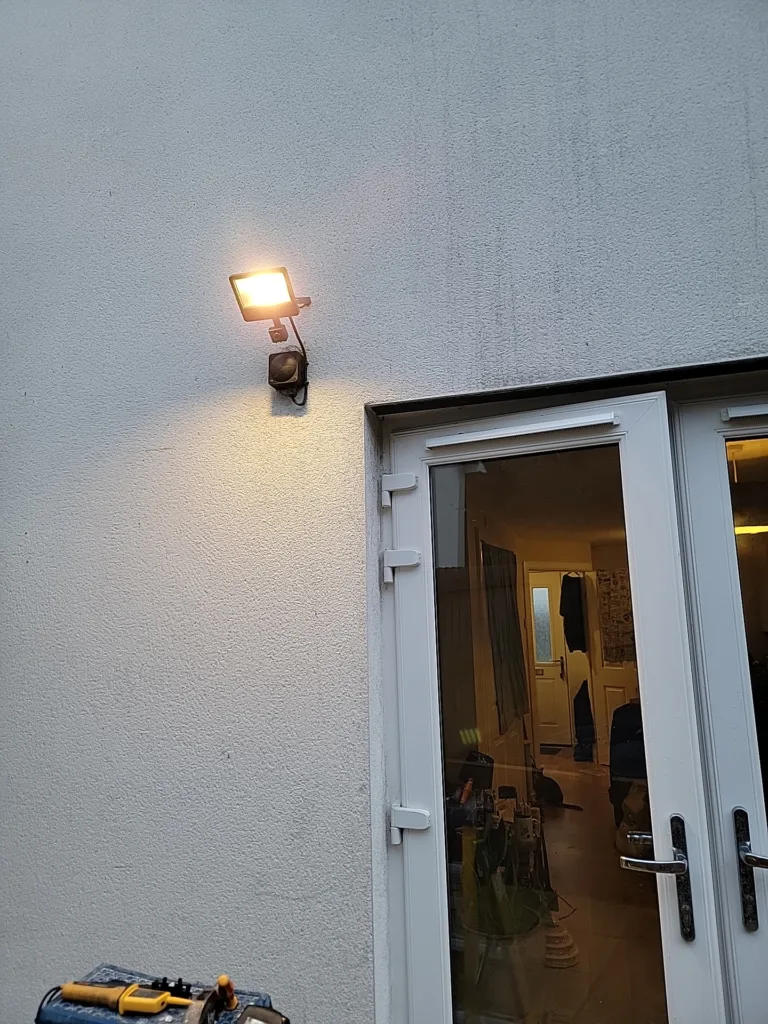
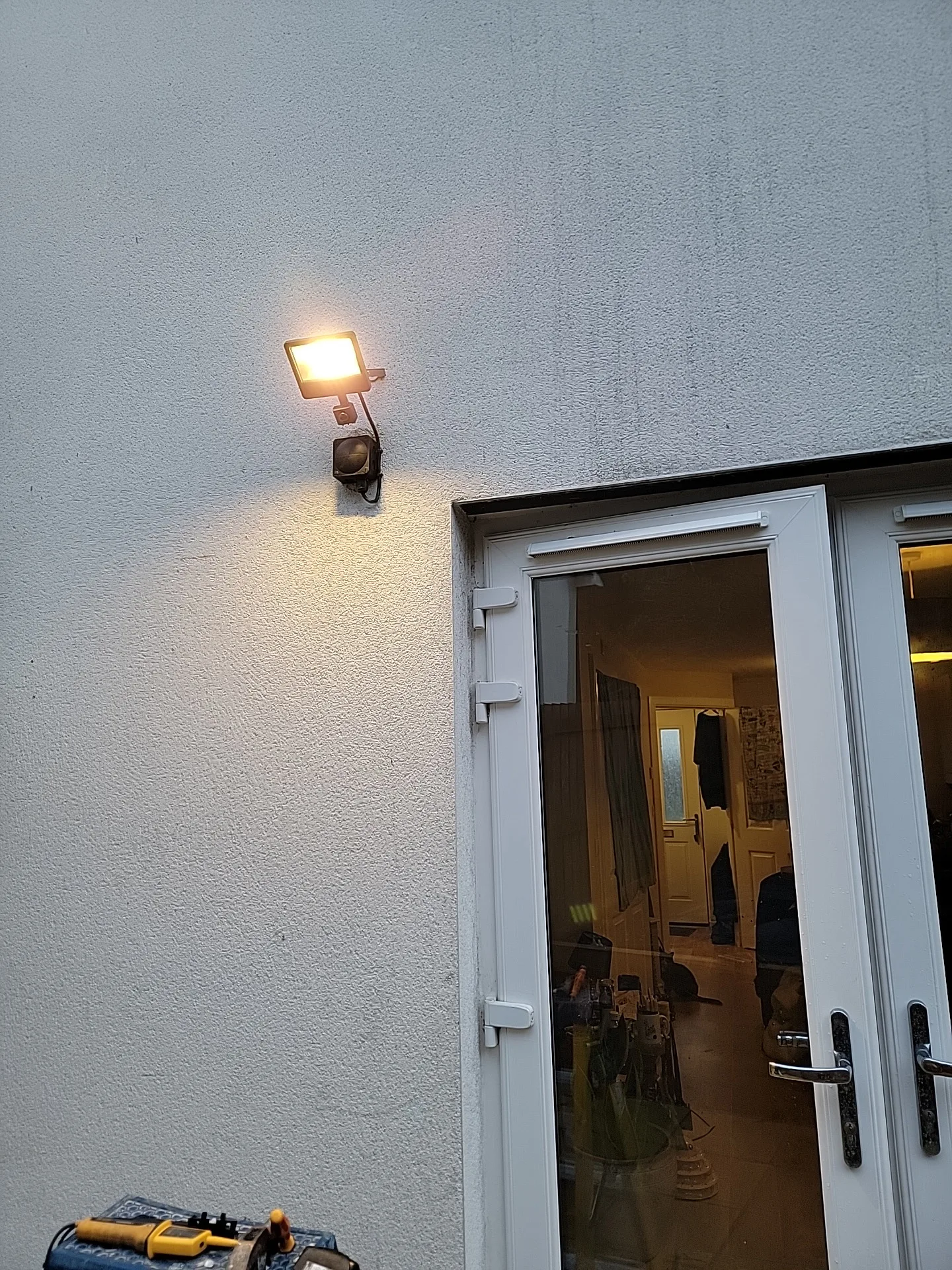
Starting with the floodlight, the existing fitting had been mounted using a standard adaptable back box – the kind of setup that’s common enough on older installs but not ideal for a permanent outdoor light that needs to handle the weather reliably. The box was replaced with a proper IP-rated Whiska enclosure, which gives a far more secure and weather-resistant housing for the cable connection behind the fitting. These enclosures are specifically designed for outdoor use and provide the kind of ingress protection that’s actually suited to being exposed to the elements long-term. With the new enclosure in place, a 20W PIR LED floodlight was fitted and wired in. The PIR sensor means the light only comes on when movement is detected in the area, which is useful both from a security perspective and in terms of not having a bright floodlight burning all evening unnecessarily.
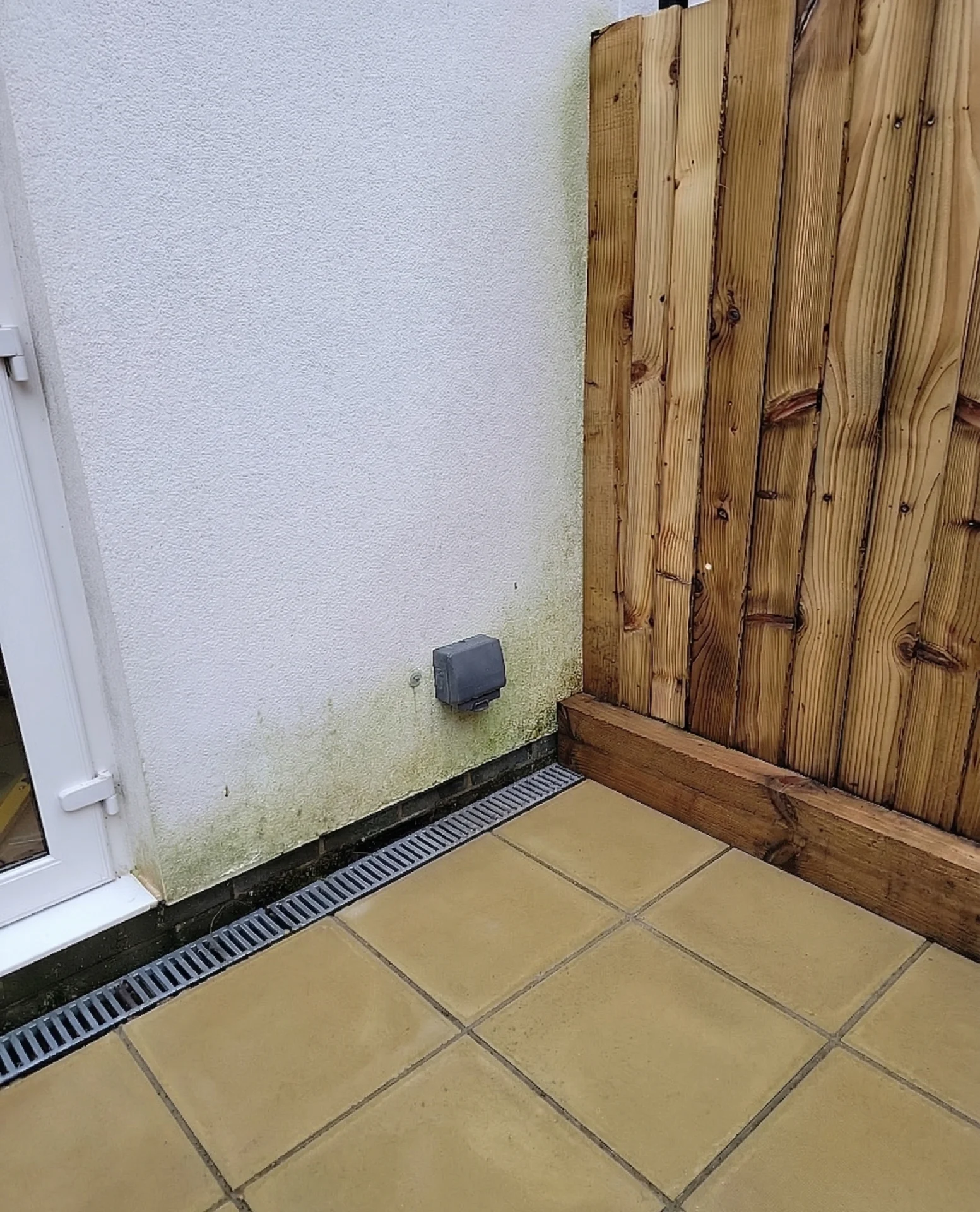
The second part of the job was the outdoor socket. The customer wanted a double socket outlet on the rear exterior wall – something that would give them a proper, safe power point outside rather than having to run extension leads out through a window or door. The supply for the new socket was taken from an existing TV socket on the internal side of the same wall. Running the supply this way meant we could keep the cable route short and tidy, avoiding the need to chase back to a consumer unit or run cables through multiple rooms. The socket itself is fully IP rated, meaning it’s designed and rated to withstand outdoor conditions – rain, dust, general exposure. That IP rating isn’t just a label; it’s the difference between a socket that’ll hold up over years of use outside and one that deteriorates or becomes unsafe fairly quickly.
Weatherproofing is probably the thing homeowners ask about most when it comes to outdoor electrics, and rightly so. Any fitting that goes outside needs to be rated for the environment it’s going into. For sockets in particular, IP44 is generally considered the minimum for a sheltered outdoor location, while something more exposed – a driveway, an open wall facing prevailing weather – would typically need IP65 or higher. The enclosures and fittings used on this job were selected to suit the conditions at this particular property.
Outdoor sockets have become increasingly common on domestic properties over the last several years, and it’s easy to see why. Whether it’s garden lighting, a lawnmower, a pressure washer, or charging an e-bike, having a proper weatherproof socket outside removes a lot of the bodged workarounds that people end up resorting to otherwise. Extension leads through open windows or doors create draughts, trip hazards, and wear on the cable itself – none of which are great long-term. A properly installed exterior socket, wired correctly and protected for outdoor use, is a much safer and more convenient arrangement.
The floodlight upgrade follows similar logic. PIR floodlights are now the go-to for most rear garden and side-of-property lighting on domestic homes, largely because they’re so much more versatile than a standard exterior bulkhead or wall light. The motion detection means the light is there when you actually need it – arriving home after dark, moving around the garden at night, or just having something that reacts to activity in the area – without being on continuously. LED technology also means the running costs are negligible compared to older halogen floodlights, which used to be the norm for this kind of fitting.
For this property in Bodmin, both parts of the job were completed in a single visit. The cable work was kept neat throughout, the fittings were positioned to give the best practical coverage and accessibility, and everything was tested and confirmed working before we left. The rear of the property now has a properly functioning floodlight and a useable outdoor power point – a significant improvement on what was there before.