PIV Fan Installation St Austell – Positive Inlet Ventilation System
PIV fan installation in St Austell providing whole-house ventilation solution with integrated heating element for year-round comfort and condensation control.
July 2025
Extractor Fans & PIV Fans, St Austell
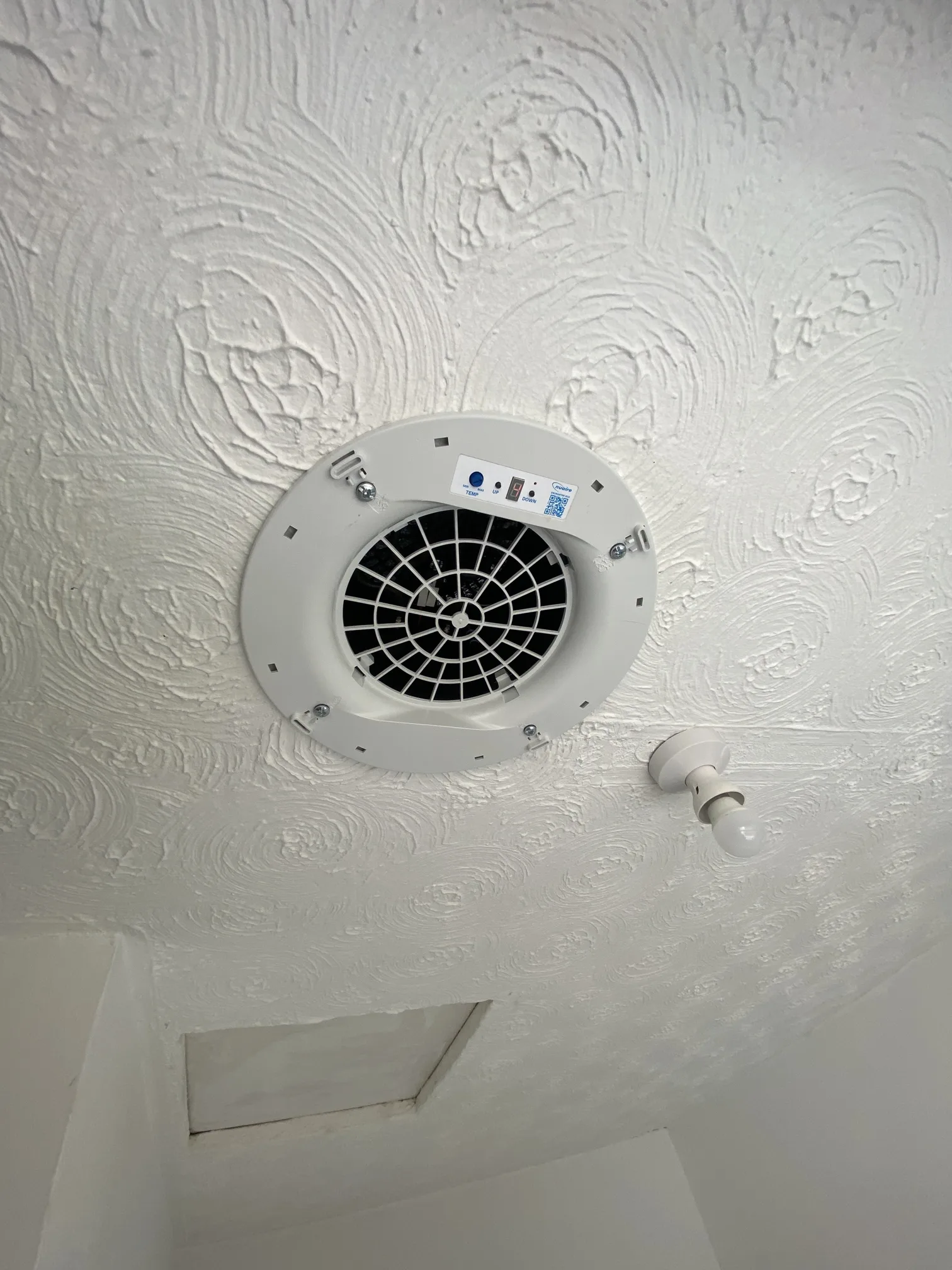
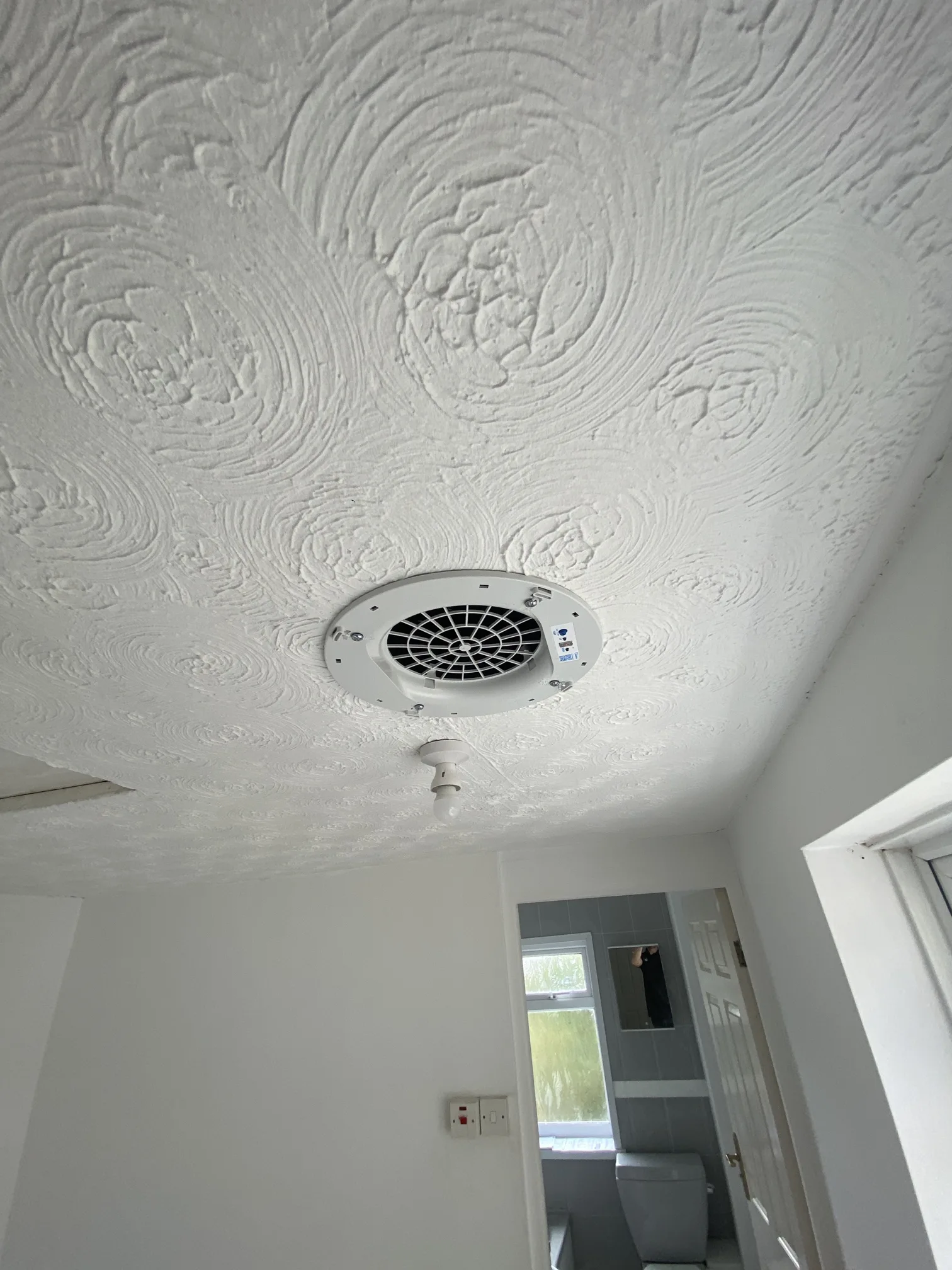
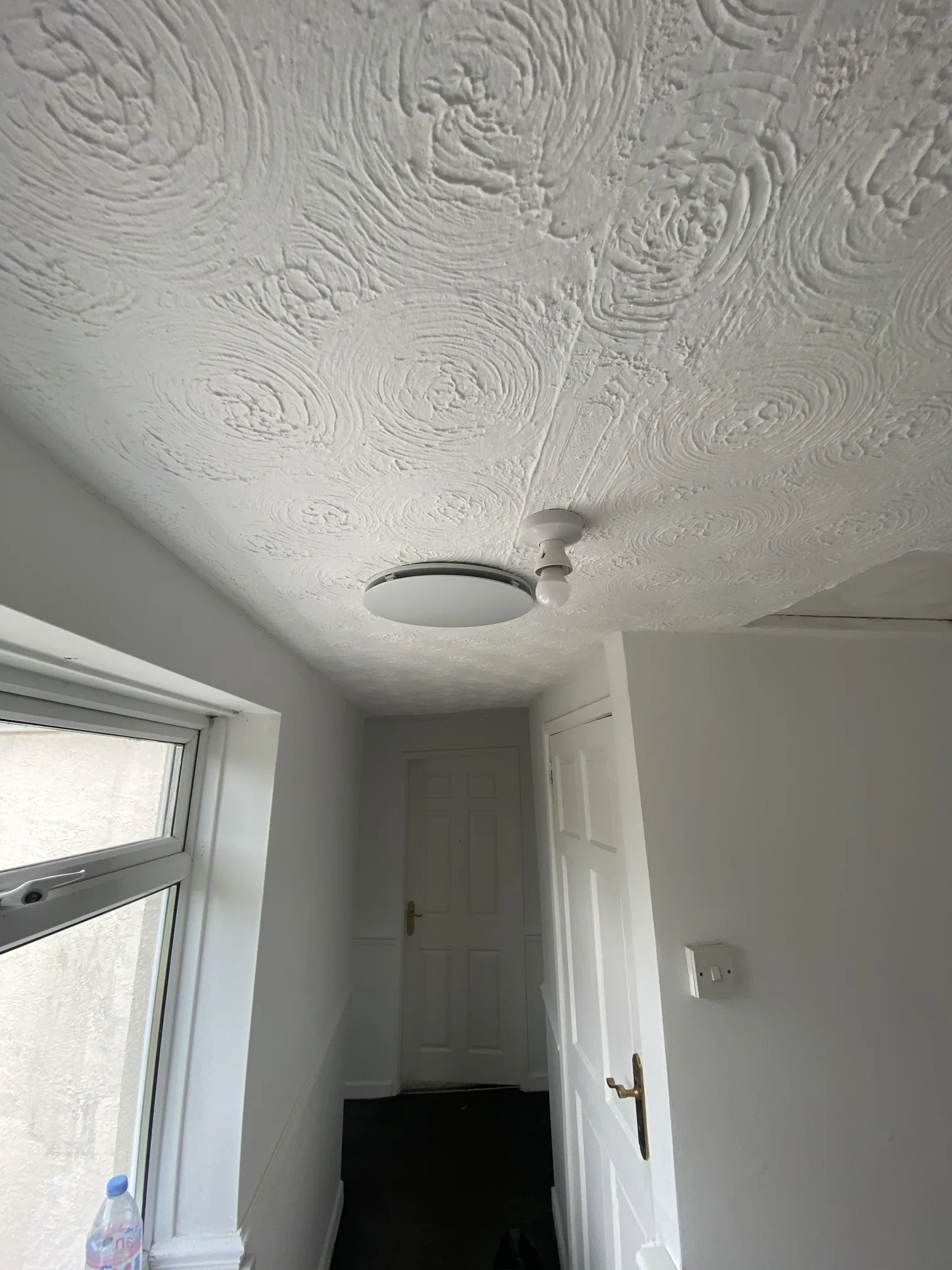
Installing a PIV fan system in this St Austell property addressed ongoing moisture and air quality concerns throughout the home. The Positive Inlet Ventilation unit was positioned centrally on the landing ceiling, creating an optimal distribution point for fresh, filtered air to circulate naturally through the entire house.
The PIV system works by drawing fresh air from outside through the loft space, filtering it, and then gently distributing it throughout the home. This creates positive pressure that naturally pushes stale, humid air out through existing ventilation points and natural gaps in the building fabric. The continuous gentle airflow helps prevent condensation buildup, reduces humidity levels, and improves overall indoor air quality.
A key feature of this installation was the integrated 400-watt heating element, which tempers incoming air during colder months. This heating function prevents cold draughts whilst maintaining the ventilation benefits year-round. The heating element automatically adjusts based on external temperature conditions, providing comfortable fresh air regardless of weather.
The unit was strategically positioned where ceiling joists allowed for proper structural support whilst maintaining the most effective air distribution pattern. This central landing location allows the PIV system to serve multiple rooms simultaneously, with air naturally flowing down hallways and through doorways to reach all areas of the home.
Power supply for the PIV unit was achieved by extending the existing lighting circuit, which was accessible within the loft space. This approach provided the necessary electrical supply whilst keeping installation costs reasonable and avoiding major alterations to the existing electrical system.
A maintenance isolation switch was installed in the loft space adjacent to the PIV unit, allowing for safe servicing and maintenance access. This switch enables the system to be completely isolated from the electrical supply when required, following proper electrical safety protocols.
The installation required careful consideration of the textured ceiling coating, which necessitated appropriate safety precautions during the cutting process. All necessary protective equipment and procedures were followed to handle the ceiling material safely and professionally.
PIV systems offer several advantages over traditional ventilation methods. Unlike extractor fans that only remove air from specific rooms, PIV provides whole-house ventilation that addresses moisture problems at their source. The system operates quietly and efficiently, with minimal running costs compared to alternative ventilation solutions.
The gentle positive pressure created by the PIV system helps prevent external pollutants and allergens from entering the home through uncontrolled gaps and cracks. Fresh air is filtered before entering the living space, providing cleaner indoor air quality than natural ventilation alone.
For homes experiencing condensation issues, particularly in bedrooms, bathrooms, and kitchens, PIV systems can significantly reduce moisture levels that lead to mould growth and structural damage. The continuous air movement prevents stagnant conditions where condensation typically forms.
The system’s automatic operation means homeowners don’t need to remember to operate ventilation controls. The PIV unit continuously monitors conditions and adjusts its operation accordingly, providing consistent air quality without manual intervention.
Energy efficiency is another benefit of PIV systems. The low-power operation and integrated heating element use significantly less energy than heating individual rooms to combat condensation and humidity problems. The system works with the home’s existing heating system rather than against it.
Installation of the PIV unit in this St Austell property will provide long-term benefits for indoor air quality, helping to create a healthier, more comfortable living environment whilst protecting the property structure from moisture-related damage.