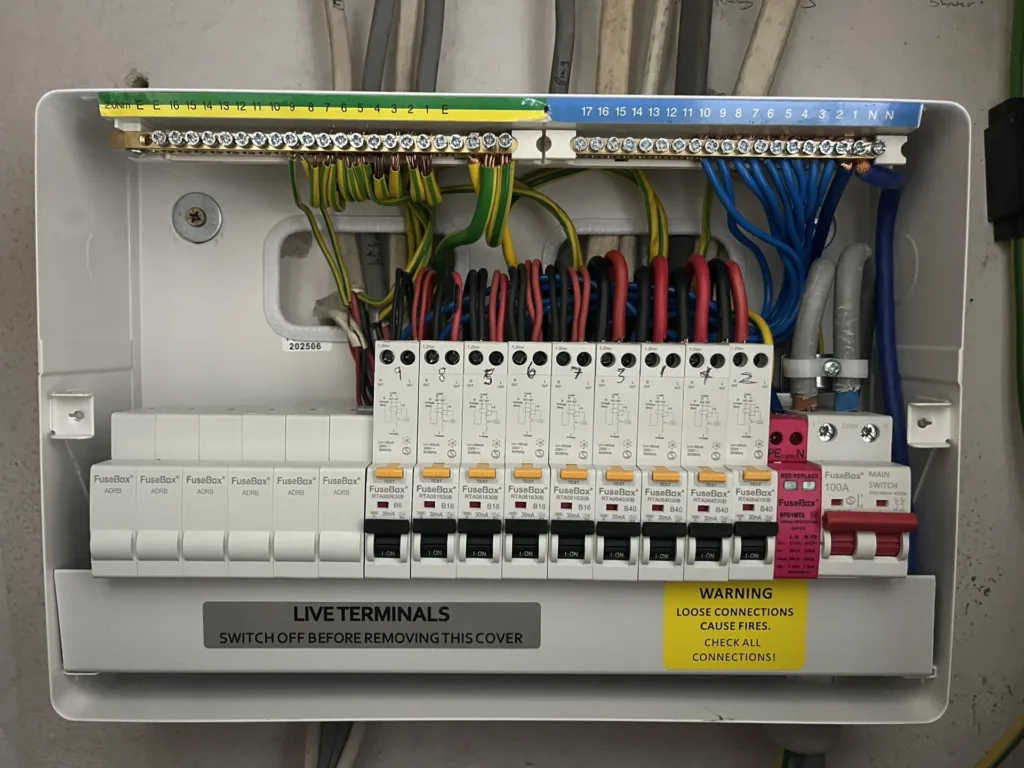
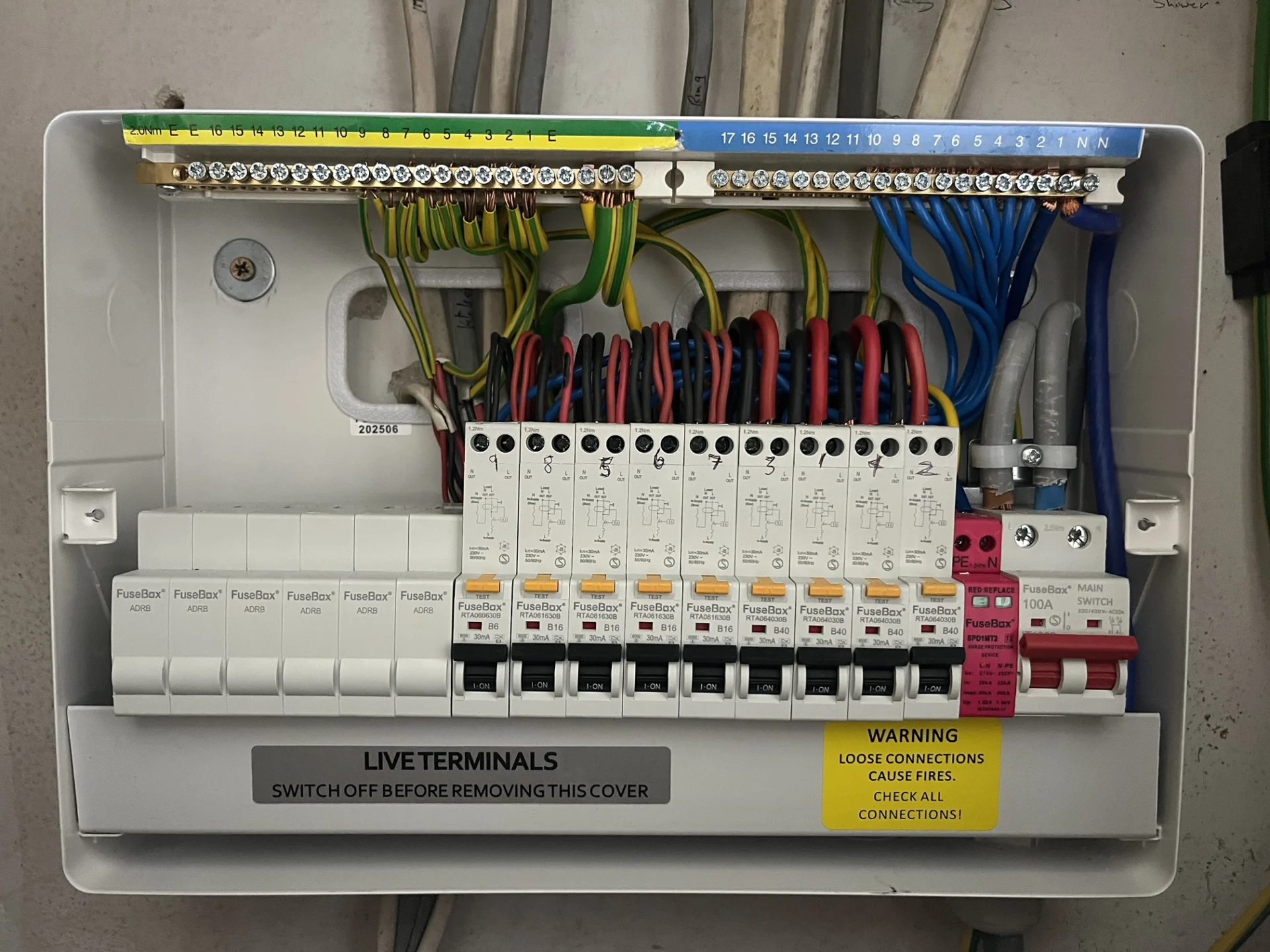
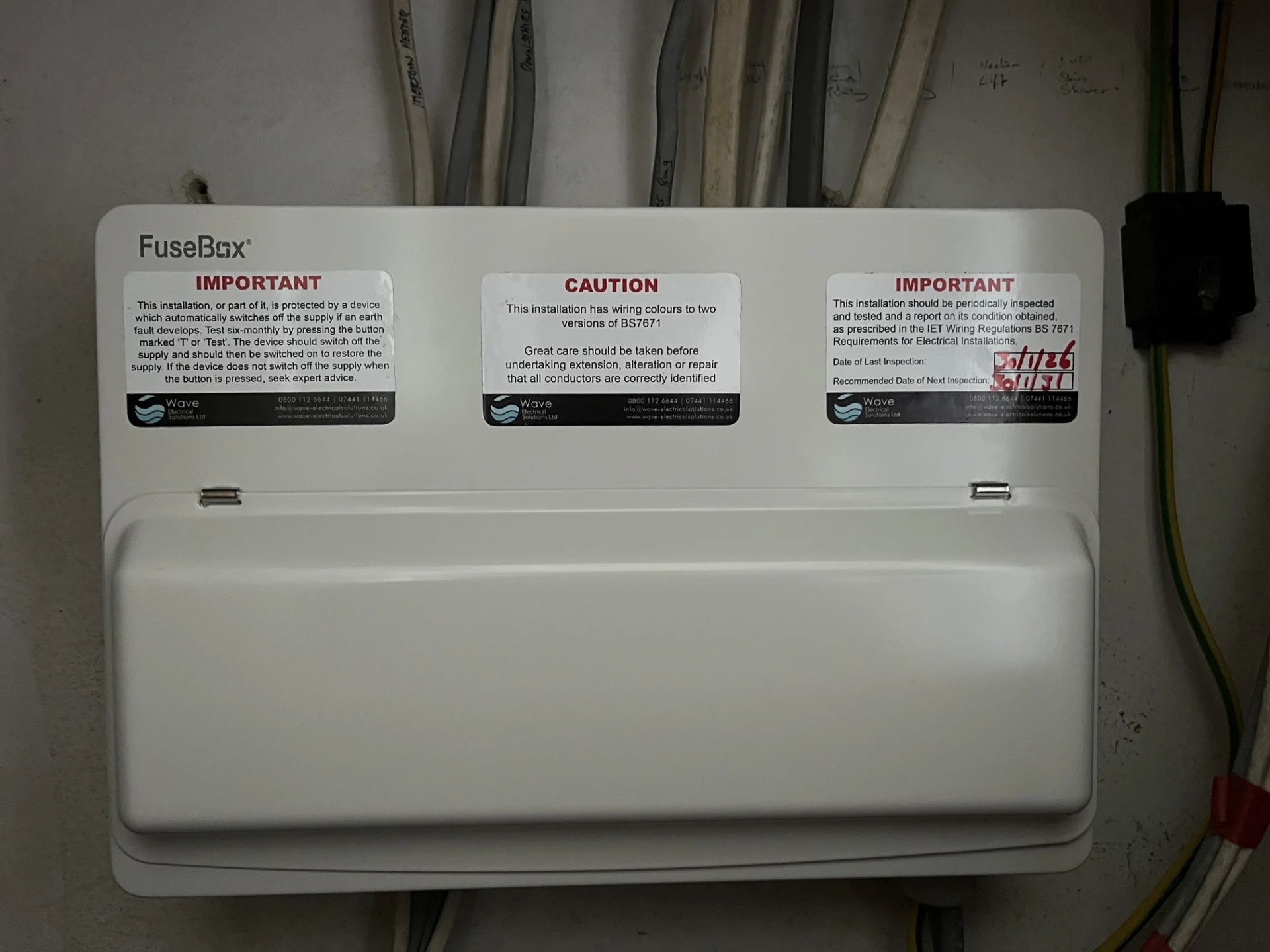
A property in Looe came to us following a previous Electrical Installation Condition Report (EICR) that had already been carried out and recorded. The report had identified that the existing consumer unit needed replacing, so the scope of work was clear from the outset – remove the old board and fit a new 15-way RCBO consumer unit with an integrated Surge Protection Device (SPD).
RCBO consumer units have become the go-to solution for domestic consumer unit replacements, and for good reason. Unlike older-style boards that use a shared RCD to cover groups of circuits, an RCBO board gives each individual circuit its own combined overcurrent and residual current protection. In practical terms, this means that if a fault develops on one circuit – say, a kitchen socket ring – only that circuit trips. The rest of the property stays live. For homeowners, that’s a significant improvement over the old arrangement where a single tripping RCD could take out half the house at once.
The integrated SPD is something that’s becoming increasingly common in new consumer unit installations, and it’s well worth understanding why. Modern homes are filled with electronics – smart TVs, computers, heat pump controllers, inverter-driven appliances – all of which contain sensitive components that can be damaged by voltage spikes and surges travelling through the incoming supply from the grid. An SPD sits within the consumer unit and diverts those transient overvoltages safely to earth before they reach the connected equipment. It’s a relatively small addition to the cost of a consumer unit replacement but it adds a meaningful layer of protection for the electronics already in the property.
As part of the installation, the incoming meter tails were also upgraded to 25mm double-insulated cabling. The meter tails are the cables running between the electricity meter and the consumer unit, and they carry the full incoming supply load for the property. Older installations quite often have tails that are undersized or not double-insulated, which no longer meets current requirements. Sorting this as part of a board change makes sense – it avoids leaving an outdated section of the installation in place immediately upstream of a new consumer unit.
The whole installation was carried out in line with BS 7671, the 18th Edition of the IET Wiring Regulations. This is the current standard that governs electrical installations in the UK, and compliance with it is a requirement for any notifiable electrical work in a domestic property. Consumer unit replacements fall within the scope of Part P of the Building Regulations, which means the work needs to be notified to Building Control. For registered electricians, this notification can be made directly through a competent persons scheme rather than requiring the homeowner to separately apply to their local authority.
Once the new board was fitted and connected, all the circuits that had been altered were tested. This electrical testing is what allows us to produce an Electrical Installation Certificate (EIC) – the formal document that records the installation details and confirms the work has been completed to the required standard. The EIC is also the basis for submitting the Building Control notification, so the testing and certification aren’t just a paperwork exercise; they’re a necessary part of closing the job out correctly.
For properties in Looe and across the wider south east Cornwall area, consumer unit replacements are a common job, particularly in older housing stock where the original boards have either reached the end of their serviceable life or simply don’t meet current standards. Whether a previous EICR has flagged the need for a replacement or the homeowner has noticed the board is ageing, the process is broadly the same – assess what’s in place, spec the right replacement, carry out the installation, test, and certify.
This job is a straightforward example of that process done properly. The existing board came out, a correctly specified 15-way RCBO unit with SPD went in, the tails were upgraded, and the installation was tested, certified, and notified to Building Control. The property now has a board that meets current standards and gives the homeowner reliable, individually protected circuits along with surge protection for their connected equipment.