Home security has shifted quite a bit over the last few years. Where people once relied on a basic doorbell and maybe a standalone CCTV recorder tucked away in a cupboard, smart cameras and video doorbells connected to your phone have become the go-to choice for a lot of households. Ring in particular has become one of the more widely recognised names in that space, and this job in St Austell is a good example of how straightforward an upgrade can be when it’s done properly.
The homeowner had already purchased their own equipment – a Ring Video Doorbell for the front entrance and a Ring Floodlight Camera for the rear of the property. Buying the hardware is the easy part. Getting it installed so it works correctly, safely, and reliably is a different matter, and that’s where we came in.
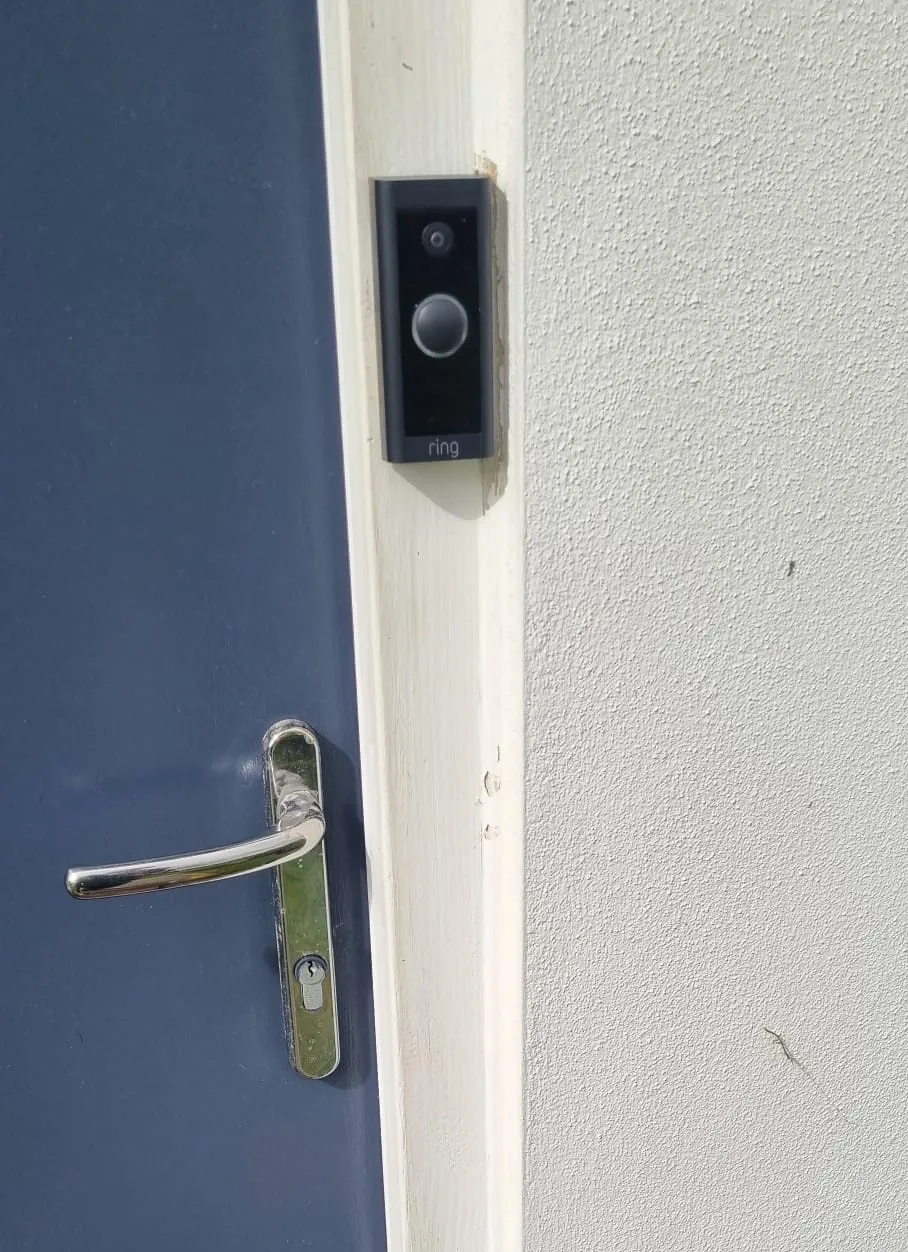
Starting at the front of the house, the existing doorbell was a battery-operated unit that had served its purpose but wasn’t giving the homeowner what they needed. The new Ring Video Doorbell was wired directly into the existing doorbell circuit, which means it draws power from the mains rather than relying on a battery to stay charged. That’s a meaningful difference in day-to-day use – no worrying about battery levels dropping, no intermittent offline periods, and no climbing up a ladder every few months to swap cells. A Ring Chime was also installed internally so there’s an audible alert inside the property when someone rings, separate from any notifications sent to a phone or tablet.
Before any of that went in, the existing wiring was checked over. The quote had flagged that the work was priced on the assumption there were no faults with the current doorbell circuit, and that’s the right approach – older wiring doesn’t always cooperate, and it’s worth knowing what you’re working with before committing to a fixed price. Fortunately, no issues were found, and the installation went through cleanly.
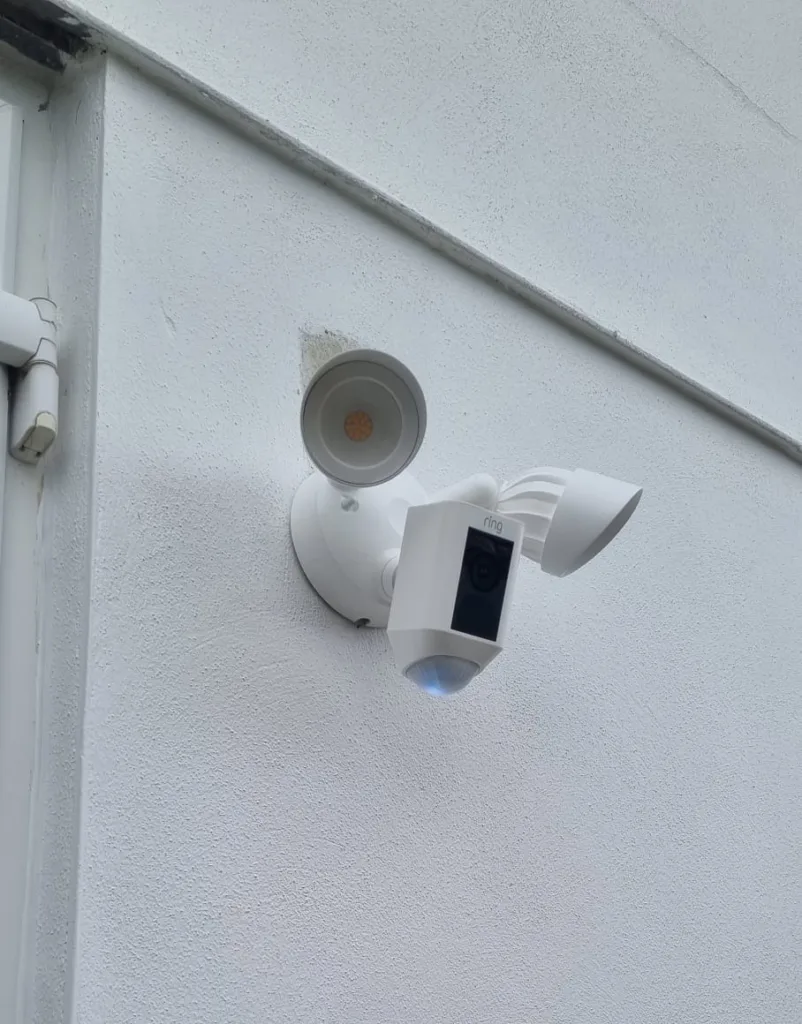
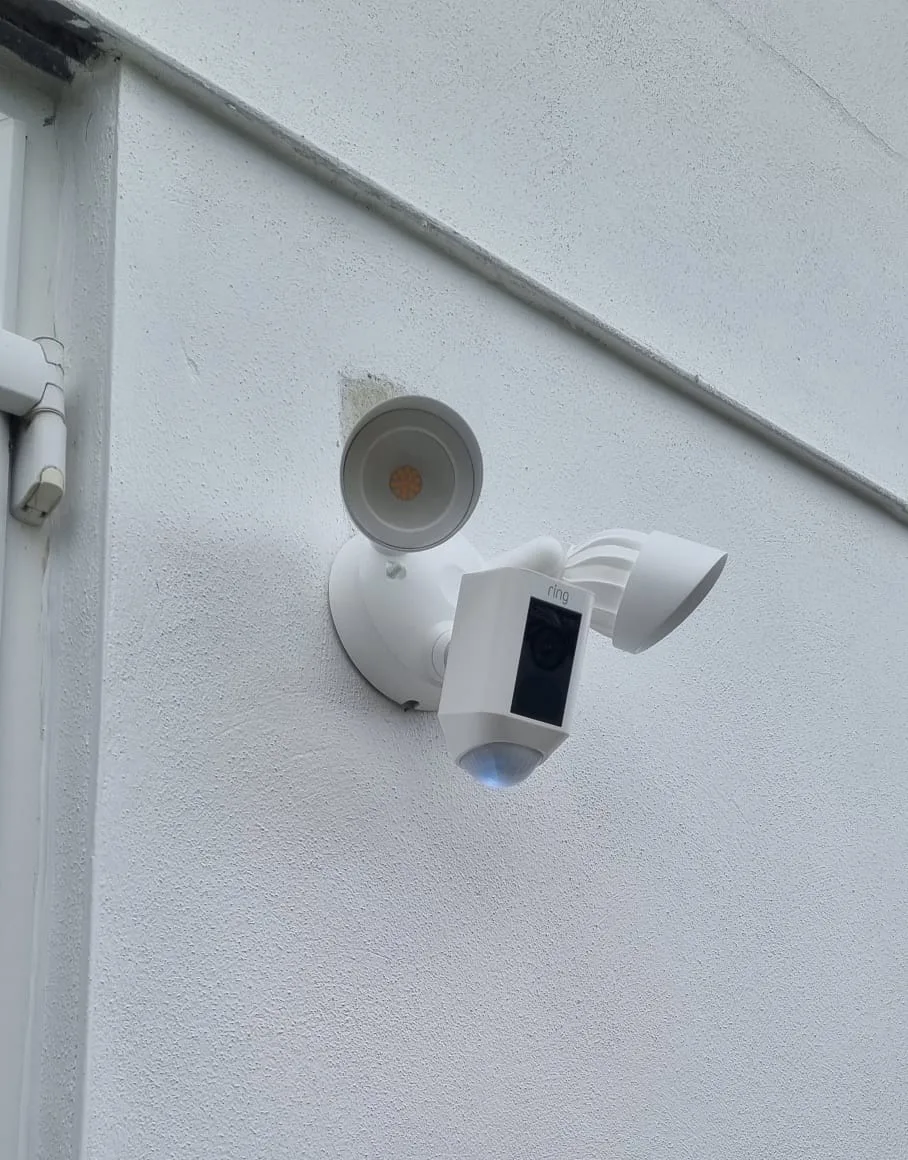
The rear of the property is where things got slightly more involved. The existing exterior wall light was removed and replaced with the Ring Floodlight Camera, which combines a motion-activated security camera with twin floodlights. It’s a hardwired installation, drawing its power from the circuit that previously fed the wall light, so no batteries are involved here either. This type of camera tends to work best when it has continuous power – it needs to stay connected to the internet around the clock so that remote access through the Ring app works as it should, motion alerts are sent in real time, and any recorded footage is available when you need it.
That last point is why the internal wall switch also needed attention. The existing switch had previously controlled the rear exterior light – and as it stood, it would have been able to cut power to the new camera just as easily. If someone flicked that switch off, the camera would go offline and lose all remote functionality until the power came back on. To prevent that from happening, the switch was removed and the wiring capped off safely behind a blanking plate. It’s a small detail, but it’s the kind of thing that’s easy to overlook and genuinely matters for how the system performs long term.
Once both devices were in place, everything was paired and commissioned. That means connecting both the doorbell and the floodlight camera to the Ring app, confirming that live view was working, checking that motion detection was active and triggering correctly, and making sure the Chime was responding to the doorbell as expected. The homeowner was walked through how the system operates so they could get straight into using it without any head-scratching.
It’s worth mentioning – because it often catches people off guard – that smart home devices like these are closely tied to your home’s Wi-Fi setup. If you change your router, update your network password, or switch broadband provider, the devices will need to be reconnected to the new network. It’s just one of those things to be aware of when you’re running connected devices around your home.
Ring doorbell installation in St Austell and the surrounding areas is something we’re asked about fairly regularly, and this job is fairly typical of what’s involved – a clean swap of existing equipment, getting the wiring right, and making sure everything talks to everything else before we leave. Whether it’s a straightforward doorbell replacement or a more involved camera setup covering multiple areas of a property, the process is the same: do it properly, check it works, and make sure the client knows how to use it.