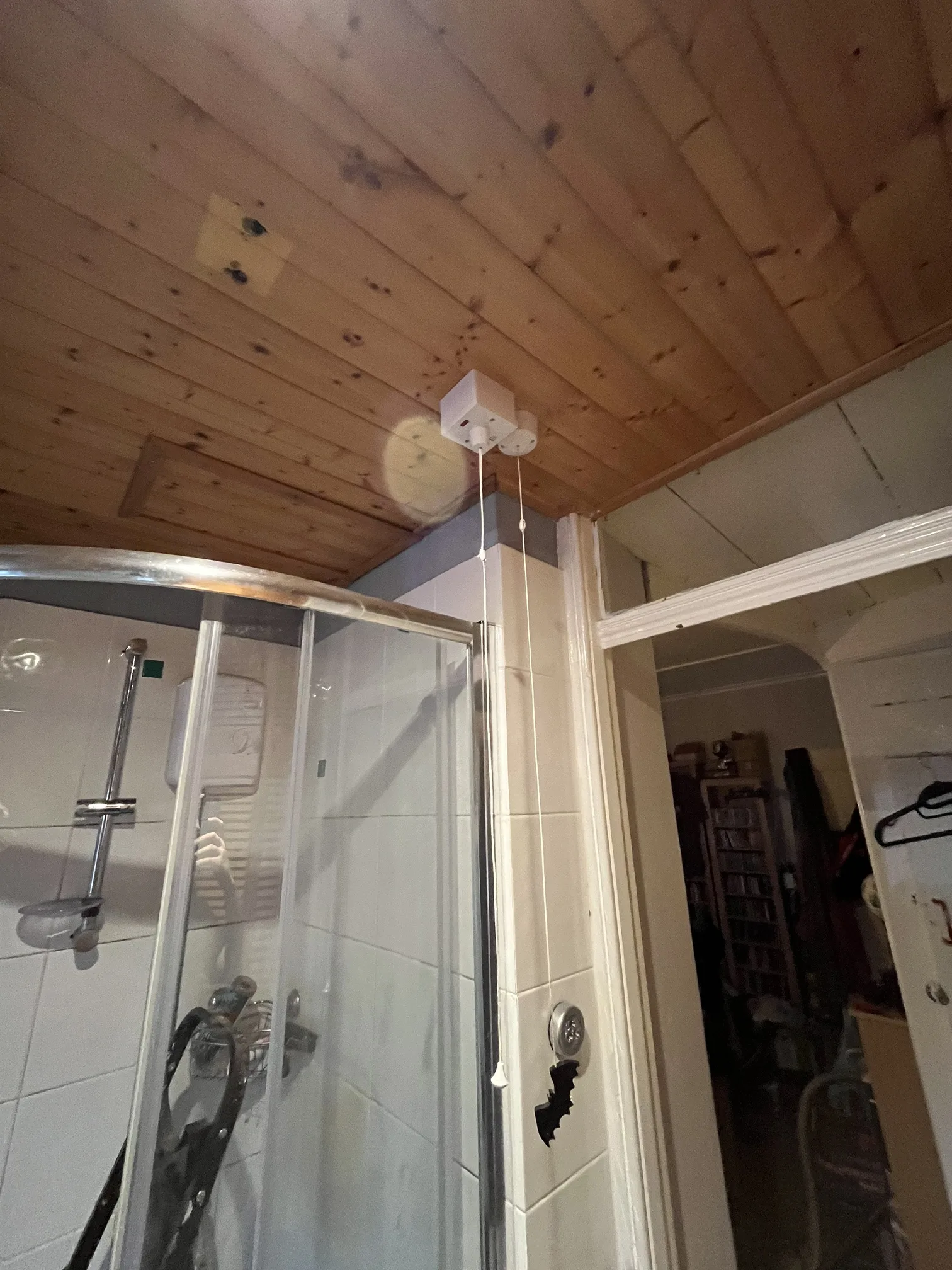
A domestic property in Redruth required electrical work to bring the shower circuit up to standard and add additional power points. The job involved relocating an isolator switch, removing unsafe junction box connections, and installing new circuits for a heated towel rail and dining room socket.
Electrical installations sometimes need updating, particularly when original work hasn’t been completed to current standards or when homeowners discover safety concerns during routine maintenance. A property in Redruth came to us with exactly this situation. The shower circuit had been terminated using a junction box hidden away in the loft space, which isn’t ideal practice. Junction boxes can work loose over time, connections can deteriorate, and having them buried in insulation or tucked away where they can’t be easily inspected creates potential problems down the line.
The homeowner had also identified the need for additional power points. Anyone who’s lived in an older property knows the frustration of not having sockets where you actually need them. The dining room only had limited socket provision, and with modern life requiring charging points for various devices alongside lamps and other electrical items, the existing arrangement simply wasn’t practical anymore. There was also the matter of the heated towel rail in the bathroom, which needed its own dedicated circuit to function properly.
Starting with the shower circuit, we accessed the loft space to assess the existing installation. The junction box arrangement needed to go completely. Rather than having connections that could potentially fail hidden away where nobody would notice until the shower stopped working, we planned to bring everything down to an accessible isolator switch. This meant re-terminating the shower supply cable properly and fitting a new 45-amp pull cord switch positioned where it could be easily reached but still remained discrete within the bathroom area.
The existing isolator switch location wasn’t suitable for the cable routing we needed, so relocating it made sense both practically and aesthetically. We removed the old switch carefully, making sure not to damage the surrounding surface more than necessary. The fixing holes left behind would need filling with wood filler, leaving the surface ready for whoever was handling the decorating afterwards. It’s always worth taking that extra bit of care with finishing details because homeowners notice these things, and it shows respect for their property.
With the new pull cord positioned correctly, we could route the shower cable directly to it without any intermediate connections. This gives a much more reliable installation that’s easier to test and maintain. The cable now runs cleanly from the consumer unit to the isolator and then to the shower unit itself, with everything accessible and properly terminated. Testing confirmed the circuit was performing exactly as it should, with proper earth continuity and insulation resistance values where they needed to be.
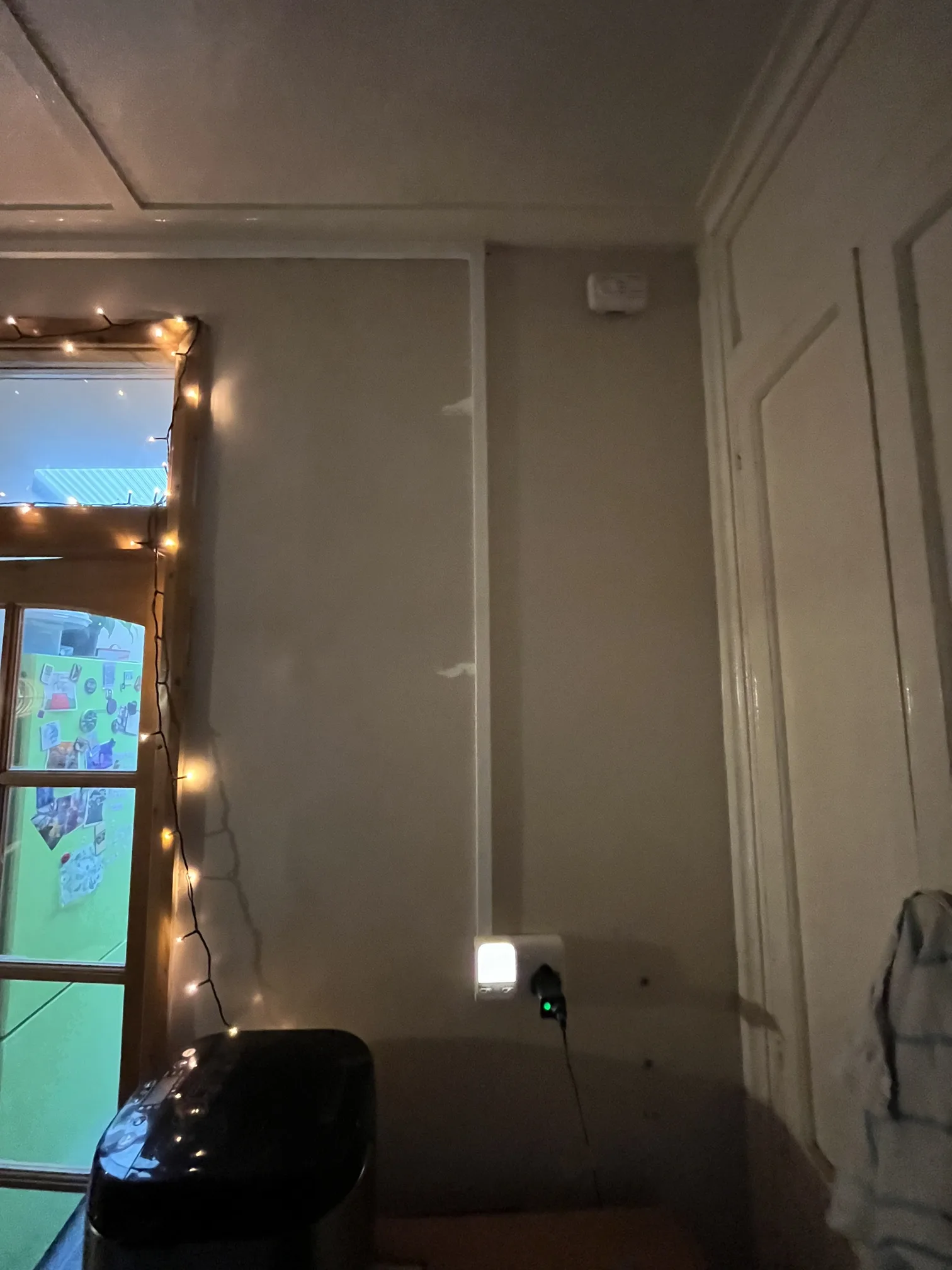
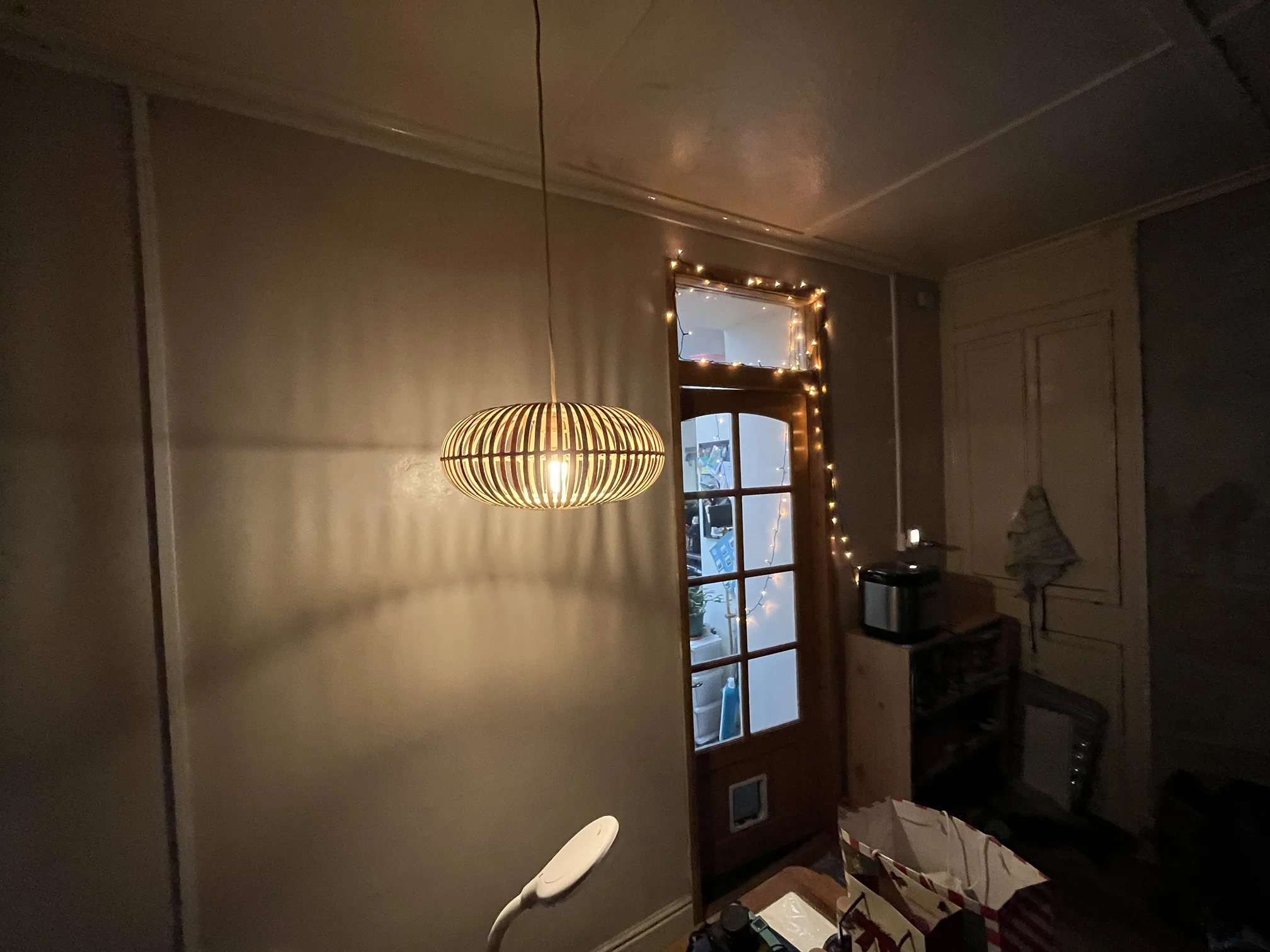
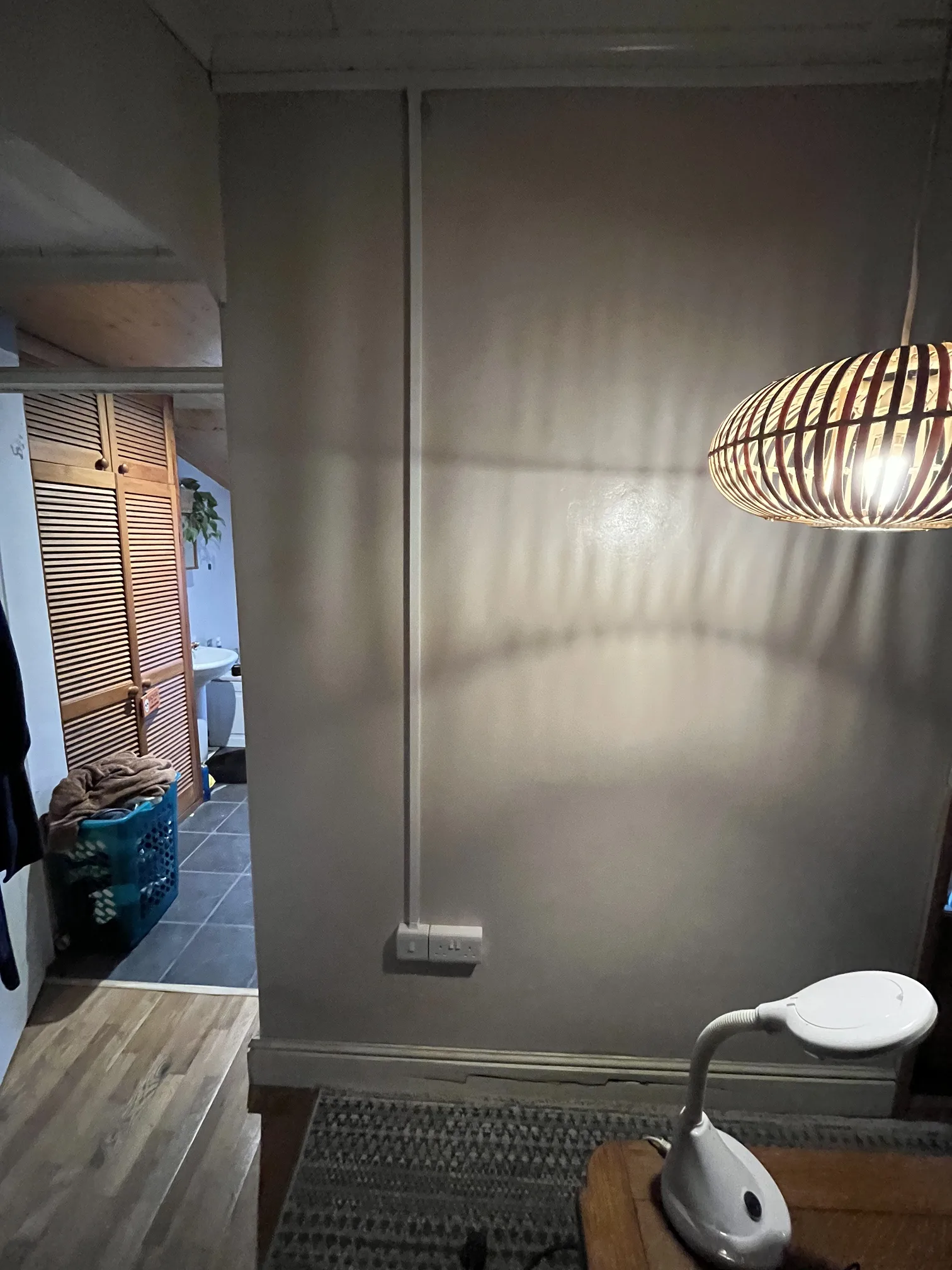
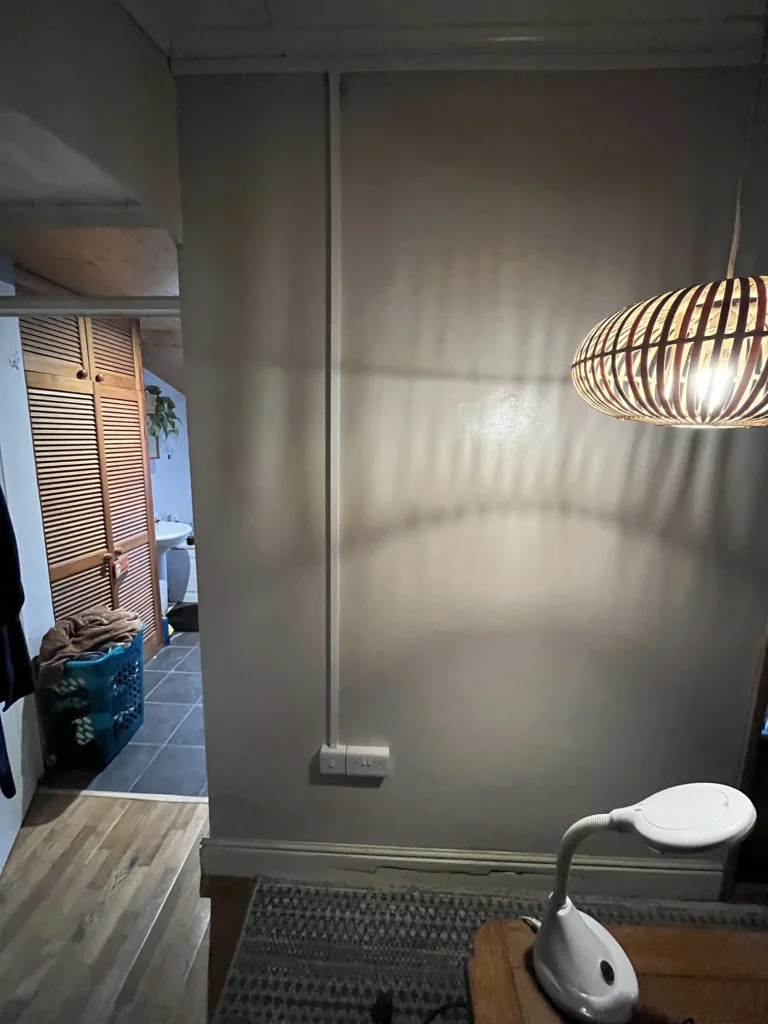
Moving on to the dining room work, the request was straightforward enough – add a double socket on the opposite side of the window from the existing outlet. This would give the homeowner flexibility for table lamps, phone chargers, or whatever else they needed without trailing extension leads across the room. We installed a surface-mounted double socket, which was the most practical approach given the room layout and the need to avoid excessive disruption to finished surfaces.
The circuit feeding this area was suitable for extension, so we could add the new socket without overloading anything. All the surface cabling needed containing properly, so we used white PVC trunking to keep everything neat and protected. Surface trunking sometimes gets a bad reputation, but when it’s installed carefully with attention to alignment and finishing, it’s a perfectly acceptable solution that’s actually easier to work with if changes are needed in the future compared to buried cables.
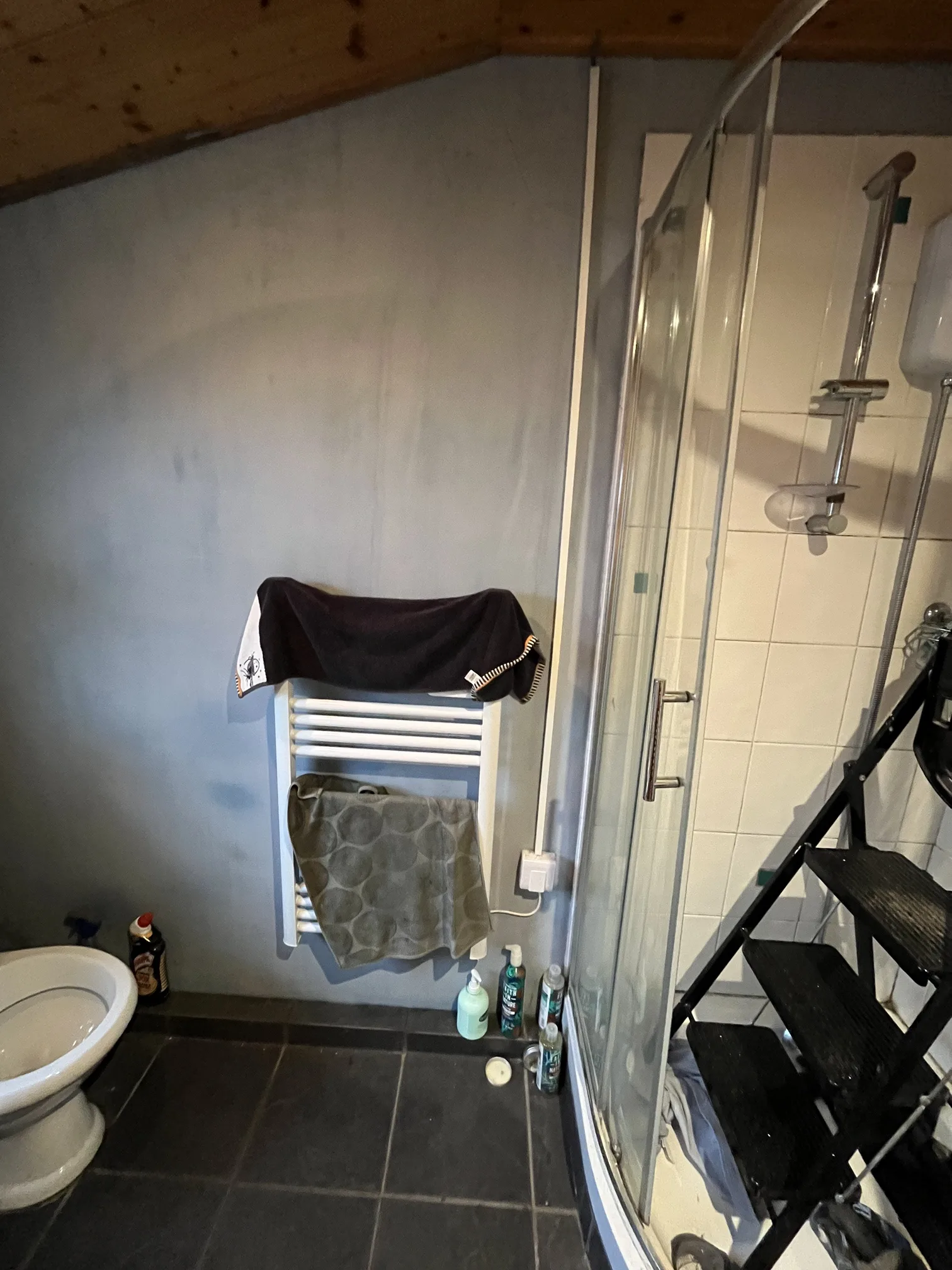
Here’s where the job got slightly more involved. That new dining room socket wasn’t just for everyday use. We needed to take a fused spur from this circuit and route it through into the adjacent loft space. This would provide the connection point for the heated towel rail in the bathroom, which sits on the other side of that wall. Running cables through loft spaces requires care – you’re working around insulation, existing services, and structural timbers, all while making sure cables are routed safely and won’t be damaged by anyone accessing the loft later.
The fused spur gives the towel rail its own protection while allowing it to be supplied from the ring main. This is a common approach for fixed heating appliances that don’t need the full capacity of a dedicated circuit but still benefit from having their own isolating point. In the bathroom itself, we swapped out the existing spur for a flex outlet plate, which gives a cleaner appearance and makes future maintenance simpler if the towel rail ever needs replacing.
All the trunking runs were measured and cut precisely. There’s a skill to getting corners neat and joins aligned properly. Poor trunking installation stands out immediately, but when it’s done well, it becomes almost invisible – people know it’s there, but it doesn’t draw the eye or look like an afterthought. We made sure fixings were secure and spacing was consistent throughout.
Throughout this type of work, testing isn’t just something you do at the end. We’re checking continuity as we go, verifying connections are sound, making sure protective devices are appropriate for the circuits they’re protecting. The final testing and inspection covers everything systematically – insulation resistance, earth fault loop impedance, polarity, RCD operation. Everything needs to meet the requirements of BS 7671, and all the test results get recorded properly for the homeowner’s records.
The Redruth property now has a shower circuit that’s properly terminated without hidden junction boxes, a bathroom towel rail with its own dedicated supply, and additional socket provision in the dining room where it’s actually needed. Sometimes electrical work isn’t about massive installations or complex systems. It’s about identifying what’s not quite right, understanding what the homeowner actually needs for daily life, and implementing solutions that work reliably while meeting all the safety standards.
Jobs like this often reveal how properties have been modified over the years, with various people making changes that seemed reasonable at the time but don’t quite meet current expectations or standards. Bringing everything up to scratch, adding the functionality that modern life demands, and doing it all in a way that’s safe and properly documented is what keeps properties functioning properly for their occupants.