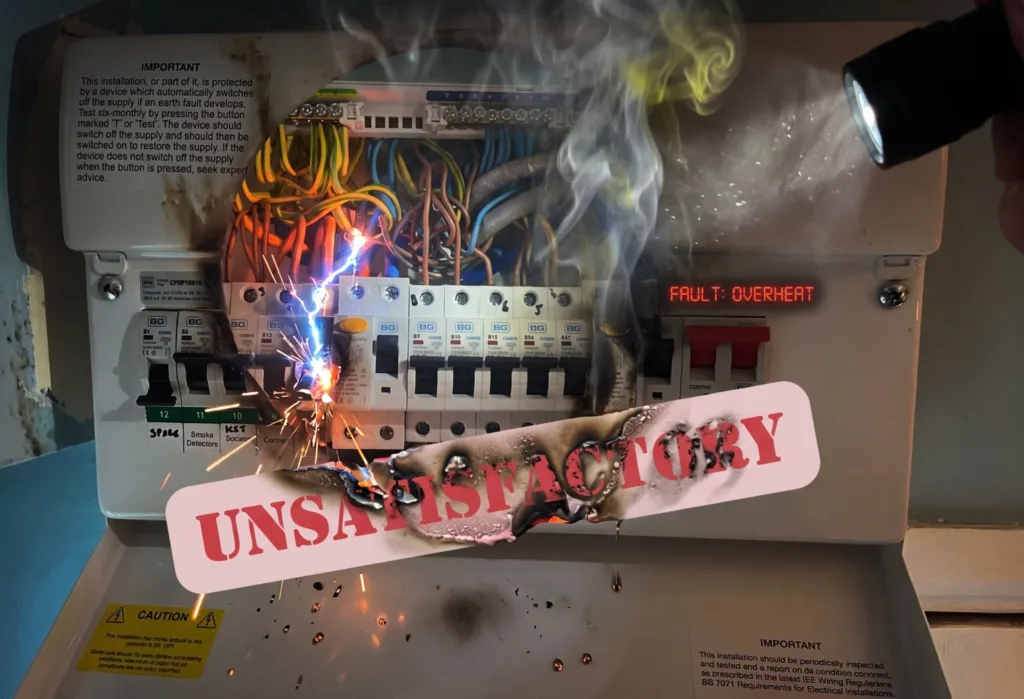
Electrical Installation Condition Reports – EICRs – are one of those things that can feel a bit daunting, particularly when the outcome comes back as unsatisfactory. For a lot of property owners, that word alone is enough to cause worry. But the truth is, an unsatisfactory result isn’t a crisis. It’s information, and arguably important information at that. It tells you, clearly and formally, what needs attention before the installation can be considered safe and compliant with BS 7671, the UK standard for electrical installations.
That’s exactly what happened here in St Austell. A tenanted property underwent an EICR, and the report returned unsatisfactory. Several observations were raised – things that, on their own, might not seem dramatic, but collectively meant the installation couldn’t be signed off as safe for continued use without further work. For rental properties, this isn’t an uncommon situation, and it’s precisely why the legislation requiring landlords to carry out periodic inspections exists.
What’s worth understanding about the EICR process is what actually happens once you get an unsatisfactory result. The report will list observations, and each one is coded according to its severity. A C1 is a danger present – something requiring immediate action. A C2 means there’s a potential danger, and remedial work is required. A C3 is a recommendation for improvement, which doesn’t fail an inspection but is still worth taking seriously over time. When a property gets an unsatisfactory outcome, it’s usually because there are one or more C1 or C2 observations that need resolving before the installation can be re-assessed.
Once the remedial works are completed, the installation – or the affected circuits and areas – goes through a re-test. That re-test checks that everything addressed during the remedial phase now meets the required standard. If it does, an updated satisfactory EICR certificate is issued. That certificate confirms the installation is safe for continued use. It’s a logical process, and one that, when carried out properly, gives the property owner genuine peace of mind about the state of their electrics.
For this property in St Austell, the remedial works covered a handful of separate issues. Immersion heater wiring, a loose back box, a damaged socket in the kitchen, and an incorrectly rated circuit breaker were among the items flagged. None of these are the kind of thing that makes headlines, but a poorly terminated immersion heater supply or a circuit breaker with the wrong rating can both create real risk over time. Overheating connections, inadequate circuit protection – these are the sorts of issues that an EICR is specifically designed to catch.
After the remedial works were completed to the required standard, we carried out the re-inspection and re-testing of the affected circuits. The installation passed, and an updated satisfactory EICR was issued. The landlord now has a current, valid certificate confirming the installation is safe – which also needs to be provided to the tenant and made available to the local authority on request, as required under the Electrical Safety Standards in the Private Rented Sector (England) Regulations 2020.
For rented properties, EICRs are required every five years, or between tenancies. When an unsatisfactory result comes back, landlords are legally obliged to carry out and evidence the remedial works within 28 days of receiving the report – sooner if the observations indicate an immediate danger. That 28-day window isn’t a suggestion; failure to act leaves a landlord in breach of their legal duties. In practice, getting it sorted promptly is always the right call, both from a compliance standpoint and simply because tenants are living there in the meantime.
The thing is, a lot of older properties haven’t been inspected since they were rewired, which might have been decades ago. Electrical standards have moved on considerably in that time, and installations that were fine when they were put in can develop issues – connections work loose, protective devices age, accessories get damaged. That’s not a reflection of poor workmanship originally; it’s just what happens over time. Which is exactly why periodic inspection exists.
Getting an unsatisfactory EICR result can feel like a problem, but it’s far better to find these things through a formal inspection than to find out about them another way. Remedial works of this kind are usually straightforward. The inspection gives you a clear picture of what’s there, the remedials put it right, and the re-test and re-certification confirms it’s done properly. That’s how the system is supposed to work, and in this case in St Austell, that’s exactly what happened.