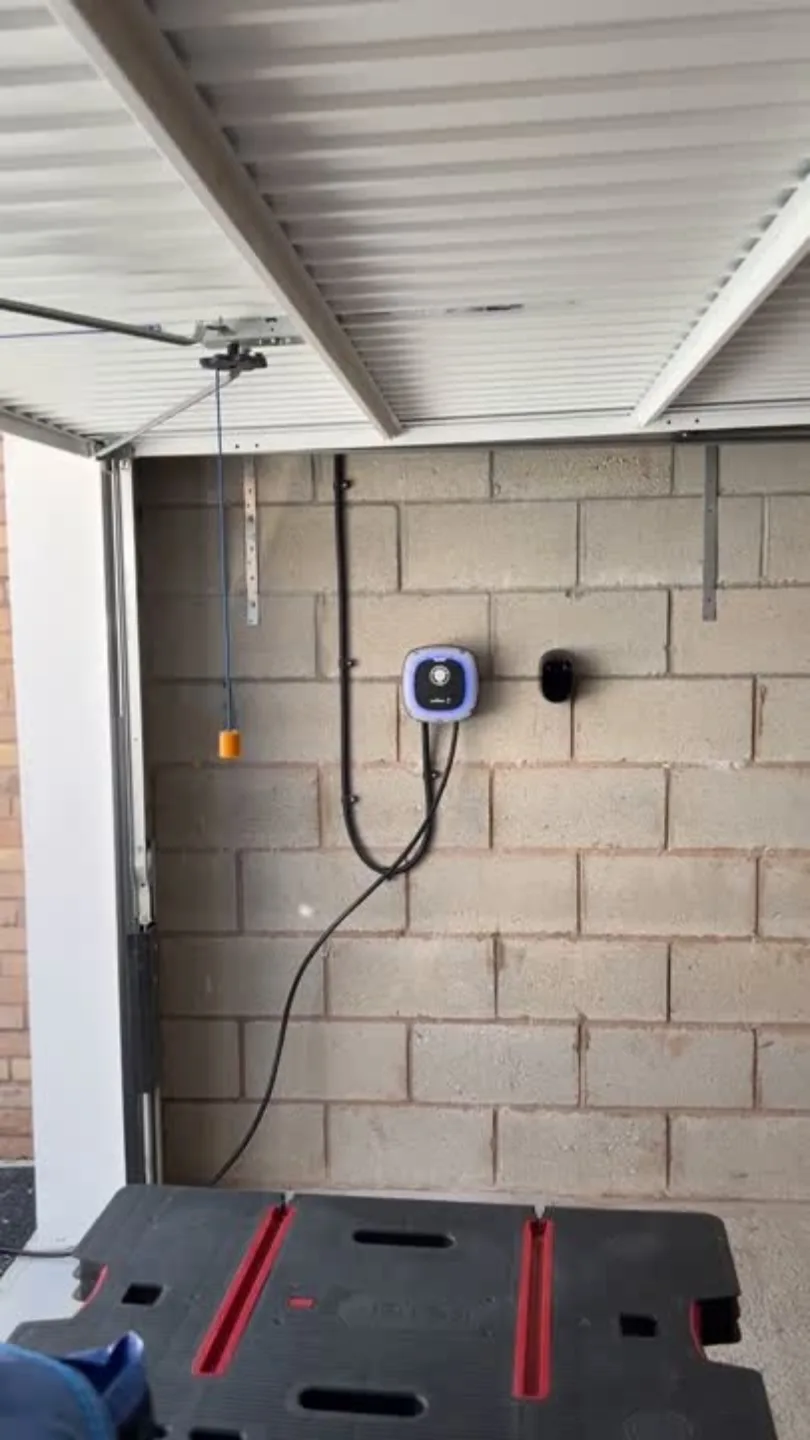
Installing an EV charger at home has become a priority for many homeowners across Newquay, and this particular Wall Box EV charger installation demonstrates how proper electrical infrastructure transforms a standard garage into a convenient charging station. The homeowner chose a tethered Wall Box unit, which offers the advantage of having a permanently attached charging cable that eliminates the need to carry additional cables and prevents theft concerns.
The installation process began with mounting the Wall Box EV charger on the internal garage wall, positioning it for optimal accessibility whilst maintaining clearance requirements. This indoor mounting approach protects the charging unit from Cornwall’s coastal weather conditions whilst providing secure vehicle access. The tethered cable design means drivers can simply plug in their electric vehicle without worrying about carrying charging cables or dealing with compatibility issues.
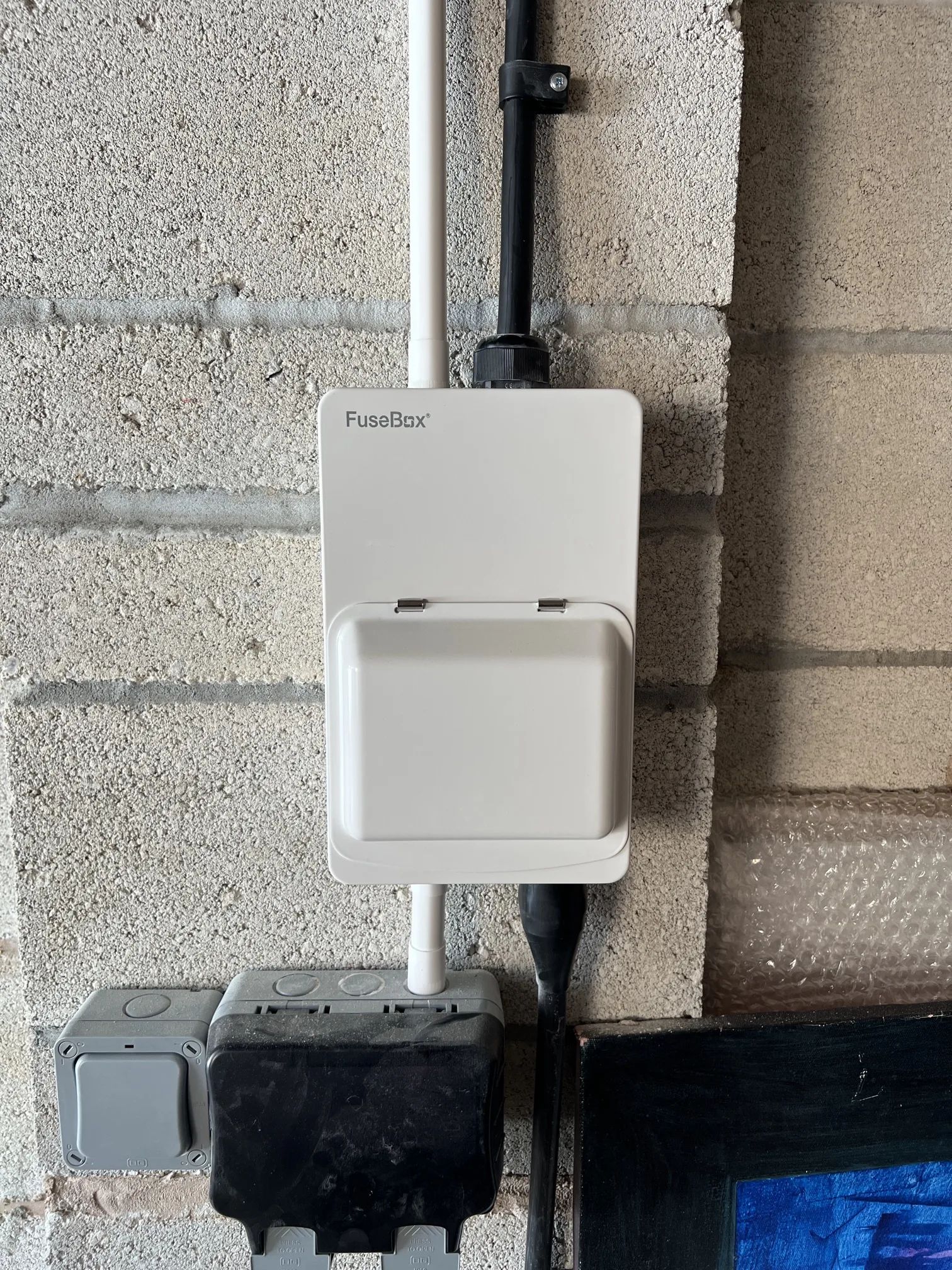
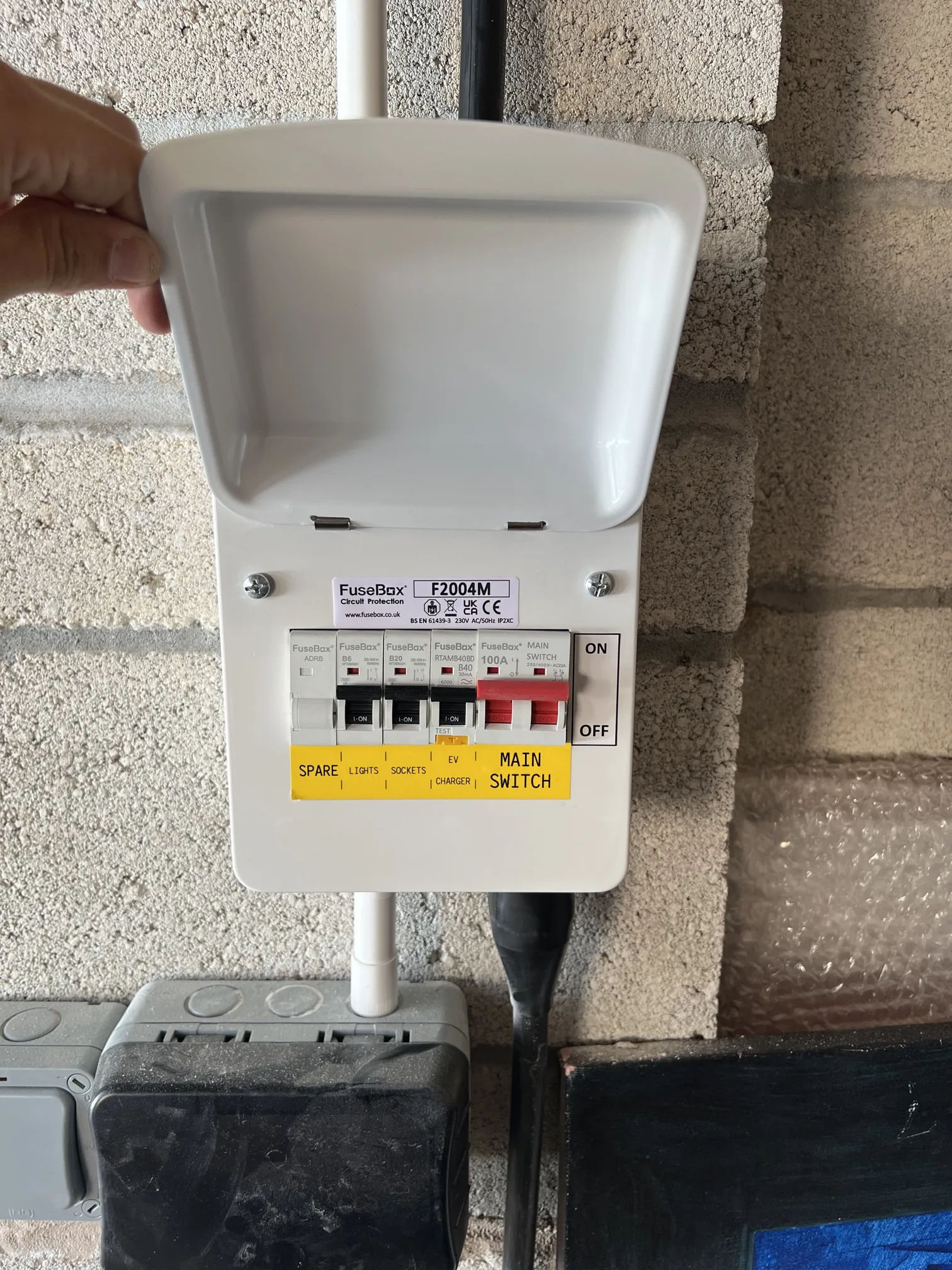
Electrical supply to the EV charger required careful consideration of the existing consumer unit capacity and available circuits. A dedicated 40A bi-directional circuit breaker was installed within the existing consumer unit, providing robust protection for the charging circuit whilst allowing proper power distribution. This configuration meets current electrical regulations and provides the necessary safety measures for high-amperage EV charging applications.
Load management plays a crucial role in residential EV charging installations, particularly in older properties where electrical supply capacity might be limited. The Wall Box internal limit switch was configured to restrict maximum charging current to 32 amps, balancing charging speed with electrical system capacity. This approach prevents overloading the domestic electrical supply whilst still providing efficient vehicle charging times for most electric vehicles.
The installation required comprehensive electrical testing to verify circuit integrity and safety compliance. An Electrical Installation Certificate (EIC) was produced following testing procedures, documenting the new circuit’s electrical characteristics and confirming adherence to BS 7671 wiring regulations. This certification process also facilitated the necessary Building Control Notification of Electrical Works, maintaining compliance with local building regulations.
Modern EV chargers incorporate sophisticated safety features beyond basic circuit protection. The Wall Box unit includes earth leakage protection, temperature monitoring, and smart charging capabilities that can integrate with home energy management systems. These features provide peace of mind for homeowners whilst optimising charging efficiency and electrical system performance.
The project also addressed the homeowner’s growing need for sustainable transport solutions whilst maintaining electrical system integrity. Modern homes increasingly require electrical infrastructure that supports both current and future technology demands, making professional EV charger installation a valuable long-term investment.
Professional EV charger installation involves more than simply mounting a unit and connecting wires. Proper cable routing, appropriate mounting techniques, and correct electrical connections all contribute to a safe and reliable charging solution. The installation process considers vehicle access patterns, cable management, and potential future electrical system modifications.
Newquay’s coastal location presents unique considerations for electrical installations, with salt air and moisture requiring appropriate materials and protection measures. Indoor garage mounting provides significant advantages over external installations, protecting sensitive electronic components whilst maintaining convenient access for daily charging routines.
The completed installation provides the homeowner with a reliable domestic charging solution that integrates seamlessly with their electrical system. The 32-amp charging capacity delivers substantial charging speeds for most electric vehicles, typically adding significant range during overnight charging periods. This charging rate strikes an optimal balance between speed and electrical system compatibility.
Professional electrical certification and building control compliance provide long-term benefits beyond immediate safety considerations. Proper documentation supports property valuations, insurance requirements, and potential future electrical modifications. The EIC serves as verification that the installation meets current electrical standards and has been completed by qualified electricians.
This Newquay installation exemplifies how residential EV charging infrastructure can be integrated into existing homes without major electrical system overhauls. Careful planning, appropriate component selection, and professional installation techniques combine to deliver reliable charging solutions that meet both current needs and future electric vehicle requirements.