Lighting problems aren’t always dramatic, but they’re never something to ignore. From bulbs that flicker on and off to fittings that suddenly stop working altogether, even minor issues can signal wear, poor installation, or hidden electrical faults. Sometimes it’s a simple fix — a loose connection or a worn-out bulb. But other times, the symptoms hint at something more serious lurking in the wiring. We’ve handled everything from nuisance flickers to complete circuit failures, and we know how important it is to approach these problems methodically.
Lighting systems are used more than almost any other electrical feature in a property. That constant use means that wear and tear is inevitable. But knowing how to spot early warning signs — and understanding when it’s safe to fix things yourself — can make a huge difference. In this guide, we’ve outlined the most common lighting issues we see in homes and businesses across Cornwall, along with the practical steps you can take and the clear indicators that it’s time to call a professional.
To learn more about our lighting services, including diagnostics and safe repairs, visit our lighting service page.
Common Lighting Issues and Their Likely Causes
Flickering or Blinking Lights
One of the most frequent complaints, flickering can range from mildly annoying to genuinely worrying. In many cases, the cause is a loose bulb or a poor connection within the fitting. For LED lighting, it’s often down to dimmer compatibility — many older dimmer switches weren’t designed for low-voltage LED systems and cause intermittent flashes or fading.
Wiring issues are also a common culprit. Loose or degraded connections inside ceiling roses, junction boxes or wall switches can cause lights to behave unpredictably. If multiple lights on the same circuit flicker at once, the problem may lie deeper in the circuit.
Lights Not Turning On
If a light refuses to turn on, the first assumption is usually a dead bulb. That’s a good place to start, but it’s not the only possible cause. Faulty wall switches, tripped circuit breakers or a disconnected neutral can all prevent a fitting from receiving power.
In some older installations, we’ve found that lighting issues stem from corroded terminals or damaged cable insulation. Especially in areas prone to damp, these faults can gradually worsen until power is cut altogether.
Buzzing or Humming Fixtures
A quiet hum from a light fitting isn’t always a cause for concern, but it shouldn’t be ignored either. Buzzing noises often come from transformers, especially in low-voltage halogen or some LED setups. They may also indicate overloaded circuits or loose electrical connections.
Another possible source is a poor-quality dimmer switch. When the dimmer isn’t matched to the light type — especially with LEDs — it can introduce electrical noise that becomes audible as a buzz.
Uneven Light Levels
If one room looks unnaturally dim or patchy compared to the rest, don’t assume the bulbs are to blame. Uneven lighting can result from poor-quality components, aged ballasts (in fluorescent fittings), or even physical blockages inside fittings.
For multi-fixture spaces, mismatched lamps are often a factor. Using bulbs with different colour temperatures or lumens ratings can create harsh contrasts — an issue especially noticeable in kitchens or open-plan areas.
Overheating Fittings
Hot fittings are never a good sign. In most cases, overheating occurs when bulbs with too high a wattage are installed in enclosed or poorly ventilated fixtures. This isn’t just a performance issue — it can damage the fitting over time or even pose a fire risk.
Overheating may also indicate a deeper fault, such as an overloaded circuit or failing connections. Discoloured plastic, scorch marks or a burning smell are all signs that immediate inspection is needed.
LED Lighting Problems
LED Strips Not Fully Illuminating
It’s surprisingly common for LED strip lights to glow unevenly or only light up partially. This usually points to a power supply mismatch. LED strips require a stable and adequately rated driver — if the driver isn’t powerful enough, the strip won’t operate properly. Voltage drop can also occur on long runs of tape, causing the far end to appear dimmer.
Poor connector quality is another common issue. With budget LED strips, push-fit or snap connectors can easily come loose over time, especially if they’re bent or disturbed.
Colour Shifts or Dimming
When LEDs change colour unexpectedly or become dimmer over time, the most likely cause is heat. LEDs produce less heat than older bulb types, but they’re more sensitive to build-up. Without proper heat dissipation, the internal components degrade.
Incompatible dimmers are also a factor. Unlike traditional bulbs, LED circuits require specific dimming modules. Using the wrong one can shorten lamp life, cause flicker, or result in colours shifting out of sync.
Safe DIY Fixes to Try
Some lighting problems are safe and easy to resolve at home — if approached carefully.
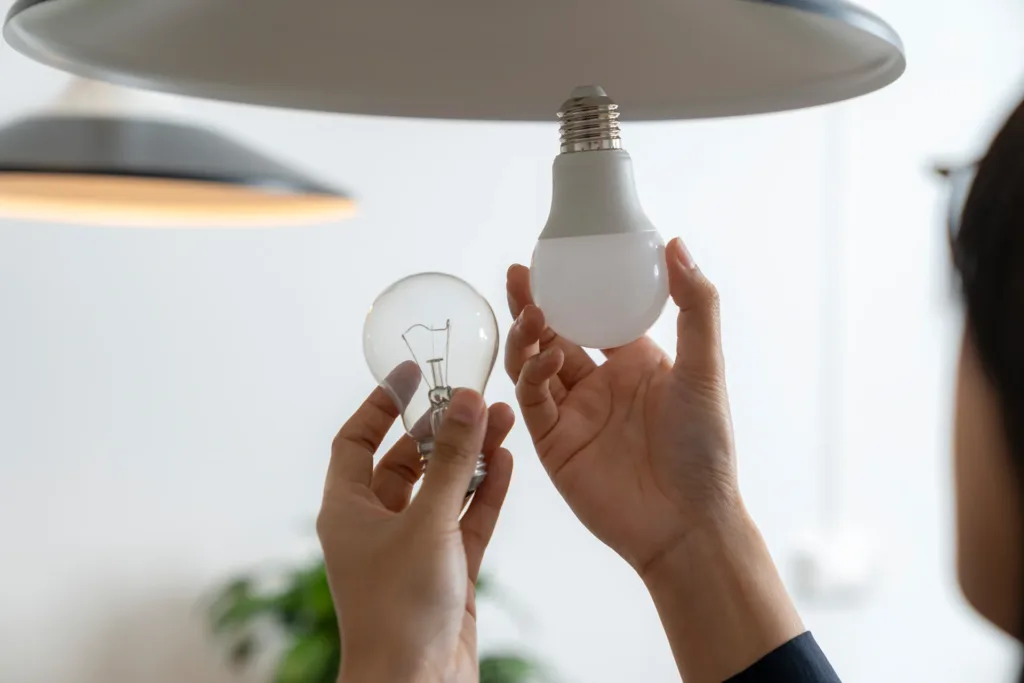
- Start by checking the bulb. Remove it, inspect for darkened glass or broken filaments, and replace it if necessary.
- Look at the wall switch. If it feels loose or doesn’t click properly, it could be worn out internally.
- Test with a known working bulb. Sometimes what seems like a wiring issue is simply multiple failed lamps in a row.
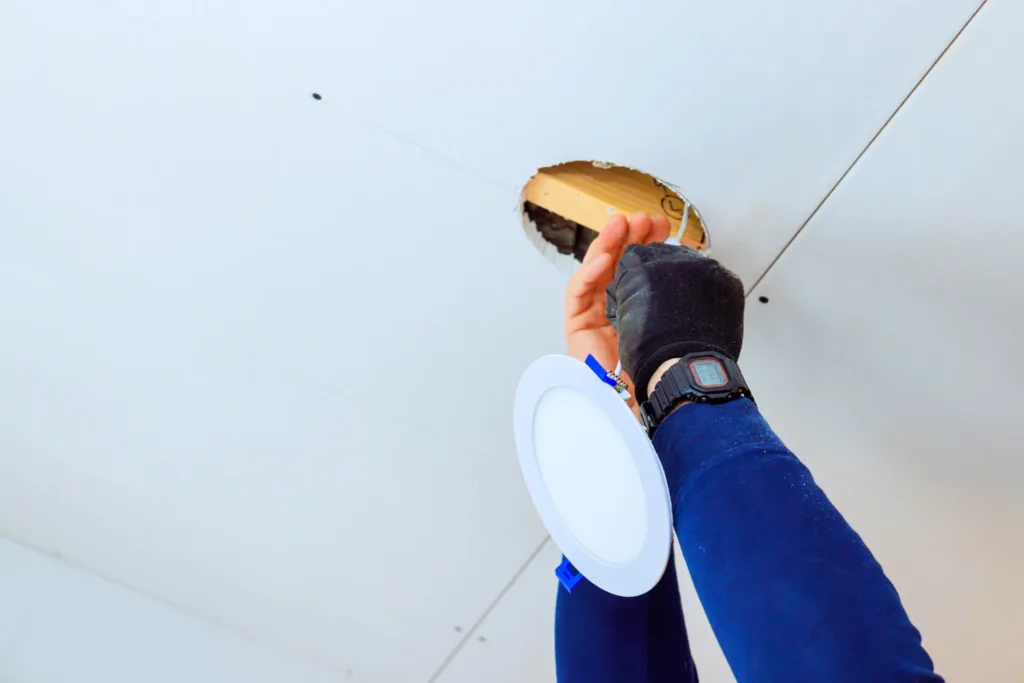
- Inspect the fitting itself. Gently tighten any screws or terminals (with the power isolated) and check for signs of corrosion or overheating.
For advice on improving your lighting’s overall efficiency, we’ve shared practical ideas in our post on upgrading to energy-efficient lighting.
When to Call a Professional
Lighting circuits aren’t especially complex, but faults can still be dangerous — especially when they involve damaged cabling, tripped RCDs or overloaded transformers.
You should always seek professional help when:
- Lights repeatedly fail, even after replacing bulbs and switches.
- There are signs of overheating, such as burnt plastic or visible charring.
- Circuit breakers keep tripping, especially after turning on specific fittings.
- You’re dealing with smart lighting or control systems that require specialist knowledge.
As NAPIT-approved electricians, we regularly diagnose and repair these issues safely and to code. If you’re unsure what’s causing a problem, don’t guess.
Preventing Future Problems
Most lighting faults can be avoided with a few preventative steps:
- Invest in quality fittings and lamps. Cheap alternatives often fail early or cause interference.
- Don’t mix technologies on the same circuit. LED and halogen don’t always play nicely together.
- Arrange periodic checks. Especially in older homes or high-usage areas like kitchens and bathrooms.
- Get new installations done properly. DIY jobs with poor connections are a common fault source.
Where building regulations or Part P apply, electrical work must be carried out by a qualified person. Always choose a registered professional to keep your installation safe and compliant.
According to the Electrical Safety First guidance, non-compliant work can result in serious risk and may invalidate your home insurance.
FAQs
Why do my LED lights flicker sometimes but not always?
Flickering can happen when the dimmer switch isn’t compatible with the LED bulbs, or when voltage fluctuates on the circuit.
Can I change a light fitting myself?
Yes, provided you isolate the circuit properly and know what you’re doing. If the fitting involves integrated drivers or smart components, leave it to a professional.
Are flickering lights dangerous?
They can be. In some cases, flickering signals a wiring fault or overheating transformer. If unsure, get it checked.
Final Thoughts
Lighting systems are easy to overlook — until they stop working. Most homes and workplaces rely on dozens of fittings to function smoothly each day, and when something goes wrong, it’s often a sign of wear or neglect. By staying alert to the early signs of lighting trouble and knowing which issues can safely be handled yourself, you can avoid the risk of more serious problems down the line. Our team supports both domestic and commercial clients with lighting inspections, upgrades, and safe installations throughout Cornwall. If you’re dealing with a persistent fault or planning a more ambitious lighting setup, get in touch with us and we’ll help you sort it safely and properly.