Electrical panels sit quietly in utility cupboards and garages, but their role in keeping a property running safely should never be underestimated. Whether you’re managing a residential rewiring project or planning the electrics for a new commercial build, selecting the right type of panel—and knowing when an upgrade is due—makes all the difference. In the UK, we refer to these as consumer units or distribution boards, and there’s a range of options depending on your setup, load requirements, and building type.
Our team at Wave Electrical has worked on installations across Cornwall for years. In this article, we’ll explain the different types of panels, their typical applications, and how to recognise when a replacement or upgrade is necessary.
For common electrical issues such as circuit tripping or faulty sockets, our DIY troubleshooting guide can help rule out simpler causes before touching your consumer unit.
What is an Electrical Panel?
Core function in a UK property
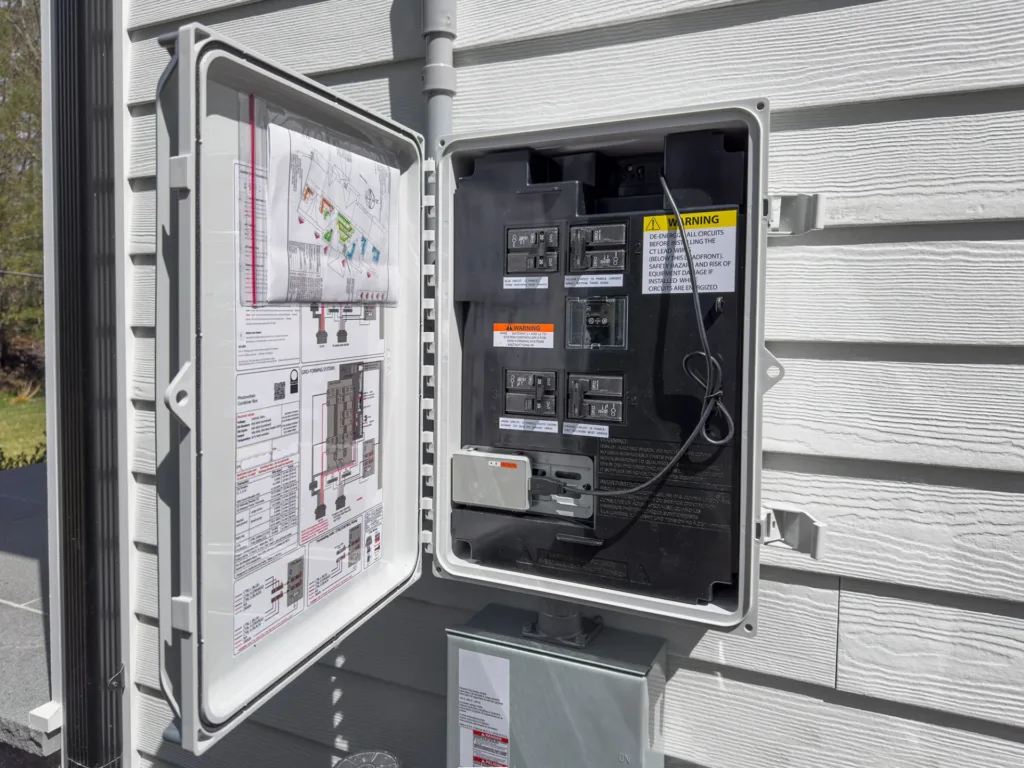
An electrical panel is the central point where electricity from the national grid is distributed to individual circuits throughout your home or commercial property. In UK homes, this is known as a consumer unit. It contains protective devices such as miniature circuit breakers (MCBs), residual current devices (RCDs), or RCBOs that isolate faults and prevent hazards like fires or electric shocks.
Terminology differences (UK vs US panels)
It’s worth noting that in the US, ‘panel’ typically refers to what we call a consumer unit. While American panels might look similar, the underlying wiring systems, voltages, and component naming conventions differ significantly. For example, their “GFI breaker” is equivalent to our “RCBO”, and what we call a “ring main” doesn’t exist in their residential systems.
Compliance and regulation overview
All new installations and panel upgrades must comply with BS 7671, also known as the IET Wiring Regulations. Part P of the Building Regulations applies to domestic work in England and Wales, requiring that changes to electrical systems are notified and certified. Non-compliant or outdated panels can void insurance and put occupants at risk.
Main Types of Electrical Panels
Main Consumer Units
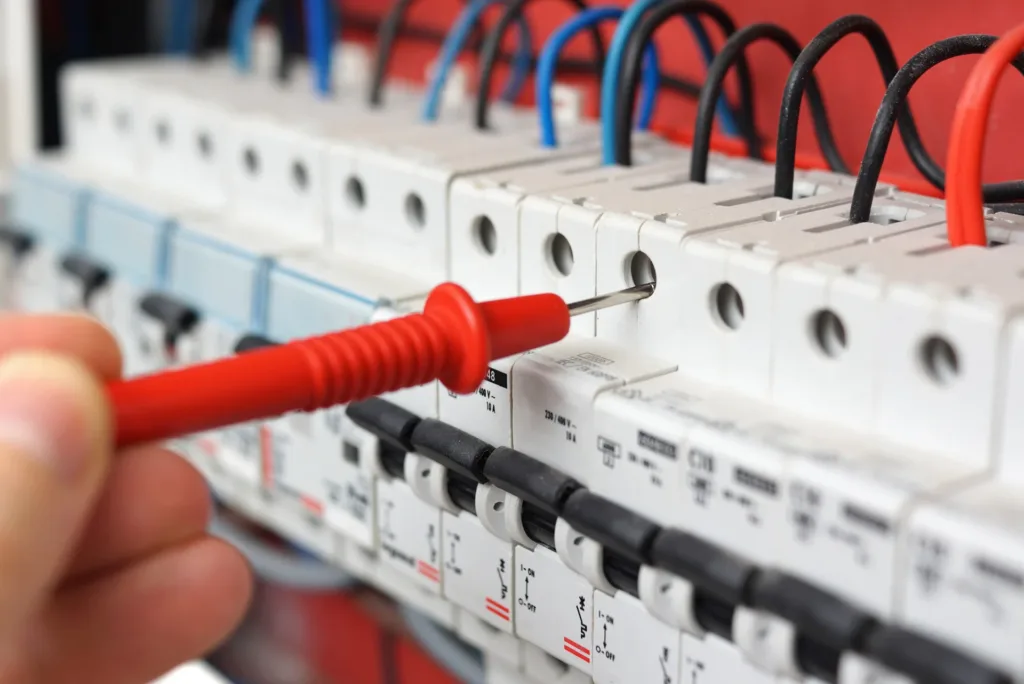
These are found in nearly every UK home. A modern consumer unit includes a main switch, MCBs for individual circuits, and RCDs or RCBOs for additional protection. Some units split the circuits across two RCDs, while others use RCBOs for each circuit to minimise disruption during a fault.
Consumer units vary in size and configuration. Compact options are suitable for flats, while larger boards cater to properties with electric heating, EV chargers, or multi-storey layouts.
Sub-Panels
Sub-panels are smaller boards fed from the main consumer unit. They’re commonly used in extensions, garages, workshops, or outbuildings where running individual cables from the main board would be impractical. Each sub-panel usually includes a main switch and protective devices tailored to the circuits it serves.
Proper planning is key here, and our guide to electrical layout planning for new homes explains how to allow for sub-panels when designing your distribution setup.
Commercial Distribution Boards
Larger properties and commercial premises often require three-phase distribution boards. These handle heavier loads, support industrial machinery, and offer modularity for expansion. Features may include metering modules, surge protection devices, and programmable time-delay relays. These systems demand more space and professional input from an experienced commercial electrician.
Control Panels (Industrial Use)
Electrical control panels differ from standard distribution boards. They’re typically custom-built and designed to control processes, automation, or equipment in industrial settings. These might include contactors, relays, programmable logic controllers (PLCs), and timers. Panels can range from basic enclosures to sophisticated, networked control systems with diagnostic displays and remote access.
Fuse Boards (Older Systems)
Fuse boards, which use rewirable fuses instead of MCBs, were standard in UK homes before the 1980s. Many are still in place today. While not inherently dangerous, they lack modern safety features such as RCD protection and are no longer compliant with current regulations. If your home still has one, it’s time to plan an upgrade.
When Do You Need to Upgrade?
Outdated Fuse Boards or Split Loads
If your consumer unit has rewirable fuses or lacks RCD protection, it doesn’t meet current safety standards. Likewise, older split-load boards can be problematic when a single fault knocks out half your circuits.
Overloaded circuits and frequent tripping
Frequent breaker trips suggest that your current board is at capacity or that the installation is unbalanced. This often happens in homes with electric showers, induction hobs, or EV chargers added without reassessing the panel’s total load.
Adding new appliances or property extensions
Any major addition—like an extension, garden studio, or electric heating—will usually require new circuits. If your existing board has no spare ways or can’t safely handle the increased demand, you’ll need a new or upgraded consumer unit.
Property rewires and insurance compliance
Insurers increasingly request proof that your electrical system meets modern standards. If you’re having a property rewired or selling a home, upgrading the consumer unit is often part of the process. It ensures compatibility with new circuits and compliance with legal obligations.
Choosing the Right Panel for Your Property
Size, capacity and future-proofing
It’s not enough to select a board that suits your current needs. We always recommend allowing for spare ways, so future upgrades like solar PV systems or EV chargers can be added without major rewiring.
Understanding single vs three-phase needs
Most UK homes use single-phase power. However, rural properties, workshops, and commercial buildings often benefit from—or require—three-phase supply. The type of panel you choose must match the supply type and expected loads.
Planning layout and location
Consumer units must be mounted in accessible locations, away from damp areas, and allow for clear labelling. Regulations also specify working space, cable entry methods, and enclosures that meet fire safety standards, especially in multi-occupancy buildings.
Electrical Panel Installation and Safety
Why professional installation matters
A certified electrician doesn’t just install the unit—they assess load balancing, earthing, bonding, and fault protection. Incorrect installations are common among DIY attempts and pose serious fire risks.
Certification and Part P compliance
All panel replacements or new installs must be notified under Part P and carried out by a registered electrician. You’ll receive an Electrical Installation Certificate and Building Regulations Compliance Certificate, both important for insurance and resale.
Common DIY mistakes to avoid
Mistakes include overloading neutral bars, incorrect RCD groupings, or using mismatched breakers. We regularly encounter boards that appear tidy but have dangerous underlying faults, often installed without the necessary testing.
FAQs
How long does it take to replace a consumer unit?
Most replacements take one full working day, including testing and certification. Temporary power cuts are usually required.
Can I install a sub-panel in a garden building?
Yes, as long as it’s protected by its own RCD and supplied via an armoured cable rated for outdoor use. Proper earthing and testing are essential.
Are RCBOs better than RCDs?
RCBOs provide individual circuit protection and reduce nuisance tripping. While slightly more expensive, they offer better fault isolation and are increasingly common in new installs.
Final Thoughts
Choosing the right electrical panel isn’t only about what fits the wall. It’s about ensuring your property has a safe, scalable and compliant system that can grow with your needs. From standard consumer units to three-phase commercial boards, each has its place—and knowing when an upgrade is necessary could prevent costly failures or future disruption.
If you’re considering a panel upgrade, our guide to consumer unit installation and upgrades outlines what to expect and how to ensure your home or business stays protected.