Renovating a kitchen is an opportunity to rethink everything from layout to lighting — but beneath the surfaces, it’s the electrical planning that often makes the biggest difference. While cabinets and tiles define the look, it’s the sockets and wiring that determine how safely and efficiently your kitchen works day to day. In recent years, the UK’s kitchen socket regulations have seen some important changes, driven by updated standards and growing demand for safety in high-use spaces.
For homeowners, understanding these changes is essential when adding new sockets, replacing old ones, or planning an entirely new layout. For electricians, staying aligned with the current version of BS 7671 and Part P of the Building Regulations isn’t optional — it’s the baseline for safe and legal work. In this article, our team at Wave Electrical walks through the current requirements for kitchen sockets in the UK, from positioning and circuit protection to what you’re allowed to install and where.
To understand specific restrictions near appliances, such as the rules around cooker socket placement, our earlier guide may also help: can you put a socket behind a cooker?
Why Kitchen Socket Regulations Have Changed
Kitchens are the most appliance-heavy rooms in a home. Ovens, kettles, fridges, washing machines and microwaves can all demand significant power, often from the same radial circuit. As usage has increased, so have the risks. Faulty connections, overloaded sockets and incorrectly placed outlets have all contributed to household incidents — many of which could have been avoided with updated wiring standards.
In response, the IET has refined the requirements within the Wiring Regulations, particularly with Amendment 2 of the 18th Edition (BS 7671:2018). These updates improve safety around moisture, load balancing and user accessibility, and provide clearer rules for installers working in domestic kitchens. Crucially, Part P of the Building Regulations now expects all kitchen socket work — whether full rewires or minor alterations — to be completed by a competent person and certified where required.
Minimum Standards for Socket Installation
BS 7671 and IET Wiring Regulations
The 18th Edition of the IET Wiring Regulations, including Amendment 2, sets out the definitive legal standard for electrical installations in the UK. For kitchens, the following apply:
- All socket outlets rated up to 32A must now be RCD protected
- Circuit design must account for expected load and grouping of appliances
- Cable routes and installation methods must prevent damage from heat or moisture
- Socket heights and positions must account for accessibility and surface protection
These rules apply regardless of whether you’re adding one new outlet or replacing an entire kitchen ring circuit.
Kitchen Zones and Clearance Rules
Sockets must never be installed directly above a hob or sink. UK guidance typically advises that outlets should be at least 300mm horizontally from the edge of a sink or hob, and 150mm above the worktop surface. This ensures they are out of splash zones and reduces the chance of water or steam exposure affecting the installation.
In compact kitchens, particularly galley-style layouts, it may be tempting to push these boundaries — but doing so can risk both safety and compliance. Clearances exist for good reason: moisture, steam and oil vapours are all potential hazards near live connections.
If you’re planning a redesign or extension, our team provides fully compliant kitchen electrics installation services for projects across Cornwall.
Socket Types Allowed in Kitchens
Standard 13A Sockets
These remain the most common socket type found in domestic kitchens. They are suitable for general countertop use, such as kettles, toasters and blenders. BS 7671 requires that all such sockets in kitchens are protected by a 30mA RCD and wired in accordance with circuit load planning. Sockets should be fixed securely to back boxes and not placed inside cupboards unless for a specific, single appliance connection.
Switched Fused Connection Units (FCUs)
An FCU is required for hard-wired appliances like dishwashers, extractor fans, and under-cabinet lighting. These units allow for isolation and contain an accessible fuse, meaning the appliance can be safely disconnected without switching off the entire circuit. FCUs are especially useful where sockets would be impractical or non-compliant due to space or zoning rules.
Cooker Control Units
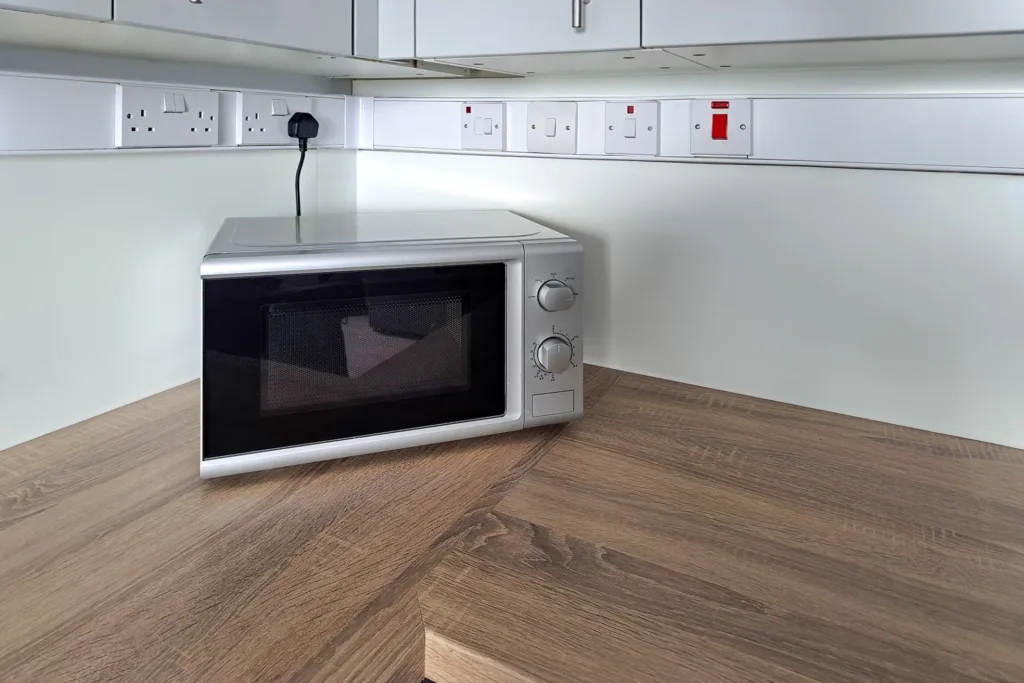
Cookers and hobs must be supplied via a dedicated circuit and isolated via a cooker control unit. These units include an integral switch and socket, offering a convenient means to power down large appliances for maintenance or in an emergency.
Positioning is important — the isolator must be accessible and within 2m of the appliance it controls. There are specific concerns when placing outlets behind cookers, which we’ve explained in our guide on socket placement and cooker safety.
New Compliance Rules Electricians Must Follow
Part P of the Building Regulations
All kitchen electrical work falls under the scope of Part P, which requires installations to be safe and certified. Any new circuits, consumer unit replacements or work near water must be either:
- Carried out by a registered Part P electrician, or
- Notified to your local building control authority before work begins
DIY work is not prohibited, but must still be inspected and approved to be legally compliant.
RCD and Circuit Protection
Every socket outlet in a kitchen must now be protected by a Residual Current Device (RCD). These devices detect current leakage and disconnect the supply in under 40 milliseconds — preventing potentially fatal shocks.
In practice, this means:
- Final circuits supplying socket outlets up to 32A require 30mA RCD protection
- RCDs can be incorporated into the consumer unit or installed as standalone units
- RCBOs (which combine RCD and MCB functions) are often preferred in kitchens for selective circuit isolation
These protective measures are non-negotiable under the current regulations.
Common Pitfalls in Kitchen Socket Design
Overloading Single Circuits
One of the most frequent errors is loading multiple heavy-draw appliances (kettle, toaster, microwave) onto a single ring or radial circuit without calculating total demand. This risks nuisance tripping, overheating, and eventual failure.
Poor Appliance Placement
Sockets inside base units may seem neat but can lead to access issues and overheating risks, especially if airflow is restricted. Appliance manufacturers often specify clearance zones — these must be respected.
Lack of Future-Proofing
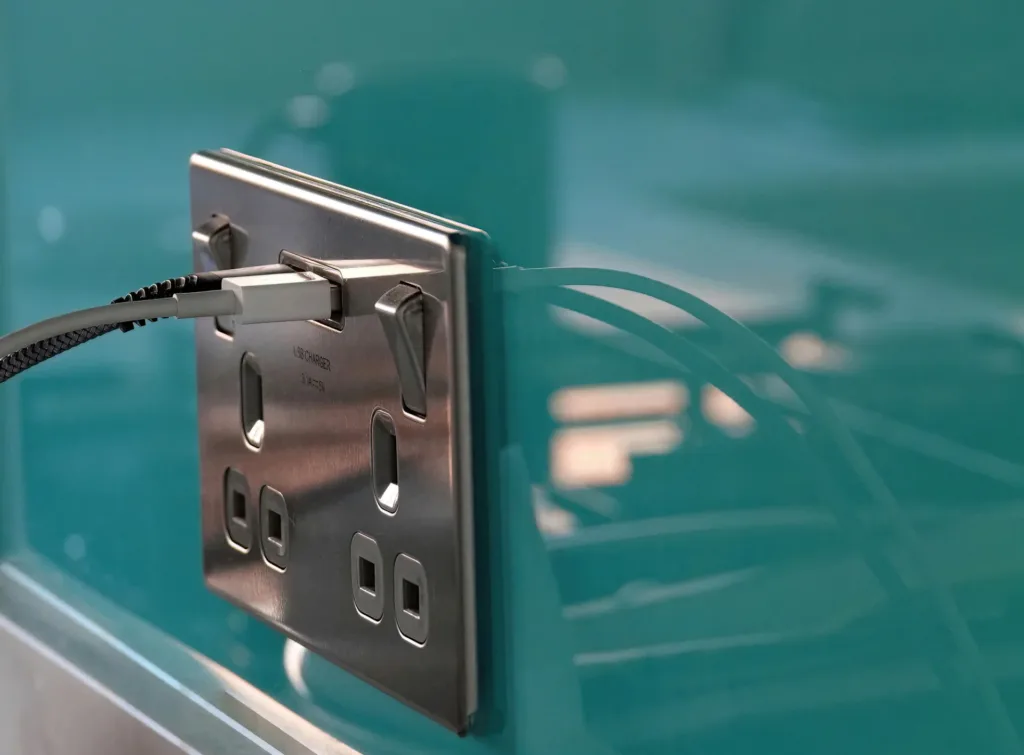
Modern homes tend to accumulate more gadgets and devices. Planning for extra sockets during a rewire is far cheaper than retrofitting later. Consider USB sockets or dedicated supplies for coffee machines and chilled taps.
When to Update Your Kitchen Sockets
Even without a full renovation, you may need to review your kitchen socket setup if:
- Sockets are mounted too close to water points
- There’s no visible RCD protection at the consumer unit
- The existing system lacks isolation switches for fixed appliances
- Sockets are cracked, discoloured or loose
- Circuits frequently trip under load
If your installation predates the 18th Edition or hasn’t been checked in over ten years, a condition report is recommended. For upgrades and compliance advice, you can contact us directly to speak with a qualified electrician.
FAQs
How far should sockets be from a kitchen sink?
Sockets should be at least 300mm horizontally from the edge of the sink to prevent moisture contact.
Are RCDs mandatory for kitchen sockets?
Yes. Under current regulations, all socket outlets up to 32A in kitchens must be RCD protected.
Can I install kitchen sockets myself?
Technically yes, but only if you notify building control in advance or have the work tested and certified by a registered electrician.
Concluding Thoughts
Kitchen socket regulations have evolved to reflect the way modern homes use electricity — with greater safety measures, tighter controls near water, and clearer guidance on appliance isolation. While much of the guidance appears technical, it ultimately supports one goal: to make kitchens safer, more reliable, and future-ready.
Our team at Wave Electrical regularly supports kitchen rewires and upgrades across Cornwall, ensuring every socket, switch and circuit is installed with full compliance in mind. If you’re planning changes to your kitchen, our contact page is the best place to start.