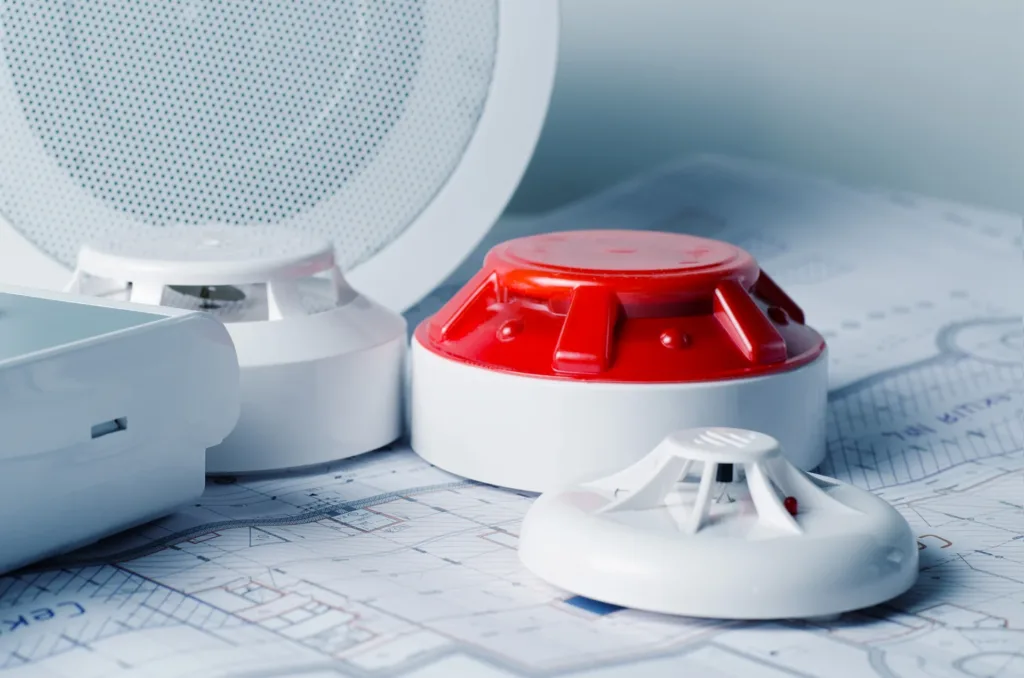
When we’re designing or upgrading fire alarm systems, one question comes up time and again: which fire detector is most widely used, and why? In homes, offices, schools and smaller commercial units across the UK, the answer is clear. The optical smoke detector — sometimes called a photoelectric smoke detector — is the most commonly installed type. It’s favoured for its all-round reliability, low cost, and suitability for general-purpose use.
That said, not all detectors are created equal. The most appropriate device depends on what the space is used for, the risks involved, and how the system as a whole is designed. At Wave Electrical, we recently completed a fire detection and lighting upgrade at a rural commercial property in Cornwall, where we installed a combination of optical smoke and heat detectors to meet regulations and customer requirements. That kind of tailored approach is essential — but it all starts by understanding what each type of detector offers, and why optical devices are the default in so many settings.
What defines a common fire detector?
Popularity vs. suitability
When we refer to the “most common” fire detector, it’s not just about how many are sold. It’s about how frequently they’re specified by installers, recommended by manufacturers, and installed in line with BS 5839 — the British Standard covering fire detection and alarm systems.
In practice, that makes optical smoke detectors the go-to in:
- Homes (especially LD2 systems, which protect escape routes and key rooms)
- Offices and classrooms
- Corridors, lobbies and waiting areas
- Most small-to-medium commercial properties
Where optical detectors fit in
Optical detectors use a light-sensing chamber to detect visible smoke particles. They’re excellent at spotting slow, smouldering fires early — such as those caused by overheated wiring, unattended candles, or soft furnishings catching alight. These are the types of fires most likely to start and spread indoors.
They’re also less prone to false alarms caused by cooking fumes or steam, which is one reason they’re typically placed in circulation areas and bedrooms, rather than kitchens or bathrooms.
Understanding the main fire detector types
Optical (photoelectric) smoke detectors
This type accounts for a significant share of installations in both domestic and non-domestic settings. They use a light beam to detect smoke particles and are particularly effective at sensing fires that smoulder before they flame. Typical applications include:
- Bedrooms
- Lounges and living rooms
- Escape corridors
- Waiting areas and reception zones
Ionisation smoke detectors
Ionisation detectors respond to the fine particles produced by fast-flaming fires. They were once common in homes, but have largely fallen out of favour due to their high false alarm rate and the presence of a small radioactive source.
While still safe to use if properly installed, ionisation detectors are now largely replaced by optical models in new installations.
Heat detectors
Heat detectors sense a rapid rise in temperature or a fixed heat threshold. Because they don’t respond to smoke, they are used in environments where steam, dust or cooking fumes would cause frequent false alarms in a smoke detector.
Common places to install them include:
- Kitchens
- Utility rooms
- Garages
- Industrial workshops
Multi-sensor detectors
These combine two sensing elements — typically optical smoke and heat — in a single unit. They’re increasingly used in commercial environments where fast, reliable detection is vital. Multi-sensors reduce the risk of both missed fires and nuisance alarms.
While more expensive than single-sensor units, they offer excellent performance in variable-risk environments such as open-plan offices or hotels.
Specialist detectors (beam, flame, aspirating)
These high-end detectors are designed for unique or high-risk sites:
- Beam detectors for large spaces such as warehouses
- Aspirating systems for data centres or archive rooms
- Flame detectors for fuel storage areas or chemical sites
They’re uncommon in general-purpose installations due to cost and complexity.
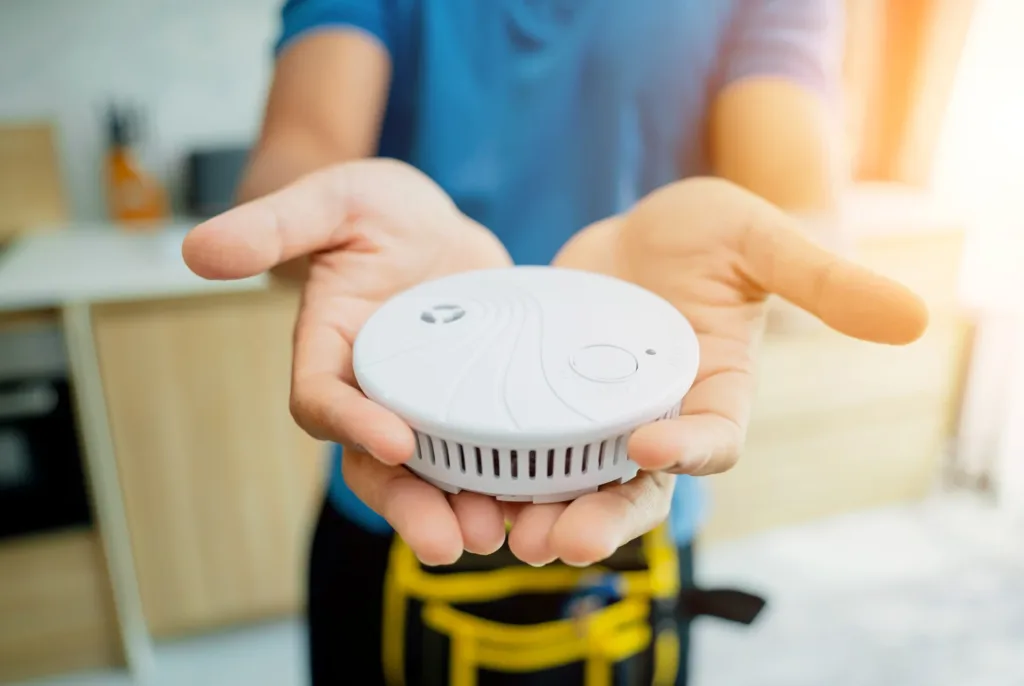
Factors affecting detector choice
Fire risk and room function
A detector should match the expected fire behaviour in a given space. For example:
- Bedrooms may have slow-burning fires: optical detector
- Kitchens produce false alarms: heat detector
- Open offices may need combined detection: multi-sensor
The intended use of the space is always our starting point when designing a system.
Size and layout of the premises
Large, open-plan or high-ceilinged areas may require specialist detection or additional coverage. Beam detectors can bridge long distances, while aspirating systems work well in hard-to-access or sensitive environments.
In most homes and small businesses, ceiling-mounted point detectors provide full coverage when correctly positioned.
Regulatory requirements
In domestic installations, BS 5839-6 categorises systems from LD1 (full coverage) to LD3 (escape routes only). Most modern homes are designed to LD2, which typically includes:
- Optical smoke detectors in halls and landings
- Heat detectors in kitchens
- Additional coverage for risk rooms as needed
In commercial buildings, BS 5839-1 applies. The required system category (L1, L2, L3 etc.) determines how far the detection must extend. In both cases, the type of detector must suit the room function and fire risk.
System integration and maintenance
Most detectors are either standalone mains-powered units with battery backup or part of a larger system, which may be conventional or addressable.
- Conventional systems: cost-effective for small buildings
- Addressable systems: identify the precise device in alarm, useful for larger premises
Regular testing and maintenance are essential, especially in commercial settings where legislation requires routine checks and records.
Installation insights from our recent project
Alarm and lighting upgrade in Cornwall
One of our recent installations involved a fire alarm system and exterior lighting upgrade at a converted barn used for commercial storage and meetings. The client needed a system that met building control requirements and could be maintained without specialist knowledge.
We designed a solution using:
- Optical smoke detectors in the circulation areas
- Heat detectors in utility zones
- Mains-powered alarms with battery backup
- LED exterior lighting with dusk-to-dawn sensors
This hybrid system gave the client confidence in fire detection and improved site visibility, without adding unnecessary cost or complexity. You can view that project in more detail.
Who installs fire detectors and how?
Installer responsibilities and testing
Fire alarm systems must be installed by competent persons — which in practice means electricians or fire safety professionals familiar with BS 7671 and BS 5839. The process includes:
- Risk assessment and design
- Device specification and positioning
- Testing and certification
- Ongoing maintenance schedule
In domestic settings, installers must comply with Part P of the Building Regulations. In commercial settings, further obligations may apply under the Fire Safety Order.
Support from Wave Electrical
Our team provides end-to-end support for fire detection systems, including design, installation, and post-installation advice. We ensure every setup complies with UK legislation and performs as expected for the environment it protects. You can get in touch with us directly to discuss your next project.
FAQs
What’s the difference between smoke and heat detectors?
Smoke detectors respond to particles in the air, while heat detectors measure temperature. Smoke detectors are faster at detecting most fires but are more prone to false alarms.
Can I use a multi-sensor detector in my home?
You can, especially in large or open-plan homes. They offer excellent performance but may be over-specified for smaller houses.
Are ionisation detectors still safe to use?
Yes, but they’re being phased out. Most new systems use optical detectors, which are safer and more reliable for general use.
Conclusion
In most UK installations, the optical smoke detector is the standard choice — and for good reason. It balances performance and cost, offers reliable early warning, and works well in typical household and office environments. But no detector is one-size-fits-all. The right device depends on room use, layout, and compliance with fire safety standards.
At Wave Electrical, we regularly help clients identify the right solution for their needs — whether upgrading an old system or planning protection for a new build. For a closer look at how detector types fit into overall system design, see our fire detection system guide.