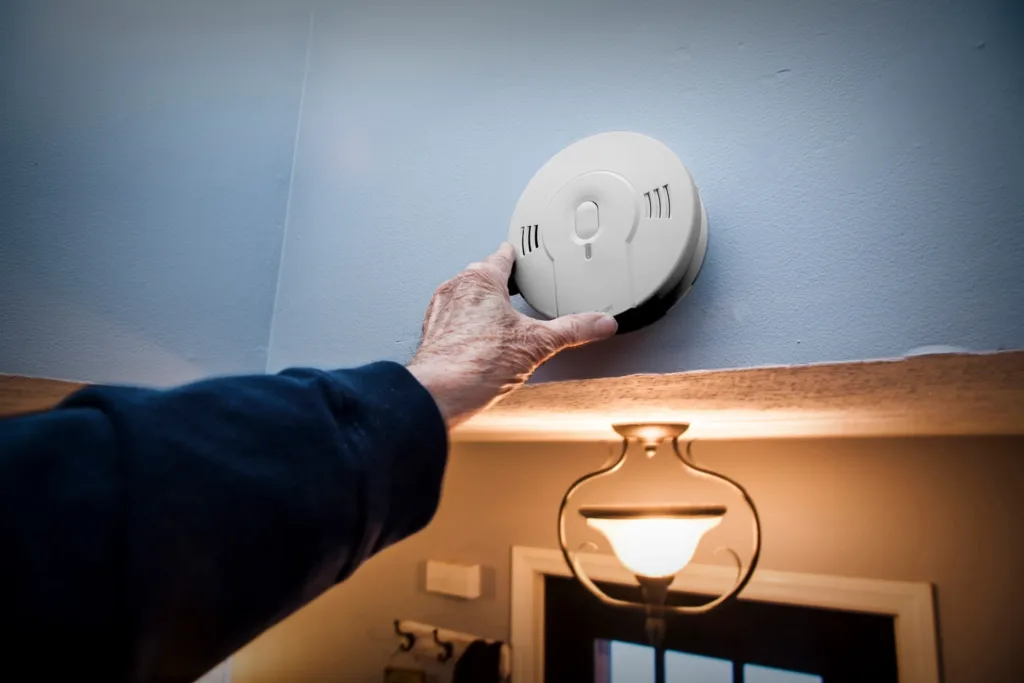
Most homeowners know the basics when it comes to smoke alarms. A hallway detector, maybe one in the kitchen, and the job’s done. But as recent safety guidelines evolve — and as technology makes alarms more interconnected — the old assumptions start to look worryingly outdated. Fires don’t always start in predictable places, and smoke rarely stays where you’d expect.
It’s tempting to assume that meeting the bare minimum will be enough. But early warning saves lives, and time is everything in a domestic fire. The question isn’t just about what’s legal — it’s about what’s smart. Our team at Wave Electrical Solutions sees the aftereffects of poorly placed alarms all too often. And as regulations shift towards wider interlinking and full coverage, many homes are overdue for a rethink.
We’ve broken down the facts in plain terms. If you’re wondering whether every room really needs a smoke detector — or if that sounds excessive — this guide is for you.
Smoke Alarm Rules: The UK Position
Domestic Smoke Alarm Requirements
In England, building regulations currently require smoke alarms to be installed on each storey of a new dwelling, typically in circulation spaces such as hallways and landings. Heat alarms are required in kitchens. For existing properties, legal obligations depend on use — but fire services strongly recommend mimicking the new-build setup as a baseline.
Scotland has taken this further. Since February 2022, all homes must have interlinked smoke alarms in the living room, each hallway or landing, and a heat alarm in the kitchen. This move sets a new bar for what’s expected in terms of coverage and communication between devices.
You can explore the three basic types of fire detection systems to better understand how these setups differ in structure and purpose.
Private Rentals and HMOs
Landlords have additional obligations under the Smoke and Carbon Monoxide Alarm (Amendment) Regulations 2022. At a minimum, one smoke alarm must be fitted on every floor used as living accommodation, and a carbon monoxide alarm must be installed in any room with a solid fuel appliance.
You can review the official UK Government guidance for private landlords for exact duties under current regulations.
Houses in multiple occupation (HMOs) have even stricter requirements under the Housing Act. Here, automatic fire detection systems must often include alarms in bedrooms and common areas, with interlinked units and a permanent power supply. In many cases, professional fire risk assessments will specify room-by-room needs.
Building Regulations for New Builds
Approved Document B of the Building Regulations outlines where alarms must go in new builds and conversions. It references BS 5839-6:2019 as the core standard for fire detection in dwellings. This standard divides systems into categories based on risk and coverage — with higher grades recommending alarms in all rooms except bathrooms.
That doesn’t mean every home must have every room covered. But if you’re upgrading an old system, planning a renovation, or buying a newly built home, this guidance is a useful benchmark.
Do You Really Need One in Every Room?
Rooms Where Smoke Alarms Are Strongly Recommended
Bedrooms are the most overlooked location — but they’re also where fires can go undetected longest. Devices charging overnight, unattended candles, or even faulty electric blankets can all pose risks. Placing a detector inside each bedroom increases the chance of early warning, especially at night.
Living rooms also deserve attention. They often contain high-risk items: televisions, heaters, fireplaces and large quantities of electronics. Fires starting in lounges are common, and smoke can build rapidly before it reaches a hallway detector.
Where Heat Alarms Are Better
Kitchens are typically excluded from smoke detector placement due to nuisance tripping. Heat alarms, which respond to temperature changes rather than smoke particles, are used instead. These are effective in detecting actual fires without being set off by everyday cooking steam.
Garages or workshops may also benefit more from heat alarms. Dust and fumes can interfere with optical detectors, so choosing the right type is as important as choosing the right location.
Places You Might Exclude
Bathrooms are not suitable for standard smoke alarms due to the moisture levels and likelihood of steam. Similarly, small utility cupboards or pantries with no electrical devices or ignition sources may not need dedicated coverage, unless they form part of a larger system design.
However, each property is different. A utility room with a tumble dryer, for example, presents a higher risk and might benefit from protection.
We’ve helped homeowners install fully interlinked alarms that comply with the new regulations, using the Scottish standard as a practical reference for nationwide setups.

Understanding Coverage: More Than One Detector
How Smoke Travels Through a Property
Smoke doesn’t rise in a straight line. It curls along ceilings, lingers in warm pockets of air and slows at closed doors. One hallway detector may not give you warning until it’s already too late in another part of the house.
Homes with multiple rooms, irregular layouts or heavy doors benefit from point-specific detection. Without it, early smoke might never reach a sensor in time.
The Role of Interlinked Alarms
Interlinked alarms communicate across the property — if one goes off, they all sound. This is now mandatory in Scotland and strongly recommended elsewhere. Battery-powered wireless versions are easy to install and ideal for retrofitting existing homes.
For example, a fire starting in a child’s bedroom at night will trigger the alarm in your own room instantly, giving you vital seconds to act.
Audible Reach and Sleep Safety
Sleeping occupants are less likely to wake to a distant alarm. BS 5839-6 specifies that alarms must be audible in all bedrooms, even with doors closed. This is where interlinked alarms become not just helpful, but essential.
If you’re unsure whether your current setup offers enough coverage, a volume test during closed-door conditions is a good place to start.
Picking the Right Detector: Placement Tips
Ionisation, Optical or Heat?
Ionisation alarms respond quickly to flaming fires with little smoke — such as paper or grease fires. Optical alarms are more sensitive to smouldering fires and are less prone to false alarms from cooking, making them better for living spaces.
Heat alarms, as covered earlier, are ideal for kitchens or garages. A well-designed system often combines all three types in the right areas.
Mounting Tips and Avoiding Dead Spots
Ceiling-mounted alarms should sit at least 300mm away from any wall or light fitting, and well clear of beams or vents. Avoid corners or areas where air flow is restricted — smoke may never reach these spots in time.
Where possible, alarms should be installed centrally in a room’s ceiling. This ensures consistent air exposure and quicker detection.
Maintenance and Battery Advice
Test alarms weekly and clean them every few months to remove dust. Replace batteries annually unless using a ten-year sealed model. Mains-powered units with battery backup are now standard for new installations.
If you’re unsure whether your system needs updating, it’s often easier to replace than to repair.
FAQs
Do I need a smoke alarm in the kitchen?
No — kitchens typically use heat alarms instead, which are better suited to cooking environments and less likely to false-trigger.
Are smoke detectors legally required in bedrooms?
Not in all parts of the UK, but many standards and local requirements strongly recommend them, especially for new builds or rentals.
What’s the rule for converted lofts or extensions?
Converted spaces must comply with Building Regulations, including alarm coverage. This often means installing additional detectors in the new area.
Conclusion
Smoke detectors shouldn’t be seen as one-size-fits-all. Every room poses different risks — and modern interlinked systems are designed to respond accordingly. You don’t legally need a smoke detector in every room, but in many cases, you absolutely should have one.
Bedrooms, living rooms, converted spaces and high-risk areas deserve the same protection as landings and hallways. Today’s systems make this easy, with wireless options and combination alarms simplifying installation.
Our team has worked on homes across Cornwall where compliant doesn’t always mean safe. If you’re reviewing your own system or planning a rewire, now is the right time to go beyond the minimum.
Visit Wave Electrical Solutions for expert support in designing and installing tailored, safe fire detection systems.